Far From Home, Closer to the Dream
6 Juli 2026
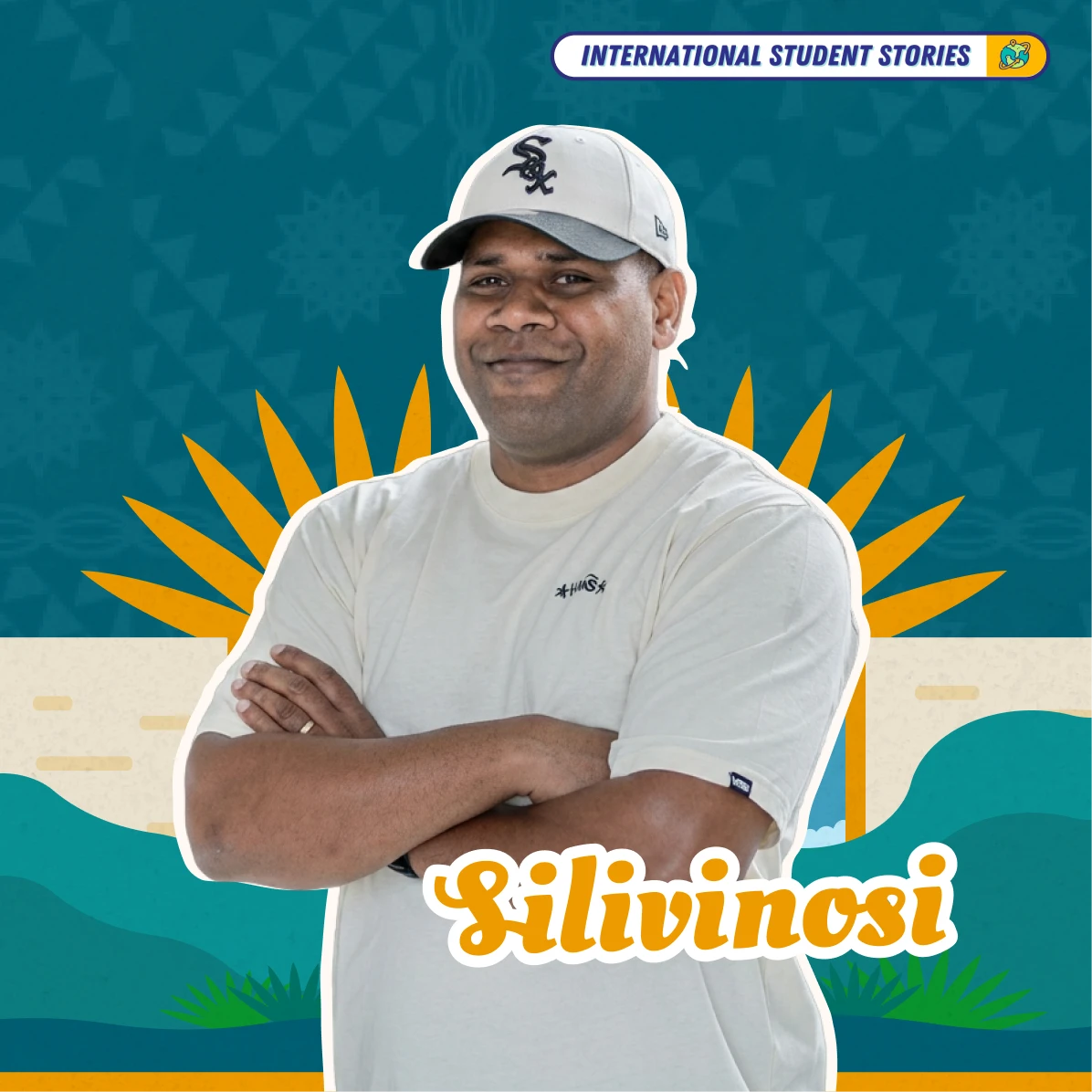
Sili built a good life as a government engineer in Fiji. To answer his father's promise, he had to leave all of it behind


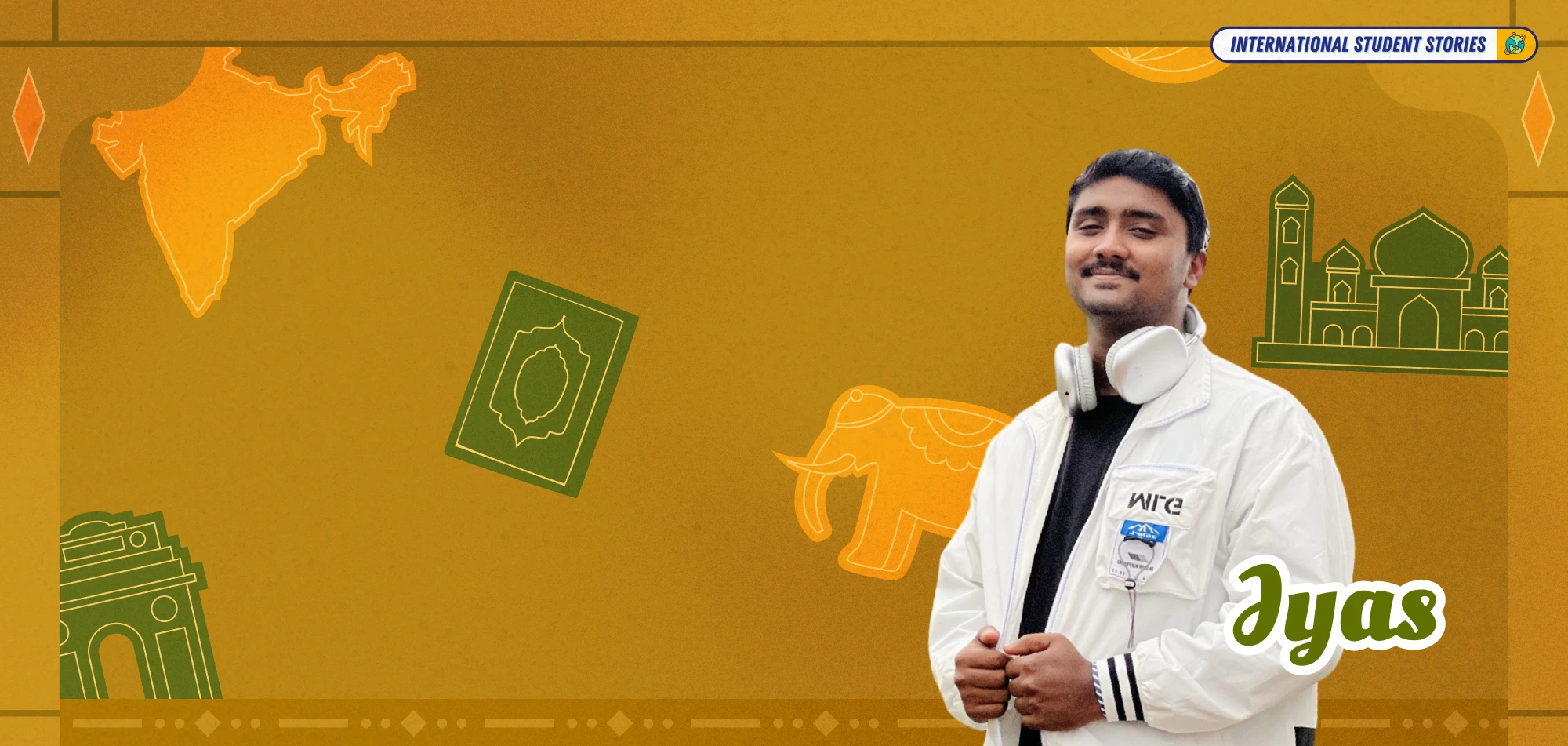

The scent of chai wandered through the dorm room, settling over the scattered books and papers. Mohamed Iyas Valarthodi, known simply as Iyas Ali, stood by the stove, measuring loose-leaf tea from a tin he had brought from Kerala.
His room looked lived-in. A handwritten schedule hung by the bed, and scraps of paper with Arabic poems, quotes, and to-do lists were taped to the wall beside it.
The floor was scattered with half-read books, and power strips groaned under too many plugs. As he handed me a steaming mug, he smiled, “Tea from India, milk from Indonesia.”
Iyas, 24, came from Kerala, a coastal state in southern India known for its lush landscapes and emphasis on education. “If a child doesn’t go to school, even the parents can get in trouble,” he said, while passing the chai.
Raised in a middle-class Muslim family, Iyas had been surrounded by Islamic learning from an early age. His father taught at a madrasa and served as the local Imam, so it was natural for his son to follow a similar path.
He studied for seven years at Jamia Madeenathunnoor, a well-regarded Islamic institution, where he earned a Bachelor’s degree in Islamic Revealed Knowledge. At the same time, he completed a second degree, a Bachelor of Arts in Arabic Language and Literature through Sunday classes at the University of Calicut, one of Kerala’s state universities.
“Classes started at 6:30 in the morning. We studied mostly Islamic sciences, but also English, Arabic, Urdu. Fridays were our only break,” he recalled.
After completing the seven-year course, there are typically two possibilities, one is pursuing Mutawwal, which focuses on deep specialization in a particular area of Sharia, eventually becoming a Muallif, Mufti, or Mudarris. The other path is continuing with a master’s degree, either abroad or within India.
“I didn’t want to leave behind what I learned, I just wanted to expand it,” he said.
He hadn’t heard of UMS before, and his knowledge of Indonesia was vague at best. He mostly associated the country with tourism and a strong Islamic identity. But that alone piqued his interest.
Some people around him questioned whether the degree would hold international value or how it would compare academically. For Iyas, though, the real draw was the chance to experience a different Islamic academic culture.
Once in Indonesia, he quickly noticed differences in the academic environment. His master's program in Islamic Education emphasized research, which he found contrasted with the more coursework-heavy structure of Indian universities. “In India, there's a heavy emphasis on coursework, with extensive book reading and structured exams,” he explained.
“Here there's a focus on creating articles and presentations,” He cited a course on Islamic Educational Psychology where output centered on research and presentations rather than traditional exams.
Still, Iyas saw value in both approaches. In his view, the ideal academic model would combine the best of both worlds, the critical thinking developed by research, and the solid grounding provided by coursework. “Without a strong foundation in the subject matter, research can lack depth,” he said.
When Iyas first came to Indonesia, he didn’t know anyone who had taken a similar path. He realized that could discourage others from even trying.
“The information is there online, but what if you don’t even know what to search for?” he said as he sipped his chai.
He created a WhatsApp group and began sharing what he had learned, application deadlines, scholarship links, tips for applying. At first, he just posted on his WhatsApp status. But word spread quickly. Within weeks, the group grew to hundreds of members, most of them Indian students curious about studying in Indonesia.
“Now we have around 300–400 students in the group,” he said. “Some of them have already enrolled in places like Sumatra, Surabaya, and other parts of Indonesia.”
Though he occasionally shared educational content on Instagram, Iyas didn’t see himself as an influencer. His goal was simply to pass on what he had learnedHe laughed when the label was brought up. “Influencer? I don’t think so! I only have around 2,000 followers, and half of them are just my friends.”
Occasionally, one of Iyas videos made the rounds in WhatsApp or Instagram, but that’s not something he plans or promotes. He didn’t script his content or polish it with editing software. Often he simply picks up his phone, records a quick selfie video, and uploads it as is.
In recent years, Iyas research has centered on curriculum in Islamic education, especially in regions like India and Southeast Asia. The heart of his vision lies in what he calls integrated education, a model where students can pursue both Islamic and general knowledge within the same academic framework.
“I love travelling, sometimes when I travel I get a chance to visit pondok or Islamic institutions, even when I travel to other countries in Southeast Asia, so it is like killing two birds with one stone.” said the 2nd-semester student.
In his experience, students who go through the religious track may have deep faith but limited access to professional or academic opportunities. On the flip side, students in modern education often lack grounding in spiritual frameworks.
To him, the division is harmful. A balanced curriculum, he believed, could produce scholars who are both intellectually rigorous and spiritually rooted.
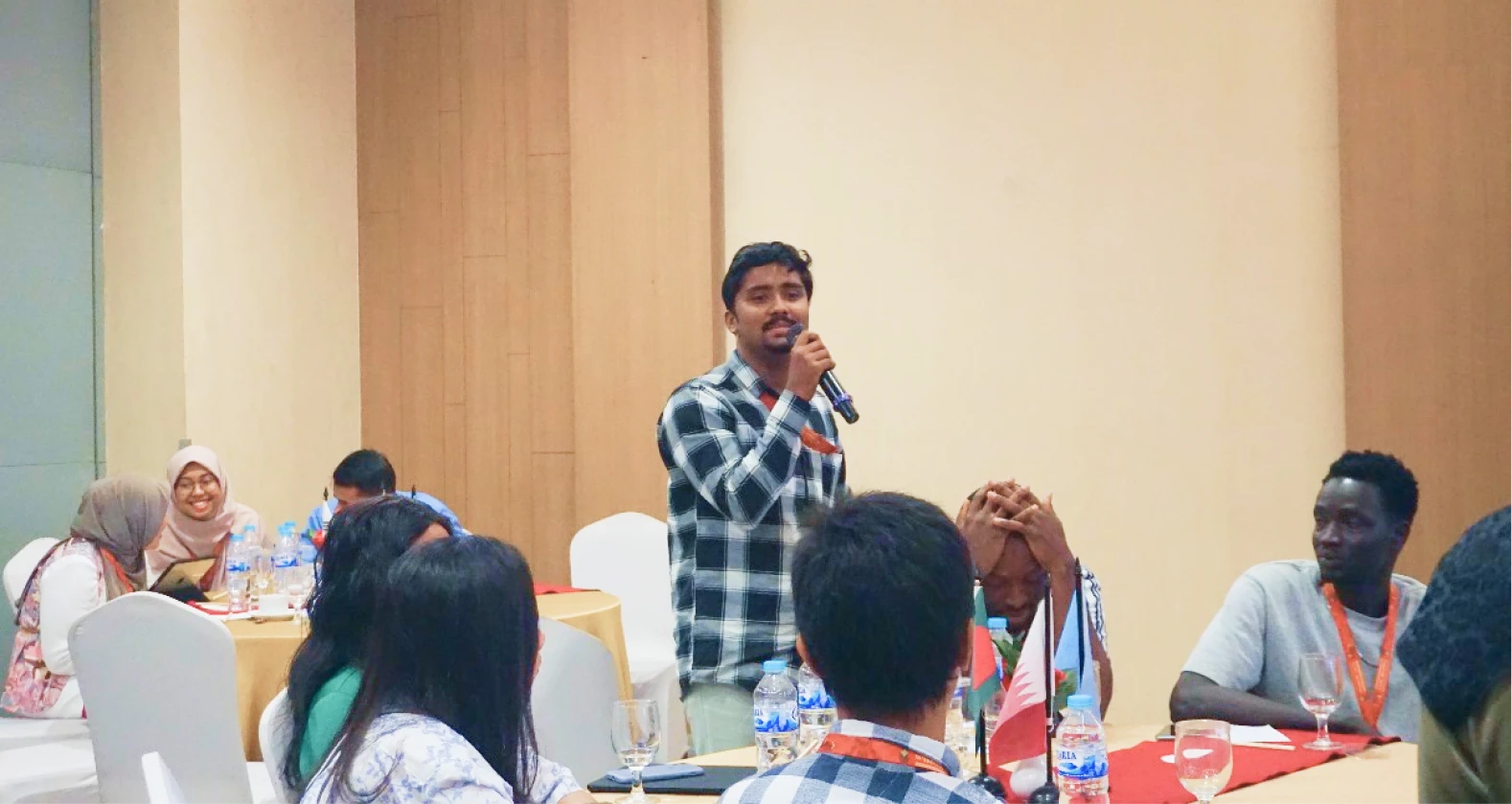
Iyas shares insights during WISDOM 2024 at UIN Walisongo Semarang, 19 September 2024.
He has spent hours poring over academic articles, studying education models in Malaysia, Indonesia, and Thailand, and reflecting on how systems succeed, or fail, to serve their students.
“Sometimes I’ll just read a research paper and go down a rabbit hole,” he said. “And if I can, I try to visit the places I read about.”
He was also concerned about the opportunities lost due to weak language skills. He noted that many students studied Arabic or English but never gained fluency, which limited their ability to access global scholarship or contribute to international discourse.
That is why Iyas encourages students to step beyond their comfort zones although he also acknowledges the challenge that comes with it. Iyas believed studying abroad can offer more than just academic content.
“I won’t pretend there weren’t challenges. Adjusting to the academic environment, language, understanding expectations around research or thesis work, these things took time. But they also taught me resilience. But I can assure you, you won’t be alone, and you won’t regret taking the leap. Your growth here will be academic, yes, but also personal, intercultural, and lifelong.” he assured.
As the interview came to a close, my mind drifted to the drink Iyas handed me earlier, Indian tea, Indonesian milk.
His journey was a fusion of past and present. He hadn’t abandoned his roots, he is now learning to let them grow more.
Writer: Farizal Luqman Majid
Editor: Al Habiib Josy Asheva
Designer: Salsabila Kamila Wardah
Sili built a good life as a government engineer in Fiji. To answer his father's promise, he had to leave all of it behind
Tak ada yang lebih spesial dari membaca berita pilihan redaksi hanya untukmu.
Langganan gratis UMS Newsletter sekarang.