PHC Nusantara is a prestigious collaborative program organized through a partnership between the French Ministry for Europe and Foreign Affairs (MEAE), the French Ministry of Higher Education and Research (MESR), and the Indonesian Ministry of Higher Education, Science, and Technology (Kemendiktisaintek).
“The aim of PHC Nusantara is to facilitate collaboration between researchers in Indonesia and France,” said Endang, on Thursday (10/4/2025).
According to an official report released by the Institut Français Indonesia, an institution under the French Embassy in Indonesia, out of 43 submitted proposals, 10 outstanding projects were selected for the PHC Nusantara 2025. One of them is Endang's proposal.
Each project carries a different topic. Endang’s project represents the field of information and communication technology. “My field is information and communication science technology,” he added.
Endang is the only UMS lecturer to receive the funding. This also marks the first time a representative from UMS has taken part in the Indonesia-France research collaboration program.
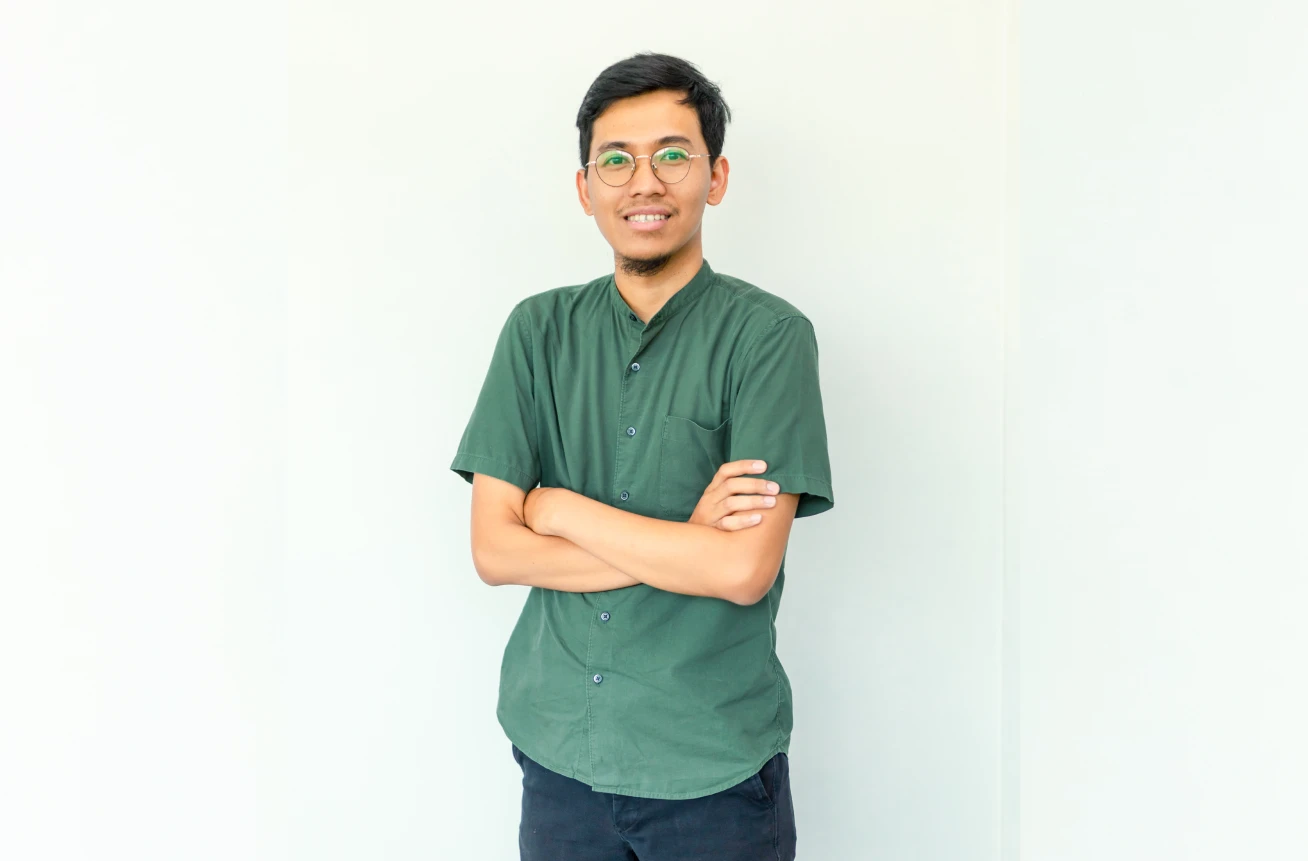
UMS Informatics Engineering lecturer, Endang Wahyu Pamungkas, Ph.D.
He is also collaborating with a former colleague from his internship in France, Farah Benamara of the University of Toulouse. Their proposed research topic is still related to a hate speech detection machine for social media in Indonesia, based on artificial intelligence (AI).
The tendency of Indonesians to mix Indonesian with regional languages poses a unique challenge for their research. This makes it difficult for the AI to detect hate speech.
"This becomes a challenge, making hate speech detection more difficult," he added.
Another challenge comes from the dataset used to develop the hate speech detection machine. Currently, there is a significant lack of datasets involving code-mixed language usage in Indonesia to train AI models.
The research is expected to test the capabilities of Large Language Models (LLMs), such as ChatGPT, in augmenting code-mixed languages, including regional languages.
“While evaluating LLMs, we’ll also examine whether the augmented data is strong enough to detect hate speech on social media,” he continued.
The research is planned to run for two years. Endang mentioned that the first year will focus on strengthening the dataset for the AI being developed, while the second year will focus on implementing the AI to detect hate speech in other languages.
“If the research on code-mixed Indonesian languages is successful, the project will be expanded further to other languages such as Indian and Arabic,” Endang concluded.
Writer: Gede Arga Adrian
Translator: Farizal Luqman Majid