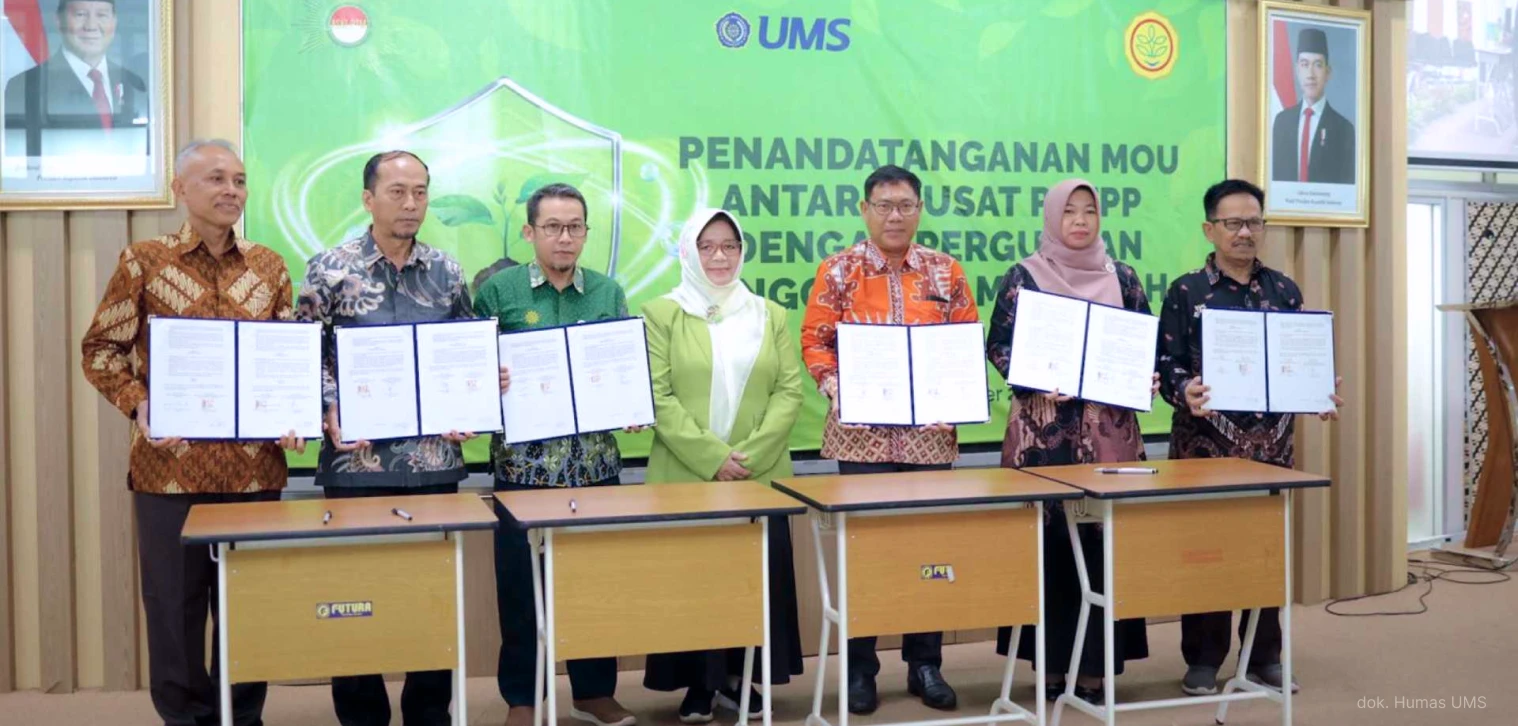
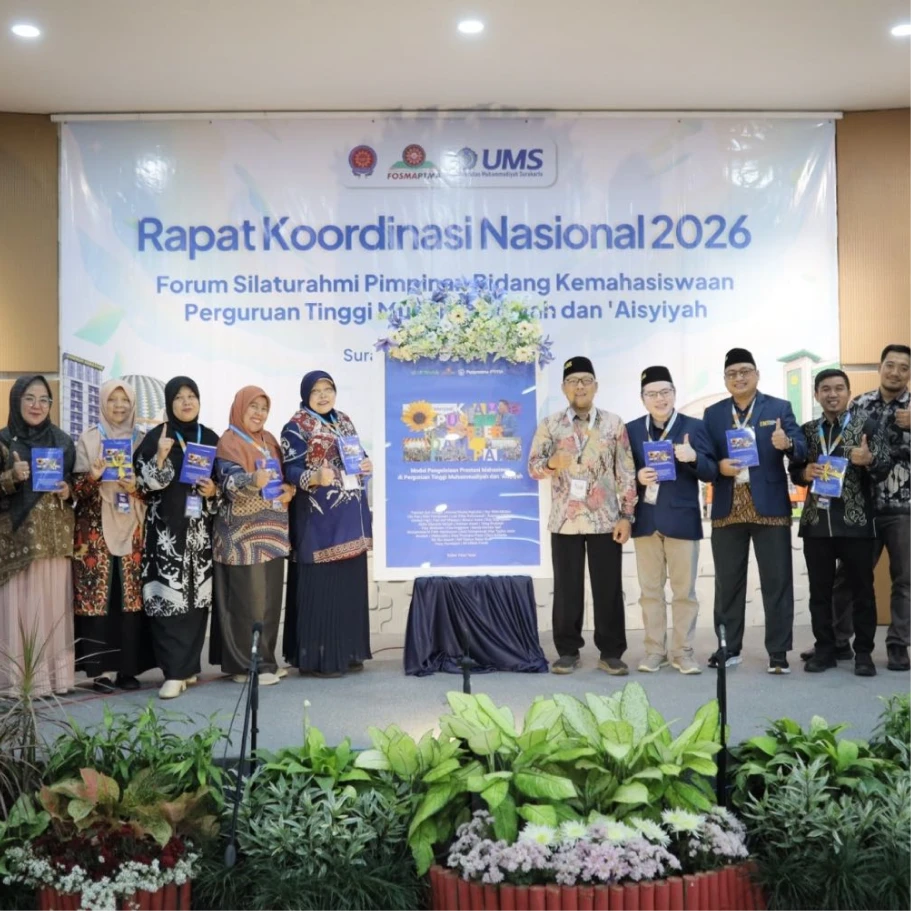
Universitas Muhammadiyah Surakarta (UMS) hosted the Working Meeting of the Association of Intellectual Property Centers of Muhammadiyah and ‘Aisyiyah Universities (ASKI PTMA). The event also featured the signing of a Memorandum of Understanding (MoU) between 29 Muhammadiyah and ‘Aisyiyah Higher Education Institutions (PTMA) and the Plant Variety Protection and Agricultural Licensing Center (PVTPP) of the Ministry of Agriculture of the Republic of Indonesia. The signing ceremony took place on Tuesday (28/10/2025) at the Seminar Room, 7th Floor of the Siti Walidah Main Building, UMS.
This partnership marks an important step to bolster research collaboration, accelerate downstream innovation, and strengthen intellectual property protection in the agricultural sector. Through this MoU, PTMA institutions are expected to actively contribute to the development of superior plant varieties, plant variety protection registration, and innovative agricultural licensing systems that provide tangible benefits for society.
UMS Rector, Prof. Dr. Harun Joko Prayitno, M.Hum., expressed hope that this collaboration will go beyond formal administrative agreements and evolve into a productive and sustainable partnership.
“We hope today’s MoU will not be a sleeping MoU, but one that truly lives. We aim to drive the establishment of an outstanding research consortium in the field of food development, involving all PTMA institutions with full support from the Ministry of Agriculture,” Harun emphasized.
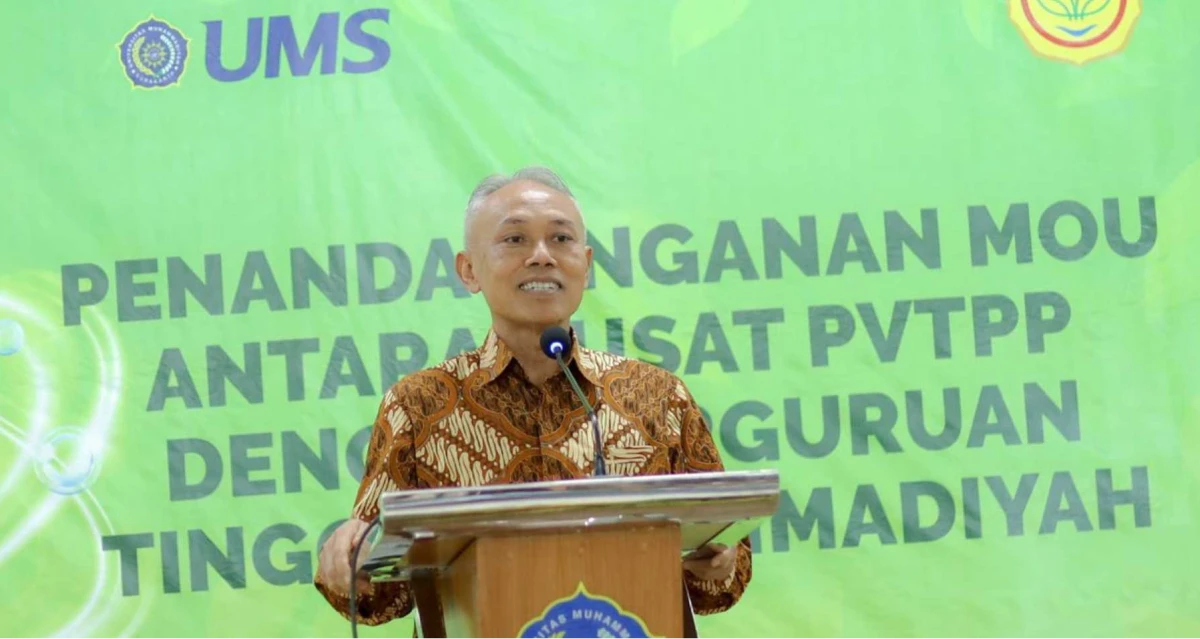 UMS Rector Prof. Dr. Harun Joko Prayitno, M.Hum., delivered his remarks during the MoU signing between 29 PTMA and the PVTPP Center of the Ministry of Agriculture, 28 October 2025. UMS Public Relations
 He added that UMS is ready to become the driving force of the consortium, particularly in research focused on local food and the development of non-rice varieties that have the potential to support national food security. “UMS and other PTMA have extensive resources. With collaborative research and cross-institutional funding support, the results will be tangible and beneficial to society,” he emphasized.
Meanwhile, the Head of PVTPP Center, Dr. Ir. Leli Nuryati, M.Sc., stated that this collaboration is not merely a formality, but a concrete step to strengthen the downstreaming of university research outcomes in the agricultural sector.
“This partnership with PTMA is strategic because universities are centers of innovation. We want research conducted by lecturers and students not to stop at publication, but to become intellectual assets with economic value and real impact for farmers,” said Leli.
She explained that currently, the contribution of universities in registering plant variety protection rights is still relatively low, only around 7 percent of the total national applications. However, several PTMA have recorded notable achievements, including the jatropha variety developed by Universitas Muhammadiyah Malang and two kopyor coconut varieties from Universitas Muhammadiyah Purwokerto that have been registered at the PVTPP Center.
In his remarks, the Chairman of the Council for Higher Education, Research, and Development of PP Muhammadiyah, Prof. Dr. Bambang Setiaji, M.Si., emphasized that the agricultural sector remains a major pillar of Indonesia’s economy. Therefore, research and innovation on superior varieties are strategic priorities for Muhammadiyah universities.
“Twenty-five percent of Indonesians rely on the food sector for their livelihood. It means improving agricultural quality is improving national welfare. Therefore, PTMA must take the role as a center of agricultural innovation and food sovereignty,” he asserted.
Chairperson of ASKI PTMA, Prof. Dra. Kun Harismah, M.Si., Ph.D., in her report added that this collaboration covers the three pillars of higher education: education, research, and community service. The collaboration will also include strengthening human resource capacity through expert lectures, coaching clinics, and assistance in plant variety registration.
“We want PTMA campuses to become centers of innovation for superior varieties and hubs for disseminating plant variety protection down to regional levels. With an extensive network, PTMA is ready to become a catalyst in strengthening the national agricultural innovation ecosystem,” said Kun.
This event also featured an exhibition and coaching clinic on plant variety protection, attended by rectors, vice-rectors, and KI Center managers from 29 PTMA across Indonesia. This momentum reaffirms that this cross-institutional collaboration is part of a strong commitment to enhancing applied research that is useful and has a real impact on national progress, as well as strengthening dedication in realizing UMS’s vision as an Islamic University Leader that is “Islami, Mencerahkan, Unggul, Mendunia, Sustainable”, and driving positive transformation.
Writer: Alvian Rizki Prasetya
Editor: Fika Annisa Sholihah
Translator: Farizal Luqman Majid