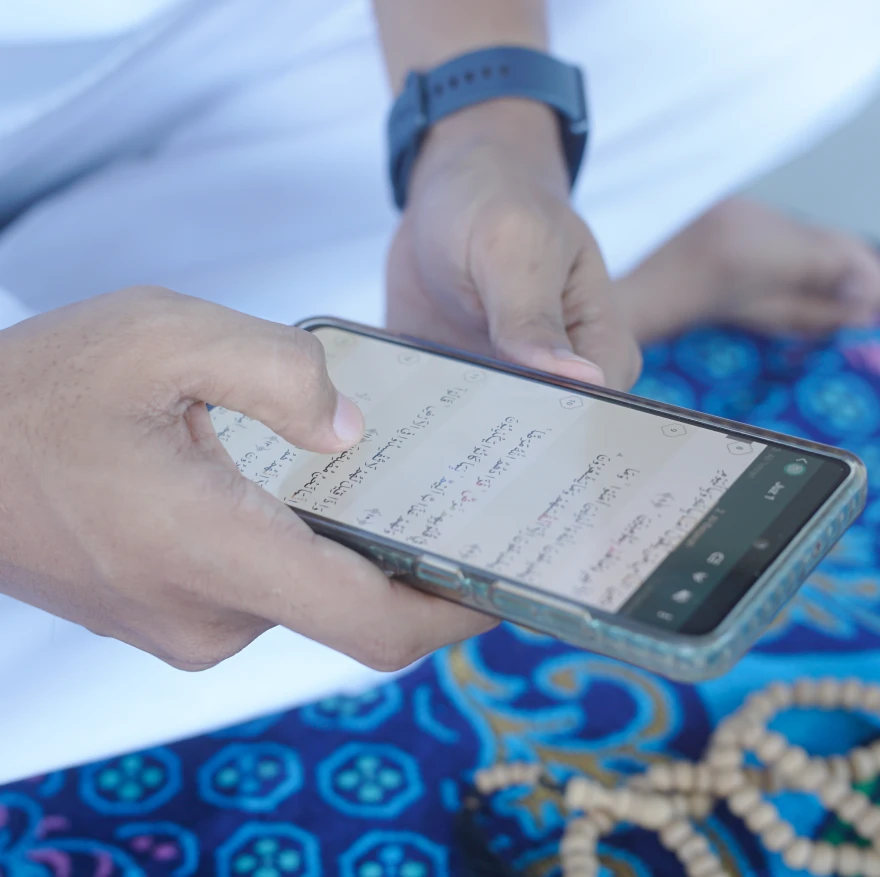
Does Playing Your Phone Invalidate Friday Prayer?
13 August 2026
It is quite a familiar sight of worshippers using their phones while the Friday sermon is being delivered. Does this invalidate their Friday prayer?
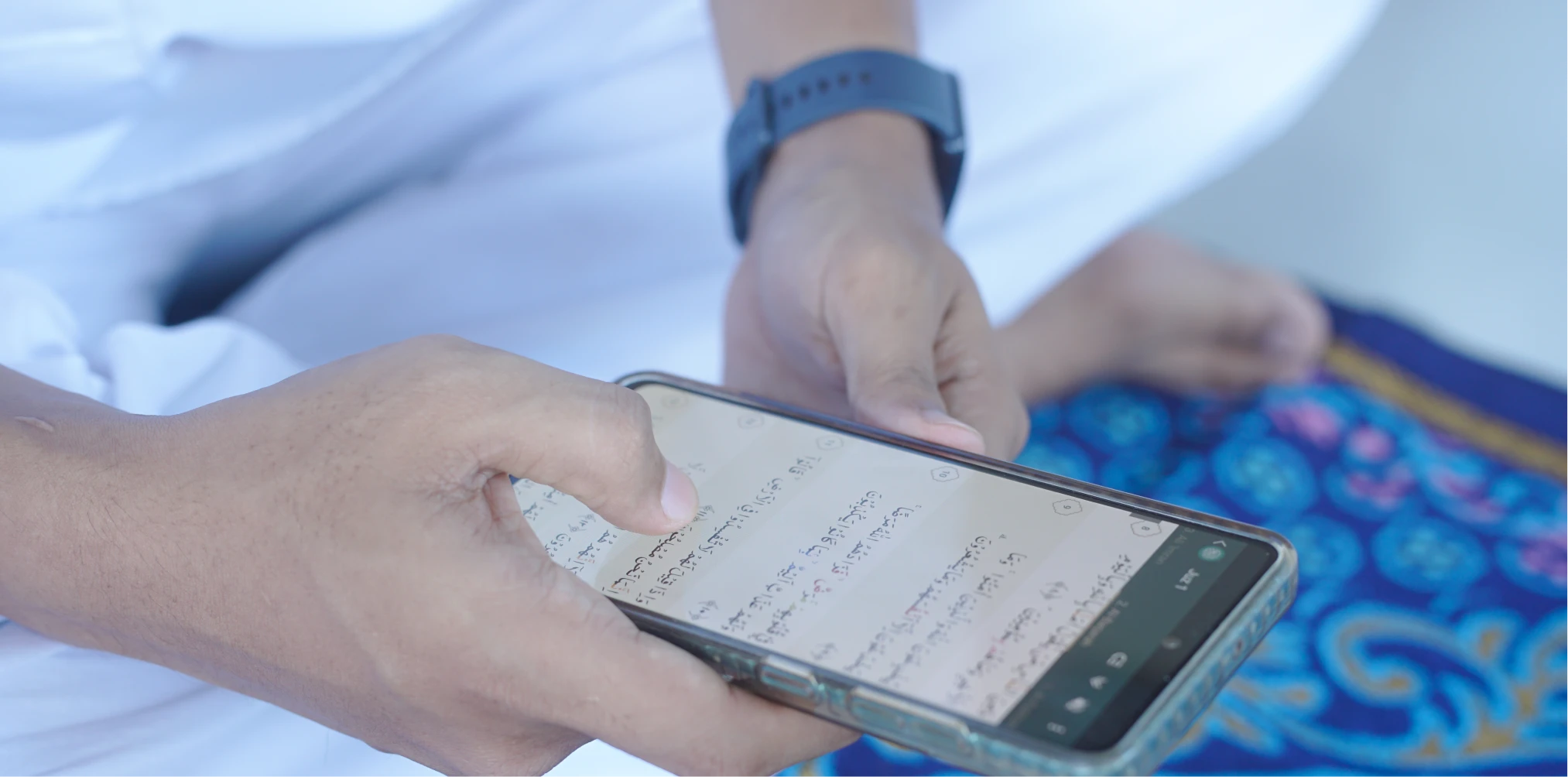
Using a phone during Friday prayer has become a familiar scene in many mosques. Some worshippers answer WhatsApp messages, scroll social media, or even play games after the khatib takes the pulpit and begins the sermon.
Dr. Kharis Nugroho, Lc., M.Ud., a lecturer in the Al-Quran and Tafsir Studies program at Universitas Muhammadiyah Surakarta (UMS), explained that the Friday sermon is an important moment for Muslims to take in religious guidance. Worshippers are meant to give it their full attention and steer clear of anything that pulls them away.
"Once the khatib begins, the congregation should set aside whatever isn't necessary and focus on listening. That means no phones, no opening WhatsApp, nothing else that diverts attention," said the head of UMS' Al-Quran and Tafsir Studies program in an interview on Thursday (13/8/2026).
The duty to listen closely to the Friday sermon rests on this hadith:
مَنْ تَوَضَّأَ فَأَحْسَنَ الْوُضُوءَ، ثُمَّ أَتَى الْجُمُعَةَ، فَاسْتَمَعَ وَأَنْصَتَ، غُفِرَ لَهُ مَا بَيْنَهُ وَبَيْنَ الْجُمُعَةِ، وَزِيَادَةُ ثَلَاثَةِ أَيَّامٍ، وَمَنْ مَسَّ الْحَصَى فَقَدْ لَغَا. رواه مسلم.
"Whoever performs ablution and does it well, then comes to the Friday prayer, listens attentively, and stays silent, will be forgiven his sins between that Friday and the next, and three days more. But whoever touches the pebbles has fallen into laghw." (Narrated by Muslim)
This hadith recorded by Imam Muslim, Kharis said, underscores how important it is to stay focused throughout the sermon. In the Prophet Muhammad's time, even toying with pebbles counted as laghw, idle conduct that drew a person away from listening.
The principle, he believed, still holds. If merely playing with pebbles was discouraged in the Prophet's era, Muslims today should just as readily avoid whatever pulls their attention in the same way.
"A smartphone is far more distracting. Opening WhatsApp, scrolling social media, taking selfies, watching videos, playing games, any of it can easily keep someone from following the sermon," he said.
The problem, he stressed, is not the phone itself but how it's used and whether it distracts. Phones can serve good purposes too, reading the Qur'an or looking up Islamic knowledge among them.
"But if there's no pressing need during the sermon, it's best to put the phone away or set it to silent so it doesn't disturb the solemnity of worship," he added.
Talking to fellow worshippers during the sermon should be avoided as well. The Prophet Muhammad said:
إِذَا قُلْتَ لِصَاحِبِكَ يَومَ الجُمُعَةِ: أنْصِتْ، والإِمَامُ يَخْطُبُ، فقَدْ لَغَوْتَ
"If you say to your companion, 'Be quiet,' on Friday while the imam is giving the sermon, then you have fallen into laghw."
The point is the value of silence during the sermon. Even saying "Be quiet," which is itself encouraging good behavior, still counts as laghw while the imam is preaching.
For that reason, worshippers should hold off on casual talk, joking, or any needless exchange during the sermon. "Islam teaches that during the sermon both the heart and the body should be turned toward listening. It isn't enough for the mouth to stay quiet; the attention has to be on the khatib's message too," he explained.
Which raises the real question: does using a phone during the sermon invalidate one's Friday prayer?
Many people assume that speaking or using a phone while the khatib preaches automatically voids the prayer, Kharis said, and that misconception is worth clearing up, because acts that are forbidden or count as laghw do not, on their own, invalidate the Friday prayer.
"You have to separate an act that's prohibited or considered laghw from one that actually invalidates the prayer. Not every forbidden act during the sermon nullifies it," he said.
Islamic scholars, he explained, have worked through this in classical jurisprudence for centuries. In the Shafi'i school, for instance, speaking during the sermon is generally treated as makruh, discouraged, on the basis of the hadiths calling for silence and attentive listening.
"So we shouldn't jump to the conclusion that someone who talks or uses a phone during the sermon has automatically invalidated their Friday prayer. The more accurate reading is that it should be avoided because it eats away at the proper etiquette and the spiritual reward of attending," Kharis explained.
Kharis believed the khatib should not embarrass a congregant by calling them out publicly over the microphone. A wiser approach is to offer a general reminder instead.
Kharis gave an example of the kind of appeal a khatib could make:
Let us together preserve the solemnity of this sermon. We kindly ask all congregants to put away or silence their phones and refrain from talking during the sermon, so that we do not disturb this solemnity and can instead receive the full benefit and blessing of the Friday sermon.
This approach, he said, is more educational and better aligned with the purpose of the sermon, which is to offer guidance and build the congregation's religious awareness.
"We don't want a situation where the intention was to remind someone, but instead that person ends up feeling humiliated, and the whole congregation's attention shifts to the person being called out," he explained.
Beyond that, he believed the phenomenon of using phones during the sermon should not only be viewed through the lens of fiqh (Islamic jurisprudence), but also from the perspective of spiritual education. Both physical presence and presence of heart are essential to properly performing Friday prayers.
"We shouldn't let our bodies be present in the mosque while our attention is actually on WhatsApp, social media, or other matters. We're physically present, but not present mentally or in our hearts," he said.
Kharis encouraged congregants to build a simple habit every Friday: putting away their phones, switching to silent mode, refraining from talking, and focusing their attention on the sermon.
Messages that come in can be read after the sermon ends. Non-urgent calls can wait. Congregants should also cultivate self-discipline, learning to delay playing games and starting to prioritize the Friday sermon.
Technology doesn't need to be avoided altogether, but rather used in a balanced way, appropriate to the situation and need. Doing so is an expression of maintaining proper etiquette as well as showing respect for the act of worship and the opportunity to receive religious guidance. A person's presence at the mosque should stand as evidence of their obedience to God's command.
"A phone can be a means of doing good, for example when used to read the Quran, but there's a time when we need to put it down. Because it's entirely possible that a single sentence from the Friday sermon, listened to with full sincerity, becomes the reason we improve our lives for a week, a year, or even a lifetime," he concluded.
Writer: Gede Arga Adrian
Translator: Farizal Luqman Majid
Editor: Al Habiib Josy Asheva
It is quite a familiar sight of worshippers using their phones while the Friday sermon is being delivered. Does this invalidate their Friday prayer?
Nothing’s more special than reading curated news just for you.
Subscribe to the UMS Newsletter for free today.