Nano Liquid for Healing Diabetic Ulcers
21 July 2026
UMS students have formulated a treatment for diabetic wounds from moringa and neem leaves, and carried home gold at WYIE 2026 in Malaysia.



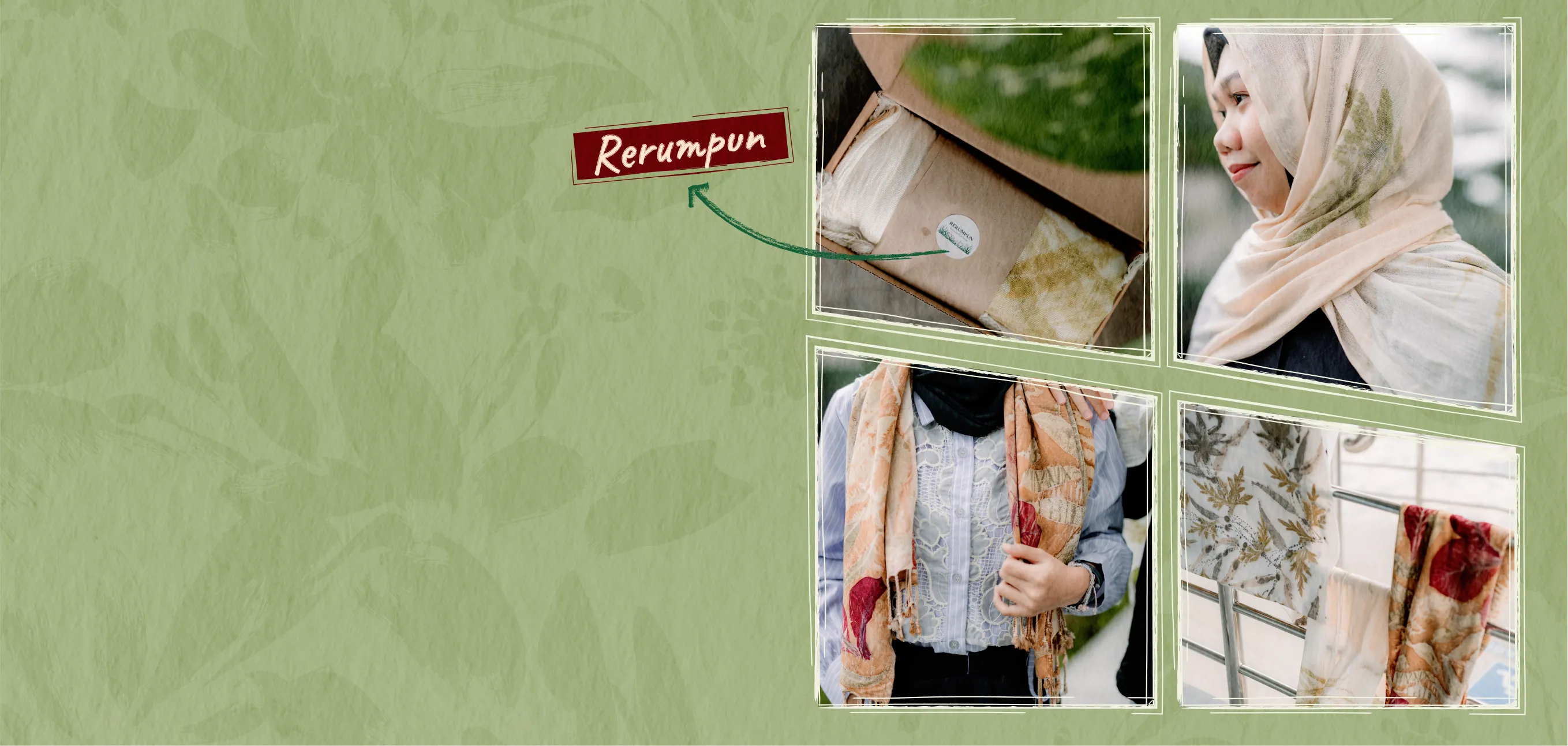
Adelina Ririn Wulandari's hands were busy arranging fabric products with leaf motifs at the Campuspreneur exhibition at Universitas Sebelas Maret in early April. The products she displayed included fabrics, scarves, and pashminas.
Adelina also provided explanations to visitors interested in learning about the products under the Rerumpun brand. Her fingers traced each leaf-shaped pattern on a predominantly cream-colored fabric. "These motifs and colors come from real leaves. The technique is called ecoprint," she said.
Ecoprint is a natural dyeing technique that uses plant pigments to create patterns directly on fabric. It typically draws from various parts of plants, such as flower petals, leaves, and stems.
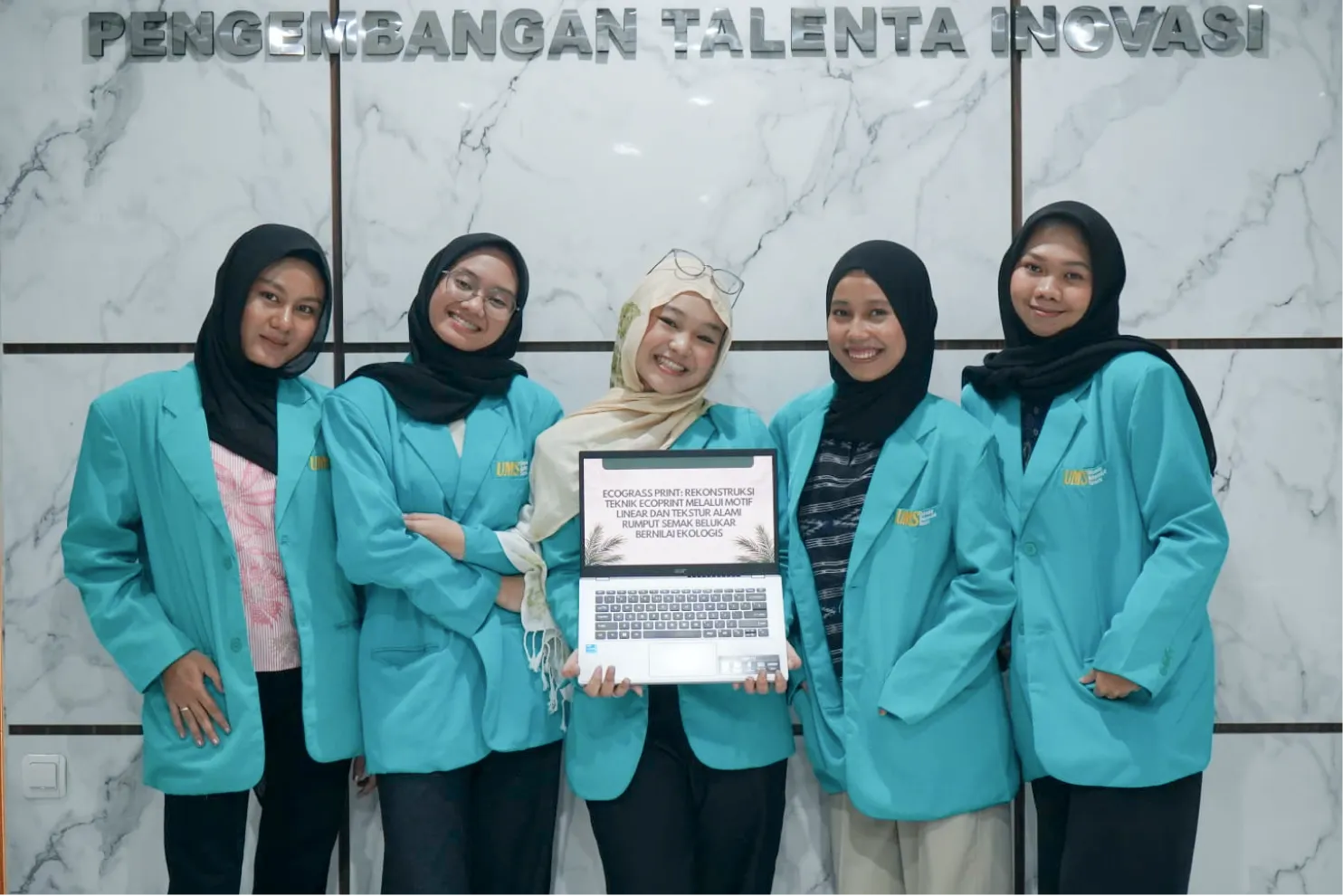
Adelina said Rerumpun was first initiated by her friend, Vivia Ayu Maharani. Both are Accounting students at Universitas Muhammadiyah Surakarta (UMS). In addition to Adelina and Vivia, the three other students are Diona Annora Kartika, Defania Fadilla Widyaningrum, and Naila Herwanti.
Rerumpun began as a student entrepreneurship project entered into the PIK (Entrepreneurship Innovation Program) competition in 2026, organized by the Directorate of Student Affairs and Innovation-Talent Development (DKPTI) at UMS. Their seed capital was Rp1 million.
The idea to create Rerumpun was born from concern over the large amount of textile dye waste polluting rivers and soil. The five students also saw the untapped potential of natural dyes from wild shrubs. "We thought we could create ecoprint products with economic added value," she added.
They partnered with the ecoprint batik brand Zulfa Ecobay, based in Bayat District, Klaten Regency, Central Java, to learn the basics of ecoprint fabric production.
Their first products were a 2.5-meter fabric and a scarf. The plants used at that time were mentoar leaves, kenikir flowers, eucalyptus leaves, castor leaves, and pine leaves.
The team then began developing new products for the PIK 2024 competition, a pashmina with a castor leaf motif.
The innovation paid off: Rerumpun took third place in PIK 2026. They are now moving toward the Student Entrepreneurship Development Program from the Ministry of Higher Education, Science, and Technology.
Adelina shared that producing ecoprint fabric takes three to four days. The process begins with gathering the grasses, flowers, and leaves that will be used in the fabric-making.
Before dyeing, the first step is mordanting, a process that clears the fabric of any residual chemicals. "We use tunjung and alum for this mordanting process," Adelina said.
The next step is applying the plants onto the fabric. There are two techniques for transferring plant pigments onto cloth: steaming and pounding.
The steaming technique is carried out for two hours until the leaf motifs and colors set into the fabric. The pounding technique, on the other hand, involves striking the leaves directly onto the cloth until the plant pigments transfer.
Adelina noted that Rerumpun's fashion products use the pounding technique during the dyeing process. "This technique brings out the colors more vividly and clearly compared to steaming," she explained.
Castor leaves are chosen as the primary dye material. Wild grass is also added to create striped motifs on the fabric, which, according to the team, can give a slimming effect when worn.
"We hope that people with larger body types can also wear our products," Adelina said.
Adelina and her friends began marketing Rerumpun through word of mouth around campus, keeping things simple with WhatsApp. Purchases are handled through a pre-order (PO) system.
According to the team, the PO system puts customer closeness first. "Whatever design they want, we can adjust to that," Adelina explained.
The PO system also gives the team room to experiment and develop products that match what customers are looking for, which matters especially since ecoprint fabric takes longer to produce than other textiles.
Production is also heavily weather-dependent. Strong sunlight is needed to dry the fabric properly so the colors last. Adelina admitted she once tried drying the fabric with a hair dryer. The results were far from ideal.
The products are offered at a range of prices. Ecoprint tote bags are priced between Rp75,000 and Rp120,000. Scarves range from Rp100,000 to Rp180,000. Ecoprint fabric runs from Rp180,000 to Rp300,000, while accessories go for Rp50,000 to Rp100,000.
When asked about future plans, Adelina said Rerumpun intends to expand onto social media and online marketplaces. They also plan to ramp up production while keeping product quality consistent.
"So the quality stays maintained and customers will be satisfied with what we produce," she said optimistically.
Writer: Gede Arga Adrian
Translator: Farizal Luqman Majid
Editor: Al Habiib Josy Asheva
UMS students have formulated a treatment for diabetic wounds from moringa and neem leaves, and carried home gold at WYIE 2026 in Malaysia.
Nothing’s more special than reading curated news just for you.
Subscribe to the UMS Newsletter for free today.