Reuse, Reduce, Recycle
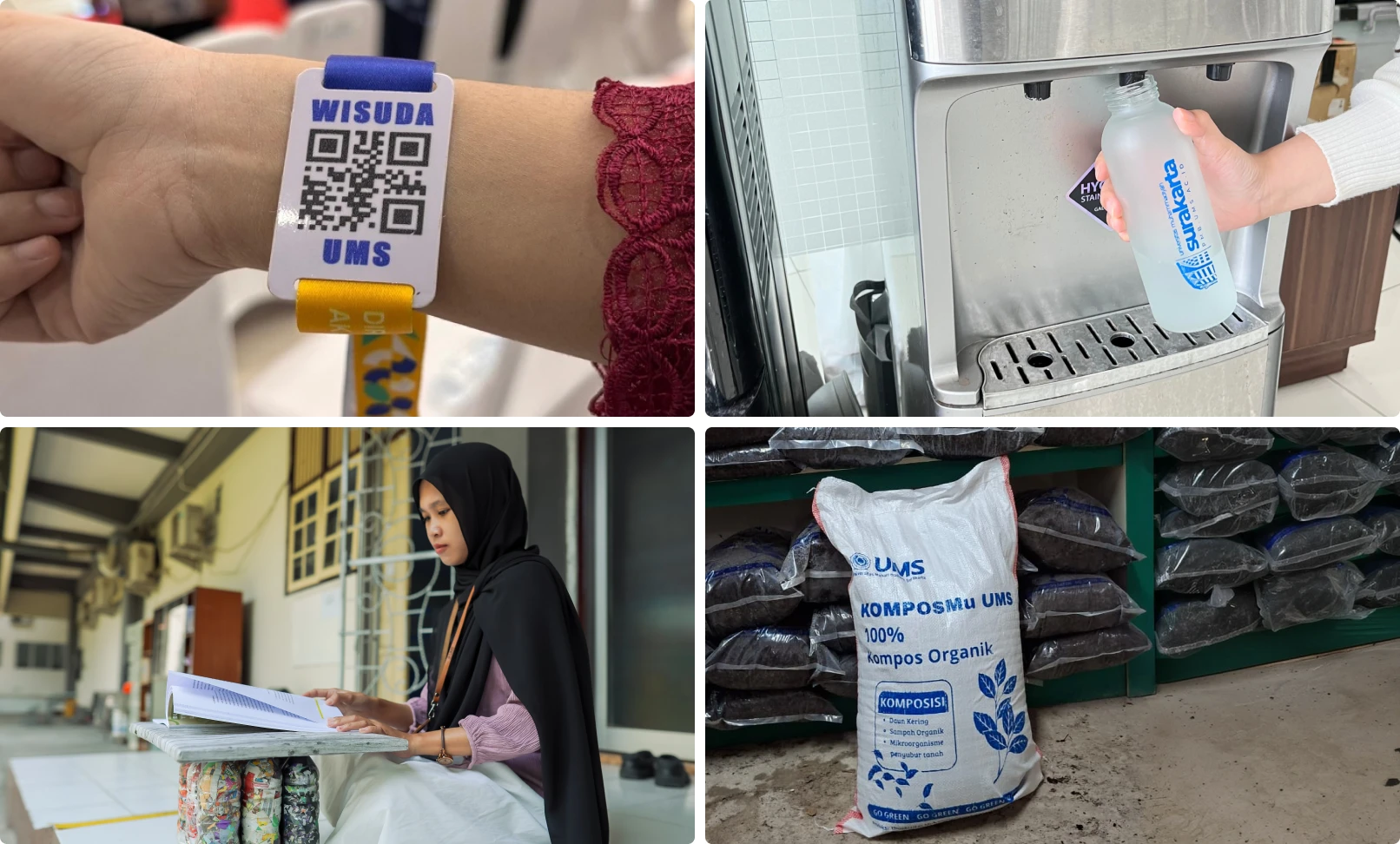
UMS implements an integrated 3R (Reduce, Reuse, Recycle) waste management system as part of its Green Campus commitment. Waste reduction is achieved through digital-based administration, including paperless academic services and digital graduation wristbands that replace printed materials. UMS also encourages the reuse of resources through refill stations that promote reusable water bottles. In addition, the university recycles inorganic waste into ecobricks and processes organic waste into compost through its composting program. These initiatives reflect UMS's commitment to resource efficiency, waste reduction, and sustainable campus management.
Program for Reducing Paper and Plastic
UMS promotes waste reduction by minimizing the use of single-use plastics through practical and sustainable campus initiatives. Water refill stations encourage students and staff to use reusable bottles instead of disposable plastic bottles, while ceramic tableware is used during meetings and campus events to replace single-use food containers. UMS also promotes reusable tote bags as an eco-friendly alternative to plastic bags for daily campus activities. These initiatives support a low-waste campus culture and demonstrate UMS's commitment to sustainable resource use.

Organic Waste Treatment
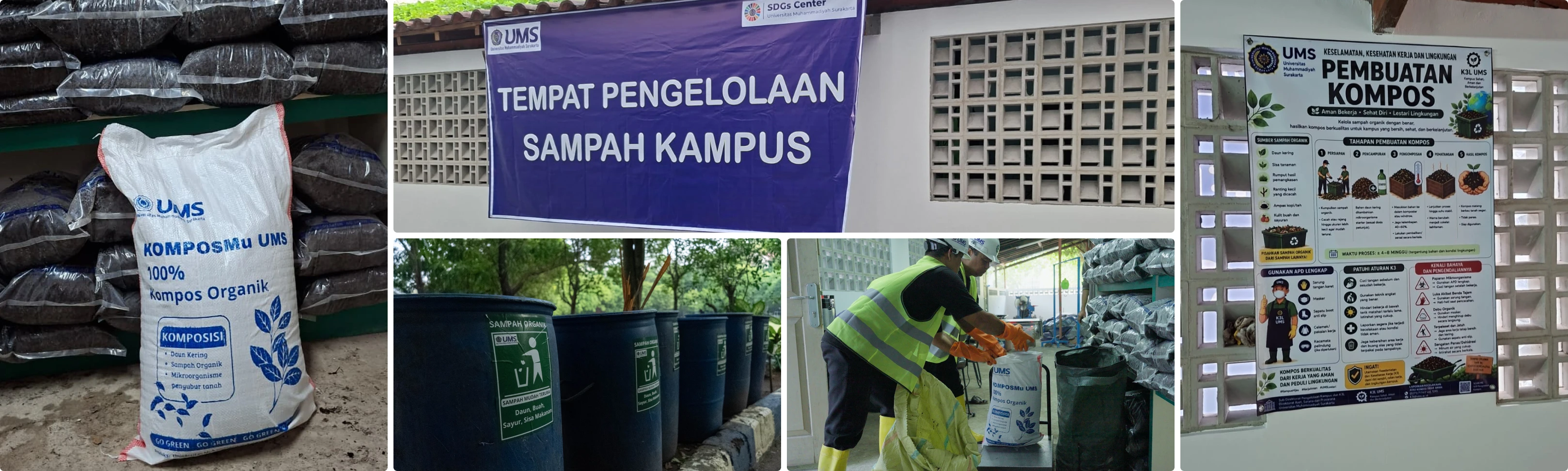
UMS treats more than 85% of its organic waste through an integrated composting program managed by the UMS Waste Management Unit. Organic waste, including food scraps and garden waste, is collected and processed at the Rumah Kompos using a controlled composting process. The resulting product, KomposMu UMS, is utilized for campus landscaping, soil improvement, and other greening initiatives. By converting organic waste into valuable compost, UMS reduces waste sent to landfills while promoting circular resource management and sustainable campus development.
Inorganic Waste Treatment
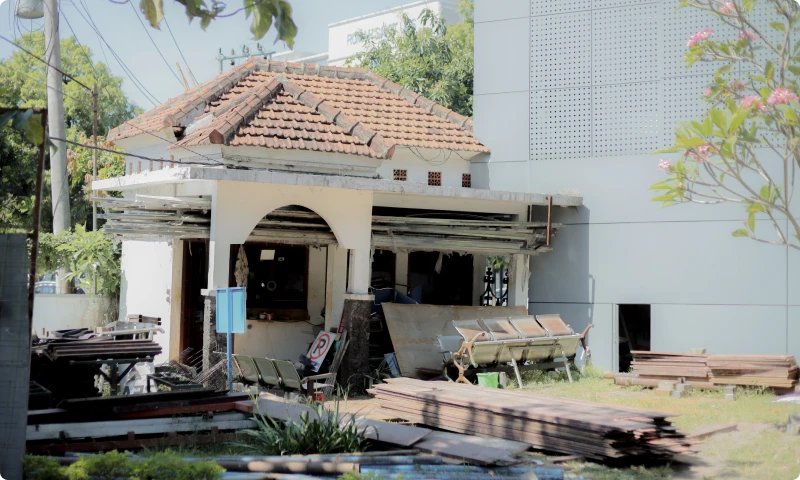
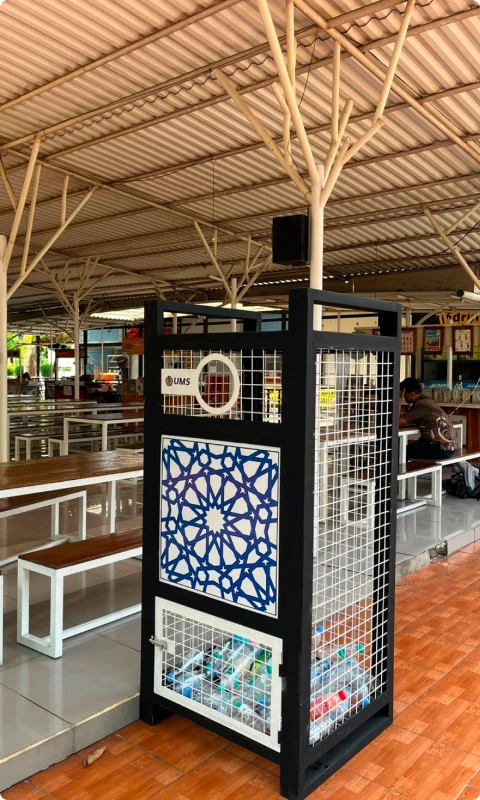
UMS implements inorganic waste management through reuse, recycling, and upcycling initiatives. Non-toxic inorganic materials, including metals, hard plastics, and other reusable waste, are collected through designated collection points across the campus, including plastic bottle collection bins placed in public areas to encourage waste segregation and recycling. The collected materials are then processed into functional products such as outdoor furniture and campus facilities. In addition, UMS collects used plastic bottles and textile waste to produce ecobricks, which are assembled into durable tables and chairs for campus use. Through these initiatives, UMS extends the life cycle of inorganic waste, reduces landfill disposal, promotes circular economy practices, and encourages environmental responsibility across the university community.
Toxic Waste Treatment
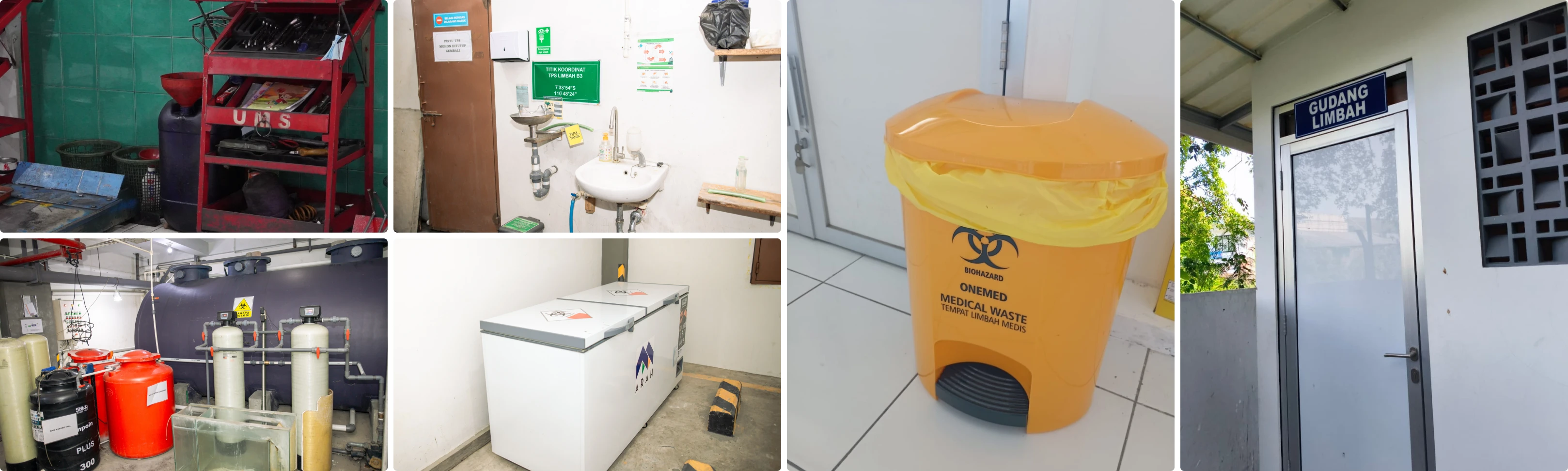
UMS implements a comprehensive hazardous waste management system to ensure that infectious and laboratory chemical waste is handled safely and separately from general waste. Hazardous waste generated by the university hospital, dental hospital, and laboratories is segregated at the source, stored in designated facilities, and managed in accordance with institutional Standard Operating Procedures (SOPs). UMS collaborates with a licensed hazardous waste treatment company for the collection, transportation, and final treatment of waste, while qualified personnel oversee the entire process. Through this integrated system, UMS ensures regulatory compliance, minimizes environmental and health risks, and supports safe and sustainable campus operations.
Sewage Disposal
UMS manages domestic wastewater through an integrated sewage treatment system combining primary and secondary treatment processes. Wastewater from toilets, sanitation facilities, and campus buildings is first treated in septic tanks, where solids are removed through sedimentation. The treatment is then enhanced by the addition of beneficial microorganisms that biologically decompose organic matter, reduce sludge accumulation, and improve effluent quality before final disposal or infiltration. This integrated approach helps prevent water pollution, enhances campus sanitation, and reflects UMS's commitment to sustainable wastewater management.