
The Endlessness of His Own
5 June 2026
Some journeys point outward. Akimana Cedrick’s has been the other direction. His years in Indonesia are measured inward.


A homosexual case in Solo came to public attention after community reports emerged of suspected male-to-male sexual transactions in the Sriwedari Park area. The information even drew the attention of local government officials who said they had been conducting regular monitoring of the location.
Tribun Jateng reported that the Head of the Surakarta City Civil Service Police Unit (Satpol PP), Didik Anggono, had been monitoring the Sriwedari Park area and its surroundings for some time. According to him, activities suspected to involve male-to-male sexual transactions frequently occur at night, prompting both covert and open surveillance.
"We have been monitoring it for a long time. We do see that place as a site of transactions, with the activities happening outside. It tends to occur at night, between around 10 PM and midnight," Didik said, as quoted by Tribun Jateng on Monday (8/6/2026).
Public concern has prompted various responses on social media linking the phenomenon to health issues, particularly given the rising cases of HIV and sexually transmitted infections.
According to data from the Ministry of Health website, Indonesia ranks 14th in the world for the number of people living with HIV (PLHIV) and 9th for new HIV infections. An estimated 564,000 people were living with HIV in 2025, yet only 63 percent are aware of their status.
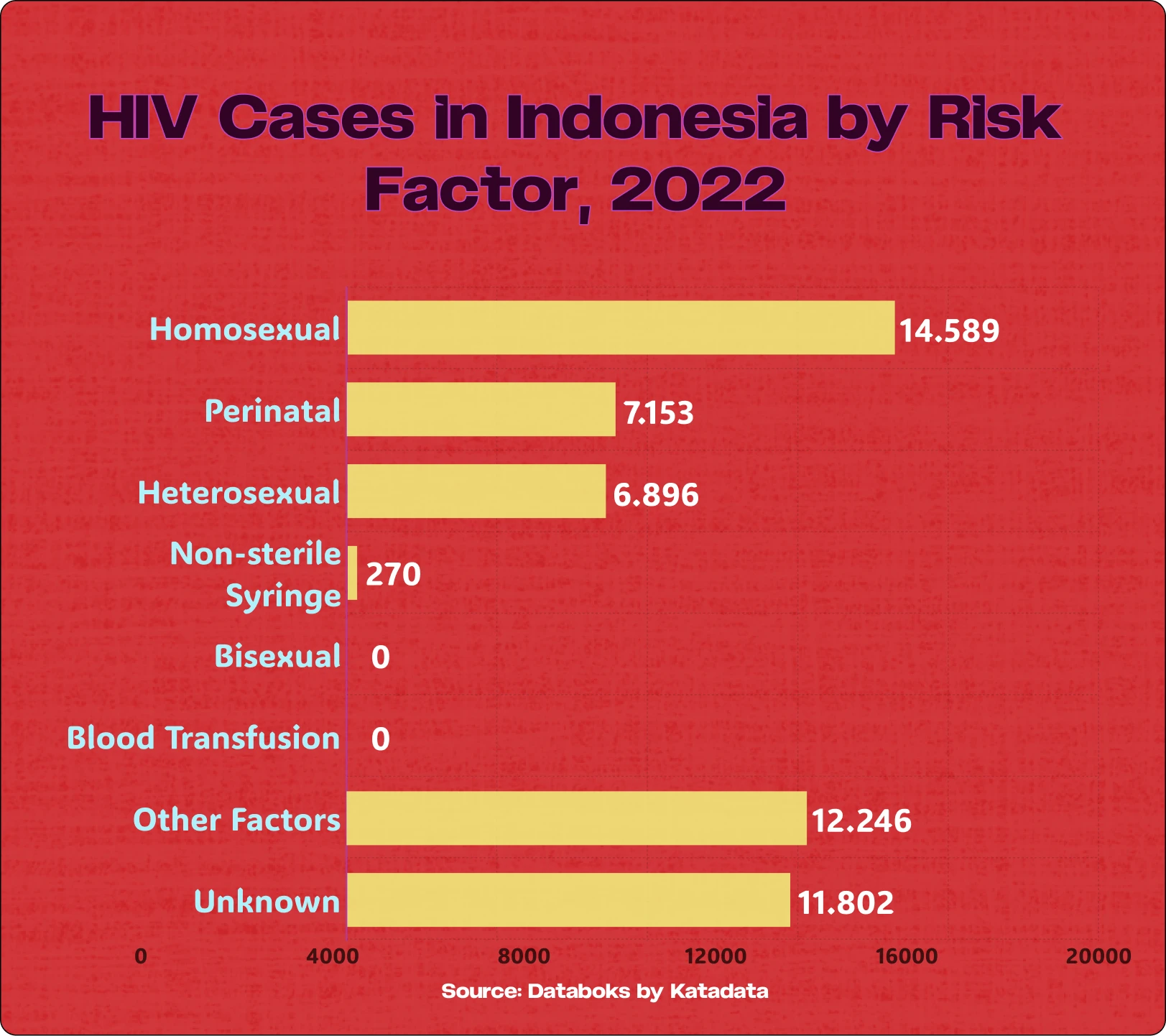
An earlier report from the National Narcotics Agency (BNN) recorded 52,955 HIV infection cases in Indonesia throughout 2022. Of that figure, 27.54 percent or 14,589 cases were linked to homosexual risk factors.
Homosexuality as a sexual orientation, according to Dr. dr. Flora Ramona Sigit Prakoeswa, M.Kes., Sp.DVE., Dipl. STD-HIV/AIDS., FINSDV., FAADV., a specialist in Dermatology, Venereology, and Aesthetics at Universitas Muhammadiyah Surakarta (UMS), can contribute to the transmission of sexually transmitted infections (STIs) in certain contexts.
“The context I am referring to relates to behaviors that pose health risks. If a particular place or environment becomes a venue for the formation of social networks that eventually lead to risky sexual activities, then this should indeed be a concern from a public health perspective,” Flora explained on Monday (8/6/2026).
The social misconduct occurring in the Sriwedari area cannot simply be left unaddressed. "From an epidemiological standpoint, the wider a person's sexual network, the greater the likelihood of sexually transmitted infection transmission when risky behavior is involved," said the UMS Faculty of Medicine lecturer.
"The highest-risk HIV transmission is actually linked to epidemiological and behavioral factors. Biologically, unprotected anal intercourse carries a higher risk of HIV transmission compared to some other forms of sexual contact," Flora explained.
Flora noted that medically, the mucosal tissue in the anal area is more vulnerable to micro-tears during sexual activity. This condition can make it easier for the HIV virus to enter the body when sexual contact occurs without protection.
HIV transmission is heavily influenced by a person's sexual behavior. One of the biggest risk factors is having multiple sexual partners and partners who are unaware of each other's health status.
"The more sexual partners a person has, the greater the likelihood of exposure to an infection that may show no symptoms," she explained.
"HIV symptoms in men are often unrecognized because in the early phase of infection many sufferers show no complaints. They still appear healthy and can carry out normal activities when they should in fact be receiving treatment," Flora said.
Flora stressed that if the trend of rising HIV and STI cases continues, the impact will be felt not only by those infected but by society as a whole. From a health standpoint, an increase in cases can lead to a rise in advanced-stage HIV, AIDS, infertility, pregnancy complications, and congenital syphilis in newborns.
From an economic standpoint, healthcare costs will rise and community productivity can decline due to prolonged illness. From a social standpoint, growing stigma toward certain groups can actually hinder prevention and treatment efforts.
Regarding the authorities' monitoring of sites used for sexual transactions among gay or homosexual men in Solo, Flora viewed the enforcement action positively. However, from a public health perspective, she emphasized the importance of strengthening preventive measures through education and outreach so that everyone has a better understanding of the various health risks arising from this behavior.
Writing: Genis Dwi Gustati
Translator: Farizal Luqman Majid
Editor: Al Habiib Josy Asheva
Some journeys point outward. Akimana Cedrick’s has been the other direction. His years in Indonesia are measured inward.