Far From Home, Closer to the Dream
6 July 2026
Sili built a good life as a government engineer in Fiji. To answer his father's promise, he had to leave all of it behind




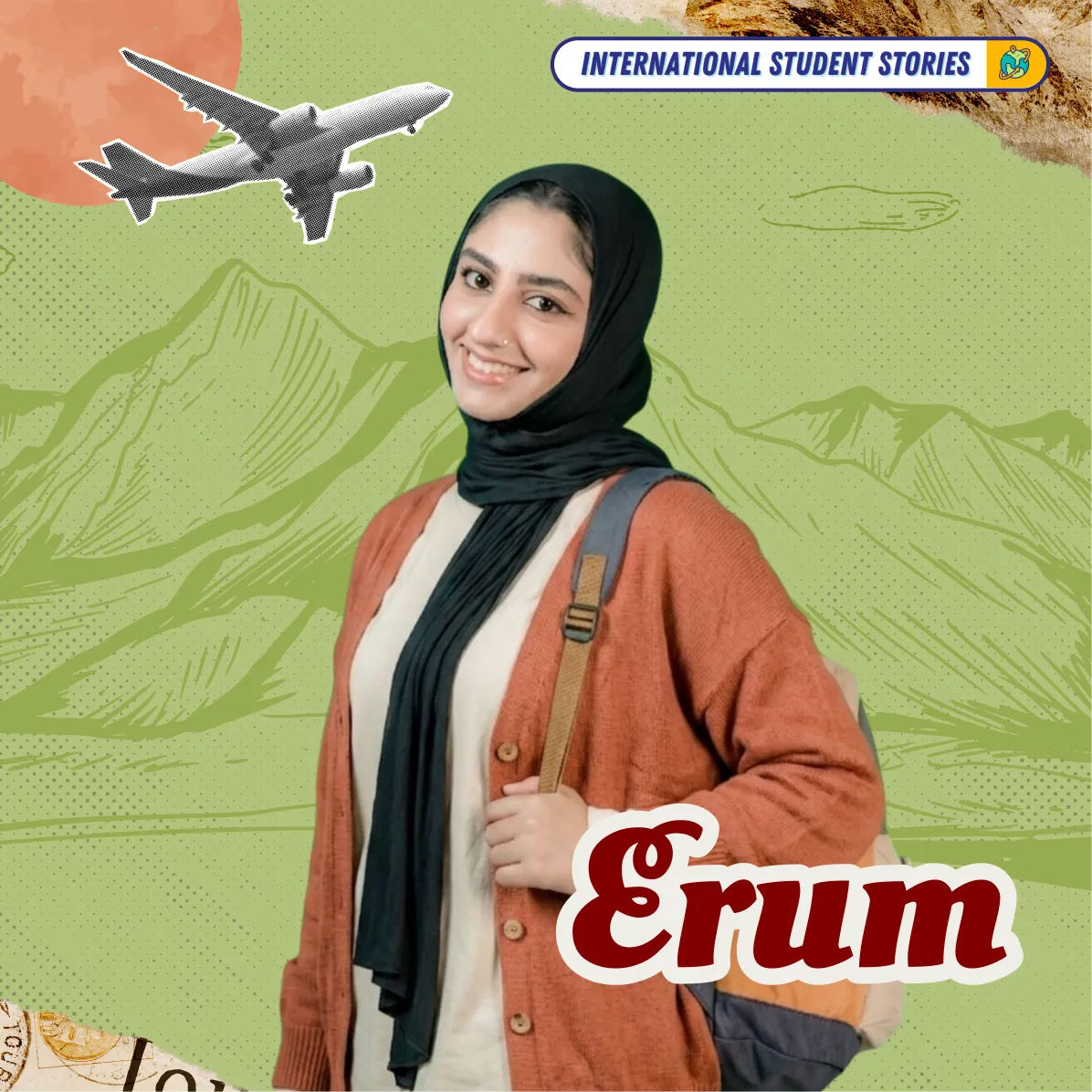
When Erum was a little girl growing up in Islamabad, Pakistan, her father would tell her a bedtime story to make sure she practiced good hygiene. If she wore stinky socks to bed, he warned, a Komodo dragon would slip into her room and eat her feet.
She slept with her feet wrapped in a blanket for years.
Fifteen years later, she is studying Chemical Engineering at Universitas Muhammadiyah Surakarta, in the country where that lizard lives.
"Someday I need to go and face the lizard of my nightmares," she laughed.
The first thing she noticed when she walked out the door in Solo was the road. No sidewalk. Cars and motorbikes coming from every direction without stopping.
"I was like, oh my god, how should I cross this road?" she said.
She stood at the edge for a while, she told me, counting motorbikes, watching locals slip into gaps in the traffic. Then she crossed.
The first food she ate was ayam geprek. It arrived so spicy she felt like her ears would fall off, with a raw red chili sitting on the side of the plate as if that were normal.
For a month she ate chicken and rice and nothing else. She tried noodles and didn't like them; in Pakistan, noodles are a snack, not a meal.
She had grown up far from the coast. She had been to the beach once in Pakistan, as a baby. So in Solo, where seafood was suddenly everywhere and cheaper than anything she recognized, she started ordering things she had never seen.
She tried crab, had a reaction, tried it again to confirm, and discovered an allergy. She tried squid for the first time. Star fruit. Avocado, which is expensive in Pakistan and almost free here. Pisang goreng, fried banana, which she had also never seen. She bought the wrong kind of banana the first time she tried to make it herself.
The weather was the other thing. Islamabad has four seasons; summer can hit forty-five degrees, but it's dry. Solo's heat is humid, and the sun, she said, burns differently through the wet air.
Once, when it began raining before class, she texted her professor asking to move the session online, Pakistani professors often cancel for rain.The professor wrote back: this is Indonesia, it rains every day, come to class.
Bandung was her first trip outside Solo. She picked it because of a program and a friend, but also because the trip lined up with her chemical engineering work. She had decided early that her travel and her volunteering would do the same job.
She spent time at Binar Ilmu, a school in the mountains for underprivileged students. The buildings were a mix of wood and concrete, and the air at altitude was cold even in the middle of the day. The girls there, she said, were usually married off young; the boys went to work instead of university.
One of them sat across from Erum in a classroom and told her, plainly, that she wanted to study and travel the world."It made me feel very happy that I was able to motivate someone to do better in life," Erum said.
By the time of that trip, she could already hear the difference between Javanese, Indonesian, and Sundanese."Sundanese is so different," she said. "Different culture, different values, even different thinking."
That was the moment, she said, when she understood that Indonesia is not one culture. The Indonesians she had met in Islamabad almost always wore hijab, and she had assumed the rest of the country looked like that. Her family had assumed worse.
"Both sides have a picture that isn't real," she said, "and the only way to fix that is to actually go."
After Bandung came Malang, Surabaya, Yogyakarta. She kept slotting trips around field studies and volunteering programs that connected to her major. Next month she is going to Semarang for a plastic waste management program at Universitas Diponegoro.
"The learning and the traveling happen together," she said.
The trips also taught her something her course load couldn't. Different parts of Indonesia have different ecologies, different waste problems, different ways communities relate to their environment.
Before she came, she continued, anything unfamiliar made her uncomfortable. Now her first reaction is closer to: that's just another way of doing it.
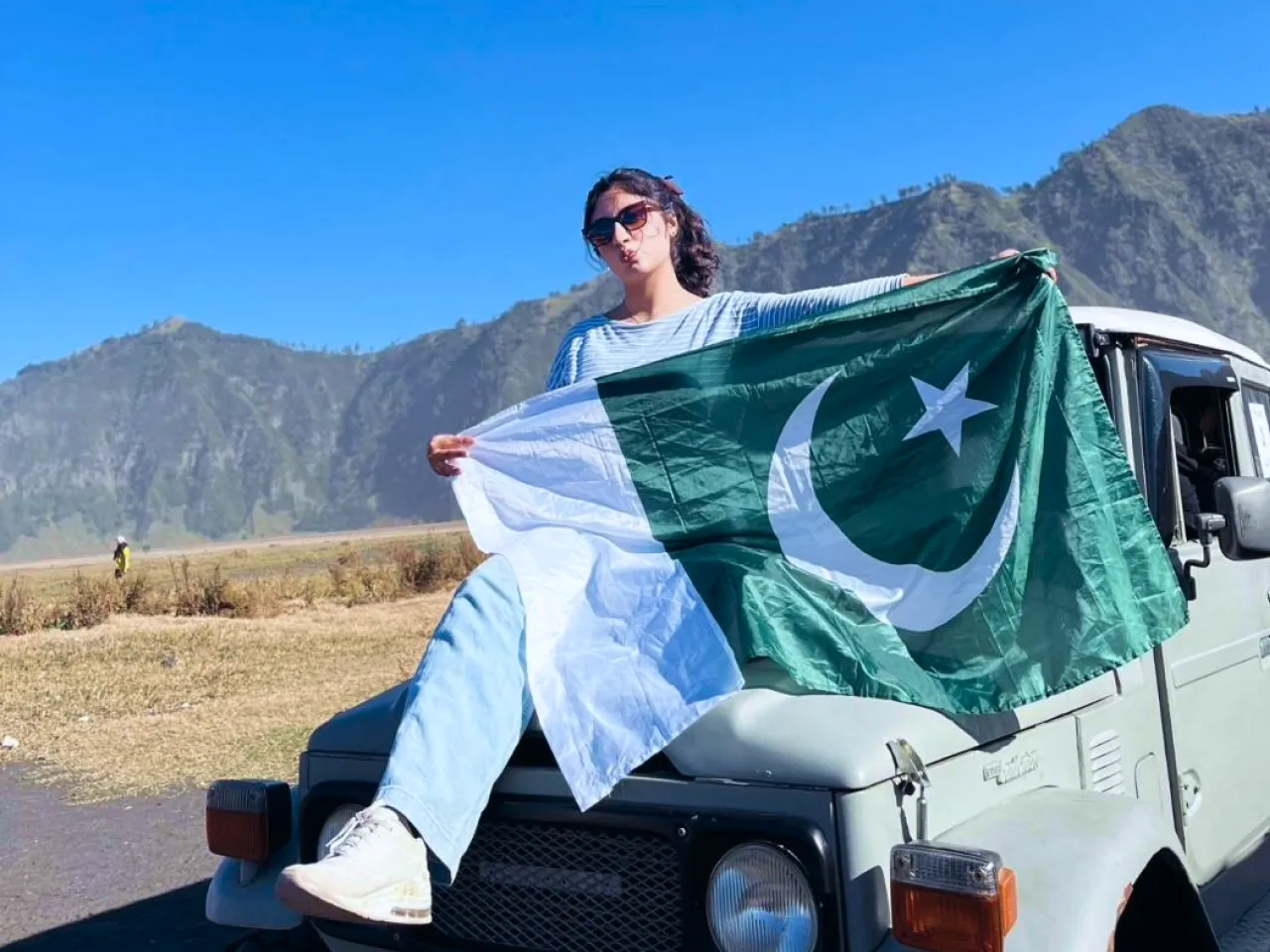
There was Bromo too, at four in the morning, not dressed for the cold, running in the dark because she and her friends had miscalculated the timing. They were out of breath, couldn't see anything, and then the crater, the smoke, the sunrise. She still goes back to the pictures.
By her second year, the rhythm of her life in Solo had settled into something she could recognize. Class in the morning, lab work some afternoons, food on Menco Street most evenings, the same stalls, the same vendors who had stopped charging her the foreign price somewhere around month three. Her friends' rented rooms, the kos, were close enough that she could walk between them.
There is a particular kind of fluency that she didn't have when she arrived. Not language fluency, exactly, though her Bahasa is better now than it was.
It's the fluency of knowing which warung opens at what hour, which intersection is safer to cross at night, which classmate to ask for the lecture notes when she misses a session. The kind of knowledge that doesn't transfer between cities, that you can only build by staying.
Though Erum showered praise to her travelling, sometimes she carries its own weight. The first month in Indonesia, everything was new and exciting so it kind of numbed her to homesickness..
But, when she went home to Islamabad at the end of her first year, for the summer break. Her youngest sister had grown so much she barely recognized her.
"I left her when she was this tall," Erum said, holding her hand below her shoulder
On the flight back to Solo, she asked herself whether the trade was worth it, once a year with her family, sometimes once in two. She said she gave herself the answer before she landed. It had to be worth it. This was her future.
She started moving again. By her second year she had assembled a kind of family across the archipelago,other Pakistani students, scattered through the country, found through social media before they ever arrived.
There is a girl from her neighborhood in Islamabad who studies in Malang. When things get hard in Solo, Erum goes to her, or to Jogja, or to Bandung. Comfort cities, she calls them. Pieces of home stitched into other people's country.
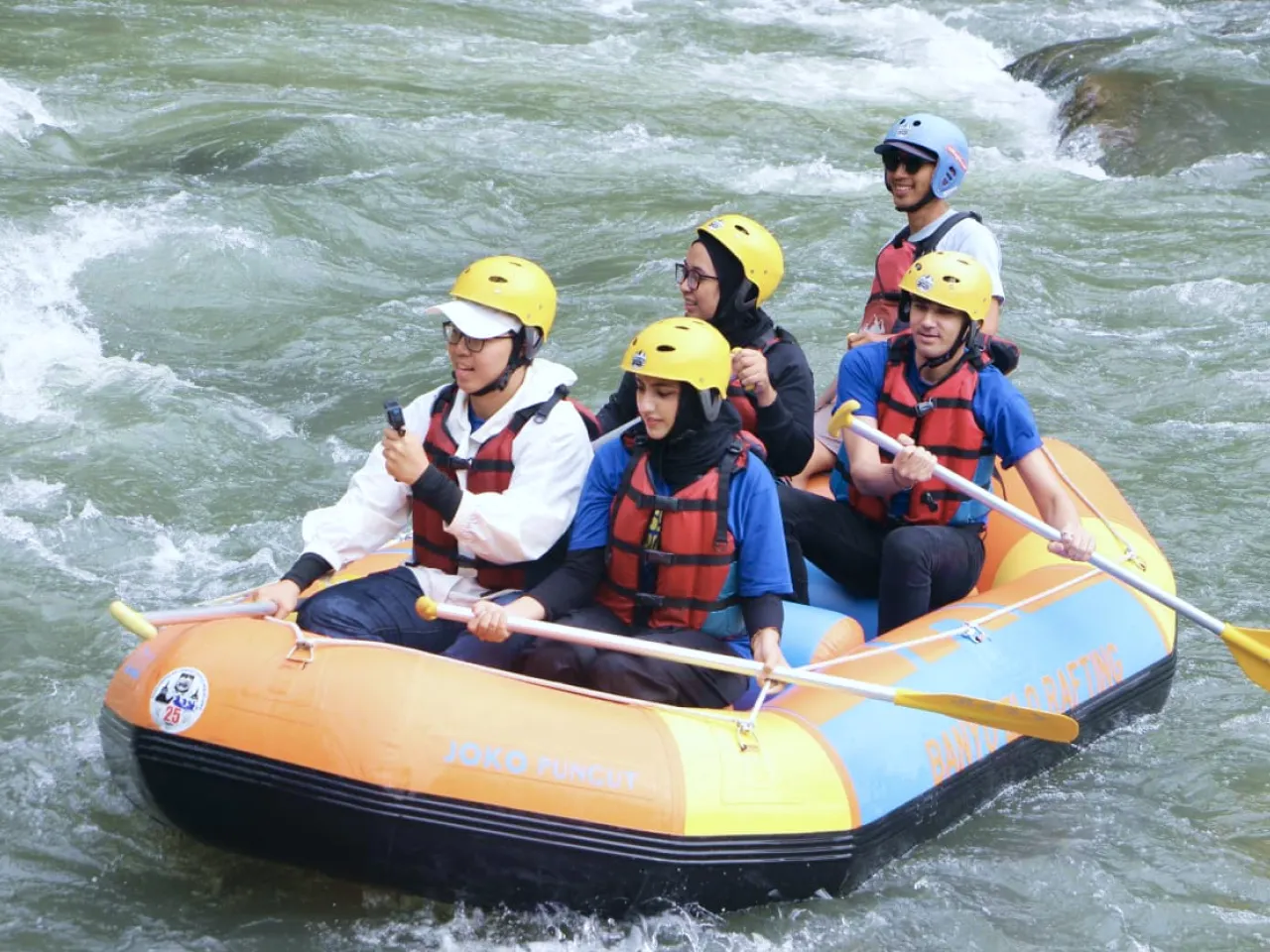
She has climbed mountains, walked beaches, shot rapids in rivers she could not have named two years ago.But Komodo Island is still on her list.
She was six or seven when she watched the National Geographic documentary that started all of it. She is twenty-one now. The lizard her father invented to keep her feet covered turned out to live here.
She thinks she has to finish the story.
Writer: Farizal Luqman Majid
Editor: Al Habiib Josy Asheva
Sili built a good life as a government engineer in Fiji. To answer his father's promise, he had to leave all of it behind
Nothing’s more special than reading curated news just for you.
Subscribe to the UMS Newsletter for free today.