Nano Liquid for Healing Diabetic Ulcers
21 July 2026
UMS students have formulated a treatment for diabetic wounds from moringa and neem leaves, and carried home gold at WYIE 2026 in Malaysia.




"This big one is the queen," Hibat began, as he opened a wooden box used as a beehive. "And this is the honey," he continued, pointing to a mound of honey on the inner wall of the box.
Hibatulloh Al-Mubarok, 21, was visiting his klanceng (stingless bee) farm that day. The farm is located on land owned by Pondok (Islamic boarding school) Hajjah Nuriyah Shabran, Universitas Muhammadiyah Surakarta (UMS), in Makamhaji Village, Kartasura, Sukoharjo, Central Java.
The nearly one-hectare area is primarily used for livestock facilities belonging to the Shabran Islamic boarding school. "Fortunately, the boarding school supports and permits us," he said when met in early February.
Stacks of brown wooden boxes were neatly arranged inside the 12-square-meter enclosure. Each box has a small hole serving as the entrance for klanceng bees to forage for nectar.
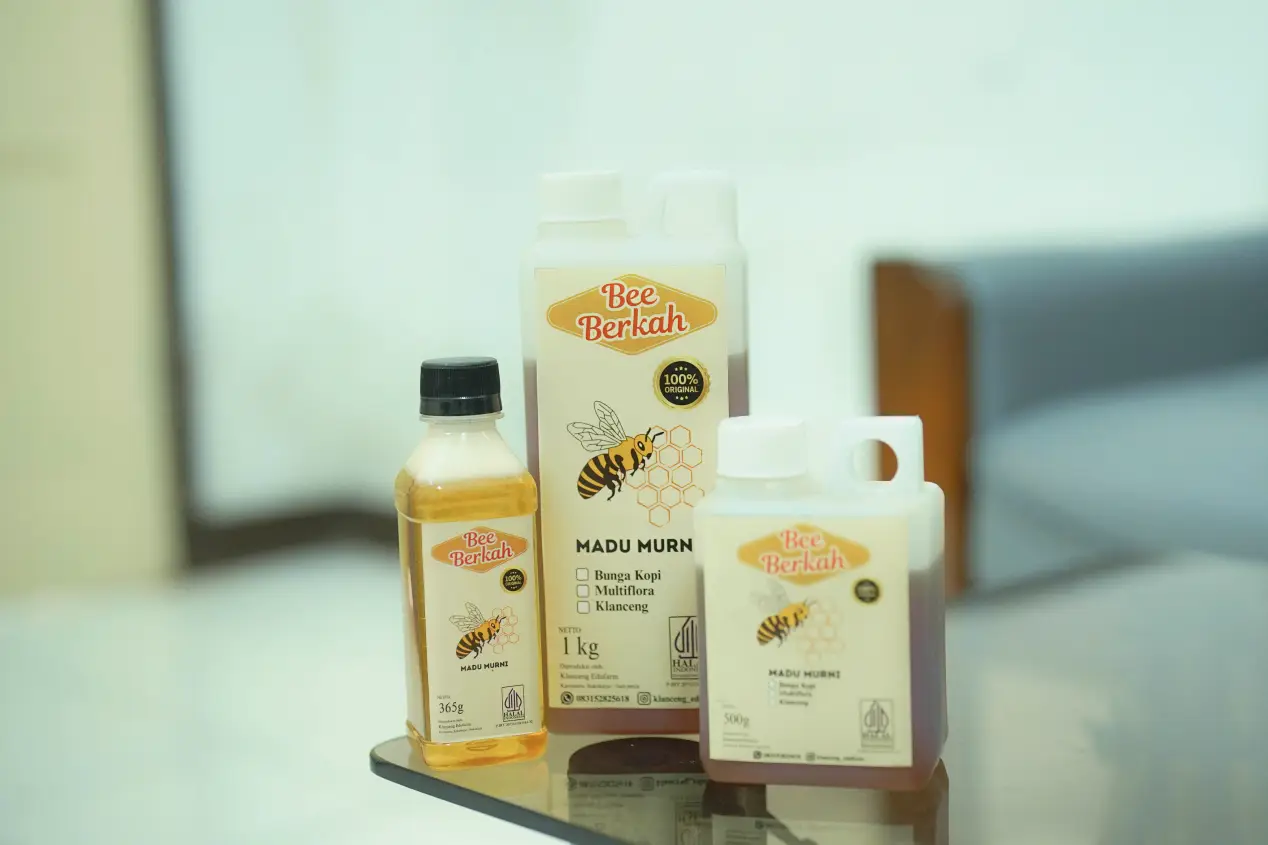
The Islamic Economic Law student at UMS established Klanceng Edufarm a year ago. The business focuses on cultivating klenceng bees, producing honey under the brand Bee Berkah, and providing education on beekeeping.
Klanceng bee, also known as kelulut, belongs to the genus Trigona. These bees are found throughout tropical Asia, particularly around tropical rainforests. Worker klanceng bees have large heads, sharp mandibles, and black bodies.
Meanwhile, the queen is three to four times larger than the worker bees. "These bees are smaller than common honeybees and do not have stingers," Hibat explained.
The honey they produce, according to Hibat, has a distinctive taste compared to other types of honey. Klanceng honey has a runnier texture and a darker color. Its flavor tends to be slightly sour, sweet, and refreshing.
Like most honey, klanceng honey contains antioxidants, flavonoids, vitamin E, vitamin C, phenolic compounds, amino acids, zinc, iron, water, and sugar. Hibat also claimed that klanceng honey is beneficial for people with diabetes. He based this claim on testimonials from customers of Bee Berkah klanceng honey.
"There are people who have diabetes, but after consuming this klanceng honey, their bodies feel better, lighter. Many have commented like that," Hibat explained.
Bee Berkah klanceng honey is available in several sizes, ranging from 369 milliliters to 1 liter. The product is priced between Rp100,000 and Rp220,000.
Hibat marketed Bee Berkah klanceng honey through marketplaces. He also offered free shipping to attract potential buyers. As a result, he has shipped his honey to nearly all regions of Indonesia.
Market demand has gradually increased, reaching 20 kilograms of honey per month. This exceeds the production capacity of his own bee farm, which can only produce 2–4 kilograms. Hibat then began empowering local farmers across Klaten, Sukoharjo, and Karanganyar regencies in Central Java.
The honey from these local farmers is brought to his room at Pondok Shabran UMS. There, Hibat and his friends package the honey into bottles, ready to be marketed.
The Klanceng Edufarm honey business generated a profit of Rp60 million from July to December 2025. Hibat is optimistic about achieving higher profit this year, especially ahead of Ramadan.
For Hibat, the main challenge in selling honey is building public trust. "Because selling honey is not just about selling. This is my product, but we are building trust. Building that trust is the hard part," he emphasized.
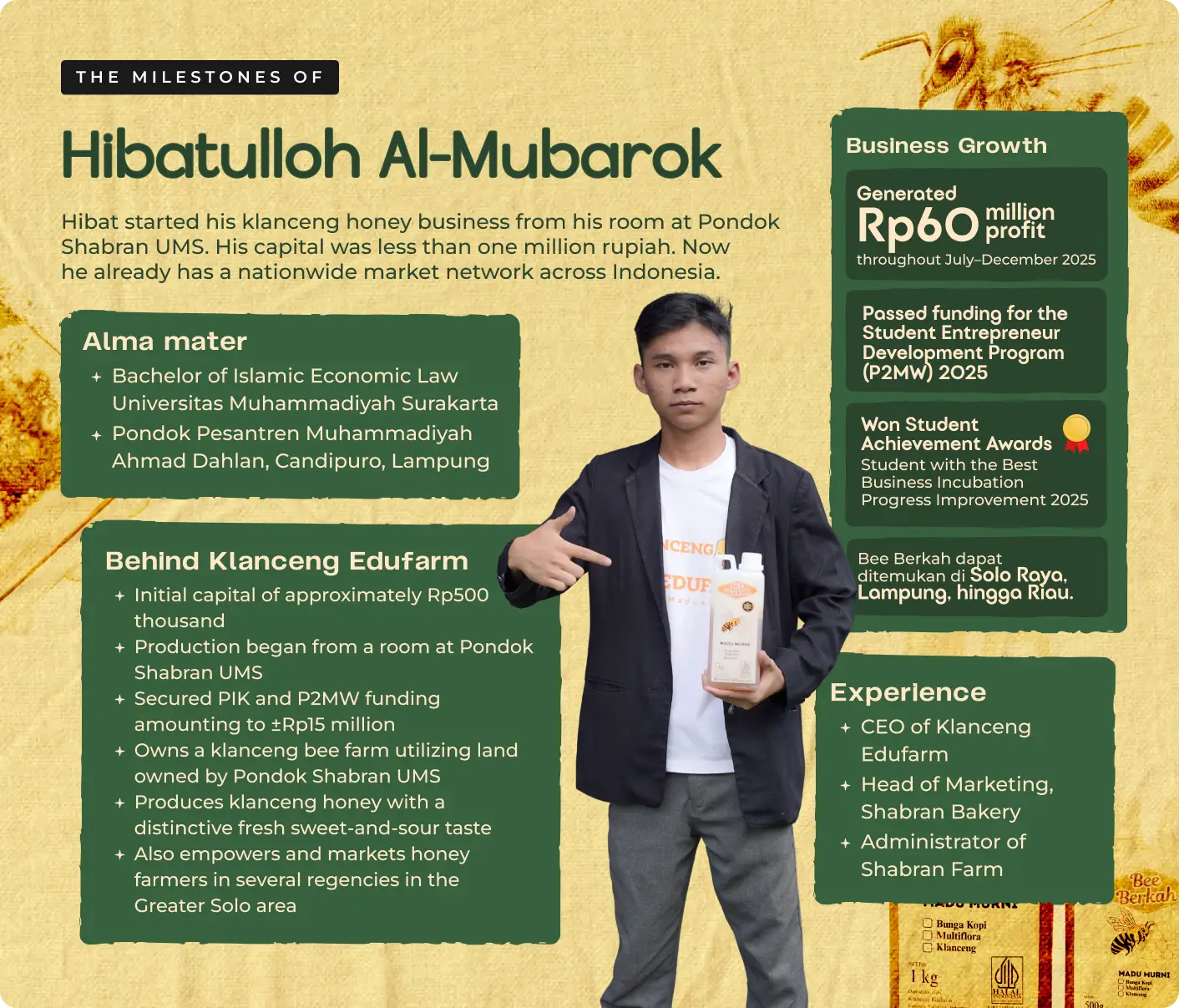
Born in South Lampung, Lampung, on 14 October 2004, Hibatulloh Al-Mubarok spent his school years at Pondok Pesantren Muhammadiyah Ahmad Dahlan, Candipuro, Lampung.
His business experience began during his teenage years. He helped cultivate his family's honey bees. From that side business, Hibat gained experience in managing a honey bee farm.
When he moved to Surakarta to continue his undergraduate studies, Hibat kept his dream of running a business alive. "Living in the boarding school can get a bit boring. So instead of being bored, we try running a small business so we don't keep asking our parents for money," he said.
Buying and selling motorcycles on Facebook Marketplace was his first business venture in college. Hibat later stopped the trading after suffering losses amounting to tens of millions of rupiah. Fortunately, he had set aside part of the money from the business. He used those funds to build his klanceng honey business.
The initial capital for the klanceng honey business was no more than Rp500,000. Hibat began purchasing klanceng queen bee colonies from local farmers in 2024. At that time, his honey products were sold in plain bottles. "There was no label yet back then," Hibat recalled.
The opportunity to expand his business came in 2025 when UMS held the Entrepreneurship Innovation Program. Hibat tried his luck by entering his klanceng honey in the competition. Fortunately, his business received funding of Rp2 million.
He used the capital injection to upgrade the packaging, add more beehives, and increase honey production. "At first there were three boxes, then it increased to 20 boxes," he revealed. Hibat then created a new brand for his business: Klanceng Edufarm.
Not wanting to stop at the campus level, Hibat once again tried his luck at the national level through the 2025 Student Entrepreneur Development Program (P2MW). To advance to this stage, Hibat recruited his boarding school mates: Wildan Iskandar, Riski Aldiansyah, and Oyan Sugianto. The team also received guidance from UMS Vice Rector III Dr. Mutohharun Jinan, M.Ag.
Lady Luck did not leave Hibat behind. Klanceng Edufarm successfully secured P2MW funding of Rp13 million. He then used the funds to develop marketing strategies to reach a broader market.
Now, Bee Berkah klanceng honey can be found in stores across Sukoharjo, Lampung, and Riau. "Two more areas are in progress, Aceh and Bandung," he said.
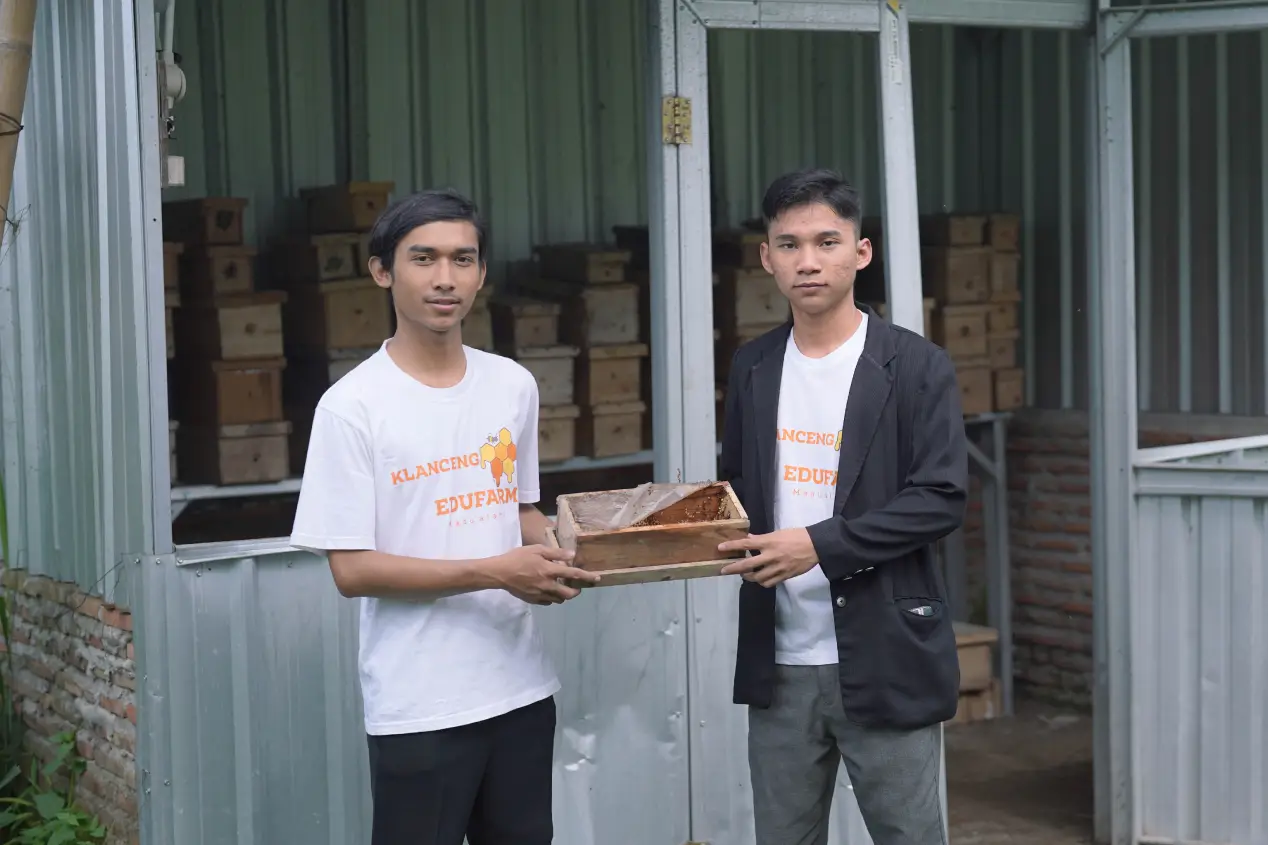
Under the Klanceng Edufarm venture, Hibat has begun expanding his business into education. He used Instagram to create educational content about the benefits of honey.
Hibat also produced a guidebook on klanceng bee cultivation and provided beekeeping guidance. The book is intended for consumers who wish to start their own klanceng beekeeping.
"We chose the name 'edufarm' because we want to enhance education, which we deliver through Instagram," Hibat explained.
Hibat is also actively conducting educational outreach at schools and orphanages. His mission is clear: to introduce the klanceng honey business to various communities and to foster an entrepreneurial spirit among young people.
"We see great potential in this business because klanceng honey has unique benefits and high market value, yet it is still relatively unknown to the public. Moreover, there are not many competitors, so it remains highly promising," Hibat emphasized.
Writer: Gede Arga Adrian
Translator: Farizal Luqman Majid
Editor: Al Habiib Josy Asheva
UMS students have formulated a treatment for diabetic wounds from moringa and neem leaves, and carried home gold at WYIE 2026 in Malaysia.
Nothing’s more special than reading curated news just for you.
Subscribe to the UMS Newsletter for free today.