Nano Liquid for Healing Diabetic Ulcers
21 July 2026
UMS students have formulated a treatment for diabetic wounds from moringa and neem leaves, and carried home gold at WYIE 2026 in Malaysia.



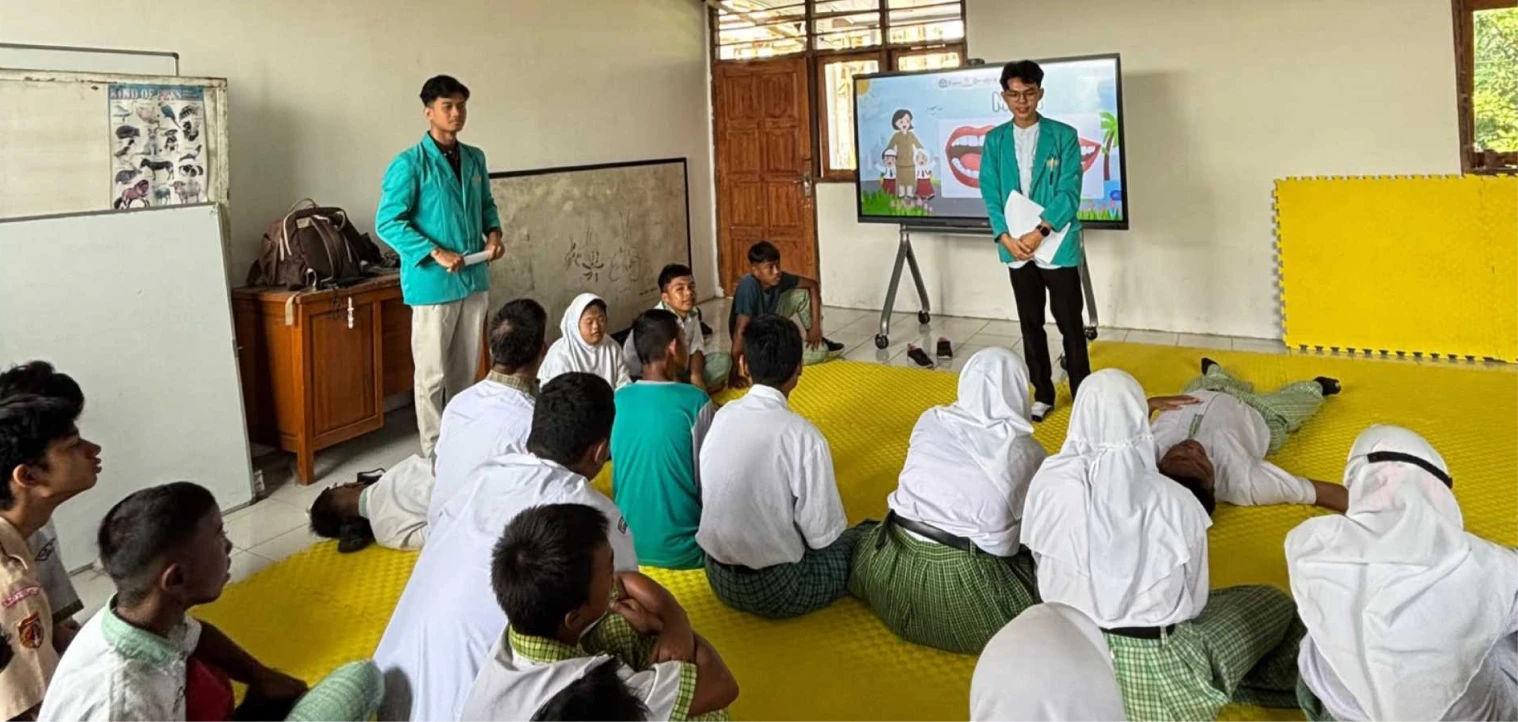
Innovations by students of Universitas Muhammadiyah Surakarta (UMS) in strengthening the protection of children with special needs continue to show positive impact. Through the Student Creativity Program in Community Service (PKM-PM) titled Artemis, funded by the Ministry of Higher Education, Science, and Technology, UMS students have introduced the Smart Body Care Program as a self-protection education model for students with intellectual disabilities.
"This program consists of five main integrated activities, namely Know My Body, Safe Touch, Polite Speech, Early Detection System, and Self-Greeting, all aimed at creating a school environment that is safer and more welcoming for students with intellectual disabilities," said Bima Satwika Qiyamulail, Head of the UMS PKM-PM Artemis Team, in an interview on Tuesday (21/7/2026).
Smart Body Care, he continued, integrates self-protection education with technology tailored to the needs of students with intellectual disabilities. The program was developed together with team members from the Communication Program: Lutfia Zahrotul Solihah, Derlin Ilham Wahyudi, Raffa Putri Maharani, and Aida Putri Maharani.
The program was developed in response to the importance of self-protection education for children with special needs, particularly in improving their understanding of bodily boundaries, healthy social interaction, and the prevention of sexual violence through educational and sensory-technology approaches.
The Smart Body Care Program was implemented at SLB Negeri Colomadu, a state special-needs school in Karanganyar Regency, Central Java, from 4 to 12 May 2026. It was carried out in stages through the five main activities, Know My Body, Safe Touch, Polite Speech, Early Detection System, and Self-Greeting, using visual approaches, simple simulations, and direct guidance for students with intellectual disabilities.
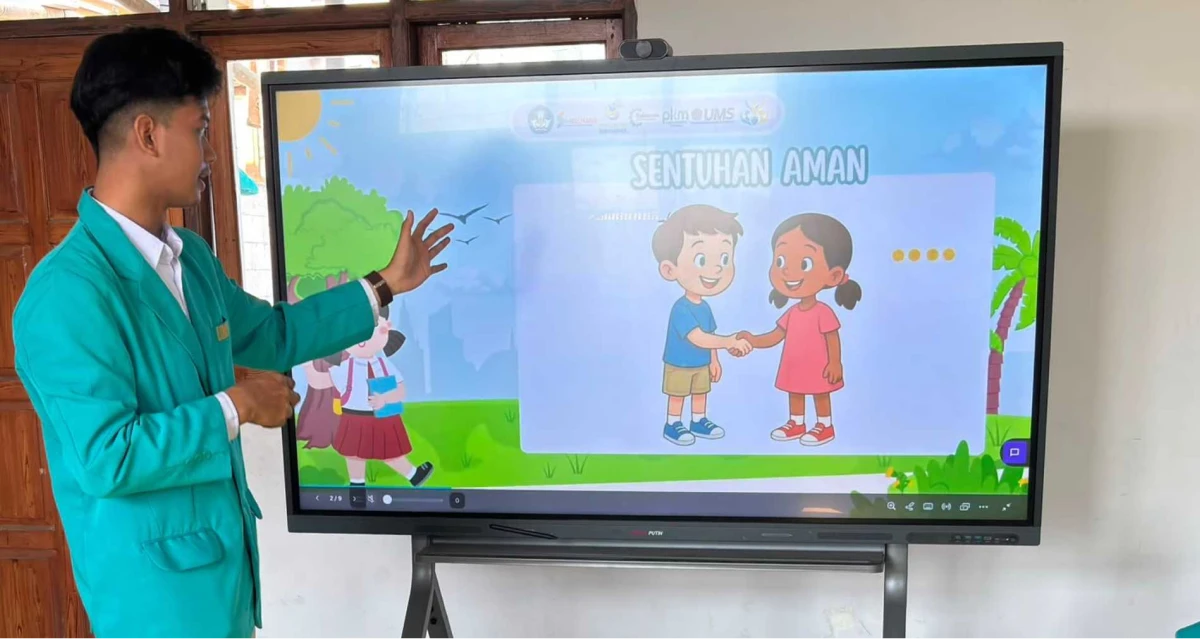
Through these activities, Bima explained that all students were introduced to the concepts of maintaining bodily boundaries, distinguishing between safe and unsafe touches, building polite communication, and understanding the steps to take when facing potentially dangerous situations.
One of the innovations developed is the Early Detection System, a sensory-technology-based educational tool that introduces color indicators: green for safe conditions, yellow as a warning sign, and red for unsafe conditions. This approach is designed to make self-protection material easier for students with intellectual disabilities to understand.
In addition, through the Self-Greeting program, UMS students encourage participants to become self-protection ambassadors within the school environment. This approach is expected to foster a culture of mutual reminding and looking out for one another among students, creating a safer and more inclusive learning environment.
The Principal of SLB Negeri Colomadu, Sri Asih Hariani, views the innovation developed by UMS students as adding value to the school in strengthening self-protection education for students with special needs.
"We welcome this program because it provides students with education on self-protection. The five programs offered are very comprehensive in preventing potential sexual violence. Our hope is that this effort can help create a safer learning environment that supports students' optimal development," she said.
The academic advisor of UMS PKM-PM Artemis, Siti Azizah Susilawati, S.Si., M.P., Ph.D., said the program stands as concrete proof of UMS students' contribution to providing solutions for social issues through practical and collaborative innovation.
According to her, self-protection education for children with special needs requires the involvement of the entire educational ecosystem. Through Smart Body Care, UMS hopes this education model can be replicated in other inclusive schools so that more children with special needs can access a learning environment that is safe, inclusive, and disability-friendly.
Writer: Yusuf Ismail
Editor: Maysali Sudarwati
Translator: Farizal Luqman Majid
UMS students have formulated a treatment for diabetic wounds from moringa and neem leaves, and carried home gold at WYIE 2026 in Malaysia.
Nothing’s more special than reading curated news just for you.
Subscribe to the UMS Newsletter for free today.