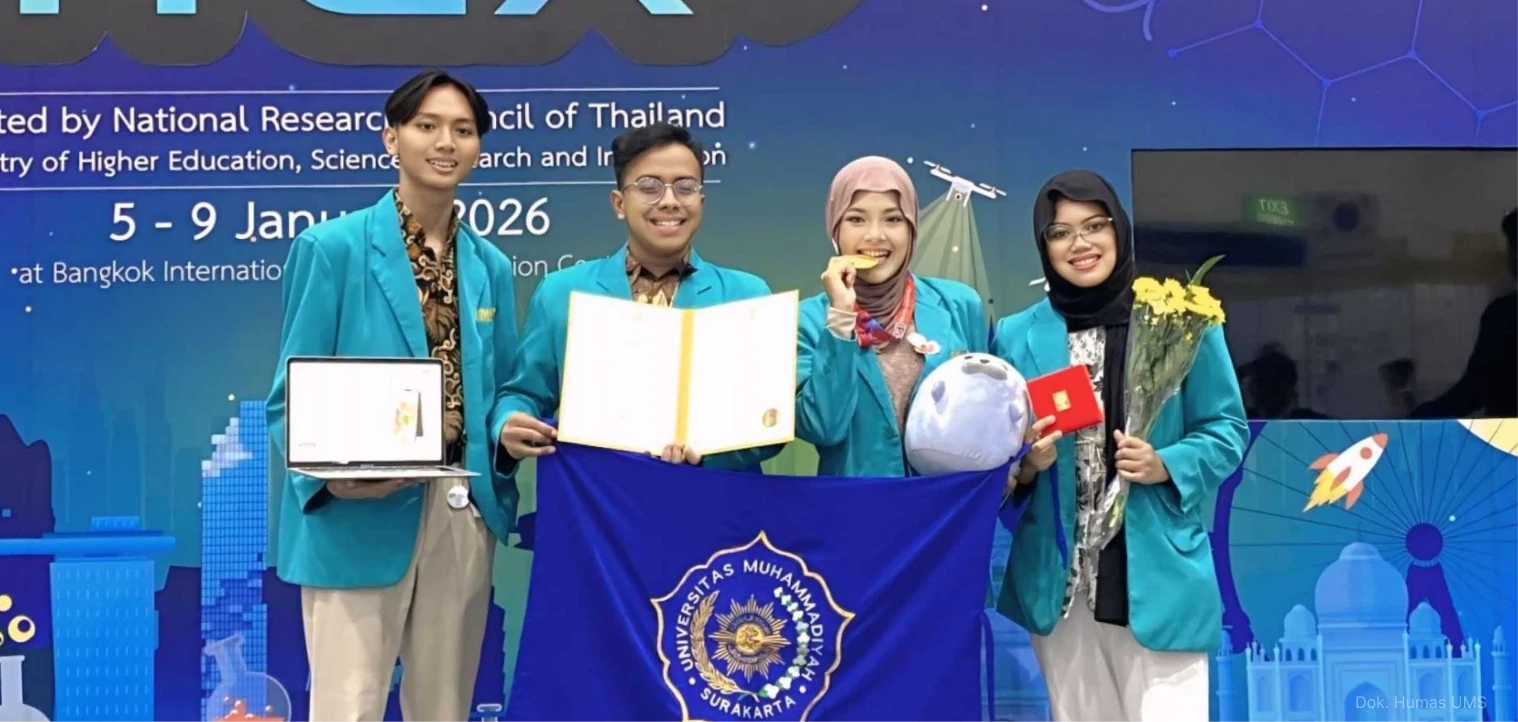
The artificial intelligence–based digital innovation titled “GEASY: AI Smart Sustainable Nutrition 4-in-1 Ecosystem for a Healthier Future” drew attention at the international Intellectual Property Invention, Innovation and Technology Exposition (IPITEx) 2026 in Thailand. The innovation is designed as an integrated solution for preventing non-communicable diseases (NCDs) through a smart nutrition approach that is easily accessible to the public.
GEASY was developed as an AI-based platform that helps people understand, choose, and consume healthier food. It combines technology with a public health approach to address the growing prevalence of non-communicable diseases, particularly in developing countries.
“One of GEASY’s main features is AI photo-based nutrition analysis, which allows users to simply take a photo of their food and have it automatically analyzed by the system,” said one of the development team members, Salsabila Khoirun Nisa, on Wednesday (14/1/2025).
She explained that the analysis covers the type of food, portion size, macro- and micronutrient content, and potential NCD risks, all without the need for manual input.
In addition to photo-based nutrition analysis, Salsabila noted that GEASY adopts an integrated ecosystem concept. The platform combines personalized nutrition planning, health screening, gamified education, a healthy product marketplace, and expert consultation services into a single interconnected digital system.
This innovation was developed through cross-disciplinary collaboration among students of Universitas Muhammadiyah Surakarta (UMS), enabling health, technology, and sustainability aspects to be examined comprehensively. This multidisciplinary approach has become one of GEASY’s main strengths compared to similar innovations.
The GEASY development team consists of Arief Surya Adhi from Accounting, Salsabila Khoirun Nisa from Public Health, Dizzo Violeta from Informatics Engineering, and Aswa Arsa Kumala from Medical Education.
During the development process, the team conducted literature reviews, user needs surveys, prototype development, and initial trials. The innovation was designed to be a practical, accurate, and user-friendly solution for people from various backgrounds.
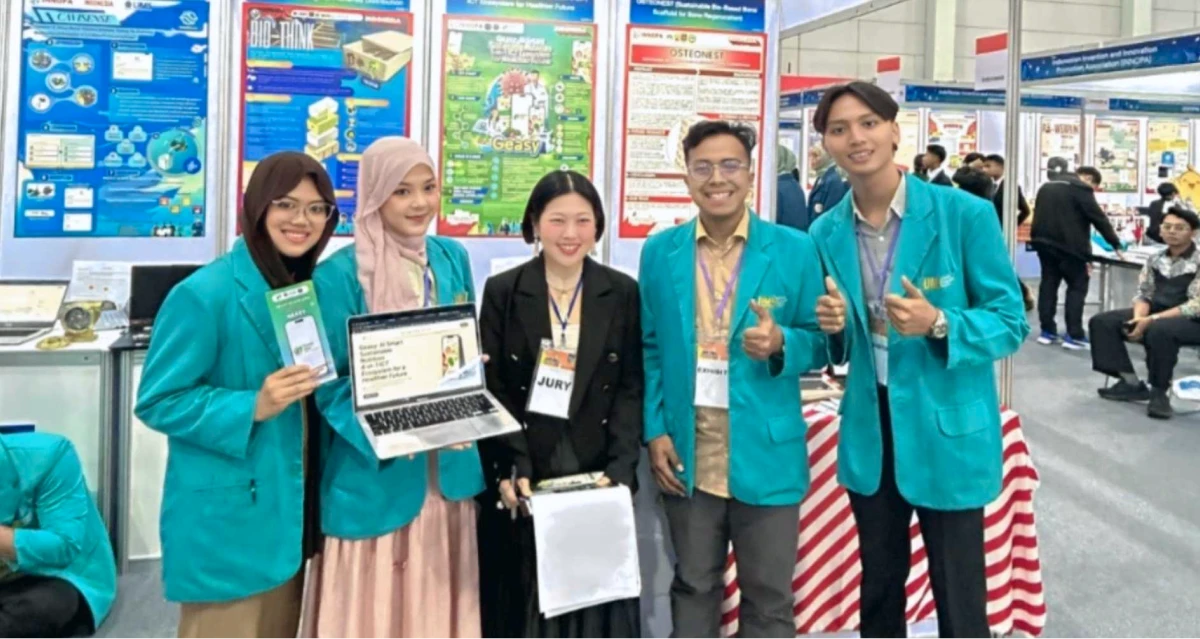
The GEASY development team with the jury.
Due to its quality, novelty, and potential impact, the GEASY innovation was awarded a Gold Medal at IPITEx 2026, a prestigious international innovation exhibition organized by the National Research Council of Thailand (NRCT). The event brought together researchers, academics, and innovators from around the world, featuring more than 800 innovations from 24 countries, and is recognized as one of the most prestigious international innovation competitions.
The award was presented to the GEASY innovation as an innovative work considered ready to compete and generate impact at the global level. During the event, Salsabila Khoirun Nisa represented the team by presenting the innovation before an international panel of judges and receiving the award, which was officially conferred on Friday (9/1/2026).
“This award was given for the innovation itself. As a team, we simply explained how GEASY works and how it addresses global health challenges,” said Salsabila.
Throughout the competition, the team faced several challenges, including limited funding and technical issues such as unstable internet connectivity. Despite these obstacles, the team was able to clearly and comprehensively explain the concept and working mechanisms of GEASY to the judges.
Salsabila also revealed that Universitas Muhammadiyah Surakarta (UMS) provided strong support for the development of GEASY through funding assistance, feasibility evaluations, and academic mentoring by supervising lecturers. Going forward, GEASY is planned to be further developed and tested on a wider scale so that it can be implemented in real-world settings and deliver tangible benefits for global public health.
Writer: Yusuf Ismail
Editor: Fika Annisa Sholihah
Translator: Farizal Luqman Majid