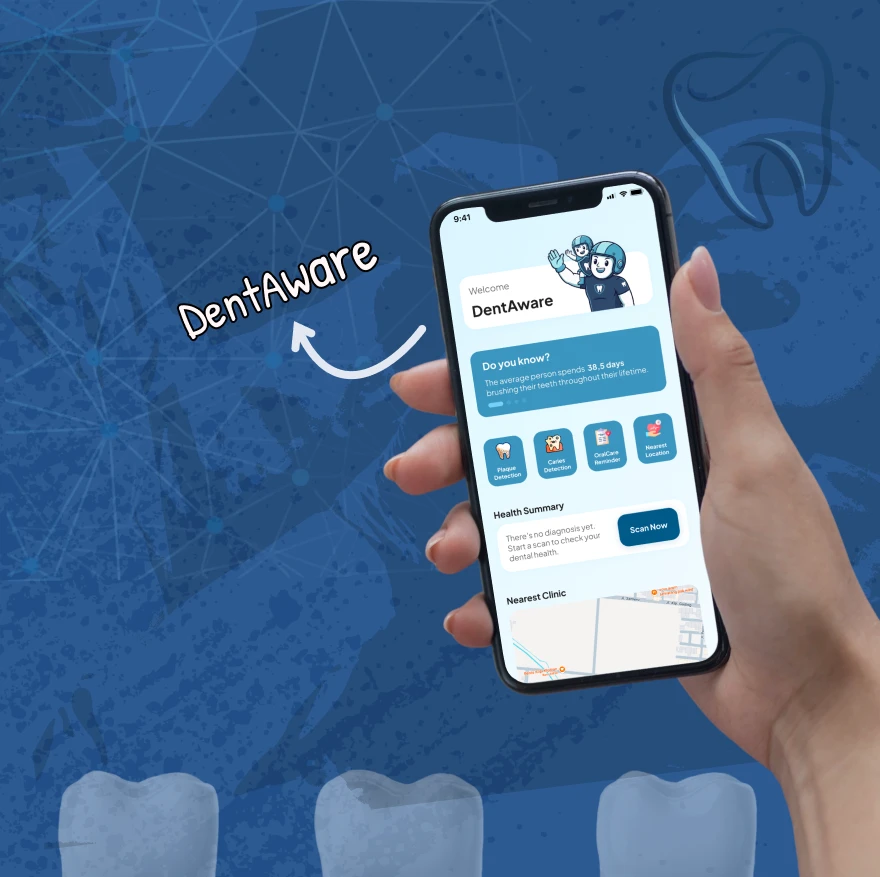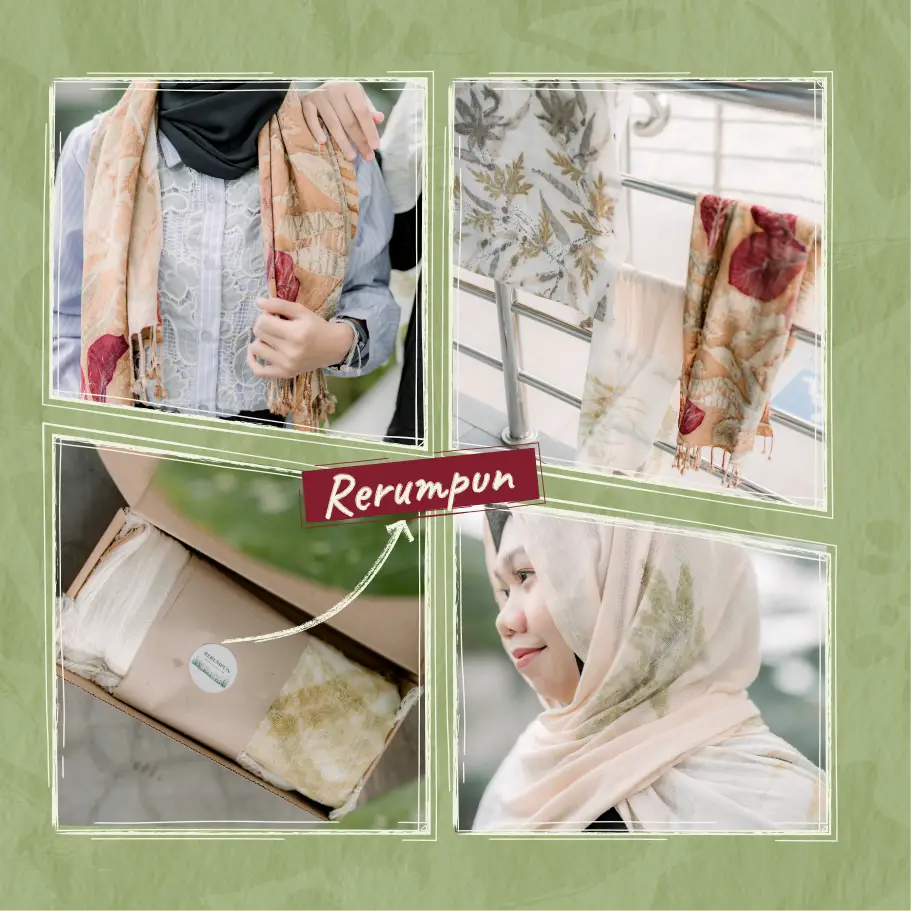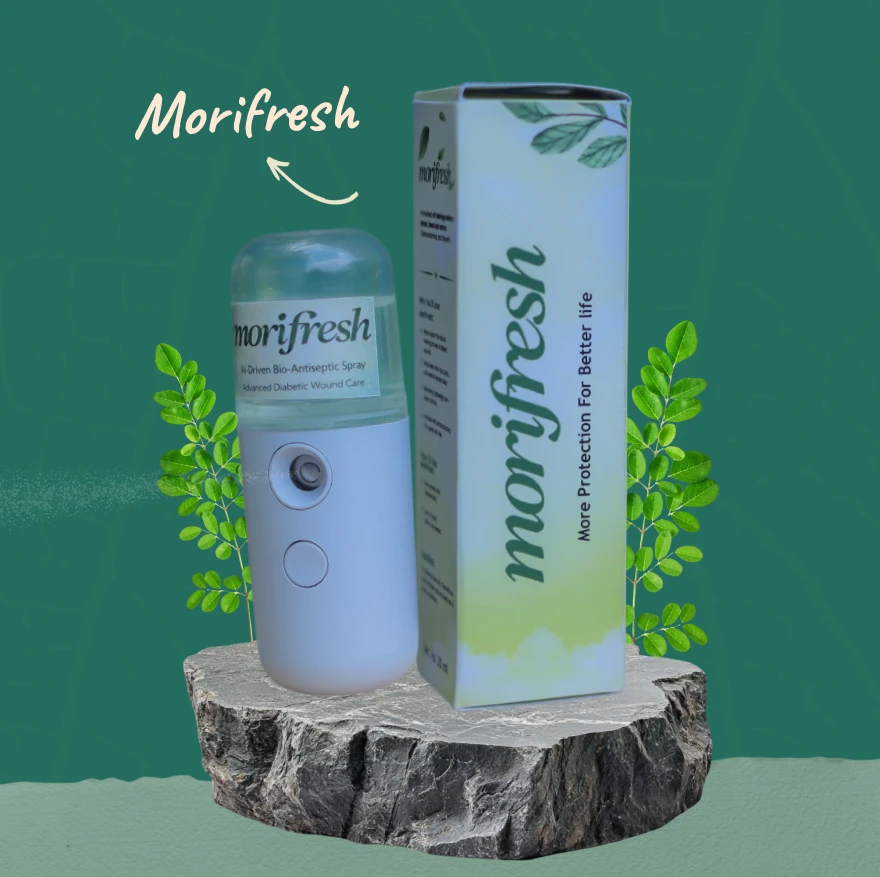
Nano Liquid for Healing Diabetic Ulcers
21 July 2026
UMS students have formulated a treatment for diabetic wounds from moringa and neem leaves, and carried home gold at WYIE 2026 in Malaysia.


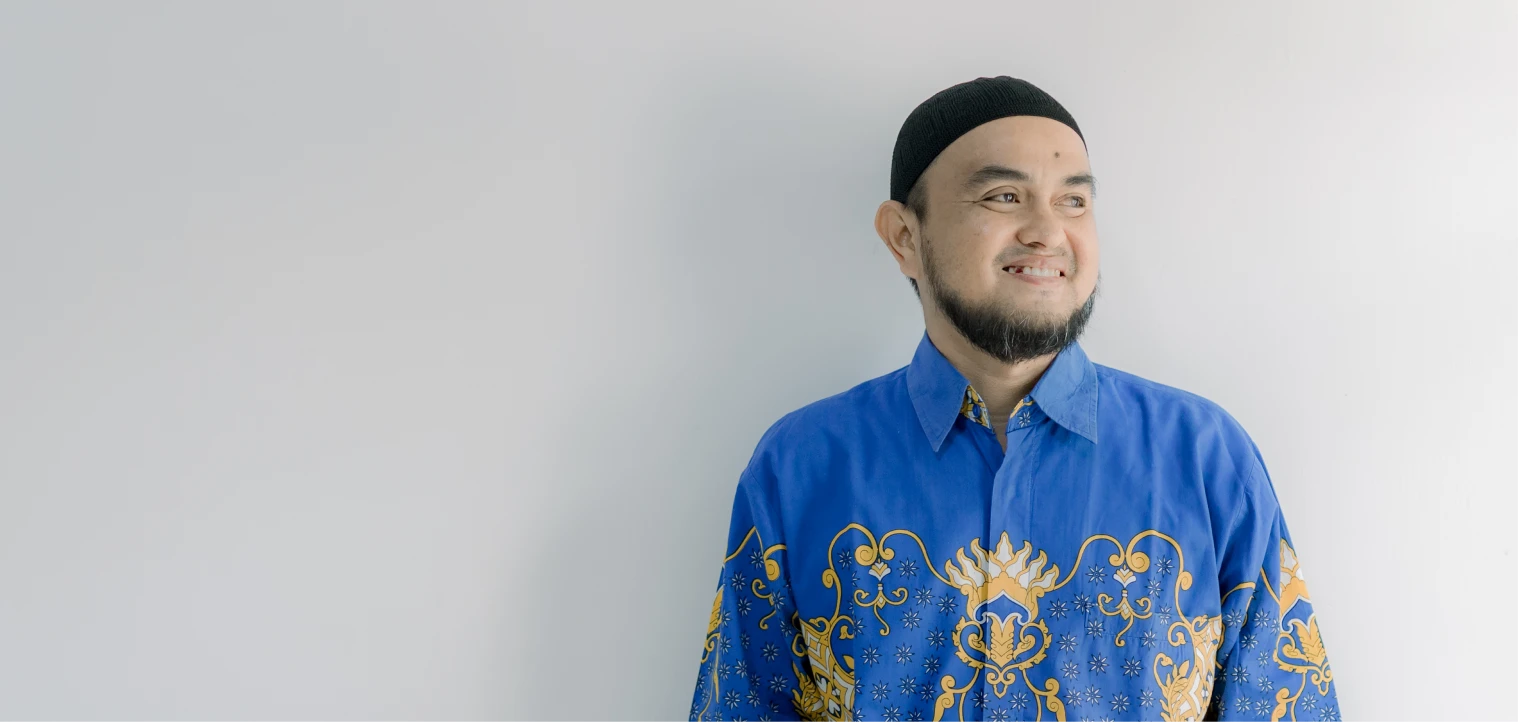
December 2020 is a month Andri Nirwana will never forget. The Covid-19 pandemic was still at its peak when he left Aceh for Surakarta to sit for the lecturer selection process at Universitas Muhammadiyah Surakarta (UMS).
"If something is meant for you, the path opens easily," Andri said in mid-July at his office. It was that conviction that gave him the resolve to leave the Serambi Mekkah, the Verandah of Mecca.
By then he had already taught at several universities in Aceh, including a term as Dean of the Faculty of Islamic Studies at Universitas Serambi Mekkah from 2015 to 2019. He held his teaching certification and academic rank, had published in reputable international journals, and had a Scopus ID to show for it. Even so, he sensed he was running out of room to grow.
"For reasons of my own, I decided my time teaching in Aceh had come to an end. Bismillah, I told myself. And once the results came out and I had been accepted as a lecturer at UMS, I moved my family to Surakarta," he said.
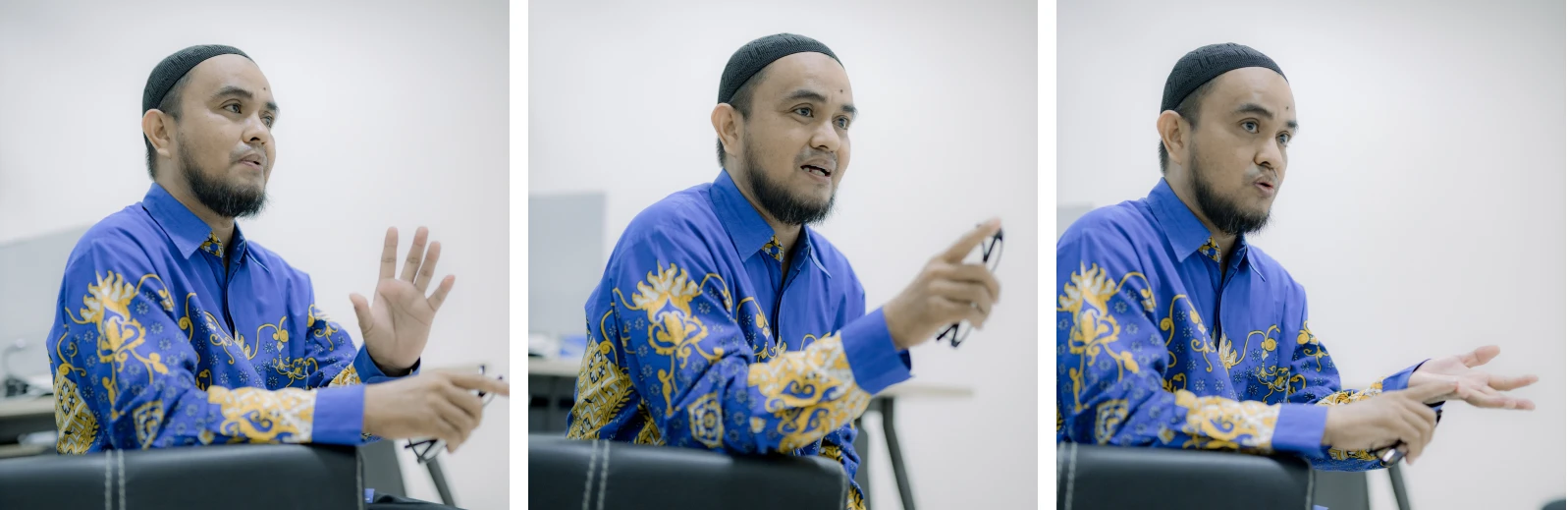
Long before the professorship, his life was shaped by an Aceh in turmoil. Political upheaval, armed conflict, and the constant watch of security forces ran through his childhood and adolescence. His family's warmth kept him feeling safe, though, so the shadow of the conflict never quite took his childhood from him.
Andri was born into a modest family that held firmly to its religious values. His paternal grandfather was a religious scholar who ran an Islamic boarding school, and his father had competed in musabaqah tilawatil Qur'an, Quran recitation contests, since he was a boy.
His love for the Quran grew naturally out of that household. When the time came to choose a university major, he was drawn at first to jurisprudence and comparative madhhab.
His father saw it differently. "If you really want to study religion, study the Quran and Hadith." Andri still remembers the words. They led him to a bachelor's degree in Tafsir and Hadith, now called Quranic Studies and Tafsir, at UIN Ar-Raniry State Islamic University in Banda Aceh.
A bachelor's degree in hand, Andri did not step straight into academia. Life took him somewhere else first: an application to an international humanitarian organization.
Aid groups from around the world had poured into Aceh after the 2004 tsunami. Andri applied to one of them, Médecins Sans Frontières (MSF). He came home disappointed. The interviewer spoke English with a heavy French accent, and Andri struggled to follow it.
Not long after, he met a group of Filipino volunteers running English classes. He trained with them for three months, speaking English through the day and sharpening his listening at night with BBC London broadcasts.
The effort paid off. He applied to MSF a second time, this time with confidence, and was taken on as administrative staff.
When that contract ended, he moved to another international humanitarian organization, the International Federation of Red Cross and Red Crescent Societies (IFRC), working in radio communications. His colleagues came from Kenya and a number of other countries. The work widened how he thought and taught him to communicate across cultures.
He enjoyed the international setting, but the ambition to teach, which his mother had backed from the start, never faded. So he went back to the classroom while still working.
He enrolled in the Master's Program in Fiqh at his alma mater, UIN Ar-Raniry Banda Aceh, finally chasing the curiosity about fiqh and comparative madhhab he had carried since his undergraduate years.
After completing that degree in 2009, he enrolled in a Master's Program in Tafsir at the Institute of Quranic Studies (IIQ) Jakarta, though he never finished it. He felt he had already found the scholarly perspective he was looking for at his previous campus.
A year later, a doctoral scholarship took him to Omdurman Islamic University in Sudan. He earned the degree at 29. Back in Indonesia, he spent close to seven years teaching at several universities in Aceh.
"So there was a kind of service commitment involved. I went to Sudan for my doctorate on a government scholarship. I taught at several universities, one of them my own alma mater, UIN Ar-Raniry," Andri explained.
Little by little, Andri began to feel that he had no room to grow. Then one day, he came across a UMS lecturer recruitment poster circulating on WhatsApp.
Without hesitation, Andri applied as a permanent lecturer at the Al-Quran and Tafsir Studies Program at UMS. After officially joining in 2020, a year later he was entrusted to serve as Head of the Undergraduate Program in Al-Quran and Tafsir Studies.
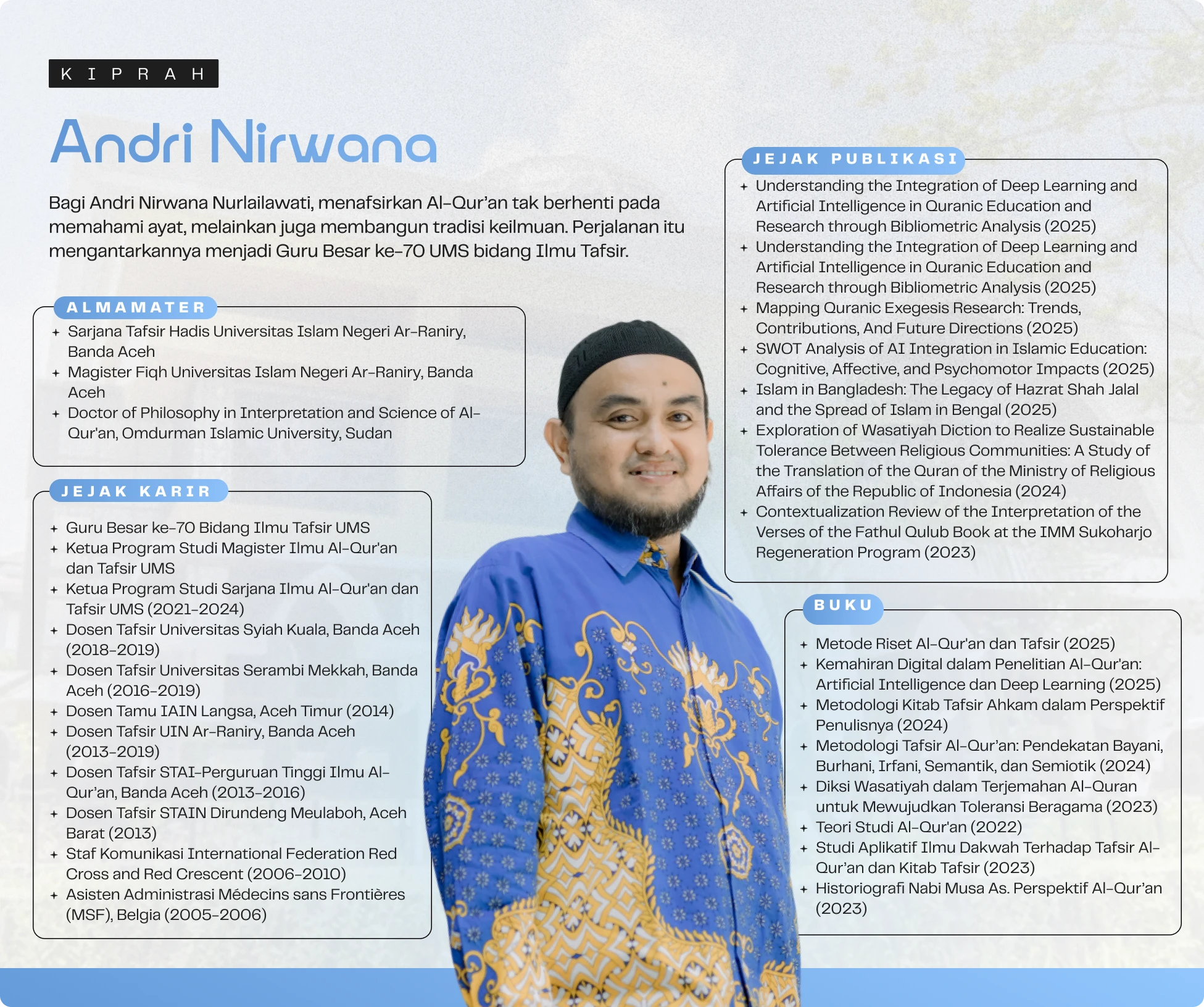
Together with fellow lecturers in Al-Quran and Tafsir Studies at UMS, Andri was then entrusted with pioneering the Master's Program in Al-Quran and Tafsir Studies. In 2024, the program was officially established. Andri was then appointed as the first Head of the Master's Program in Al-Quran and Tafsir Studies.
The launch of the program marked an important milestone for UMS. Beyond being the first Master's Program in Al-Quran and Tafsir Studies within the Muhammadiyah-'Aisyiyah Higher Education network (PTMA), the program also received operational approval from the Ministry of Religious Affairs and was designed with an interdisciplinary approach that integrates classical exegesis with contemporary issues.
For Andri, that achievement served as a starting point for building a stronger tradition of Quranic scholarship within Muhammadiyah. "If we speak about the Quran and the Sunnah, ideally we should also have a strong center of study reaching up to the doctoral level," he said.
That vision is what has driven Andri to plan his next steps. He hopes that UMS will one day have a Doctoral Program in Al-Quran and Tafsir Studies, so that more mufassir (exegetes) can emerge, capable of developing the discipline of tafsir on the basis of academic principles, rather than merely offering popular interpretations that often circulate in the community.
His teaching experience has made Andri realize that many misconceptions still exist in the understanding of the Quran. One of them is the assumption that proficiency in the Arabic language alone is sufficient to interpret its verses.
He cited the example of Surah An-Nur verse 26, which is often understood as a "soulmate verse" carrying the meaning that good men will be paired with good women. He considers this understanding inaccurate.
"In the context of the verse's revelation, this passage actually relates to God's defense of Aisha RA from the great slander that befell her, so its main message speaks about honor and the sanctity of dignity, not the certainty of a life partner," he explained.
For Andri, Arabic is only one tool. Tafsir is not simply a translation. Tafsir means seeking the meaning that God intended for a given verse.
That is why he wants to build a tafsir tradition grounded in methodology and scholarly principles. Because what he wishes to leave behind is a legacy of knowledge through students who, he hopes, will one day become the next generation of Quranic scholarship within Muhammadiyah.
That long endeavor eventually brought Andri to the peak of his academic career. In the Open Senate Session of UMS held on 20 January 2026, Andri was officially inaugurated as the 70th Professor of UMS at the age of 42.
Writer: Genis Dwi Gustati
Editor: Gede Arga Adrian
Translator: Farizal Luqman Majid
UMS students have formulated a treatment for diabetic wounds from moringa and neem leaves, and carried home gold at WYIE 2026 in Malaysia.
Nothing’s more special than reading curated news just for you.
Subscribe to the UMS Newsletter for free today.