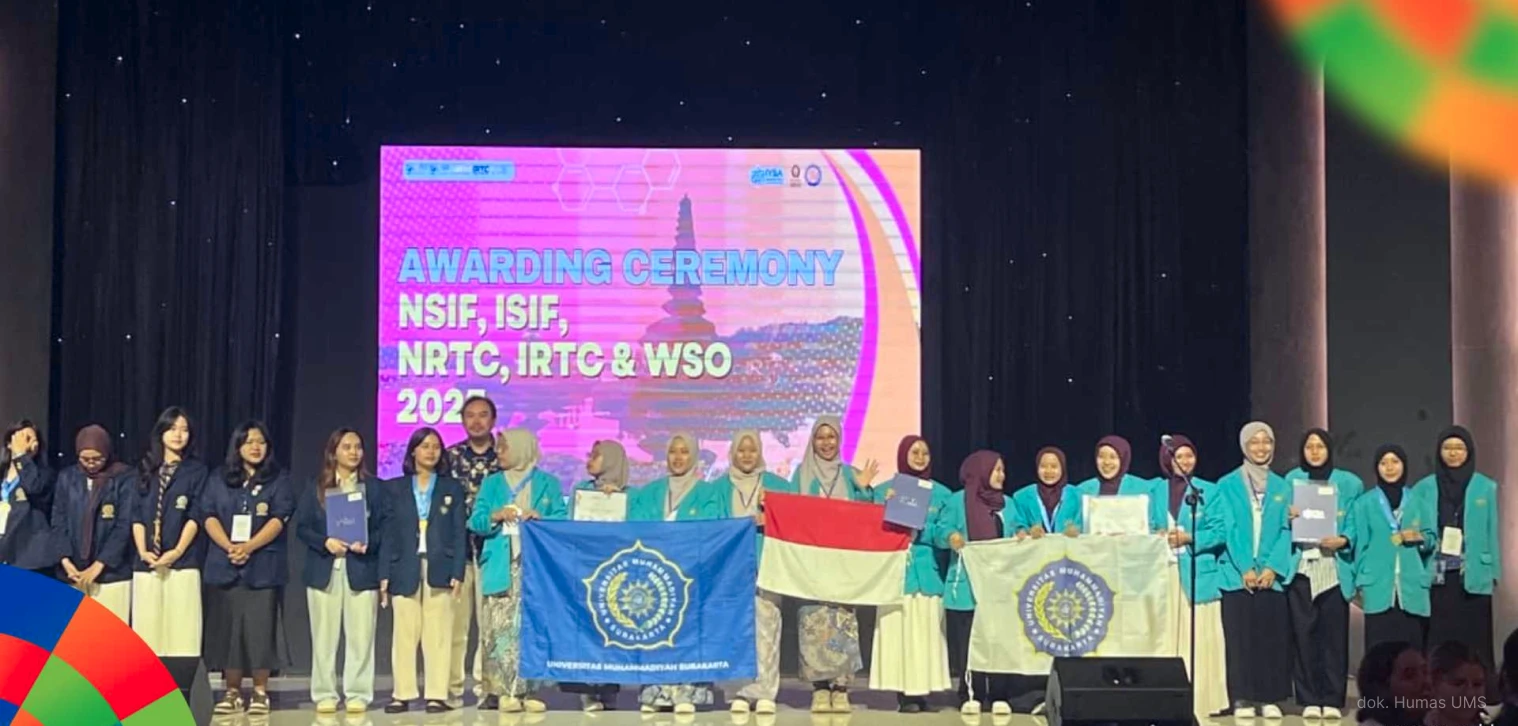
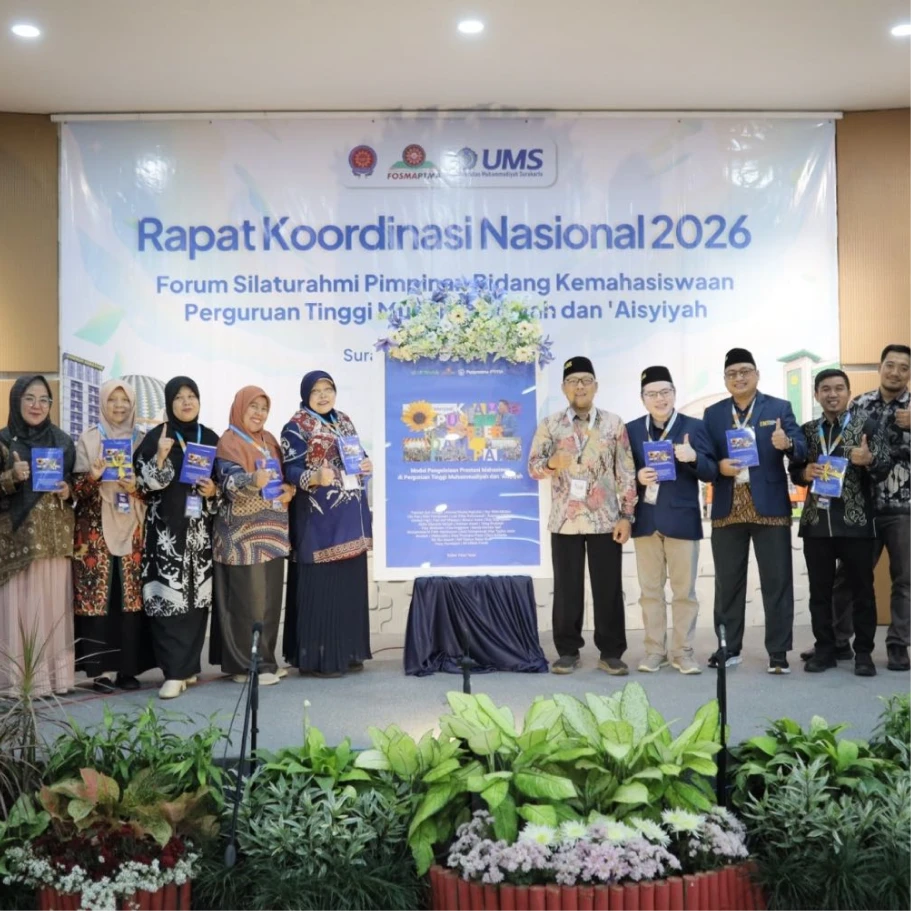
Students of Universitas Muhammadiyah Surakarta (UMS) once again achieved outstanding success by winning four gold medals at the 7th International Science and Invention Fair (ISIF) 2025. This international competition was held in Bali on 12–15 November 2025.
ISIF 2025 is a science and technology competition that brings together outstanding young inventors from around the world. This achievement reflects UMS students’ commitment to innovation, particularly in integrating technology into healthcare.
Director of the Directorate of Student Affairs and Innovation Talent Development (DKPTI) UMS, Ir. Ahmad Kholid Alghofari, S.T., M.T., stated that this accomplishment aligns with the university’s target of ensuring UMS students can compete on the global stage.
“This achievement shows that the talent and innovation of our students are globally competitive, and it also reflects the improving quality of education and mentorship at UMS,” Kholid said when asked for comments on Thursday (20/11/2025).
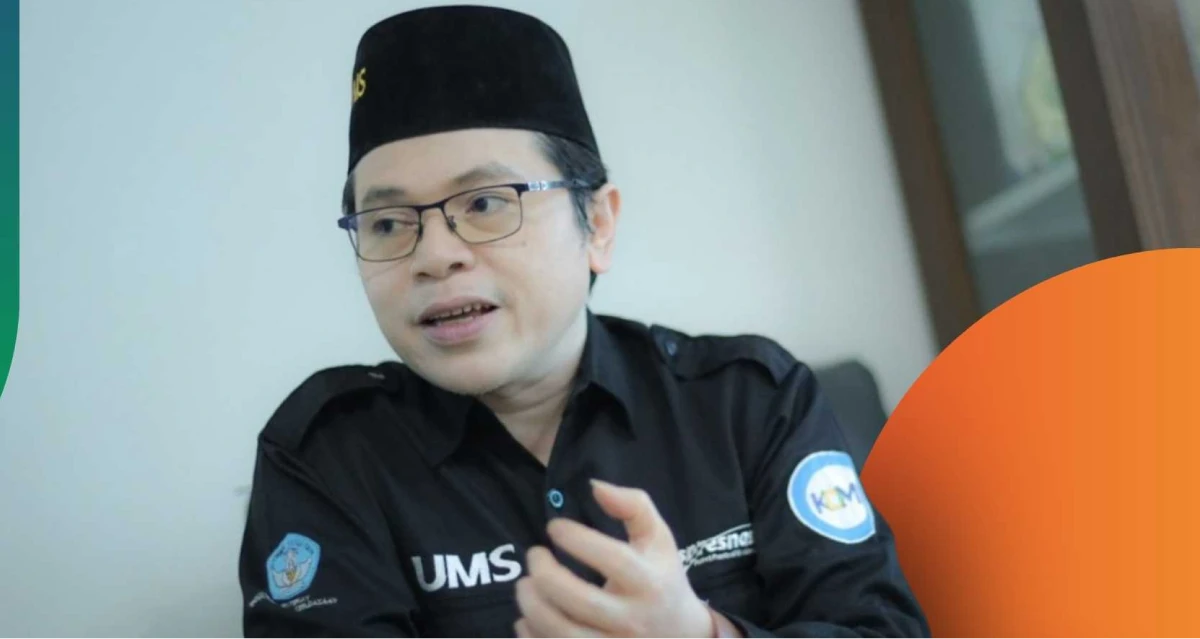 Director of DKPTI UMS, Ir. Ahmad Kholid Alghofari, S.T., M.T., expressed his appreciation for the four UMS student teams that succeeded in the ISIF 2025 competition.
 Among the four gold-winning teams, the innovation by the ‘Panda Spray’ team captivated the judges. Their idea utilized pandan leaves as a natural pain reliever, transforming local wisdom into herbal medicine. This innovation offers a solution for reducing the side effects of chemical drugs by applying herbal-based treatments.
Samiyem, the leader of the ‘Panda Spray’ team, explained that pandan leaves are considered an easily accessible natural resource, but so far have only been used as a food coloring and flavoring. However, according to their research, pandan leaves contain flavonoids, alkaloids, and tannins, which are effective in relieving and reducing pain.
“At the time, we were thinking about materials that are easy to find in our surroundings but haven’t been fully utilized. It turns out that pandan leaves hadn’t been explored as a pain reliever either,” she explained.
Another team, ‘Nansyi’ or Nano Technology Syifa, focused on a drug delivery system in the form of nanoemulsions derived from mistletoe. While mistletoe is commonly known as a parasitic plant, they aimed to change that perception by developing it into an anti-inflammatory treatment.
In an interview, Dany Hendrawan, the team leader, explained that mistletoe in the form of a nanoemulsion helps accelerate drug absorption by optimizing delivery to target cells, while also reducing the negative effects of long-term use of synthetic anti-inflammatory drugs on the body.
“The anti-inflammatory drugs used by doctors are NSAIDs (Non-Steroid Anti-Inflammatory Drugs), which inhibit Cyclooxygenase-1 and Cyclooxygenase-2. However, when taken over a long period, they can cause irritation in the gastrointestinal system and also affect the cardiovascular system,” explained the Nansyi team leader.
In addition to the use of pandan leaves and mistletoe, the ‘Sunchips’ team created an alternative snack for obesity, a thin biscuit made from a high-fiber flour blend, including sunflower seeds, jackfruit seeds as a wheat flour substitute, and corn flour.
Afiza Fitriana Sabilla, a representative of the Sunchips team, highlighted that Indonesia currently ranks fifth in obesity cases among ASEAN countries. “Obesity is one of the conditions that contributes to serious underlying problems, such as degenerative diseases. Non-communicable diseases like heart disease, stroke, and others can develop from it,” she explained.
Shifting from food technology, the next team presented an innovation titled “ZIMO: A Next-Generation Gamified Digital Health Innovation to Overcome the Triple Burden of Malnutrition in Adolescents.”
Team leader Hanifah Herawati explained that ZIMO is a gamified application integrated with artificial intelligence (AI) designed to address the rising issues of undernutrition, overnutrition, and micronutrient deficiencies that are still prevalent among Indonesian adolescents.
“ZIMO includes game features that keep users motivated, along with real-time monitoring of nutritional status so that adolescents’ body mass index (BMI) can be tracked and continuously updated. The app is also integrated with AI technology, allowing users to take photos of the food they consume,” she concluded.
Writer: Roselia Puspita Asri
Editor: Fika Annisa Sholihah
Translator: Farizal Luqman Majid