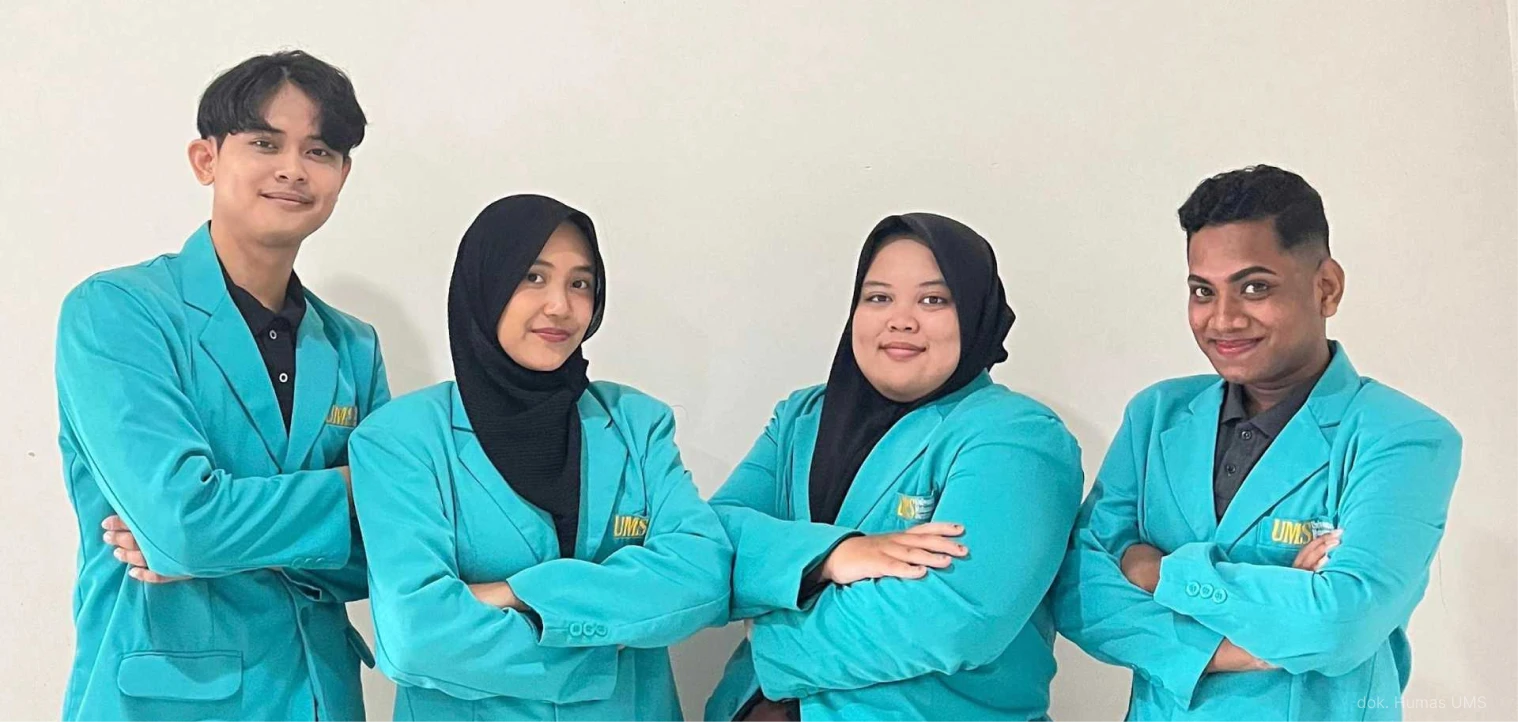
Competing under the Student Creativity Program in Exact Research (PKM-RE), the team carried out a study titled “Extraction of Squalene and Antioxidant Compounds from Cucurbita moschata Duch. Assisted by Microwave: Optimization Based on Box-Behnken Design.”
The research was motivated by the high global demand for squalene, a bioactive compound known for its antioxidant, anti-inflammatory, immunomodulatory, and emollient properties. Widely used in the cosmetic, functional food, and pharmaceutical industries, squalene plays a key role in anti-aging, moisturizing, and skin protection formulations.
Traditionally, squalene has been extracted from shark liver, which can contain up to 79% squalene. However, overexploitation of sharks poses a serious threat to marine ecosystems. Recognizing this issue, the Curbita Team proposed an eco-friendly alternative using pumpkin seeds (Cucurbita moschata Duch.), an agro-industrial byproduct often discarded as waste.
“Pumpkin seeds not only contain squalene but also other valuable bioactive compounds such as tocopherol (vitamin E), phytosterols, unsaturated fatty acids, and phenolic compounds. This potential makes them highly suitable as raw materials for the pharmaceutical and cosmetic industries,” explained Muhamad Nur Ilham, one of the team members, on Monday (6/10/2025).
The Indonesian Statistics (BPS) recorded that Indonesia’s pumpkin production from 2021, 2023 averaged 554,302 tons per year. Around 3% of the total yield consists of seeds weighing 60–80 grams per fruit, most of which are discarded. In fact, these seeds contain valuable bioactive compounds with strong potential to become a new commodity.
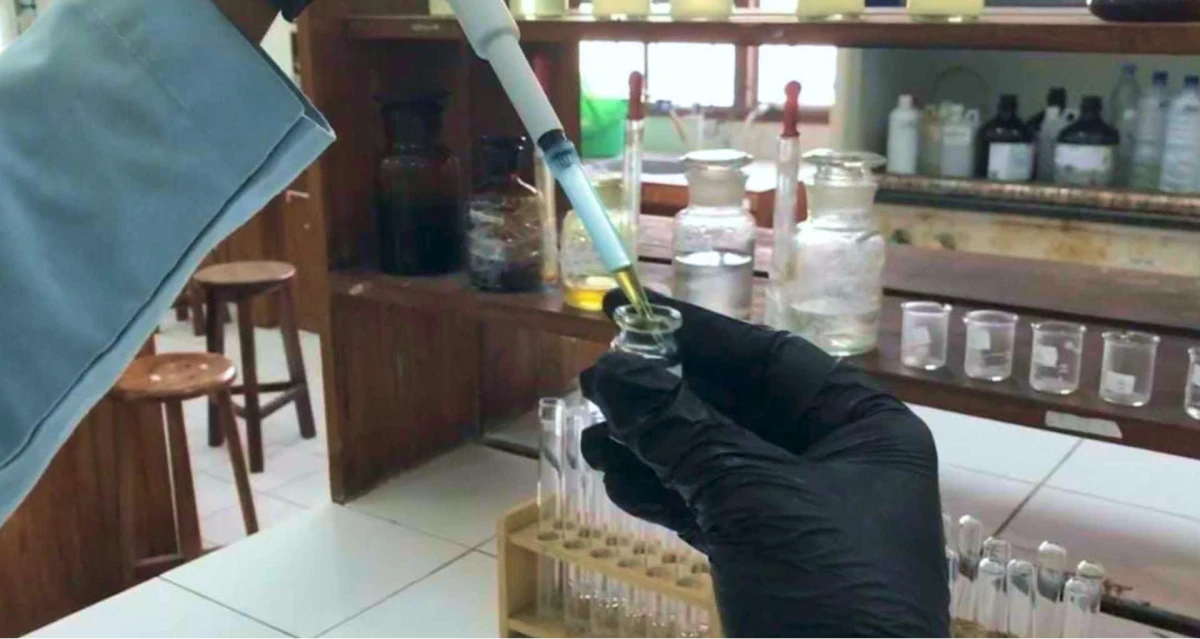
Antioxidant activity testing by the Curbita UMS Team. Private Doc.
In this study, the Curbita Team used the Microwave-Assisted Extraction (MAE) method, which proved more efficient than conventional techniques. While the Soxhlet method yielded only 1.51% squalene and the Ultrasound-Assisted Extraction (UAE) method 1.29%, under optimal conditions MAE produced 24.63% oil yield with an antioxidant activity (IC₅₀) of 15.39 µg/mL.
“These findings confirm that MAE not only excels technically but also preserves the squalene and other bioactive compounds within pumpkin seed oil,” added Ilham.
GC-MS analysis identified 53 bioactive compounds in the extracted oil. Squalene accounted for 2.62%, ranking sixth, higher than results from Soxhlet or UAE methods. Other major compounds include ascorbyl dipalmitate (32.82%), oleic acid (25.42%), and linoleic acid (11.93%), which act as potent antioxidants, LDL reducers, immunomodulators, and skin photoprotectants.
From an optimization perspective, ANOVA analysis using the Box-Behnken Design revealed a strong regression model with R² = 98.90% for yield and R² = 98.99% for antioxidant activity. The most influential factors were the material-to-solvent ratio for yield and microwave power for antioxidant activity, while extraction time had a significant quadratic effect.
The quadratic model predicted optimal conditions at a ratio of 0.3040 g/mL, power of 446.639 W, and time of 11.932 minutes, projecting a yield of 29.69% and IC₅₀ of 11.72 µg/mL - with minimal deviation from the experimental results, confirming the model’s high validity.
Beyond technical achievements, the Curbita Team actively disseminates their research to the public. They have completed 100% of their progress reports, prepared a scientific article for the Journal of Chemical Engineering Innovation (targeting Sinta 3 accreditation), and built educational outreach through Instagram and TikTok, gaining over 186,000 total views. The team is also in the process of filing an Intellectual Property (IP) application for their optimized extraction method.
With this achievement, the Curbita Team’s research not only contributes to the development of plant-based bioactive extraction methods but also provides tangible benefits for industry, the environment, and society. “Pumpkin seeds have proven to hold great potential as a superior plant-based source of squalene that can be applied in cosmetics, functional foods, and pharmaceuticals, while also promoting sustainability through the utilization of agro-industrial waste,” concluded Ilham.
Writer: Fika Annisa Sholihah
Editor: Maysali Sudarwati
Translator: Farizal Luqman Majid