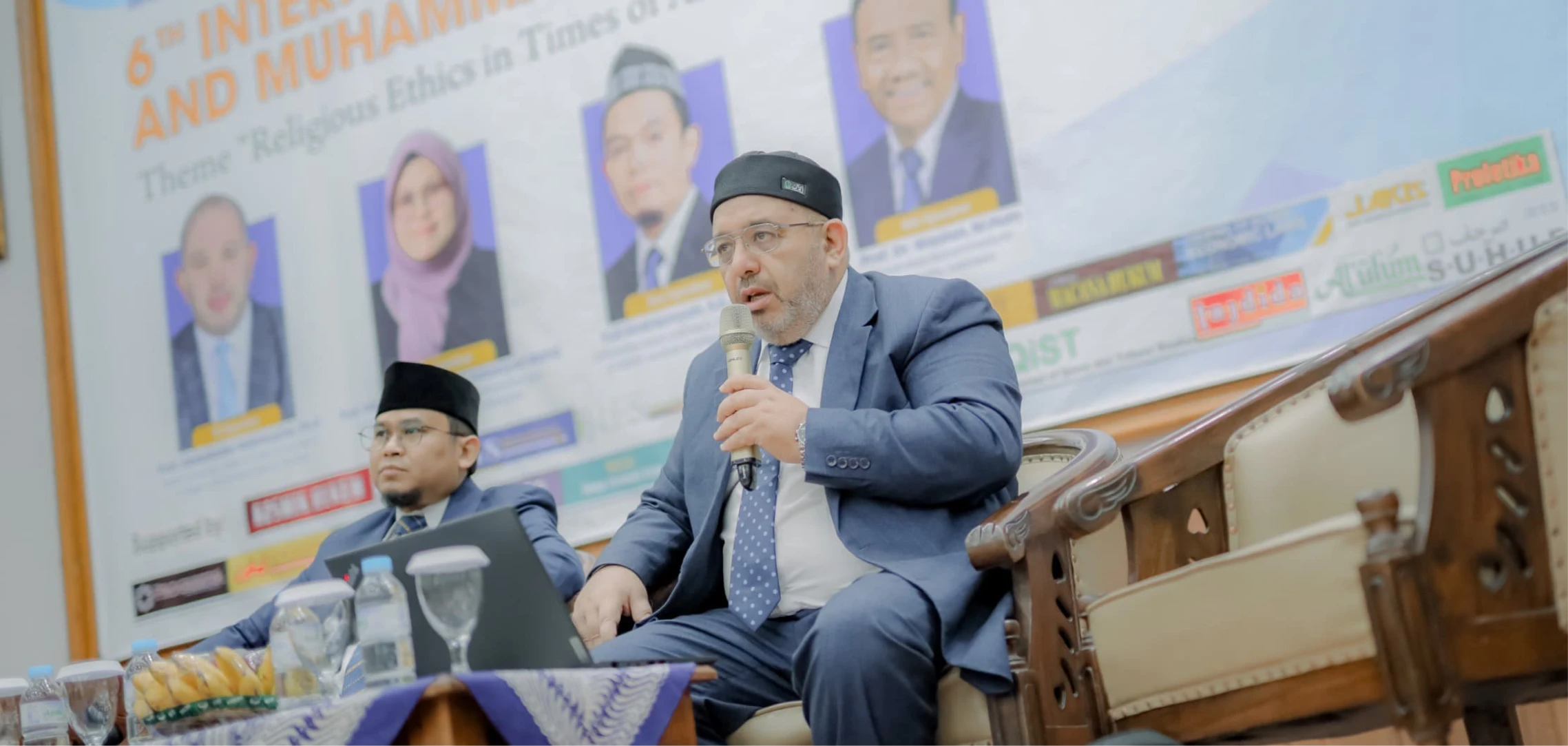
The 6th International Conference on Islamic and Muhammadiyah Studies (ICIMS) 2026 carries the theme “Religious Ethics in Times of Artificial Intelligence” and was held at the Moh. Djazman Auditorium Seminar Room, Universitas Muhammadiyah Surakarta (UMS), on Tuesday (February 10, 2026). The international conference served as an academic forum to respond to the rapid development of artificial intelligence (AI) from the perspective of Islamic ethics and Muhammadiyah values.
Chairman of the ICIMS 2026 Committee, Dr. Muh. Nur Rochim Maksum, S.Pd.I., M.Pd.I., stated that the conference is open to academics and researchers from various disciplines to continuously contribute to research development.
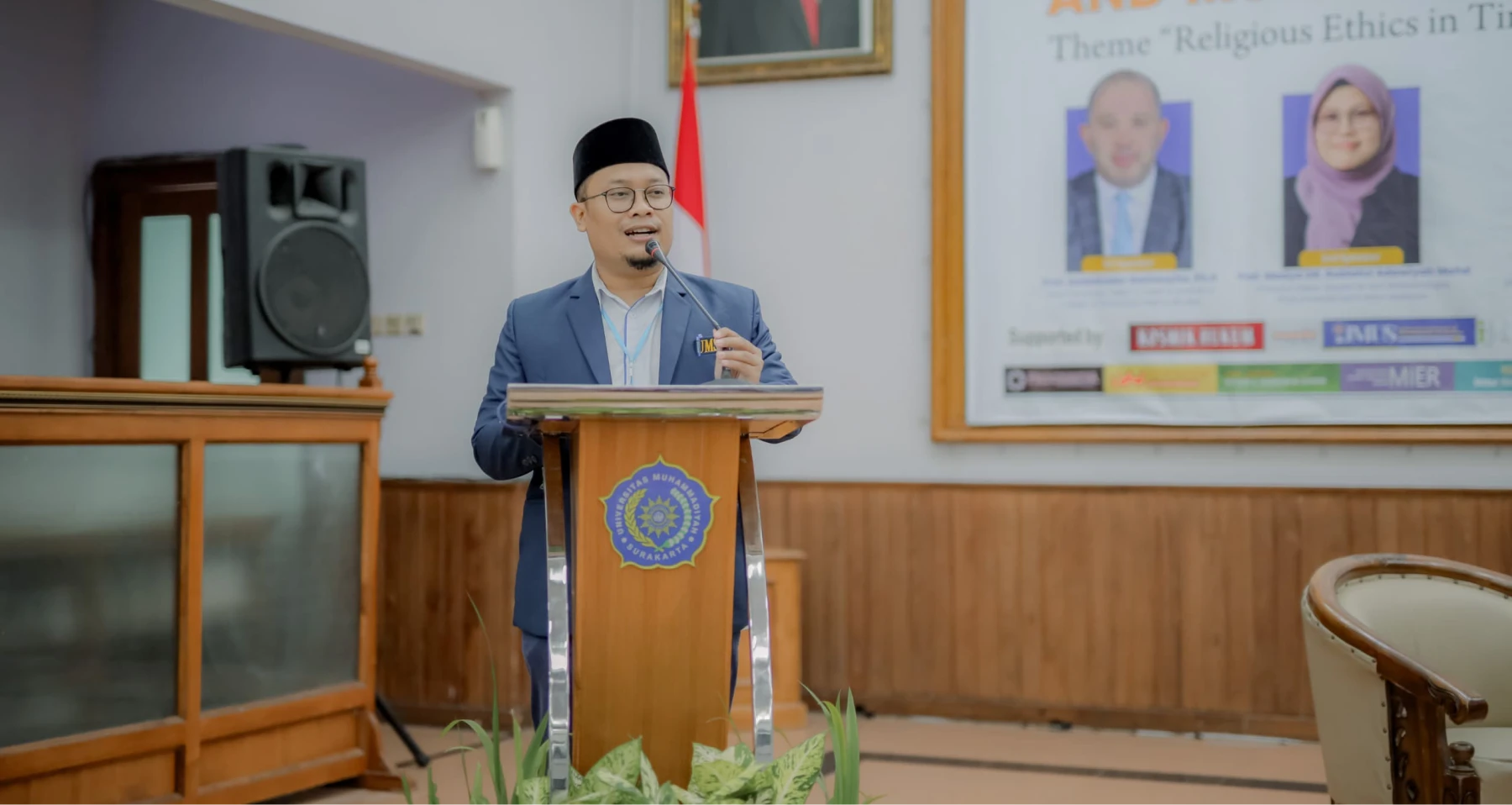
Chairman of the Committee of ICIMS 2026, Dr. Muh. Nur Rochim Maksum, S.Pd.I., M.Pd.I., delivered his welcoming remarks at the opening of ICIMS before the audience. UMS Public Relations/Imam Safi’
“We invite everyone to continue participating in this year’s ICIMS and future editions,” he said.
Vice Dean III of the Faculty of Islamic Studies (FAI) UMS, Fauzul Hanif Noor Athief, Lc., M.Sc., emphasized FAI UMS’s readiness to strengthen globally competitive research.
“FAI UMS has a Scopus-indexed journal, namely the Journal of Islamic Economic Laws from the Islamic Economic Law Study Program (HES),” he explained.
According to Fauzul, ICIMS serves as a strategic momentum for developing Islamic studies that remain relevant to contemporary challenges.
“ICIMS is an initial step toward transformation in research by integrating Islamic and Muhammadiyah values,” he stated.
In his remarks, UMS Rector Prof. Dr. Harun Joko Prayitno, M.Hum., stressed that academic conferences must produce ethical scientific works with tangible impact.
“I hope that the papers presented here carry value and uphold ethics from all participants, because this conference means nothing if it is not practiced. Therefore, it must have both impact value and transcendental value,” he emphasized.
ICIMS 2026 featured both international and national keynote speakers. The first keynote speaker, Prof. Abdelkader Bekhouche, Ph.D. from Qatar University and Editor-in-Chief of the Scopus-indexed Journal of College of Sharia and Islamic Studies, delivered a presentation titled “Artificial Intelligence and Human Dignity: An Islamic Ethical Approach,” highlighting the importance of safeguarding human dignity in the use of artificial intelligence technology.
“Artificial intelligence must be placed within the framework of Islamic ethics that upholds human dignity, because technology must not erode the human values that lie at the core of Islamic teachings,” said Abdelkader.
Meanwhile, the second keynote speaker, Deputy Minister of Religious Affairs of the Republic of Indonesia, Dr. KH. Romo R. Muhammad Syafi’i, S.H., M.Hum., emphasized that artificial intelligence cannot be separated from human ethical responsibility.
“AI is a product of human intelligence, but it does not possess morality, conscience, feelings, or emotions,” he stated.
He added that humans hold a central position in controlling technolog
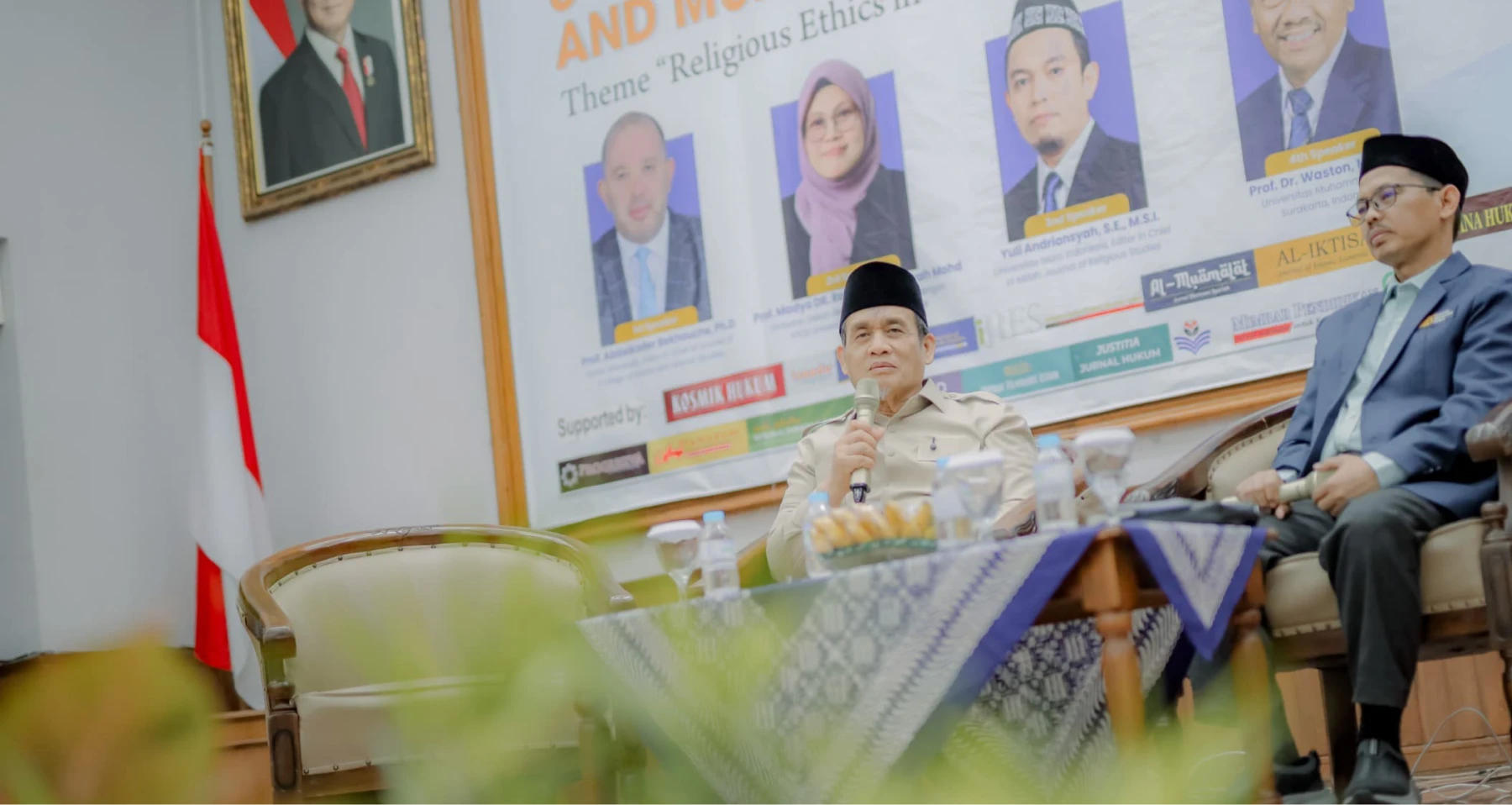
The second keynote speaker, Deputy Minister of Religious Affairs of the Republic of Indonesia, Dr. KH. Romo R. Muhammad Syafi’i, S.H., M.Hum., delivered his presentation at the Moh. Djazman Auditorium Seminar Room on February 10, 2026. UMS Public Relations/Imam Safi’i
“However advanced AI may be, it remains a human creation, and it is humans who bear full responsibility for what they have created,” he asserted.
“However advanced AI may be, it remains a human creation, and it is humans who bear full responsibility for what they have created,” he asserted.
Writer: Dwi Kurniadi
Editor: Maysali Sudarwati
Translator: Farizal Luqman Majid