The Coffee Shop Boom
31 July 2026
Indonesia is one of the world's largest coffee-consuming nations, a thirst that keeps spawning new coffee shops. Sharpening the competition among them.



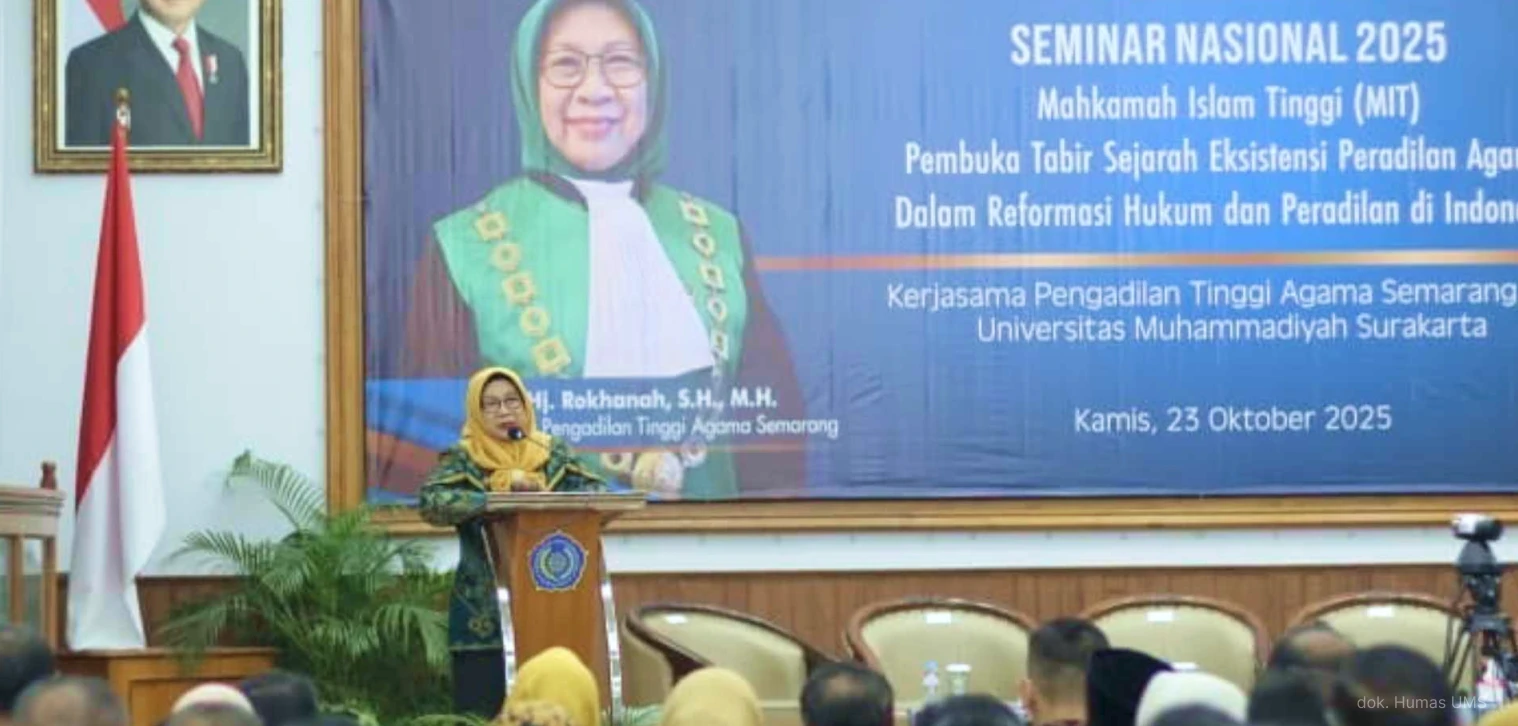
Universitas Muhammadiyah Surakarta (UMS) hosted the National Seminar on the Mahkamah Islam Tinggi (MIT) under the theme “Unveiling the Historical Existence of the Religious Court in Indonesia’s Legal and Judicial Reform”, Thursday (23/10/2025).
This activity serves as a strategic collaboration as well as the signing of a Memorandum of Understanding (MoU) between the High Religious Court (PTA) of Semarang and Universitas Muhammadiyah Surakarta, with the support of the Religious Courts Agency (Badilag) of the Supreme Court of the Republic of Indonesia.
The event marks an important moment in strengthening synergy between the judiciary and the academic world to build a national legal system that is just, modern, and rooted in progressive Islamic values. The seminar was attended by more than 500 participants, both offline and online, consisting of heads of PTA across Indonesia, high judges, academics, and UMS students.
Director General of the Religious Courts Agency of the Supreme Court of the Republic of Indonesia, Drs. H. Muchlis, S.H., M.H., delivered remarks as part of the agenda of the National Seminar on the Mahkamah Islam Tinggi (MIT) under the theme “Unveiling the Historical Existence of the Religious Court in Indonesia’s Legal and Judicial Reform”.
“Synergy between the intellectual strength of universities and the judiciary is essential to reinforce Islamic legal reform that is responsive and progressive. The study of the Mahkamah Islam Tinggi is not merely historical, but an academic effort to affirm the role of the religious court as a main pillar in the national legal system,” he stated.
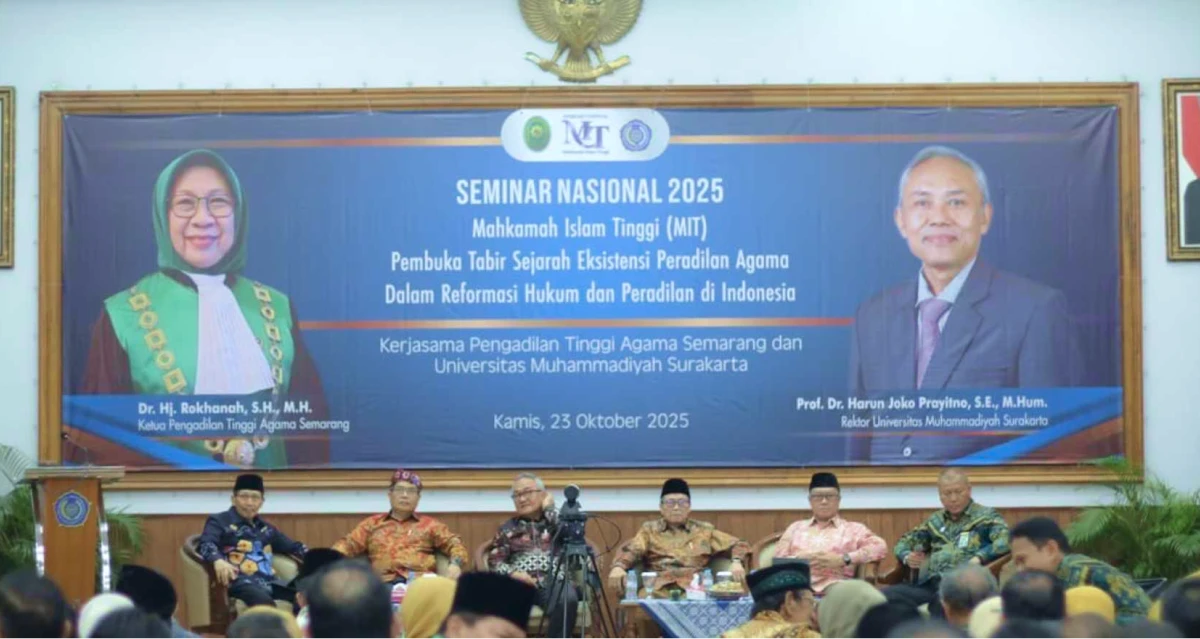 Director General of the Religious Courts Agency of the Supreme Court, Drs. H. Muchlis, S.H., M.H., delivering his remarks at the national seminar held at the Moh. Djazman Auditorium, UMS.
According to him, legal reform today does not only address procedural aspects, but also philosophical and humanitarian values.
“Digitalization, transparency, and integrity are key to the reform of the religious court system. Modernization must align with substantive justice, so that swift decisions remain fair and contextual to Islamic values,” he added.
Rector of UMS, Prof. Dr. Harun Joko Prayitno, S.E., M.Hum., in his remarks emphasized that true justice must be grounded in three core values: liberation, humanization, and transcendence.
“Justice is not only liberation from legal backwardness, but also recognition of human values and the presence of God in every legal decision. Law must place humans as subjects, not objects,” he asserted.
Harun also expressed appreciation to the Supreme Court of the Republic of Indonesia and all participants for entrusting UMS as a co-organizer of this national seminar. He added that the activity strengthens academic ties and serves as an important space for the exchange of ideas across institutions.
“UMS is committed to being part of the national legal reform movement by advancing impactful research, education, and collaboration,” he said.
Through this initiative, he continued, UMS reaffirms its role as a progressive Islamic university actively promoting the integration of knowledge, law, and humanitarian values in national development. The synergy with the Supreme Court of the Republic of Indonesia is a concrete step in preparing a new generation of legal scholars and practitioners who possess integrity, are adaptive to technology, and uphold justice that is humanistic and transcendental.
Meanwhile, Chairperson of the High Religious Court of Semarang, Dr. Hj. Rokhanah, S.H., M.H., in her report explained that this seminar aims to clarify the historical traces of the Mahkamah Islam Tinggi as the forerunner of religious courts in Indonesia. “The primary objective of this event is to rediscover the historical roots of Islamic judiciary and reinforce its contribution in shaping a national legal system that is just and civilized,” she stated.
She also expressed appreciation to UMS for its full support in providing facilities and ensuring successful collaboration in organizing the event. “The partnership with UMS shows how a Muhammadiyah univeristy can serve as a hub for productive academic and judicial collaboration,” she added.
The national seminar also featured prominent speakers, including the Chief of the Religious Chamber of the Supreme Court of the Republic of Indonesia, Dr. H. Yasardin, S.H., M.H.; Constitutional Court Justice for the 2010–2015 period, Dr. H. Ahmad Fadlil Sumadi, S.H., M.Hum.; along with two law professors from UMS and UIN Syarif Hidayatullah Jakarta. The discussion provided a strategic platform to strengthen ideas for religious court reform and the development of contemporary Islamic law in Indonesia.
Writer: Alvian Rizki Prasetya
Editor: Fika Annisa Sholihah
Translator: Farizal Luqman Majid
Indonesia is one of the world's largest coffee-consuming nations, a thirst that keeps spawning new coffee shops. Sharpening the competition among them.
Nothing’s more special than reading curated news just for you.
Subscribe to the UMS Newsletter for free today.