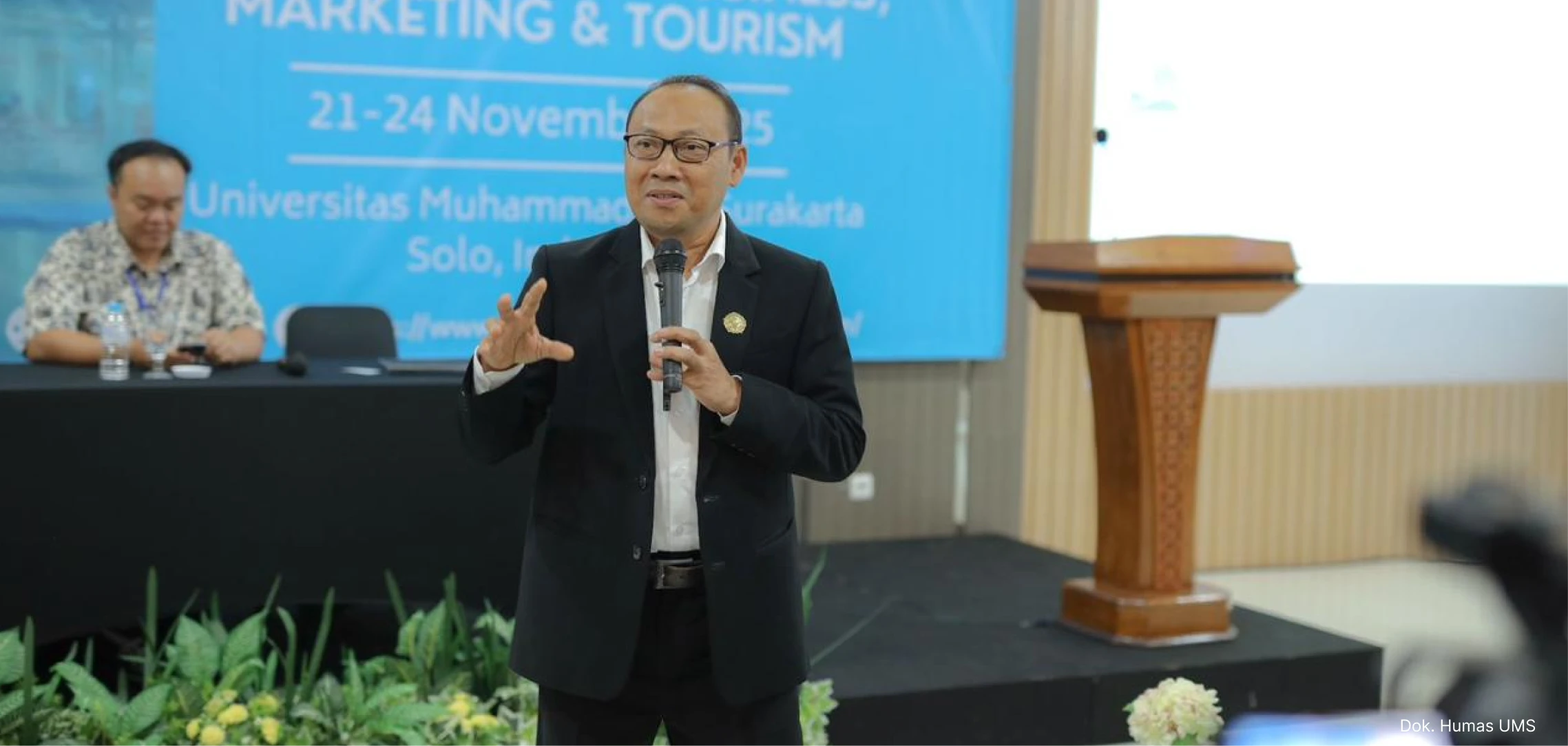
The idea of sustainable agrotourism emerged during the Marketing in Asia Group (MAG) Scholar Conference 2025, held at the Edutorium KH Ahmad Dahlan, Universitas Muhammadiyah Surakarta (UMS), Saturday (22/11/2025).
This concept was presented by UMS Vice Rector I, Prof. Ihwan Susila, S.E., M.Si., Ph.D., who delivered the findings of his research on sustainable agrotourism. Ihwan stated that sustainable agrotourism holds strong potential for implementation in Indonesia. “The opportunities are enormous,” Ihwan said when interviewed after the event
Indonesia’s geographical position along the equator is one of the factors that supports sustainable agrotourism. This condition enables the agricultural sector to thrive throughout the year. Ihwan noted that the concept of sustainable agrotourism is inseparable from the agricultural sector in rural areas.
According to Ihwan, sustainable agrotourism is an environmentally based tourism concept that emphasizes harmony between environmental conservation and the enhancement of rural economic capacity.
“This is interesting because it not only empowers local communities, but also teaches how to manage the environment and optimize existing resources,” he continued.
Ihwan based his presentation on research he conducted in Bojonegoro, East Java, together with UMS Professor of Management, Prof. Dr. Anton Agus Setyawan, S.E., M.Si.
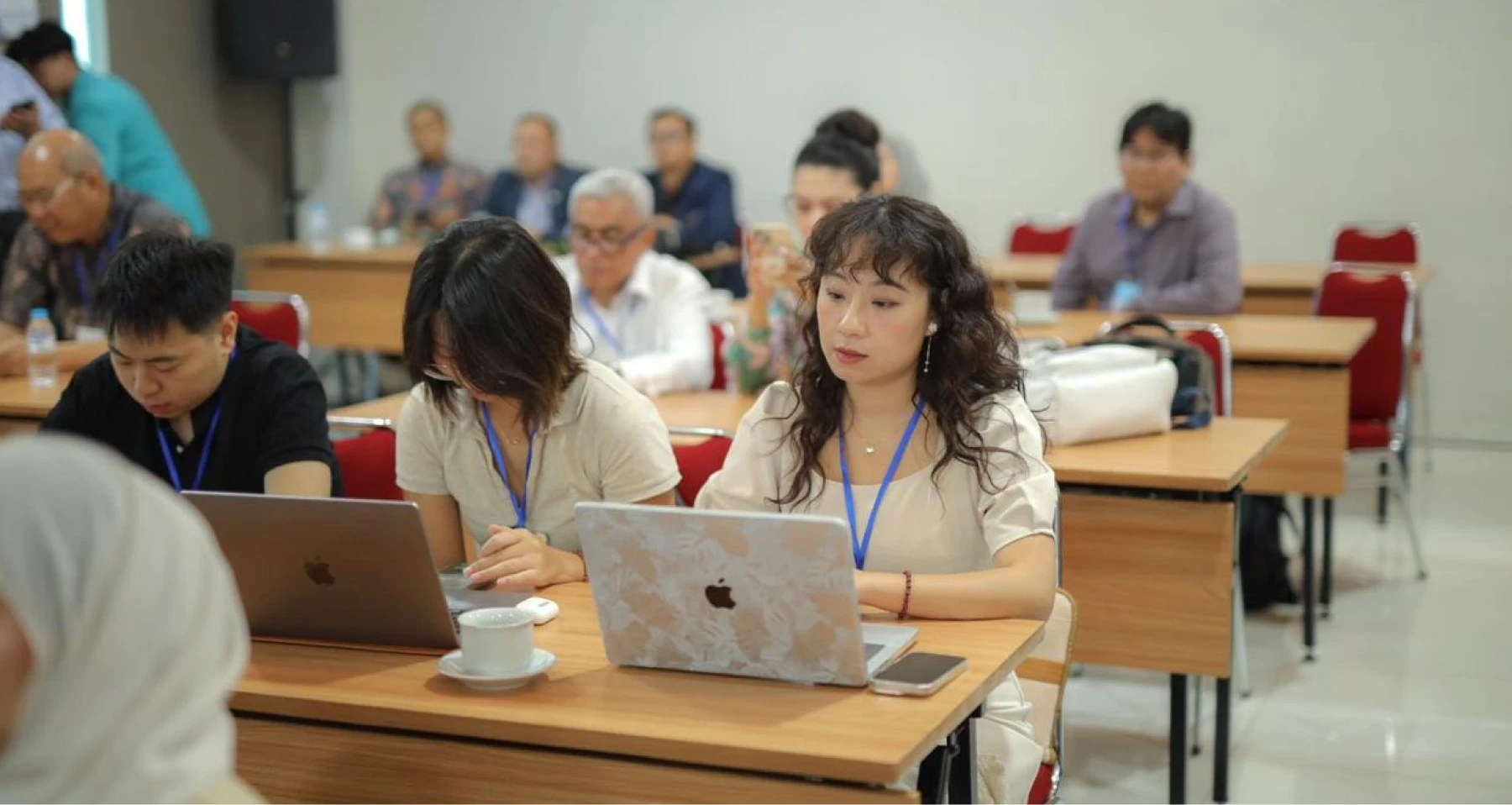
A number of participants at the MAG Scholar Conference 2025 at the Edutorium KH Ahmad Dahlan UMS, 22 November 2025, appeared enthusiastic as they listened to the presentation on sustainable agrotourism.
The study aimed to analyze challenges in integrating agrotourism management systems, identify how a region develops its branding, and produce a sustainable agrotourism model that involves local communities and local wisdom.
From the research he conducted, the implementation of sustainable agrotourism faces several challenges. These range from limited access, the community’s ability to manage tourism sites, tourists’ expectations regarding local wisdom, to government bureaucracy.
Sustainable agrotourism must fulfill three key elements: environmental, economic, and socio-cultural. Ihwan also encouraged cross-sector synergy involving universities, local communities, and regional governments.
“Agrotourism is not just about revenue, but also about ecosystems, the environment, and an industrial transformation that empowers local communities,” he added.
The UMS Vice Rector I also stated that the government must take an active role in developing agrotourism. This contribution includes providing training programs for local communities, supporting infrastructure development in the region, and committing to sustainable agrotourism initiatives.
During the MAG Scholar Conference 2025, Ihwan presented his research before several academics from Malaysia. According to him, the opportunity to share his work marked an important step toward opening avenues for further research collaboration.
Ihwan is optimistic that UMS’s involvement in the MAG Scholar Conference will expand its global network and foster more international research collaborations.
“We are very grateful to be invited as one of the collaborators, and certainly, we hope that moving forward we can work together to strengthen contributions in the field of business, especially in Asia, and in tourism,” he concluded.
Writer: Gede Arga Adrian
Editor: Fika Annisa’ Sholihah
Translator: Farizal Luqman Majid