Compassion That Reaches the Arabian Shore
30 June 2026
Nadia Nur Imani is determined to fulfill her mother's dream by becoming a nurse, opening a new path to The Land of the Two Holy Mosques



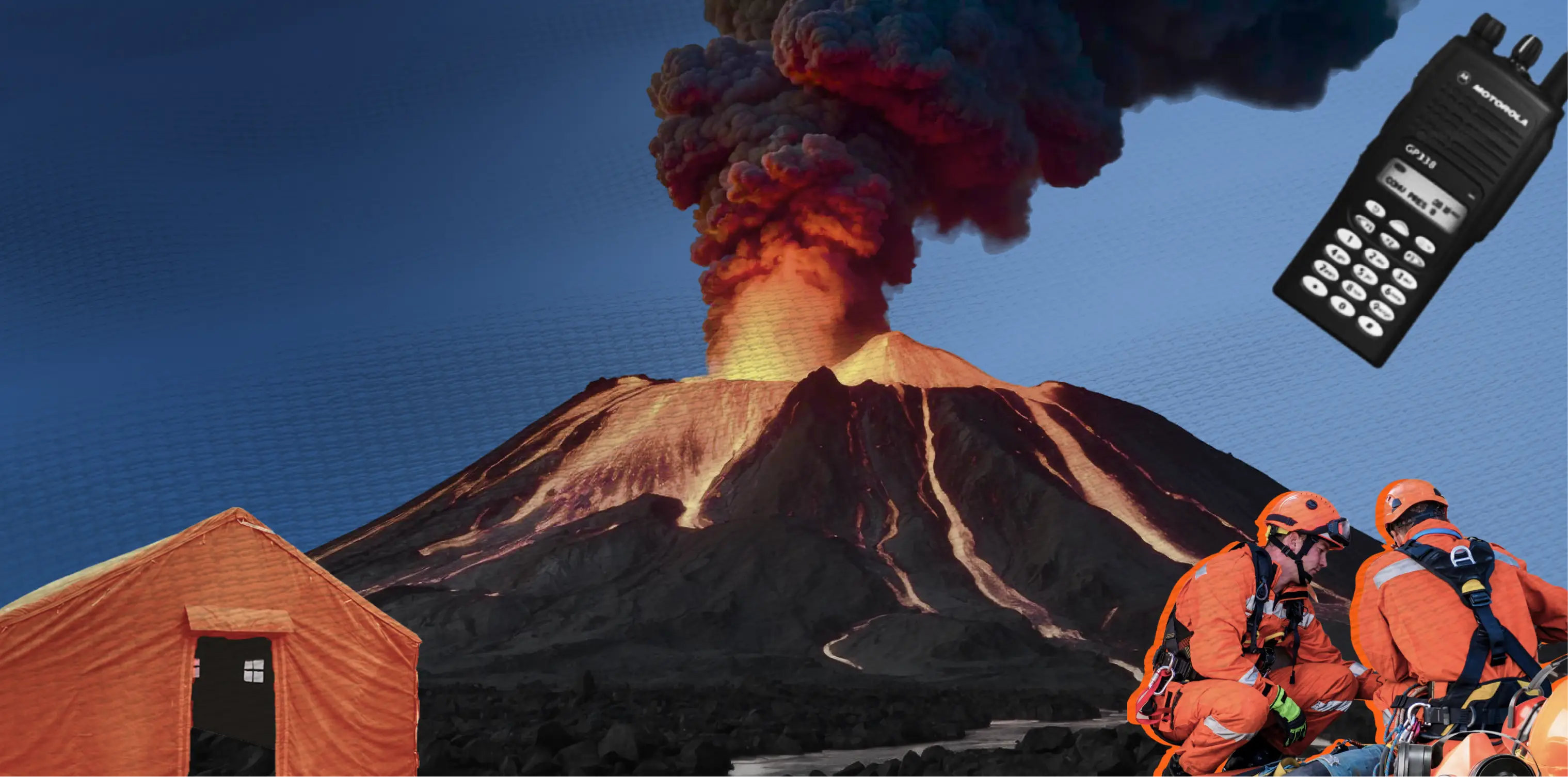
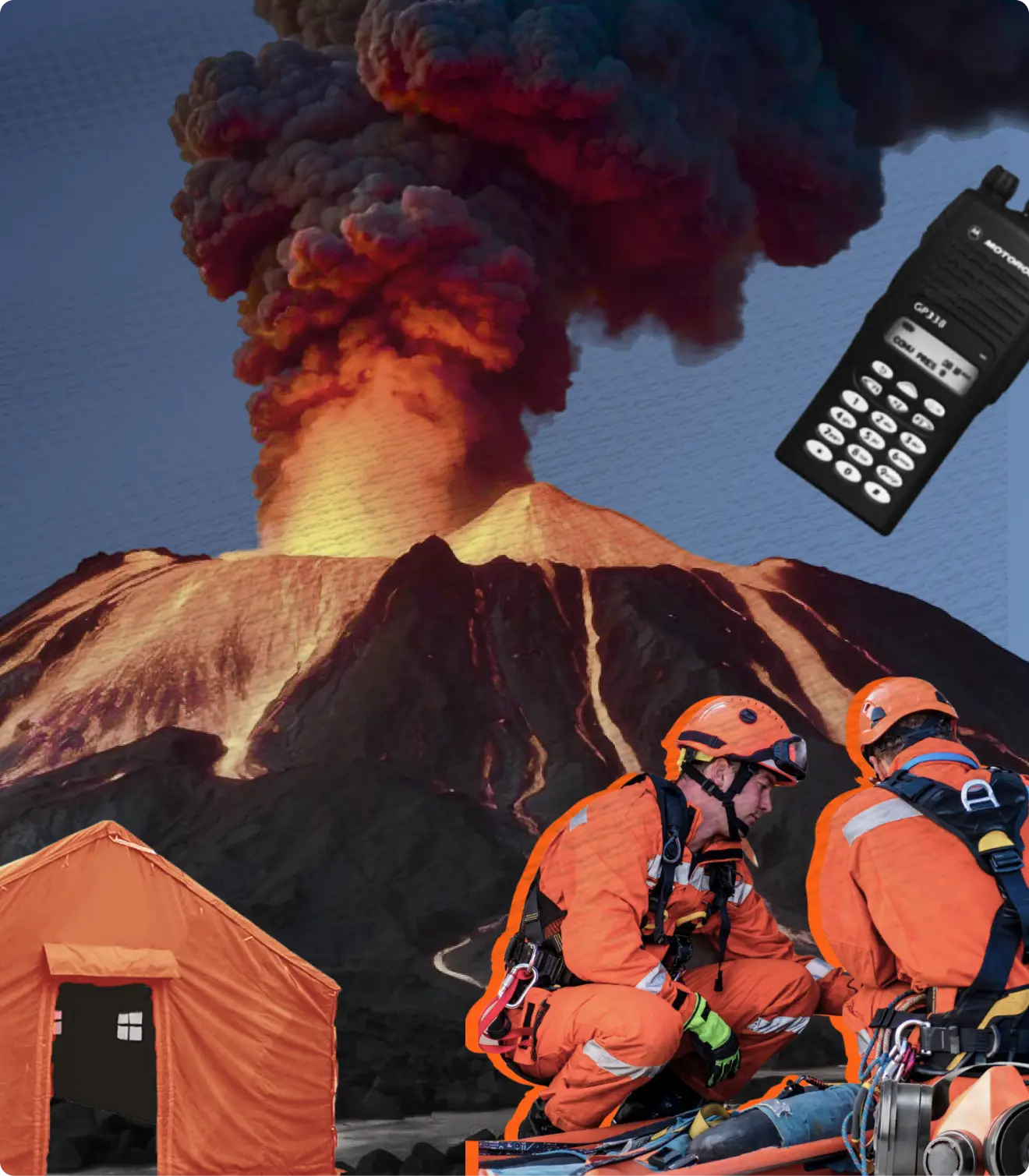
As a country prone to natural disasters, disaster communication that is honest, transparent, and empathetic toward victims must continue to be pursued. In this way, the process of handling flood disaster victims can run effectively and foster public trust in the government.
Riski Apriliani, S.I.Kom., M.A., a Communication Sciences lecturer at Universitas Muhammadiyah Surakarta (UMS), stated that the pentahelix framework is highly needed in disaster management processes. This model involves five parties in disaster response: the government, community organizations, companies, academics, and the public.
The pentahelix model is not actually new in disaster management. A similar model had previously been implemented at the regional level by the Sleman Regency Government, Special Region of Yogyakarta, during the eruption of Mount Merapi in early 2021.
Commonly known as April, the lecturer summarized her findings in a study titled "Public Relations Efforts in Disaster Communication to Build Public Trust," published in the 5th International Conference of Geography and Disaster Management 2023. In her research, April highlighted the challenges faced by the local government at the time, as it had to deal simultaneously with the eruption of Mount Merapi and the COVID-19 pandemic.
This condition was worsened by declining public trust in both the central and regional governments due to inconsistent policies. "At that time, the government did not gain public trust because its policies kept changing. One area implemented a lockdown, another did not. Or there were policies that were inconsistent. There were also issues claiming that patients were falsely labeled as Covid cases," she explained when interviewed in early March.
Amid the turmoil, April revealed a surprising finding: an increase in public trust toward the Sleman Regency Government during the management of the Merapi eruption disaster. "Based on the Sleman Regency Government's performance satisfaction index report, public trust reached 100 percent," she said. How was that possible?
The Sleman Regency Government implemented one-door communication, a single-command approach delivered directly by the Regent of Sleman. This step was taken to minimize miscommunication caused by multiple parties delivering information to the public. This system made the policies issued by the Sleman Regency Government relatively consistent and prevented public confusion.
The government's concern for the community was also shown through communication patterns that emphasized empathy. Such communication included providing information about evacuation zones, the distribution of aid, and future recovery plans.
This disaster communication was also supported by honesty and transparency of information. Every development, such as Merapi's activity, the number of casualties, the extent of damage, and disaster-prone zones, was continuously communicated openly to the media and the public.
In the digital sphere, information dissemination was carried out through websites, social media, and the "Jarak Aku dan Merapi" application (now called Simantab). Meanwhile, through conventional channels, the public could access physical reports on the latest conditions at the Operations Control Center of the Sleman Regency Regional Disaster Management Agency.
This strategy was implemented by involving media and disaster-awareness communities. April explained that the Sleman Regency Government coordinated with local communities through WhatsApp groups to share the latest developments during the disaster period. "With the existence of these groups, they were able to help each other more quickly," she explained.

Disaster communication in Indonesia remains a major challenge that requires serious attention from the government. The Sumatra floods at the end of last year illustrated how slow disaster communication was during the emergency response period.
April assessed that disaster communication during the Sumatra floods was relatively slow. The main reason was the absence of centralized command and clear policy direction from the central government during the first week of the disaster.
"In the case of the Sumatra floods, we could generally see that there was no centralized command. It seemed as if each party was acting on its own," she said.
According to her, this situation was different from when the tsunami struck Aceh and Nias in 2004. At that time, the disaster management command was under the control of President Susilo Bambang Yudhoyono. SBY later strengthened the response by establishing the Aceh-Nias Rehabilitation and Reconstruction Agency to accelerate post-disaster recovery.
The absence of integrated command and strong attention from the central government caused disaster communication to stagnate. As a result, the components of the pentahelix framework operated without clear guidance. This resulted in slower recovery efforts.
"Local governments faced a very heavy burden because the impact spread across an entire province. Without structured direction, coordination became a challenge in itself," she added.
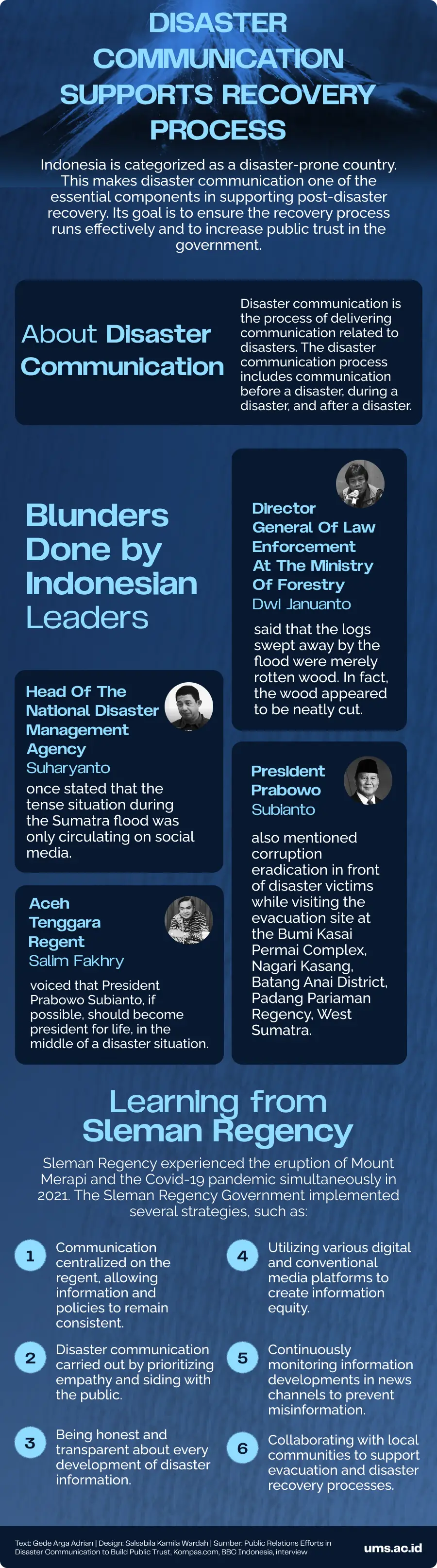
The Sleman Regency Government's approach should serve as an example for other regional governments as well as the central government. Effective disaster communication must be carried out to provide reassurance to disaster victims.
April stated that disaster communication is crucial for building and maintaining public trust in the government. The communication strategy implemented by the Sleman Regency Government proved capable of maintaining public trust while also supporting disaster response efforts.
Disaster communication that reaches local communities can accelerate the dissemination of early warning notification and evacuation coordination in the area. This approach can help address the government's limited resources in reaching communities in isolated areas.
The central government can also be transparent about its constraints and limitations in handling disasters. However, April emphasized, "There still has to be a strategy. But the most important thing is that it must be proven through actions and attitudes, not merely words," explained the UGM Communication Science master's graduate.
If honesty is conveyed without concrete action, she considered it merely lip service. In fact, communities need certainty about evacuation sites, assistance, and their future.
April emphasized that the government must adopt the perspective of the community. By positioning themselves as disaster victims, policymakers can better understand the appropriate actions and policies needed for affected communities.
"When the government has empathy for the community, it will continue to adjust all of its policies to the conditions faced by the people," April concluded.
Writer: Gede Arga Adrian
Translator: Farizal Luqman Majid
Editor: Al Habiib Josy Asheva
Nadia Nur Imani is determined to fulfill her mother's dream by becoming a nurse, opening a new path to The Land of the Two Holy Mosques
Nothing’s more special than reading curated news just for you.
Subscribe to the UMS Newsletter for free today.