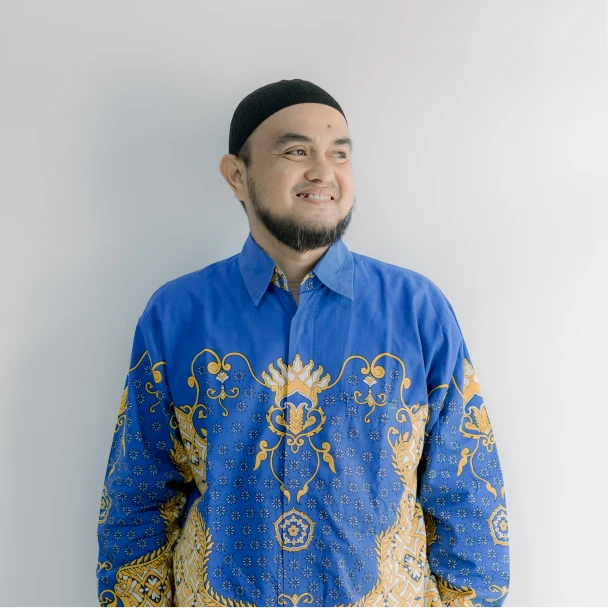
Keeping the Lights On in Qatar's Milaha Vessel
30 July 2026
Muhamad Wildan Fadhila flew to Qatar to work as an electrical technician on ships owned by Milaha. Maintaining the vessel's electrical systems while catching his global exposure.

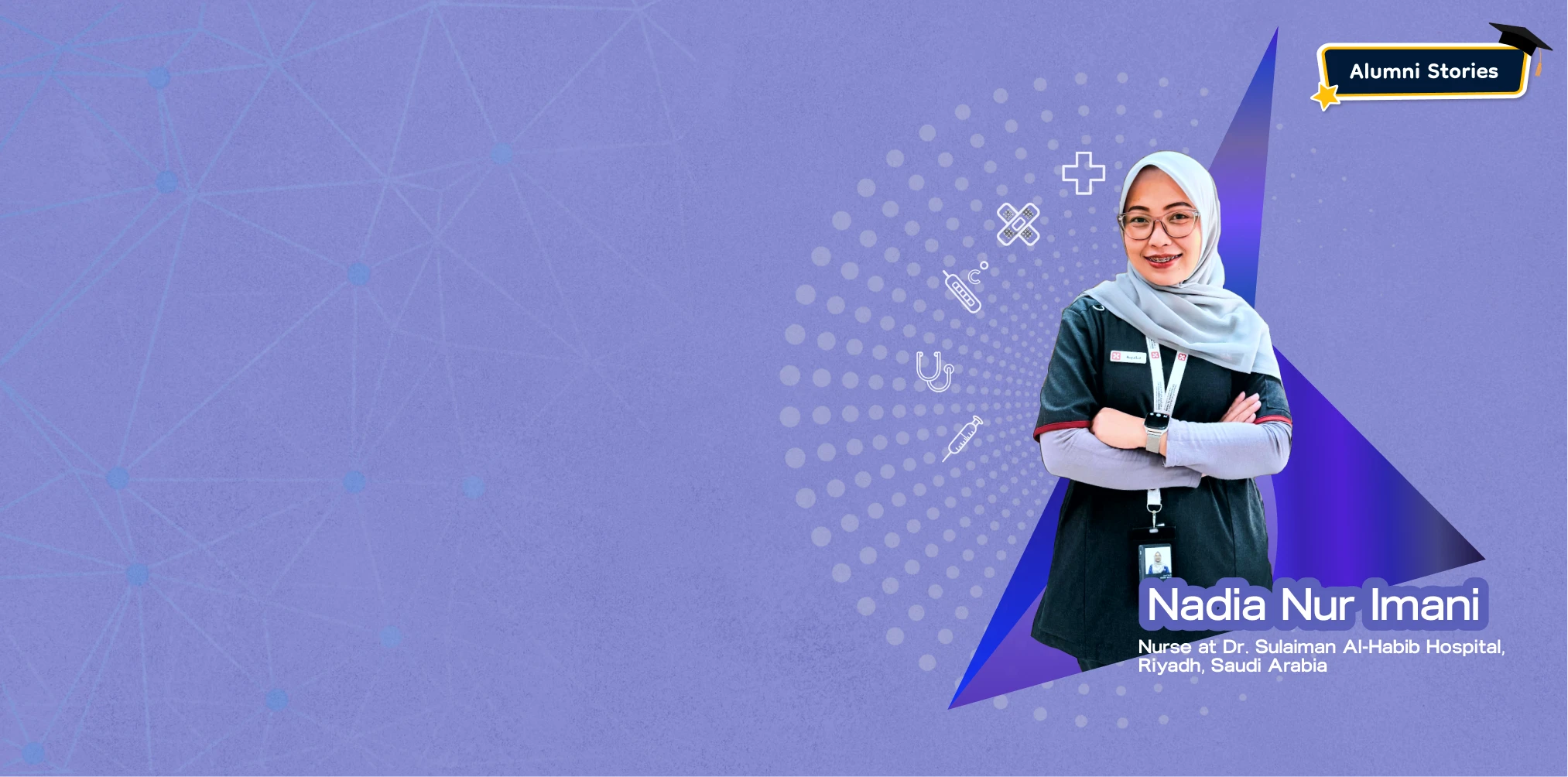
n the South Korean drama Dr. Romantic, the character Kim Sa-bu, better known as Master Kim, is celebrated as a genius, a surgeon so precise that fans have crowned him with the nickname "Hand of God." Charismatic and exacting, he has become something of a moral compass for the colleagues who orbit him on screen.
One line of his lingers with viewers more than most: "The moment you give up, that's when you start looking for excuses. The moment you decide to hold on, that's when you start finding a way."
Those words stayed with Nadia Nur Imani throughout her years studying Nursing at Universitas Muhammadiyah Surakarta. Born in Lampung on 11 March 2000, she carried a quiet conviction that the choice to pursue nursing would, in time, carve out a better road ahead.
Her reason for picking the field is, in the end, a simple one, to live out her mother's dream. It is a mission shared, perhaps, by many of her generation.
Her mother, Nadia explained, once harbored her own ambition of studying nursing. Life intervened, and the dream was quietly set aside. "That's why I want to carry on what my mother wished for," she said when reached by phone in late June.
A devoted fan of Korean dramas, drakor, as they're known in Indonesia, Nadia found her interest sharpening toward emergency nursing. The field, she said, is demanding in a way that stirs her. She laughed as she admitted that most of her inspiration was drawn from medical dramas like Dr. Romantic and Trauma Code.
To Nadia, Every emergency case demanded tactical decisions made under pressure, stabilizing the patient before doctors can step in for further treatment. "Sometimes we're racing Izrail, the angel of death," Nadia quipped.
She came to know that race firsthand during her time in UMS' Professional Nursing Program, when she was placed at the emergency department of Dr. Soeradji Tirtonegoro General Hospital (RSST) in Klaten, Central Java.
The night before Eid al-Adha, Nadia slept soundly. She had no way of knowing that the morning ahead would unspool into a string of emergencies, one after another.
Shortly after the Eid al-Adha prayers, a patient arrived at the RSST emergency room, struggling for breath after choking on a large piece of meat. Nadia called the on-duty doctor for further care.
Then came another. And another. The cases poured in with strange variety, a person kicked by a cow, a broken leg, a finger severed by a machete, a motorcyclist struck by a cow on the road.
Nadia still remembered the sheer relentlessness of that morning, the nurses and doctors moving without pause. "There was always another patient," she said.
That slice of a single shift became the most unforgettable moment of her professional training. She completed her Professional Nursing Program in December 2023.
It is still fresh in Nadia's memory, the moment at her professional nursing graduation when she first learned of the labor placement agency. The agency, she said, introduced a handful of opportunities and held open a door for fresh graduates to begin their careers abroad.
Opportunities of that sort rarely come knocking twice. “Maybe I really do need to go abroad first,” she thought to herself.
What followed was a long, layered selection process that carried her all the way to a user interview with Dr. Sulaiman Al-Habib Hospital in Saudi Arabia. The hospital posed the question plainly: "Are you ready to go?"
Her reply was just as firm. "I'm ready."
Fortune, it seems, was unwilling to abandon Nadia's resolve to become a nurse and bring her mother's dream to life. In June 2024, she secured a two-year contract at Dr. Sulaiman Al-Habib Hospital in Riyadh, Saudi Arabia.
At first, both of her parents balked at the news. "Why so far, all the way to Arabia?" Nadia recalled, echoing her mother's protest. But Nadia is not one to fold easily. Her persistence in pleading for their blessing eventually softened her parents' hearts.
She did not set out alone. At least six UMS Nursing alumni, Nadia among them, signed contracts at hospitals across Saudi Arabia. The other five, Sri Puji Lestari, Sakanti Maulida Firjatullah, Fatma Dwi, Derel Azizah, and Sofi Aulianisa, would make the journey with her.
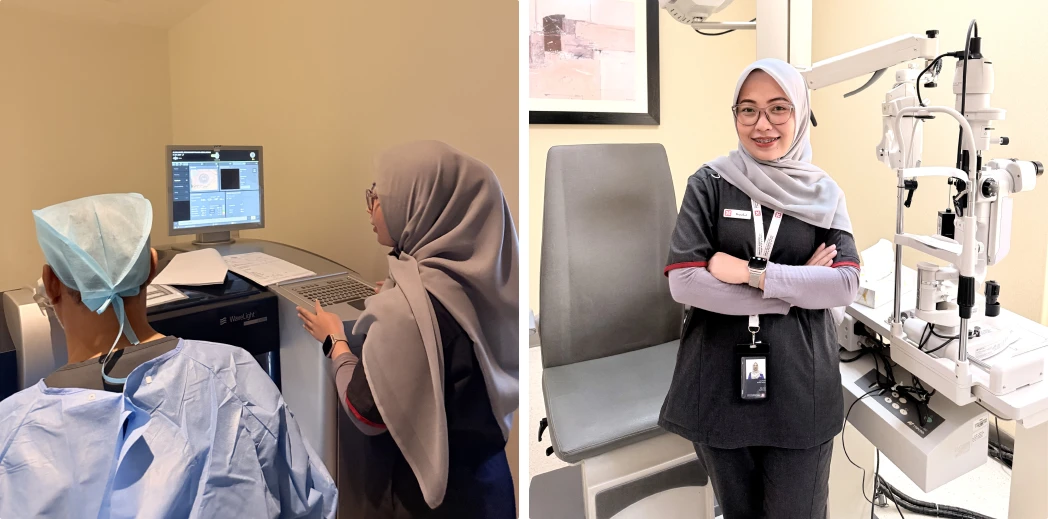
An old Indonesian saying goes, lain ladang lain belalang, lain lubuk lain ikannya, basically, “when in Rome” The proverb felt relevant the moment Nadia set foot in the Land of the Two Holy Cities.
The first thing demanding swift adaptation was the difference in temperament. Patients in Saudi Arabia, Nadia recalled, are often less patient. They lodge sharp complaints, and tempers can flare into open arguments when queues stretch long.
Language, at least, was kinder to her. The mandatory working language is English, and Indonesian still finds its way into her days thanks to the sizable Indonesian diaspora working across Saudi Arabia. "As for Arabic, you just adjust as you go, eventually you pick up the basics," she said.
The medical facilities at Dr. Sulaiman Al-Habib Hospital are well-equipped and modern. The work system runs with order and discipline. Nadia found no trace of the drawn-out handover shifts familiar to many healthcare facilities back home. Overtime hours come with proper compensation.
She was also expected to grow into an independent nurse, capable of performing basic nursing procedures without leaning on a doctor's instruction at every turn.
Two years in Riyadh have softened the unfamiliar into something close to home. Nadia even had the chance to perform Umrah in the holy city of Mecca. "This is such a privilege for me," she said.
Though thousands of kilometers separate her from her hometown, Nadia keeps the distance from feeling too wide by calling her parents on video. She had hoped to take leave and return home last November.
The hospital, however, required her to obtain her nursing license before granting that leave. The license, by way of comparison, is the Saudi equivalent of Indonesia's surat tanda registrasi, the official nursing registration certificate. "Maybe in September I'll be able to take leave and go home," Nadia says.
This June marks her full second year in Saudi Arabia. The latest news: she has been entrusted with another two-year contract at Dr. Sulaiman Al-Habib Hospital. "Alhamdulillah," Nadia concluded.
Writer: Gede Arga Adrian
Translator: Farizal Luqman Majid
Editor: Al Habiib Josy Asheva
Designer: Muhammad Nur Haqqi
Muhamad Wildan Fadhila flew to Qatar to work as an electrical technician on ships owned by Milaha. Maintaining the vessel's electrical systems while catching his global exposure.
Nothing’s more special than reading curated news just for you.
Subscribe to the UMS Newsletter for free today.