
Keeping the Lights On in Qatar's Milaha Vessel
30 July 2026
Muhamad Wildan Fadhila flew to Qatar to work as an electrical technician on ships owned by Milaha. Maintaining the vessel's electrical systems while catching his global exposure.


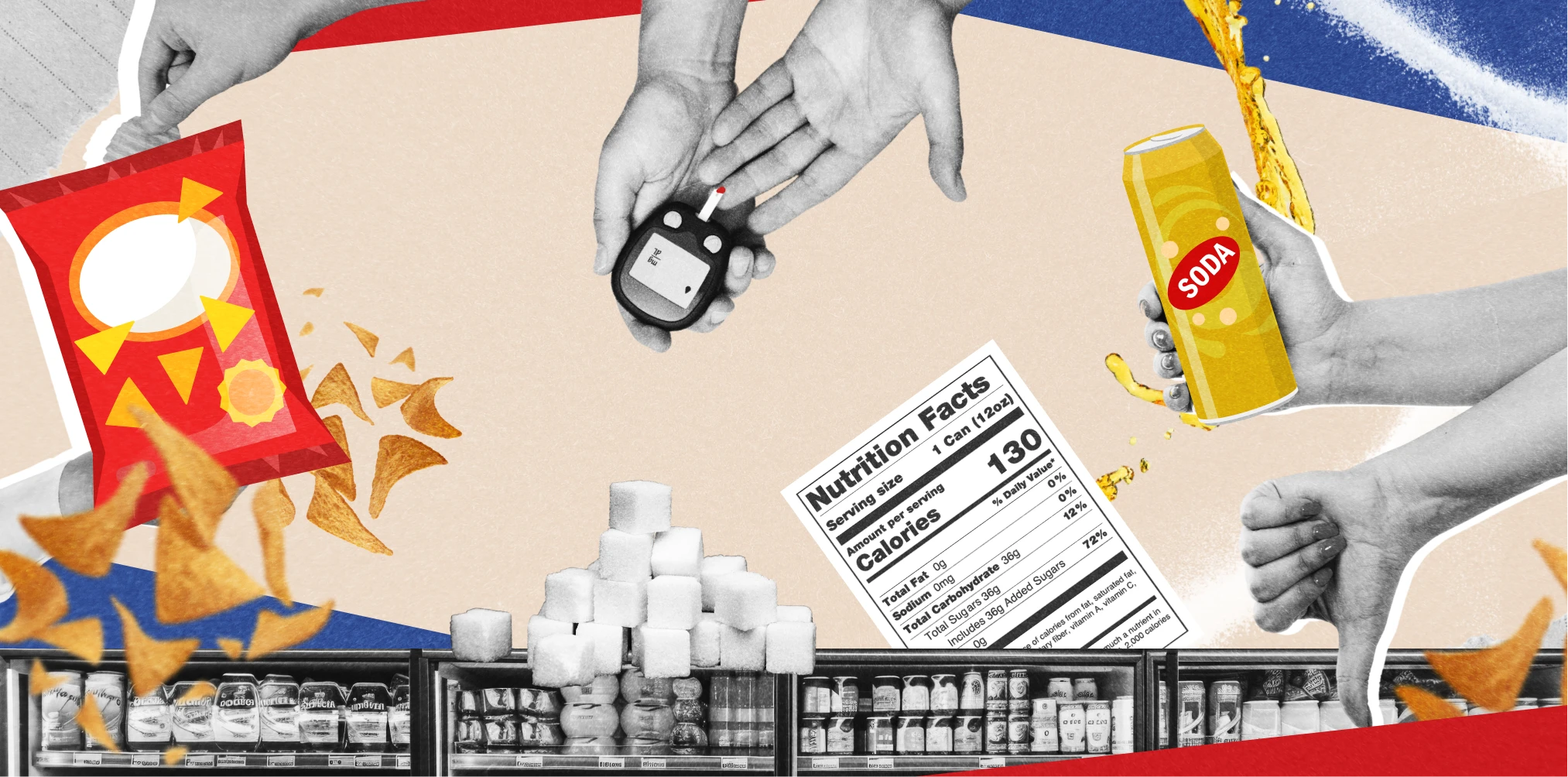
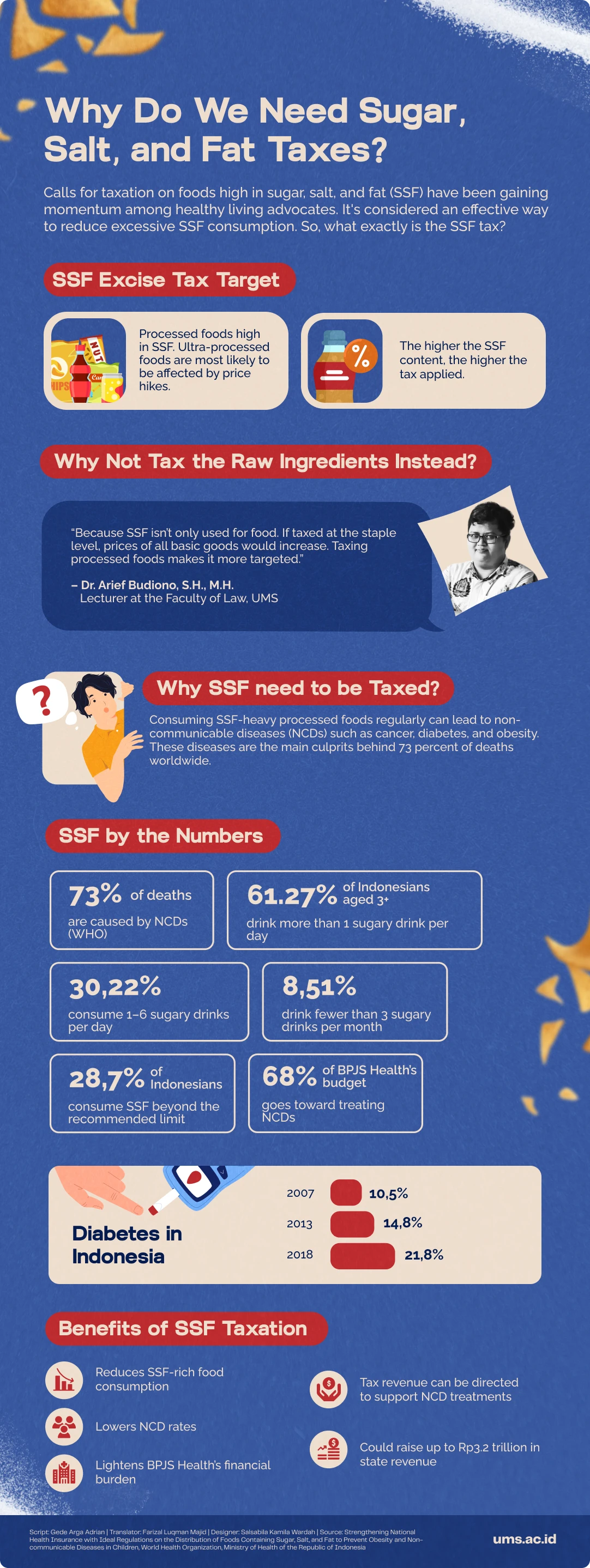
A report by the World Health Organization (WHO) states that non-communicable diseases are responsible for 73 percent of deaths globally. Diseases such as obesity, cancer, heart disease, hypertension, and diabetes are often the result of poor diet and obesity starting from a young age.
The main culprit is the overconsumption of foods high in sugar, salt, and fat (SSF). Sugar intake, for example, data from the Indonesian Ministry of Health shows that 61.27 percent of Indonesians aged over three years regularly consume more than one sugary drink per day.
Meanwhile, 30.22 percent consume between one and six sugary drinks, and 8.51 percent consume fewer than three sugary drinks per month.
The Director General of Disease Prevention and Control at the Ministry of Health, Maxi Rein Rondonuwu, said that excessive sugar consumption, whether from food or drinks, poses a high risk of health problems such as high blood sugar, obesity, and diabetes mellitus.
“This will certainly increase the burden of healthcare costs in Indonesia, especially since the top five causes of death in the country are dominated by non-communicable diseases,” Maxi explained, as quoted from the Ministry of Health website on Tuesday (29/4/2025).
The government has actually regulated the maximum daily intake levels for SSF. A health policy analyst from Universitas Muhammadiyah Surakarta (UMS), Dr. Arief Budiono, S.H., M.H., stated that the daily GGL consumption limits are stipulated in the Minister of Health Regulation Number 63 of 2015.

Dr. Arief Budiono, S.H., M.H. (UMS PR/Imam Safii)
The maximum recommended intake is 50 grams of sugar per day (equivalent to four tablespoons), 2 grams of salt (about one teaspoon), and 67 grams of fat (around five tablespoons).
Unfortunately, around 28.7 percent of Indonesians still consume SSFbeyond the limits set by the government. One of the reasons is the easy access to foods high in GGL.
“Many children freely consume high-SSF foods. Yet we’ve already seen many cases of children suffering from kidney failure, requiring dialysis, heart attacks, and other conditions,” said Arief on Tuesday.
Between 2007 and 2018, the number of obesity cases in Indonesia steadily increased. In 2007, the obesity rate was just 10.5 percent. It rose to 14.8 percent in 2013, and five years later, it surged again to 21.8 percent.
The high number of non-communicable disease cases threatens to strain the BPJS Kesehatan (Indonesia's national health insurance) budget. Currently, around 68 percent of BPJS Kesehatan (Indonesia’s national health insurance) budget is spent on treating patients with non-communicable diseases.
“More than 60 percent of the budget is used for patients suffering from NCDs caused by excessive consumption of sugar, salt, and fat,” Arief revealed.
According to Arief, this disproportionate spending limits BPJS Kesehatan’s ability to provide optimal services. As the National Health Insurance (JKN) budget remains limited and the number of non-communicable disease cases continues to rise, BPJS Kesehatan’s capacity to cover the treatment of other diseases will decline.
In his research titled "Strengthening National Health Insurance with Ideal Regulations on the Distribution of Foods Containing Sugar, Salt, and Fat to Prevent Obesity and Non-communicable Diseases in Children," Arief Budiono urged the government to pass an excise tax regulation for high-SSF processed foods.
The UMS Faculty of Law lecturer formulated a policy that serves two purposes: reducing the number of non-communicable disease cases and increasing funding for the JKN.
The excise tax would target processed foods with high SSF content. The higher the SSF content in the food, the higher the excise tax imposed. This tax would be charged to producers, which would in turn raise the retail price of processed products on the market.
“When an excise tax is applied, prices of foods and drinks will automatically rise. The hope is that consumption will decrease,” he explained.
One example of a SSF excise policy is the tax on sugary drinks, which has been implemented in several countries such as the United Kingdom, the Philippines, Mexico, Portugal, and South Africa. Arief believed it is time for Indonesia to adopt a similar policy.
So why isn’t the tax applied directly to basic ingredients like sugar, salt, or fat?
Arief said that taxing basic ingredients would not be effective.
“Because not all sugar, salt, and fat are used for processed foods. If we tax the raw ingredients, then the prices of everything will rise. But with a tax, it will specifically target certain foods,” he explained.
The policy he proposes also pushes for the government to allocate the excise tax revenue from high-SSF foods directly to BPJS Kesehatan. The goal is to ensure that the SSF excise revenue funds the treatment of people suffering from non-communicable diseases.
Currently, excise revenues are included in the country’s general income. This means the funds can be used for a wide range of needs, such as infrastructure spending, employee salaries, or other non-health sectors.
By redirecting it, BPJS Kesehatan would have more flexibility in managing its budget, especially since the potential revenue is significant. According to the Indonesian Consumers Foundation (YLKI), the excise on processed foods high in SSF could reach up to IDR 3.2 trillion.
The excise tax would also likely help cut down on the consumption of high-SSF foods. The fewer people consuming them, the lower the number of non-communicable disease cases.
“The hope is that the current 60 percent budget allocation for NCDs could decrease. This kind of budget reallocation is crucial. If it’s just about collecting excise without clear targets, of course the government would be happy, but that’s not enough,” he concluded.
Writer: Gede Arga Adrian
Translator: Farizal Luqman Majid
Editor: Al Habiib Josy Asheva
Designer: Salsabila Kamila Wardah
Muhamad Wildan Fadhila flew to Qatar to work as an electrical technician on ships owned by Milaha. Maintaining the vessel's electrical systems while catching his global exposure.
Nothing’s more special than reading curated news just for you.
Subscribe to the UMS Newsletter for free today.