The Sin of Football Betting
26 June 2026
Amid the FIFA World Cup 2026 euphoria, football betting is also spreading through digital platforms and conventional means.
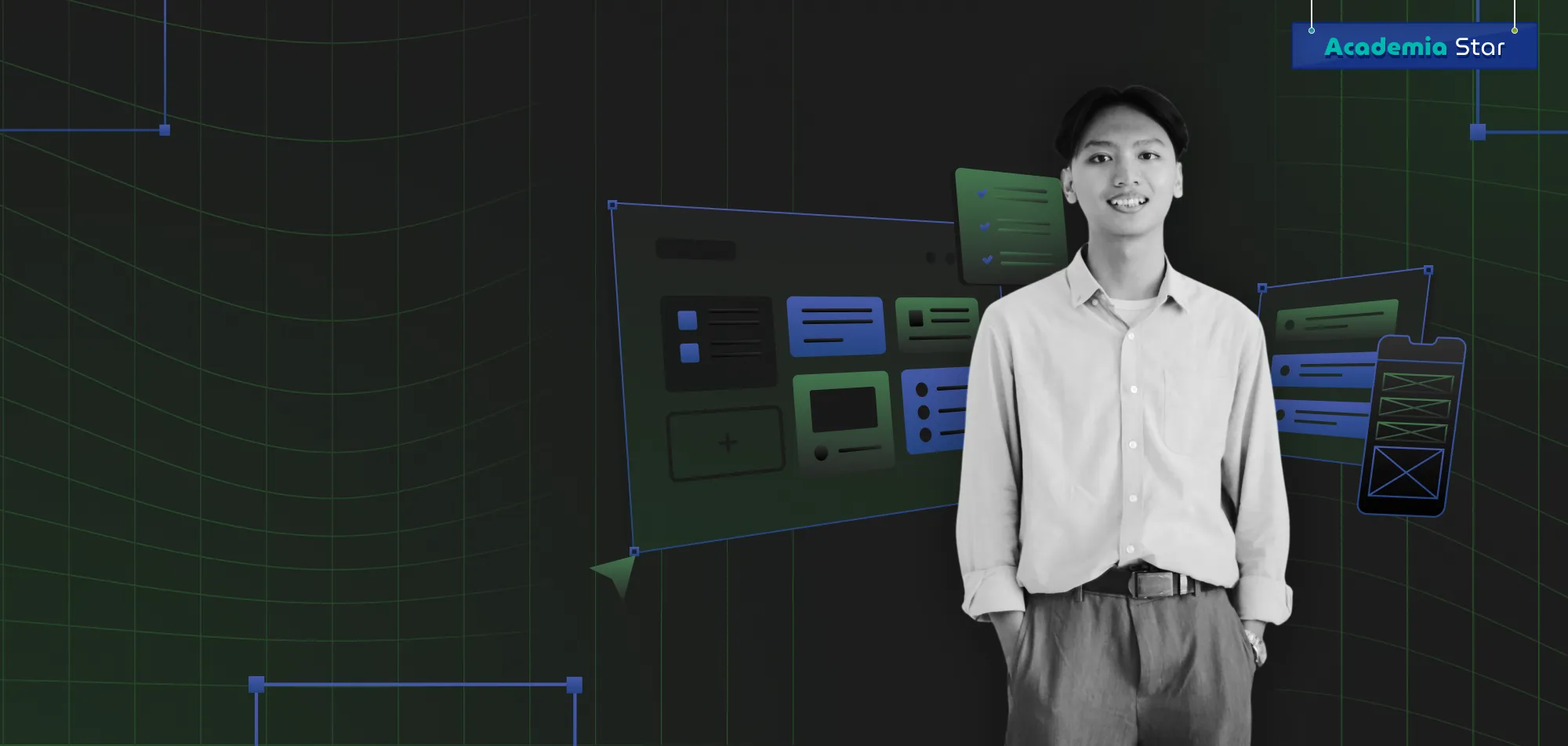
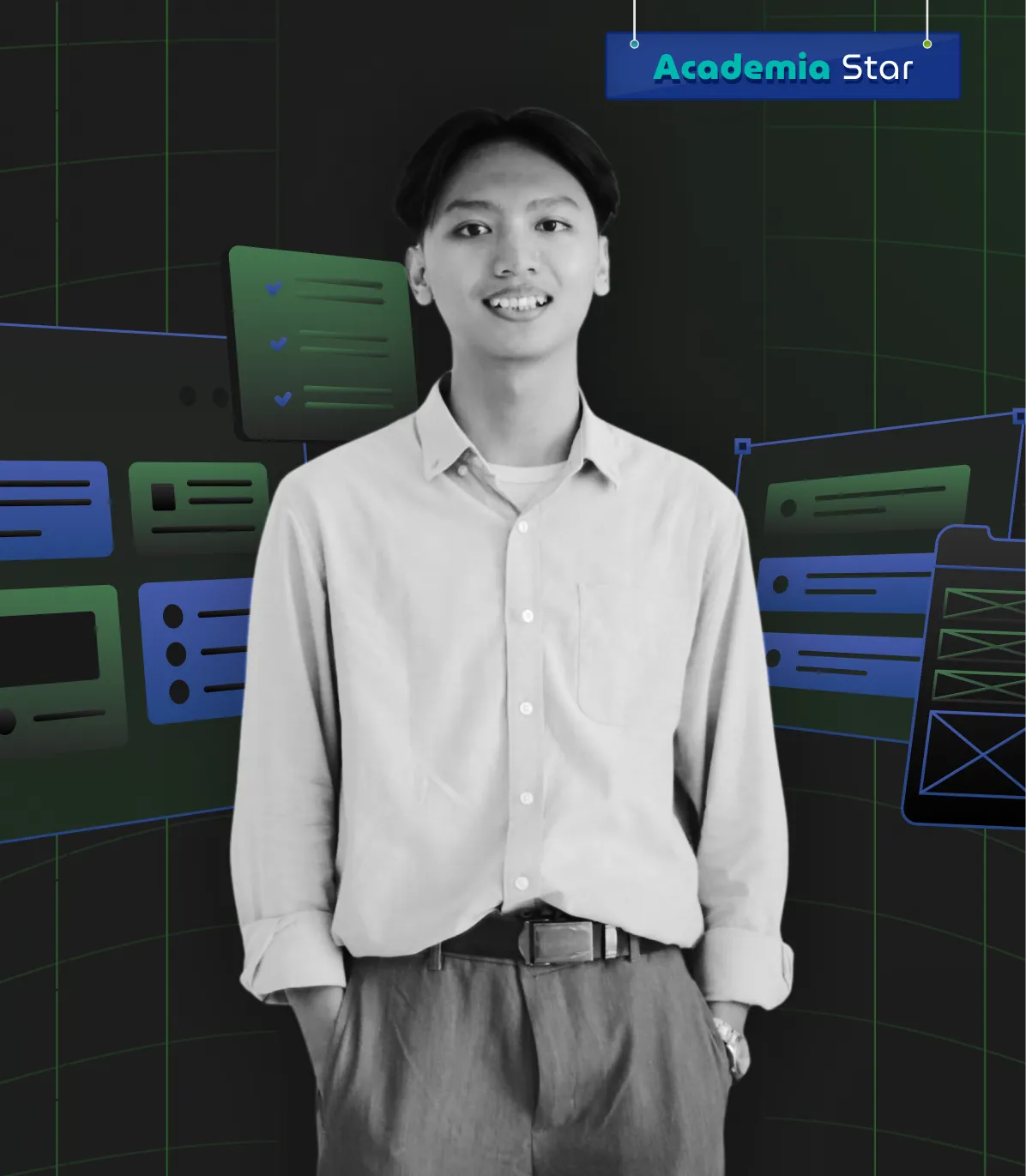
Behind the series of medals achieved by Dizzo Violeta, he was not someone who was confident about joining competitions. The Informatics Engineering student of Universitas Muhammadiyah Surakarta (UMS) grew up as a rather quiet child, who almost never imagined himself breaking into well-known innovation events.
“I was born in Madiun. But when I was still very young, my father and mother immediately migrated to Banten. In the regency where I lived, the educational environment could be said to have very limited access to competitions,” said the firstborn, born in 2004, late last December.
Within those environmental limitations, Dizzo pursued his secondary education in the Software Engineering (RPL) program at SMKN 1 Kragilan, Banten. He relied heavily on self-directed learning, rather than on facilities or specific guidance.
The academic environment around him at that time had not yet provided broad space for students to dream of entering major competitions. His first competition experience also happened with almost no preparation.
At that time, his school had to send a representative for a web development competition at the 2022 Student Skills Competition (LKS) at the Banten Provincial level. The main candidate, a senior student, was forced to withdraw for certain reasons. Dizzo, who had strong academic grades, was eventually chosen to replace the senior.
Dizzo admitted that his first competition, representing SMKN 1 Kragilan, did not yield any results. However, it was precisely there that his turning point began.
“From there, I realized that competitions are not as scary as I imagined,” said the seventh-semester student.
That first defeat became a trigger. Dizzo began to see competitions as a space for learning, rather than merely a win-or-lose arena.
Another driving force came from Dizzo’s own parents. “My parents always said that physical labor in factories is tough. They wanted me to have better life options. Most of my father’s supervisors, they said, were skilled in information technology,” Dizzo recounted.
After graduating from vocational high school, the choice of university location became a major consideration for Dizzo. He wanted to study in an area close to his grandmother’s home in Karanganyar.
That consideration eventually led him to the Informatics Engineering Program at UMS, a program he felt was closely related to his vocational school major.
“Since vocational school, I was already familiar with coding,” he said. He then began looking for another niche within informatics, one that was still technology-based but closer to the visual side.
Dizzo’s encounter with the world of interfaces, or User Interface/User Experience (UI/UX), occurred when he became active in the Forum Open Source Teknik Informatika (FOSTI) UMS. He joined at the beginning of his university years, invited by a senior he met during orientation activities.
FOSTI has several development fields, ranging from programming and cybersecurity to UI/UX. His choice fell on the UI/UX field.
“UI/UX is full of colors. As for the other two fields, I had already been involved and had some knowledge there, while UI/UX was something I had never explored at all,” he said enthusiastically.
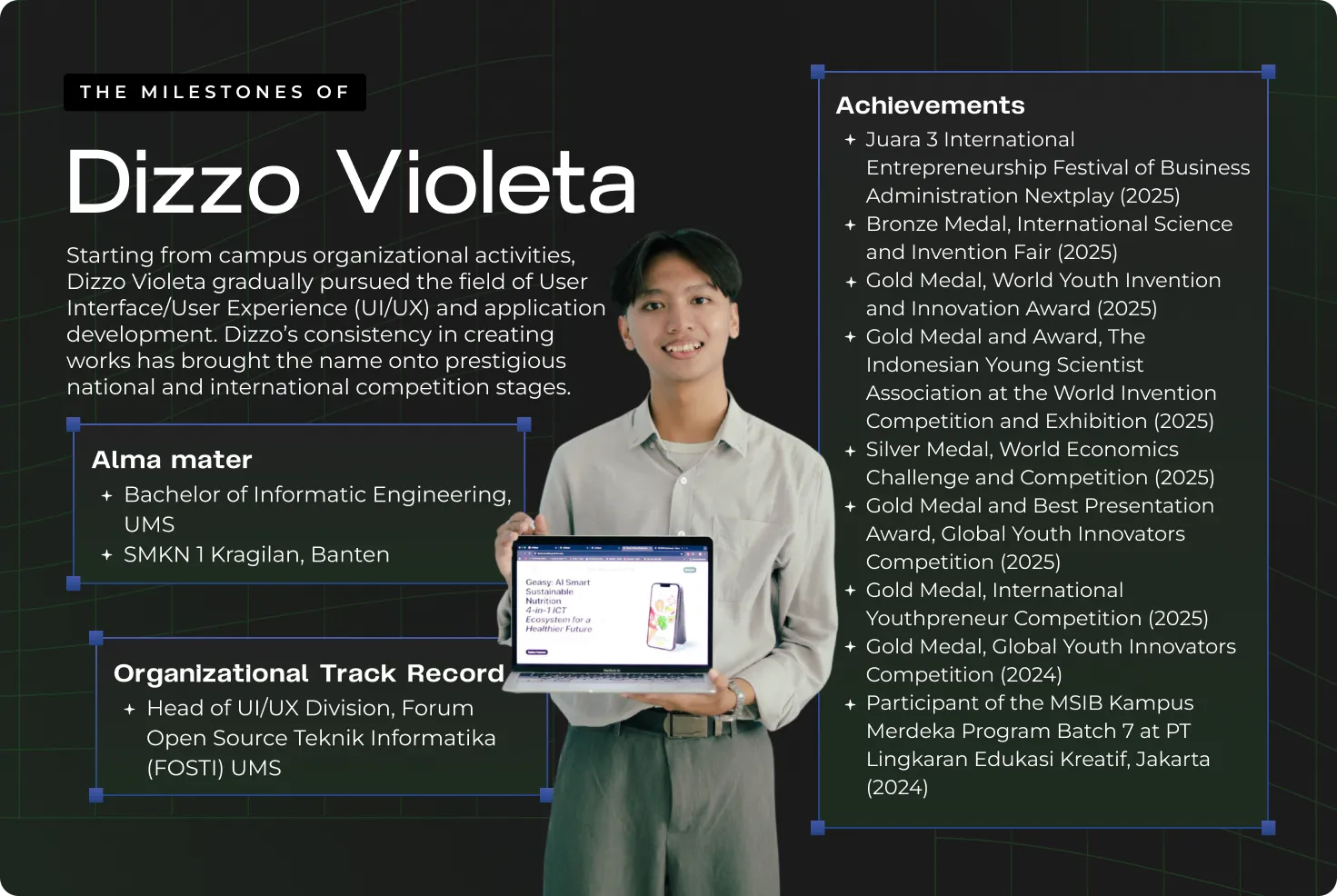
Dizzo began to study UI/UX independently, utilizing tools such as Figma and Canva. He did not stop at the user level. Gradually, Dizzo took on greater roles within the organization. Eventually, he was entrusted as the head of the UI/UX division at FOSTI UMS.
As head of the division, he not only managed work programs but also served as an instructor in internal UI/UX classes that were open to the public. “I chose to be directly involved so we could learn together as well,” he said.
Organizational activities opened the door for Dizzo to enter competitions. It began with an internal campus competition, where he won third place in the Himafos UMS Training Challenge in collaboration with Odama Studio in 2023.
“From that point on, networks began to form,” he said.
Starting in his fourth semester, Dizzo began to regularly take part in competitions, mostly in application innovation and digital business. One of the most memorable for him was the International Entrepreneurship Festival of Business Administration (IEFBA) Nextplay 2025, where his team won third place at the international level.
In the competition, Dizzo was the only informatics engineering student on his team. He was fully responsible for designing the application prototype, from structure and visual interface to user experience flow.
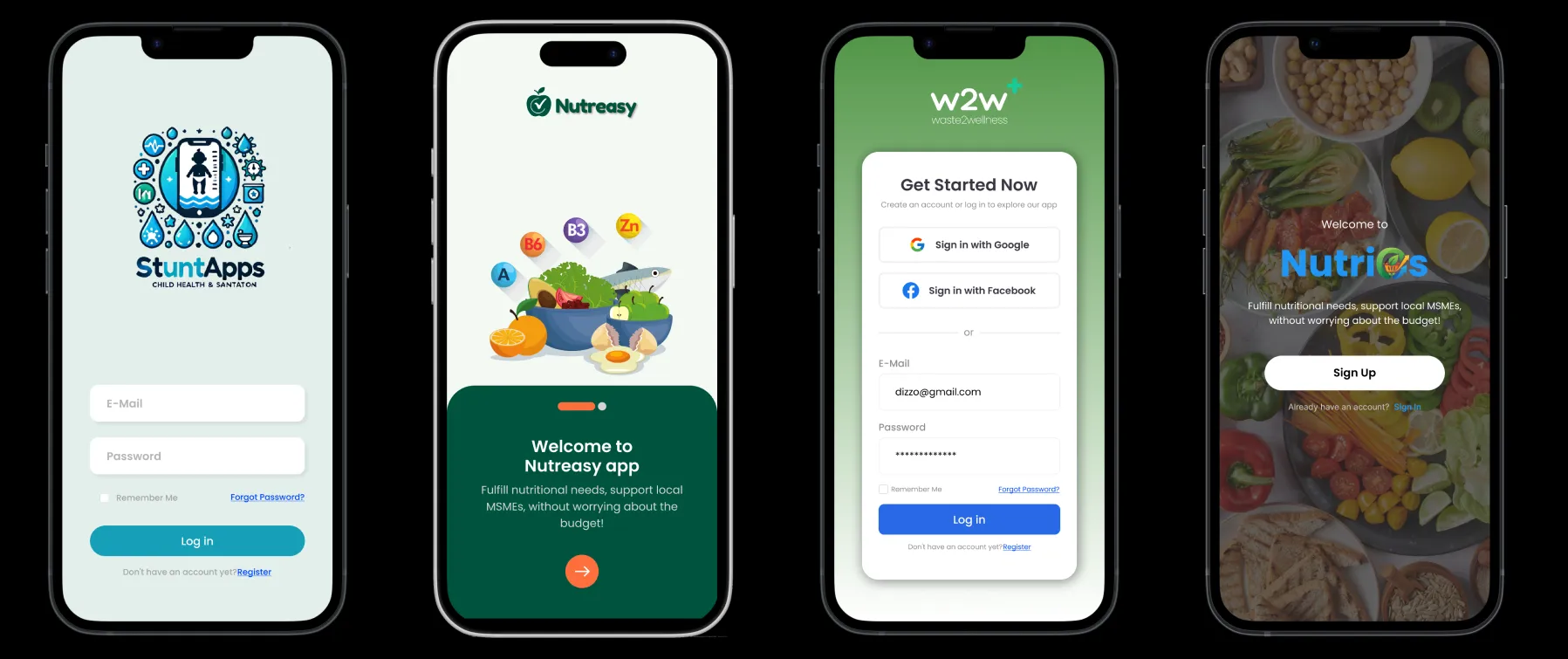
The product developed was an integrated health application combining nutrition features, consultations, and a healthy product marketplace. “Usually, competitions use a point-based system. But this one was truly head to head against many teams. So the pressure at that time made the competition feel really tough,” he said.
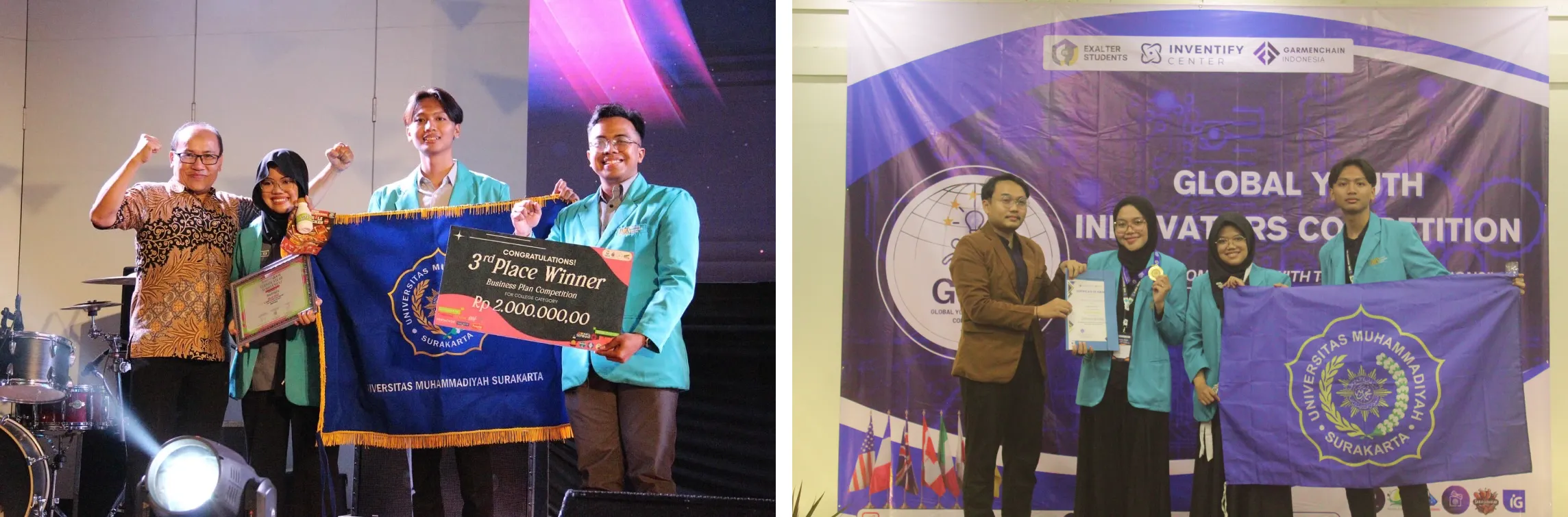
Besides IEFBA, Dizzo also recorded achievements in various other international events through health- and nutrition-based application innovations. At the Global Youth Innovators Competition 2024 and 2025, for example, he designed StunApp, an early stunting screening platform that allows parents to monitor the growth and development of children aged 0–5 years by inputting weight and height data, complemented by educational and consultation features.
Similar innovations also led him to win a gold medal at the World Youth Invention and Innovation Award, as well as a gold medal and The Indonesian Young Scientist Association Grand Prize at the World Invention Competition and Exhibition 2025. In these events, Dizzo was in charge of designing both the interface and the application prototype for an integrated health app that combines a healthy market feature for MSME products, nutrition education, a nutriplanner, and a nutrition impact tracker.
Most recently, Dizzo and his partner have tried to add an AI-based health consultation feature that refers to scientific journals and literature to the previously developed application. This feature is designed to provide reference-based answers, rather than mere speculation.
“The goal is not to replace doctors, but to provide easy and free early access,” Dizzo explained.
The application is now being prepared for participation in Thailand Inventors’ Day 2026. For the competition, Dizzo and his team are carrying out application rebranding, refining the AI features, and strengthening the interface and user experience aspects so that the solution offered is not only functional, but also easily accessible to the wider community.
In addition to actively competing, Dizzo also made the most of the opportunity to join the Certified Independent Study and Internship Program (MSIB) of Kampus Merdeka batch 7 in 2024. Dizzo was accepted through the Independent Study track at PT Lingkaran Edukasi Kreatif, Jakarta, choosing the UI/UX field.
There, Dizzo was involved in a real project developing a digital health service application, similar to Halodoc, using a UI/UX research-based approach. He worked in a small team, going through processes ranging from user research to the creation of functional prototypes.
Candidly, Dizzo admitted that he wanted to continue deepening his expertise in UI/UX. He aspired to pursue a career as a professional UI/UX designer, with front-end development as his second option.
Working at major technology companies such as Tokopedia or Shopee is a dream he continued to chase. “There’s a sense of satisfaction when I can say to my family, this is my design,” he said.
He realized that future challenges will not be easy, especially with the presence of AI in the design world. However, Dizzo saw it as motivation to continuously improve his skills, particularly in prototyping and interface animation, which he believed still required a human touch.
“I also keep motivating myself. The key is not to feel inferior about your own designs. Look for lots of inspiration and don’t be discouraged when you receive feedback,” Dizzo concluded.
Writer: Genis Dwi Gustati
Translator: Farizal Luqman Majid
Editor: Al Habiib Josy Asheva
Designer: Salsabila Kamila Wardah
Amid the FIFA World Cup 2026 euphoria, football betting is also spreading through digital platforms and conventional means.
Nothing’s more special than reading curated news just for you.
Subscribe to the UMS Newsletter for free today.