The Sin of Football Betting
26 June 2026
Amid the FIFA World Cup 2026 euphoria, football betting is also spreading through digital platforms and conventional means.
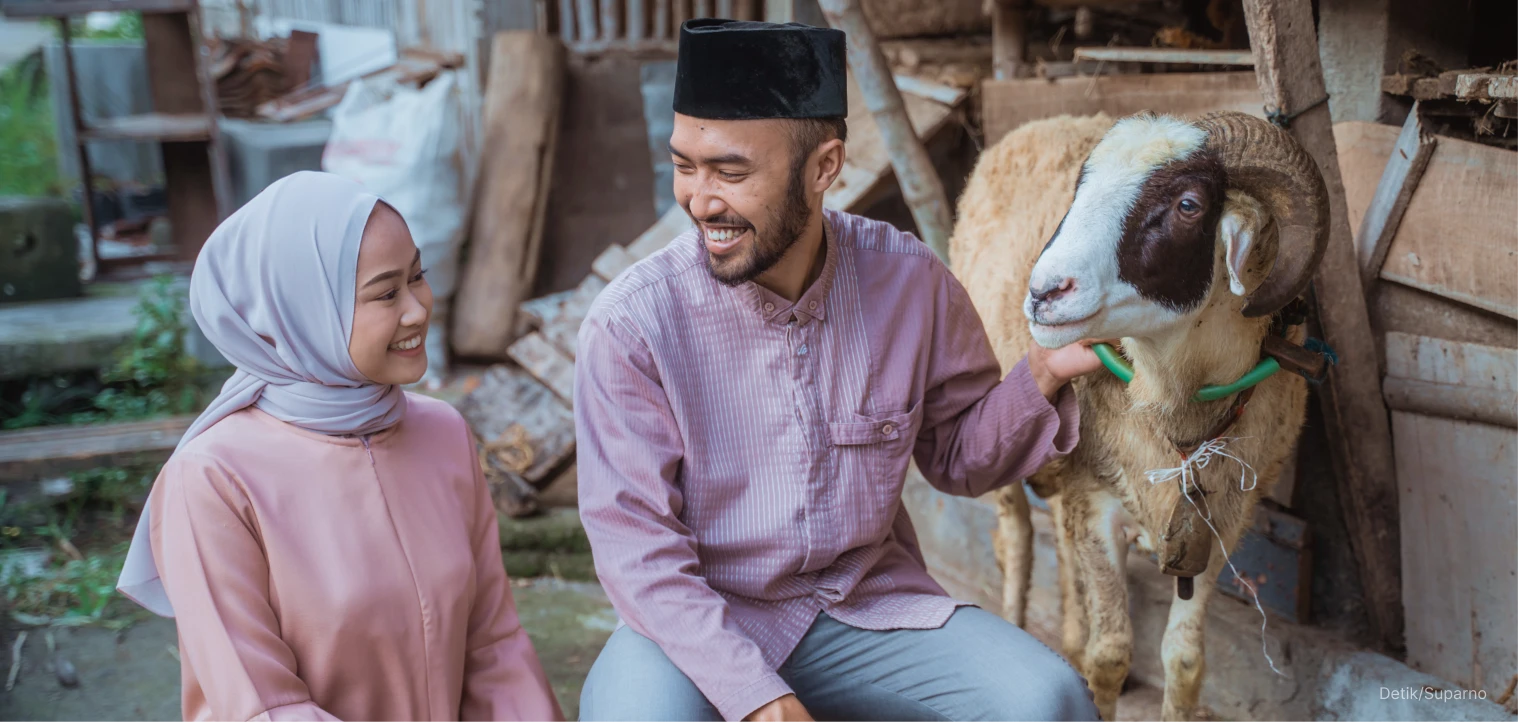
Qurban meat is one of the most anticipated moments for Muslims. Yet questions about the rules and provisions governing its distribution remain common. So what does Islamic law say about how qurban meat should be divided and calculated?
Before distributing qurban meat, it is important to understand who is eligible to receive it. The recipients have been established based on provisions in the Quran and the hadith of the Prophet Muhammad SAW.
The three main groups entitled to receive qurban meat are the shohibul qurban (the person who offers the sacrifice), the poor and needy, and relatives or the general public.
Head of the Master of Islamic Economic Law Program, Dr. Isman, S.H.I., S.H., M.H., explained that qurban meat may be enjoyed by all groups, unlike zakat fitrah which is specifically designated for the poor and needy.
"Qurban meat may also be given to the poor and needy who live outside the city or outside the area where the slaughter takes place," said Isman on Wednesday (6/5/2026).
The rules regarding recipients of qurban meat are set out in Surah Al-Hajj verses 26 and 38.
فَكُلُوْا مِنْهَا وَاَطْعِمُوا الْبَاۤىِٕسَ الْفَقِيْرَ ۖ
Meaning: Eat of it and feed the miserable and poor. (Q.S. Al-Hajj: 26)
فَكُلُوْا مِنْهَا وَاَطْعِمُوا الْقَانِعَ وَالْمُعْتَرَّۗ
Meaning: Eat of it and feed the contented one who does not ask and the beggar. (Q.S. Al-Hajj: 38)
The provisions for distributing qurban meat are based on the two verses from Surah Al-Hajj. Isman noted that the distribution must take into account three groups of recipients: the shohibul qurban, the poor and needy, and those who receive qurban meat as a gift.
Qurban meat can be distributed by allocating one third to the shohibul qurban, one third to the poor and needy, and one third as gifts to the general public.
"Those portions serve as a reference that can be adjusted to the circumstances at the time. For example, in the event of a disaster, the portion of qurban meat would be prioritized for disaster relief," Isman added.
The rules for distributing qurban meat are also referenced in the following hadith:
عَنْ أَبِي سَعِيدٍ أَنَّ رَسُولَ اللهِ صَلَّى اللهُ عَلَيْهِ وَسَلَّمَ قَالَ يَا أَهْلَ الْمَدِينَةِ لَا تَأْكُلُوا لُحُومَ الْأَضَاحِي فَوْقَ ثَلَاثَةِ أَيَّامٍ فَشَكَوْا إِلَى رَسُولِ اللهِ صَلَّى اللهُ عَلَيْهِ وَسَلَّمَ أَنَّ لَهُمْ عِيَالًا وَحَشَمًا وَخَدَمًا فَقَالَ كُلُوا وَأَطْعِمُوا وَاحْبِسُوا وَادَّخِرُوا [رواه مسلم].
From Abu Sa'id, it is narrated that the Prophet Muhammad SAW said: "O people of Madinah, do not eat qurban meat beyond three days." They then complained to the Prophet SAW that they had family members, unmarried men, and servants. The Prophet SAW then said: "Eat of it, feed others with it, keep some, and store it." (HR Muslim)
A common question is how many kilograms of qurban meat each party should receive. Isman explained that the weight of each portion can be adjusted based on the size of the slaughtered animal.
For a goat weighing 25 kilograms, for example, the meat can be divided into roughly 8 kilograms for the shohibul qurban, 8 kilograms for the poor and needy, and 8 kilograms for the general public.
For a cow weighing approximately 150 kilograms, the distribution would be 50 kilograms for the shohibul qurban, 50 kilograms for the poor and needy, and 50 kilograms for the general public.
The amount of qurban meat distributed per person can also be adjusted by weight. Most scholars recommend distributing 1 to 2 kilograms per person for the poor and the general public. This amount is considered appropriate for consumption during the days of tasyrik. If each person receives only 0.5 kilograms, there is concern the meat may not be sufficient to last through all three days of tasyrik.
"Qurban meat is not exclusively for the poor the way zakat fitrah is. That is why Eid al-Adha is followed by three days of tasyrik. They are called the days of tasyrik because they are days of joy and gratitude, celebrated by enjoying qurban meat," he continued.
One innovation in qurban meat distribution that has emerged among Muslims is processing the meat into ready-to-eat canned food. This approach is considered practical and extends the shelf life of the meat considerably. So what is the Muhammadiyah tarjih perspective on this phenomenon?
Distributing qurban meat in the form of rendang or canned corned beef is viewed as aligned with and not contradicting Islamic legal evidence. Isman even noted that processing qurban meat in this way is encouraged under certain conditions.
"However, the slaughter must still be carried out on Eid al-Adha or during the days of tasyrik," Isman stressed. Canning qurban meat is seen as a manifestation of the command to keep and store (ihbisu wa iddakhiru) for long-term benefit.
Isman explained that the purpose of canning qurban meat is to serve food security interests and provide emergency relief during natural disasters. This is an application of the principle of ease in religious practice and ensures that those in hardship can also benefit from qurban meat.
However, Isman cautioned that the canning of qurban meat must not involve any commercialization or sale of the meat by the shohibul qurban or their representative.
"The prohibition for the shohibul qurban, as stated in the Hadith narrated by Ahmad, is: do not sell the meat of hadyu and qurban. This also applies to the qurban committee, meaning it is not to be bought or sold," he emphasized.
Writer: Gede Arga Adrian
Translator: Farizal Luqman Majid
Editor: Al Habiib Josy Asheva
Amid the FIFA World Cup 2026 euphoria, football betting is also spreading through digital platforms and conventional means.
Nothing’s more special than reading curated news just for you.
Subscribe to the UMS Newsletter for free today.