
Bank Indonesia Holds Interest Rate at 5.75%, What Is the Impact?
24 July 2026
Bank Indonesia has held its benchmark rate at 5.75 percent, ending speculation of a hike to 6 percent that had circulated in recent weeks.



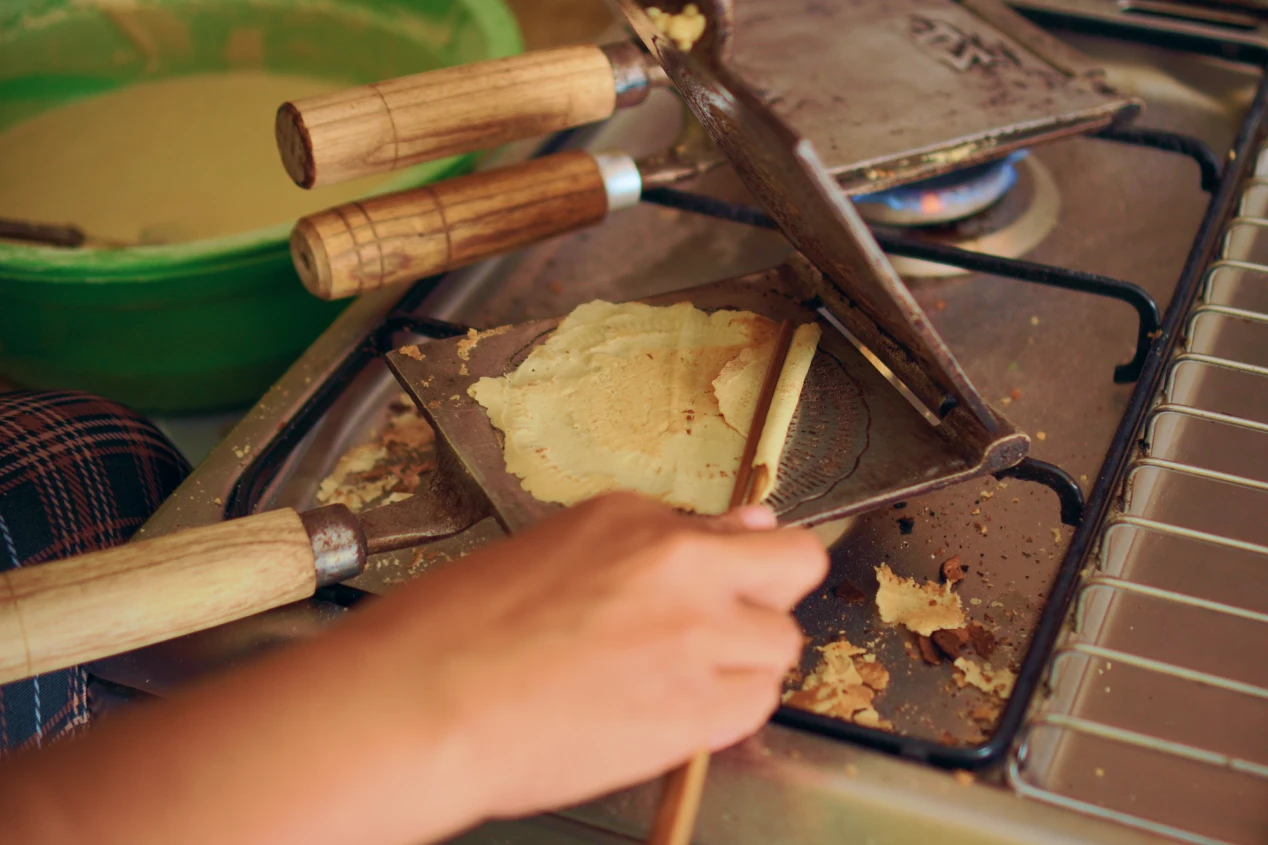
The delicious aroma of freshly baked egg rolls made by one of the Dbroo Kitchen staff in Laweyan, Surakarta, fills every corner of the small home kitchen. On the table, white and yellow ziplock packages are neatly stacked, ready to be shipped to resellers and Solo’s souvenir centers.
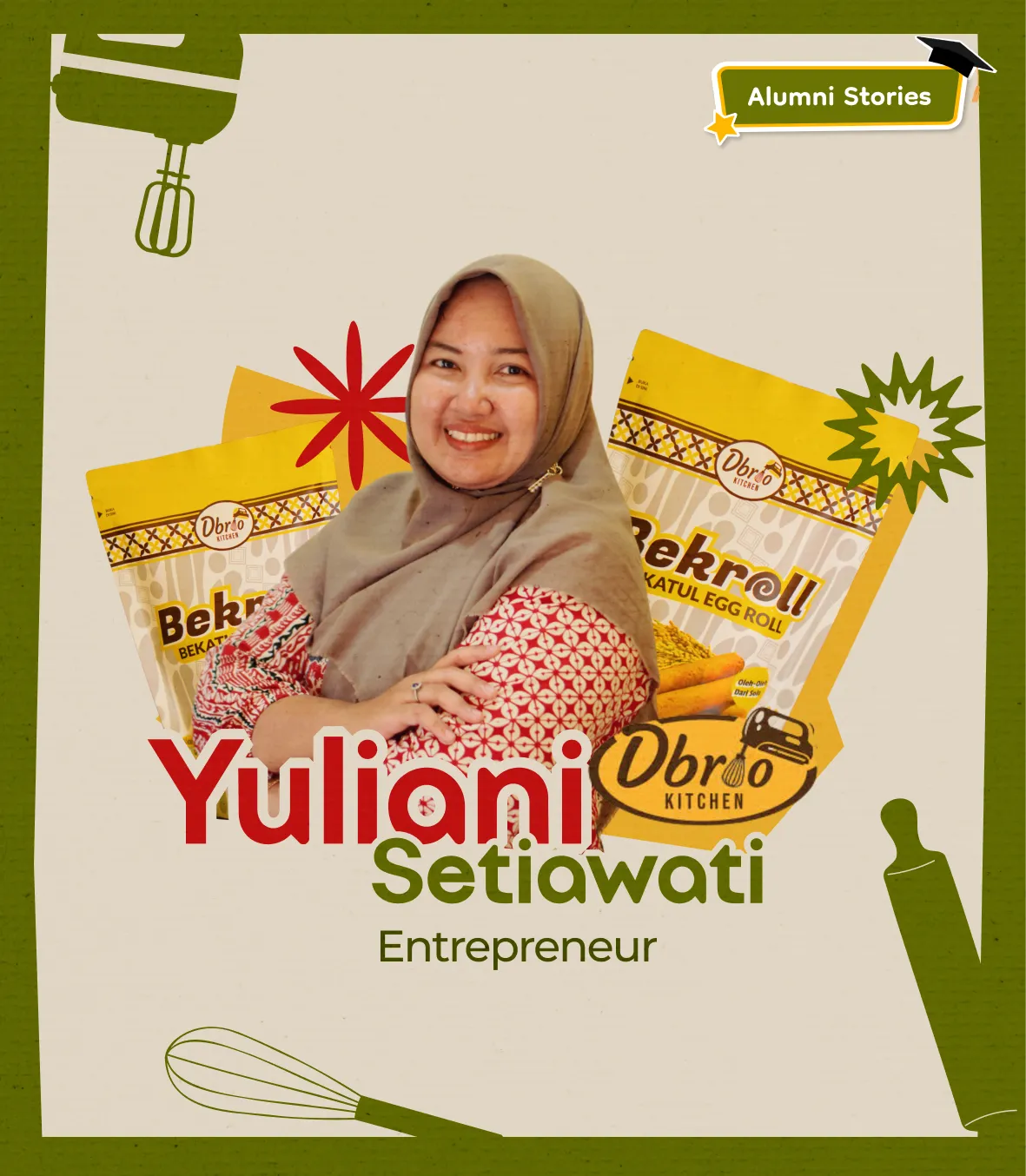
Such is the daily routine of 37-year-old Yuliani Setiawati as she manages her Micro, Small, and Medium Enterprise (MSME), Dbroo Kitchen. “This one is definitely the best-seller, the bran egg roll,” said the Accounting Education alumna from Universitas Muhammadiyah Surakarta (UMS) during our interview on the last week of November.
Before she became known as the owner of Dbroo Kitchen, Yuli spent nearly a decade working in the banking sector. Her life was stable with a steady income, until the thought of resigning crossed her mind.
Yuli’s husband, who worked at the same state-owned bank (BUMN) branch in Surakarta, had resigned first in 2018. She followed a year later.
“It wasn’t something we had planned. Before I officially resigned, my husband and I tried our luck by opening a franchise food business that was incredibly viral at the time,” recalled the mother of three.
In the first four months, the revenue was promising, enough to tempt the couple into opening two additional outlets at once.
But business is not only about market hype, it’s also about mental preparedness, management, and sustainability. “Everything suddenly fell apart. There was miscommunication, sales declined, and eventually all three outlets had to close. The debt kept running, and we still had to pay employee salaries,” Yuli recounted.
At that time, Yuli admitted that her life was under immense pressure. Coming home from the bank no longer brought relief, it felt suffocating. Eventually, Yuli decided to leave her job for good and help her husband.
“My salary at the bank meant nothing compared to our liabilities. It felt like I was working only to fill one hole after another,” she lamented.
After leaving her office, Yuli and her husband’s savings began to dwindle. One by one, they sold household items. Even their motorcycle had to go just to keep up with payments.
Amid that uncertainty, Yuli found a ray of hope, not from seminars or large capital, but from the kindness of a former employee from her failed franchise business.
“At the time, I didn’t have proper cooking equipment. My former employee said, ‘Mbak, just rent the equipment from my friend, and I’ll teach you how to make donuts,’” Yuli recalled.
Yuli began learning to make homemade donuts. After one failed recipe, she tried again. If a formula didn’t work, she tested dozens more until the texture and flavor matched her expectations.
“Those trial donuts were tasted by me first, then by the people closest to me before we finally offered them to the market or to a neighbor’s grocery stall. Back then, the product didn’t even have a brand,” she said.
The pandemic arrived not long after the home business began operating. All access to shops and markets shut down. Instead of being discouraged, Yuli actually found her momentum.
“At first, I posted on WhatsApp, then on Instagram. There were always neighbors placing orders,” she said. This was especially true when market activities were restricted and people shifted to online shopping. Raw materials were still available, even though the situation at the time was far from easy.
Her awareness of the need to manage her business more professionally began to grow in 2020. Under the guidance of the Integrated Business Service Center (PLUT) of Surakarta City, Yuli gradually took care of the required legal documents, from obtaining a Business Identification Number (NIB), a Home Industry Food Production Certificate (PIRT), halal certification, to registering the Dbroo Kitchen trademark for HAKI protection.
The most pivotal turning point in Yuli’s life came in 2022, when she joined an MSME training program and met a participant who brought rice bran milk.
“I was curious about what the product was and how it tasted. And I ended up going home with two samples of the milk,” Yuli recalled.
The first idea that crossed her mind was to make cookies out of rice bran. Yet she realized cookies would only sell well during Ramadan and Eid.
In her next experiment, a fellow MSME entrepreneur taught Yuli how to make egg rolls. The first recipe tasted bad, the second one burned, and the third turned out too crumbly.
“In just three months, I had already used up around 20 kilograms of eggs just for R&D,” she lamented.
In 2022, Yuli submitted her Dbroo Kitchen products to the Bedah Desain Kemasan (BEDAKAN) Batch 11 competition held by the Ministry of Tourism and Creative Economy (Kemenparekraf) at Lorin Hotel, Surakarta. With no expectations, she unexpectedly won and received 1,000 free premium packaging units.
“I brought donuts and rice bran egg rolls. I originally intended to enter the donuts, but the judges suggested submitting the egg rolls instead. Gosh! I wasn’t even ready for mass production,” she said.
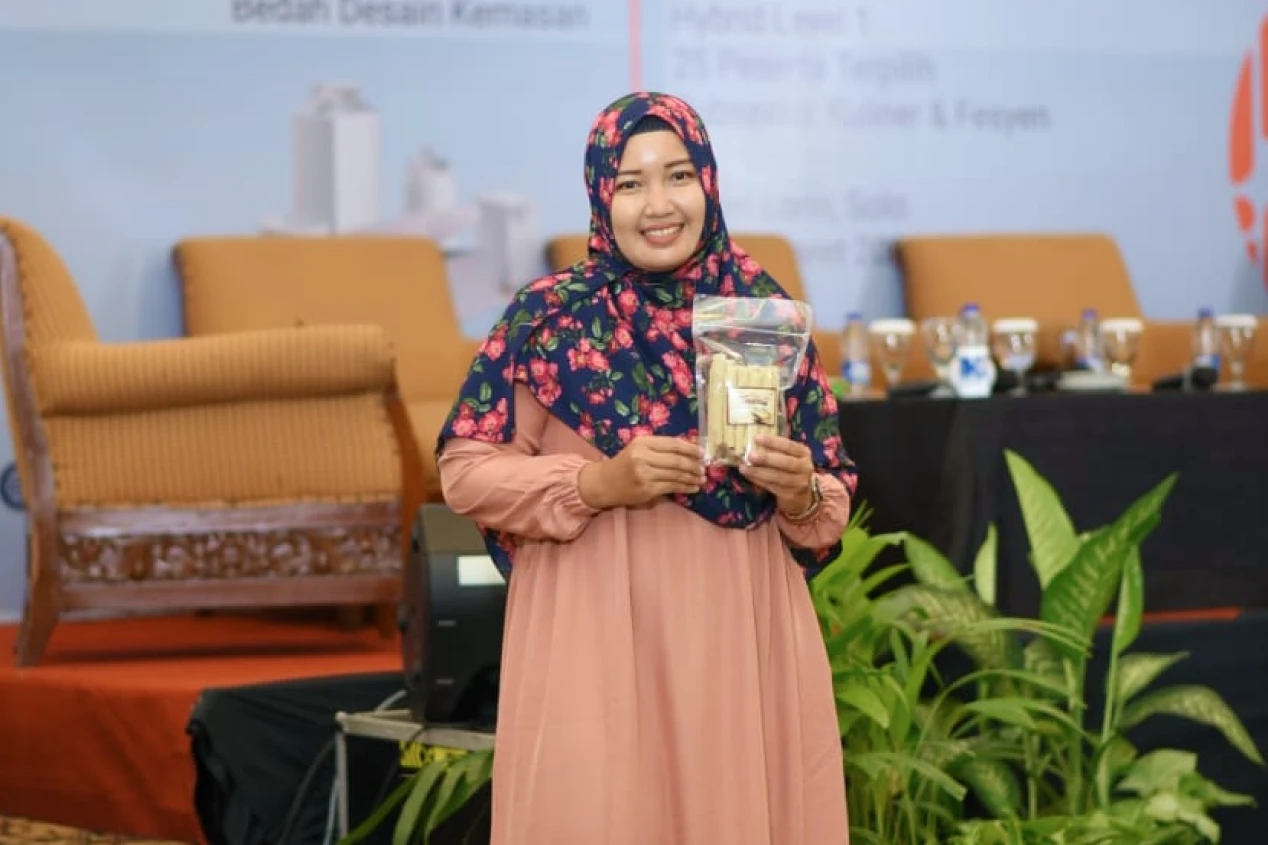
That stroke of luck opened the door to even more opportunities. Later that same year, Dbroo Kitchen again made the list of recipients of the Surakarta City Government’s 2022 Industry Innovation Award.
Yuli said she actively took part in incubation programs, MSME training, and various competitions. Beyond gaining knowledge, she understood that every stage she stepped onto was a golden opportunity to introduce Dbroo Kitchen to the public.
Since that moment, orders for the bran egg roll have taken a spike. The product is now sold at 28 souvenir shops across Solo and Jogja, has entered the Brownies Amanda network, and is even carried abroad by overseas buyers as hand carry.
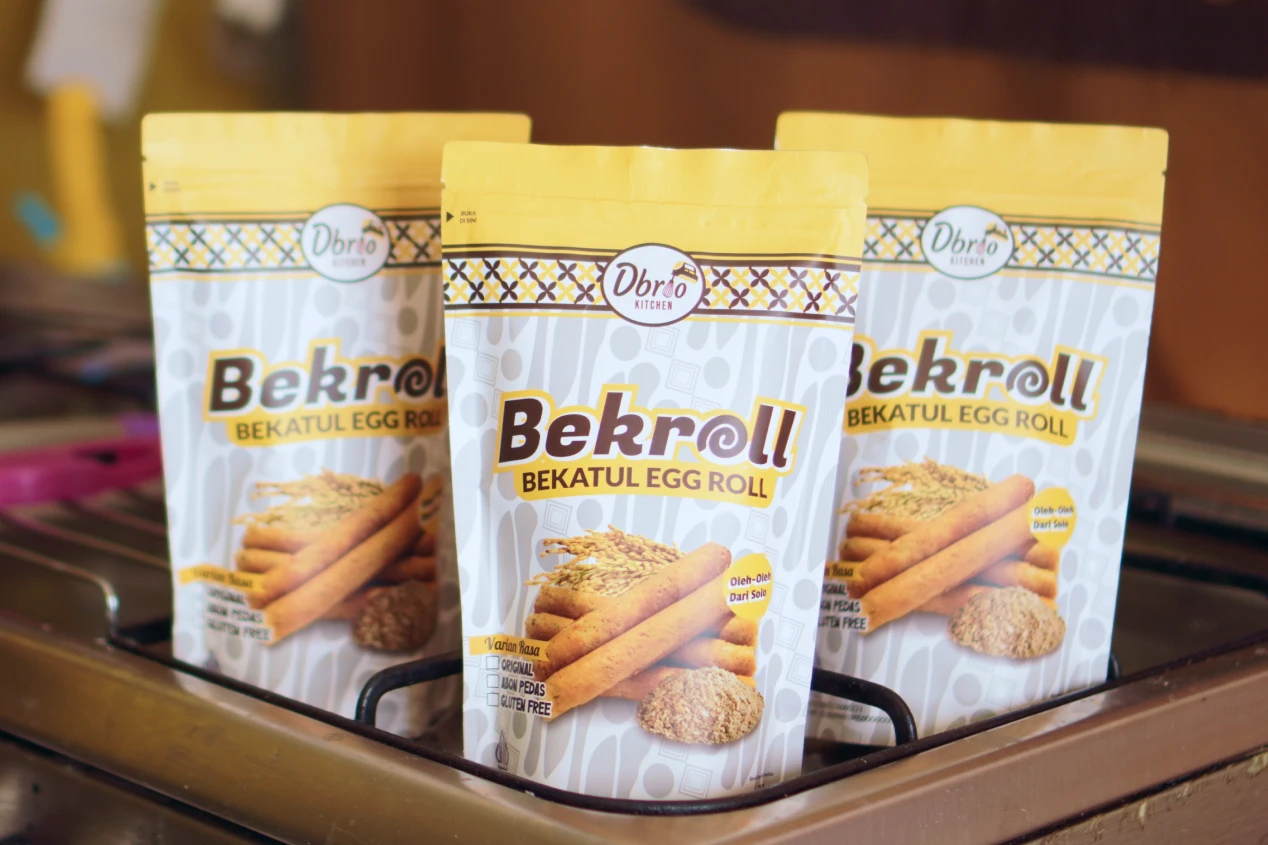
The incoming revenue was gradually reinvested to purchase production equipment, packaging, freezers, and a large oven. To expand her product variants, Yuli also adopted a pre-order system so she wouldn’t need to spend capital upfront.
Today, Dbroo Kitchen has two permanent employees and is assisted by locals when demand surges. With a stable production rhythm, its monthly turnover ranges between Rp5–10 million.
The biggest momentum comes ahead of Idulfitri. Lebaran is the peak moment for Dbroo Kitchen, especially for hampers and the bran egg roll, which has now become the brand’s signature product. “Demand can skyrocket; our turnover once reached Rp25 million that month,” Yuli said.
Although the bran egg roll remains the flagship product and the gateway to a wider market, Yuli has not stopped experimenting. Since late 2024, she has been developing several new variants.
Dbroo Kitchen’s product diversification includes Bekatul Cookies made with cassava flour as a low-gluten alternative, a gluten-free Egg Roll variant for children with special needs and consumers with gluten intolerance, as well as plans for snack products using bran-based ingredients as the brand’s hallmark.
Dbroo Kitchen also provides snack boxes and meal boxes for a variety of formal events. To meet this demand, Yuli often collaborates with fellow MSME owners in her neighborhood
For her, diversification is not just about adding more items to the catalog, it is a strategy to keep the business resilient as consumption patterns change. “Innovation can’t be rushed. If a product is only popular at launch, it means I still have a lot to learn,” she concluded.
Writer: Genis Dwi Gustati
Translator: Farizal Luqman Majid
Editor: Al Habiib Josy Asheva
Bank Indonesia has held its benchmark rate at 5.75 percent, ending speculation of a hike to 6 percent that had circulated in recent weeks.
Nothing’s more special than reading curated news just for you.
Subscribe to the UMS Newsletter for free today.