A Faster Way to Detect Dental Problems
26 May 2026
DentAware, a UMS Bachelor of Dentistry student innovation, features five AI-based screening tools for fast and practical dental health detection.



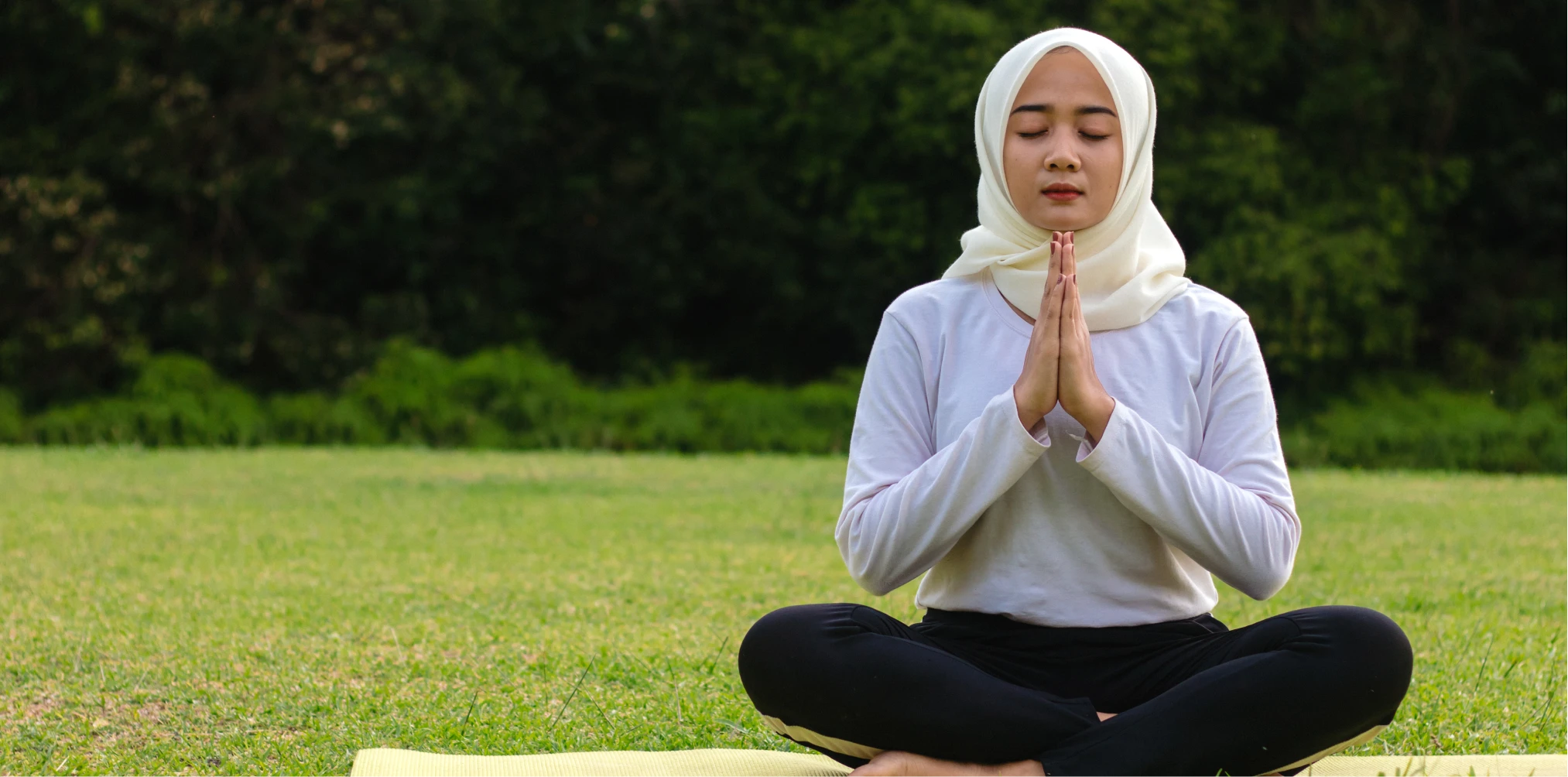
Wellness tourism is now beginning to flourish across various regions in Indonesia. The wellness tourism industry continues to grow alongside rising public awareness of the importance of healthy, balanced living.
That awareness of healthy living is exactly what has driven Rizka, a 32-year-old content creator from Surakarta, Central Java. She has taken part in a range of physical activities, yoga, pilates, trekking, and others, over the past three years. "To maintain my physical fitness," she said when contacted on Thursday (9/7/2026).
On the morning of Sunday, 5 July 2026, Rizka visited Balekambang Park in Surakarta with her yoga mat in tow. That day, she joined a yoga session at Suaragafest , one of many events in Indonesia now spotlighting wellness attractions.
For Rizka, joining a yoga session in a green open space like Balekambang offers a different experience from practicing indoors. She said she could feel the positive energy from the fellow participants there that morning. Rizka also felt more relaxed being able to take in the park surroundings.
"For me, doing yoga in an open space like Balekambang gives a different kind of experience. I felt so relaxed. Listening to the gamelan instruments, the birdsong, and taking in the view of the trees, I felt even more fully present in the moment," said Rizka, who also works as a model.
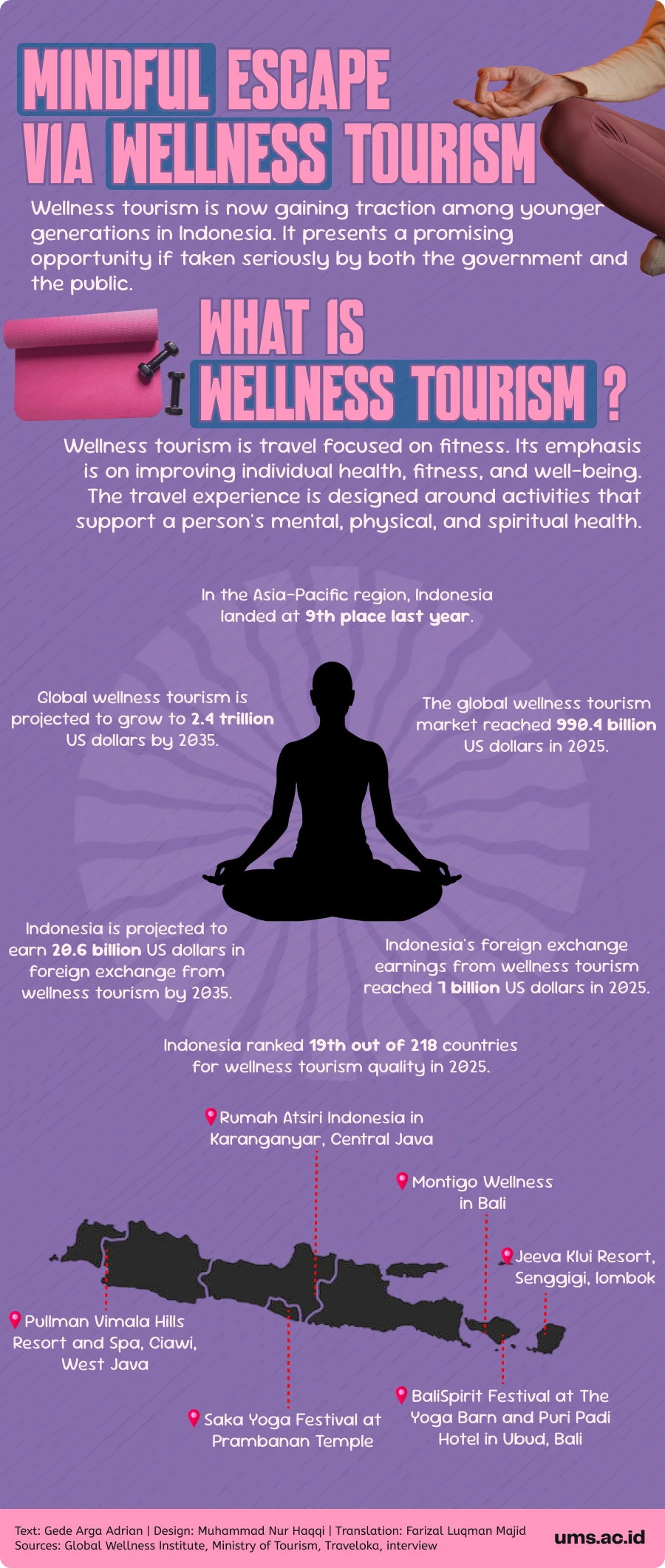
Wellness tourism refers to vacations aimed at maintaining physical fitness and well-being. The trend has grown as more tourists begin to view health, relaxation, and personal wellness as an integral part of their travel activities.
The Ministry of Tourism promoted wellness tourism at the Osaka World Fair 2025. The exhibition featured collaborations with Rumah Atsiri Indonesia, Mustika Ratu, and Taman Wisata Candi.
Many of these wellness tourism offerings are rooted in traditional Indonesian values, including essential oils, room fragrances, traditional perfumes, packaged jamu (herbal drinks), and other wellness products.
Wellness tourism in Indonesia is also supported by the growing popularity of sporting events, such as running events, marathons, and meditation-based exercises like yoga. Alongside this, wellness tourism destinations are flourishing across various regions.
Some destinations that have recently gained popularity include Rumah Atsiri Indonesia in Tawangmangu, Karanganyar, Central Java; Pullman Vimala Hills Resort and Spa in Ciawi, West Java; and Lake Toba in North Sumatra. It's no surprise that the Global Wellness Institute has ranked Indonesia 19th in the world for wellness tourism.
According to Global Market Insights, Indonesia's wellness tourism market value reached 7 billion US dollars in 2025. That figure is projected to grow by 2035, reaching 20.6 billion US dollars.
Dyah Widi Astuti, S.T., M.Sc., a lecturer in Urban Settlement at the Architecture Program of Universitas Muhammadiyah Surakarta (UMS), explained that the wellness tourism trend began to explode after the Covid-19 pandemic. During that period, awareness of the need to preserve physical and mental well-being started to emerge, from home workouts and morning runs to cycling and yoga.
"During Covid, people suddenly became aware of yoga, right? Then they became aware of drinking jamu. That's actually where it all started to grow," Dyah said when met in her office on Thursday.
Even after the pandemic ended, the routine of maintaining physical fitness has not faded. This shift has been picked up by a number of brands and event organizers, who are turning fitness activities into tourism attractions.
One city that has adopted fitness attractions as part of its tourism agenda is Solo. Beyond sports, wellness tourism is also developing in the cultural and culinary sectors, such as traditional spas and the jamu industry.
In Bali, wellness tourism appears in the form of resort accommodations offering scenic beaches and rural or mountainous environments. Meanwhile, in Sumatra, several local governments have begun promoting wellness tourism destinations. One example is Lake Toba, which is being positioned as a nature-based destination for meditation and yoga.
According to Dyah, wellness tourism is not solely focused on physical fitness activities like sports. This type of tourism can also be directed toward developing a healing environment, one that is centered on restorative experiences.
She explained that wellness tourism should engage tourists' five senses to help them feel more relaxed, supporting both physical and mental well-being. Visual stimulation, for example, can come from viewing lush green landscapes with shaded trees. Audio stimulation can be created through birdsong, the trickle of water, or the sound of rustling bamboo.
The sense of smell can also be engaged through the aroma of flowers or spices, while taste can be stimulated by regional culinary specialties from various parts of Indonesia. "Beyond sports, the body can also be trained through dance," she added.
Dyah views wellness tourism as something that should intersect with local wisdom in each region of Indonesia. Culture, sports, and cuisine can all come together to create a distinctive healing environment. "Every region needs to have its own unique identity," she stressed.
Synergy between local governments and community support is essential. She cited the example of Solo in Central Java, which is rich in cultural and culinary heritage but lacks nature-based tourism. Coordination with Karanganyar Regency is therefore needed to attract tourists through a range of integrated tour packages.
In terms of infrastructure, local governments must be strategic in building connectivity between tourist sites in their areas. One example is developing pedestrian pathways lined with shade trees. The goal is to encourage people to walk more actively. According to Dyah, this step can motivate the public to stay physically active while aligning with the vision of wellness tourism.
Writer: Gede Arga Adrian
Translator: Farizal Luqman Majid
Editor: Al Habiib Josy Asheva
DentAware, a UMS Bachelor of Dentistry student innovation, features five AI-based screening tools for fast and practical dental health detection.
Nothing’s more special than reading curated news just for you.
Subscribe to the UMS Newsletter for free today.