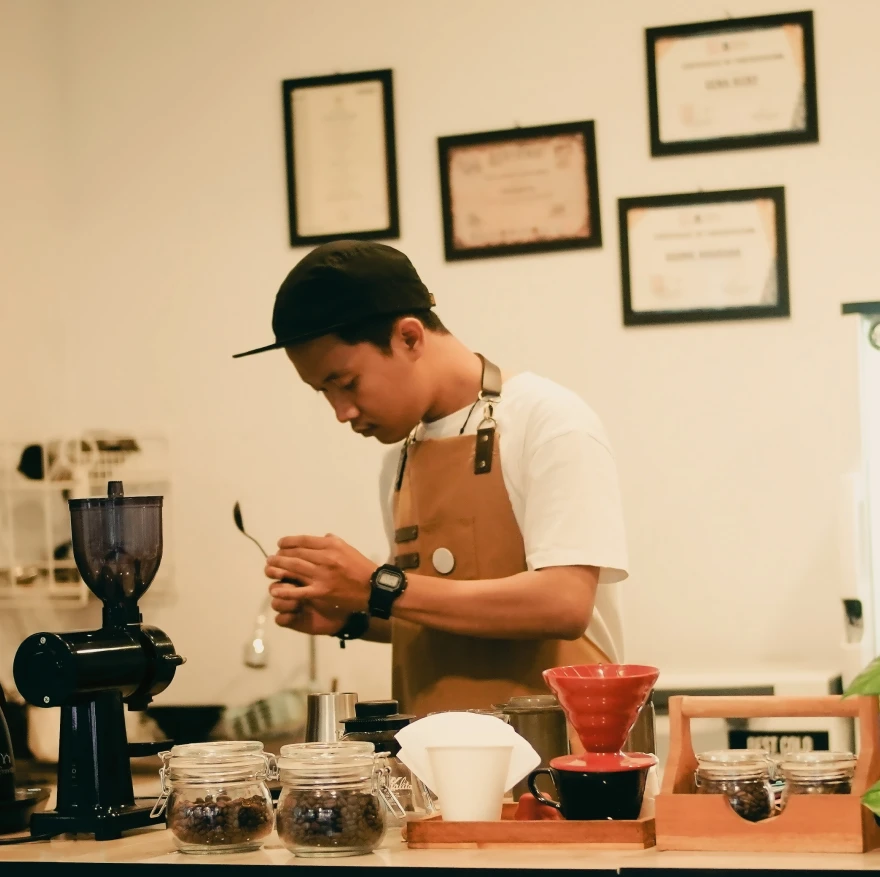
The Coffee Shop Boom
31 July 2026
Indonesia is one of the world's largest coffee-consuming nations, a thirst that keeps spawning new coffee shops. Sharpening the competition among them.




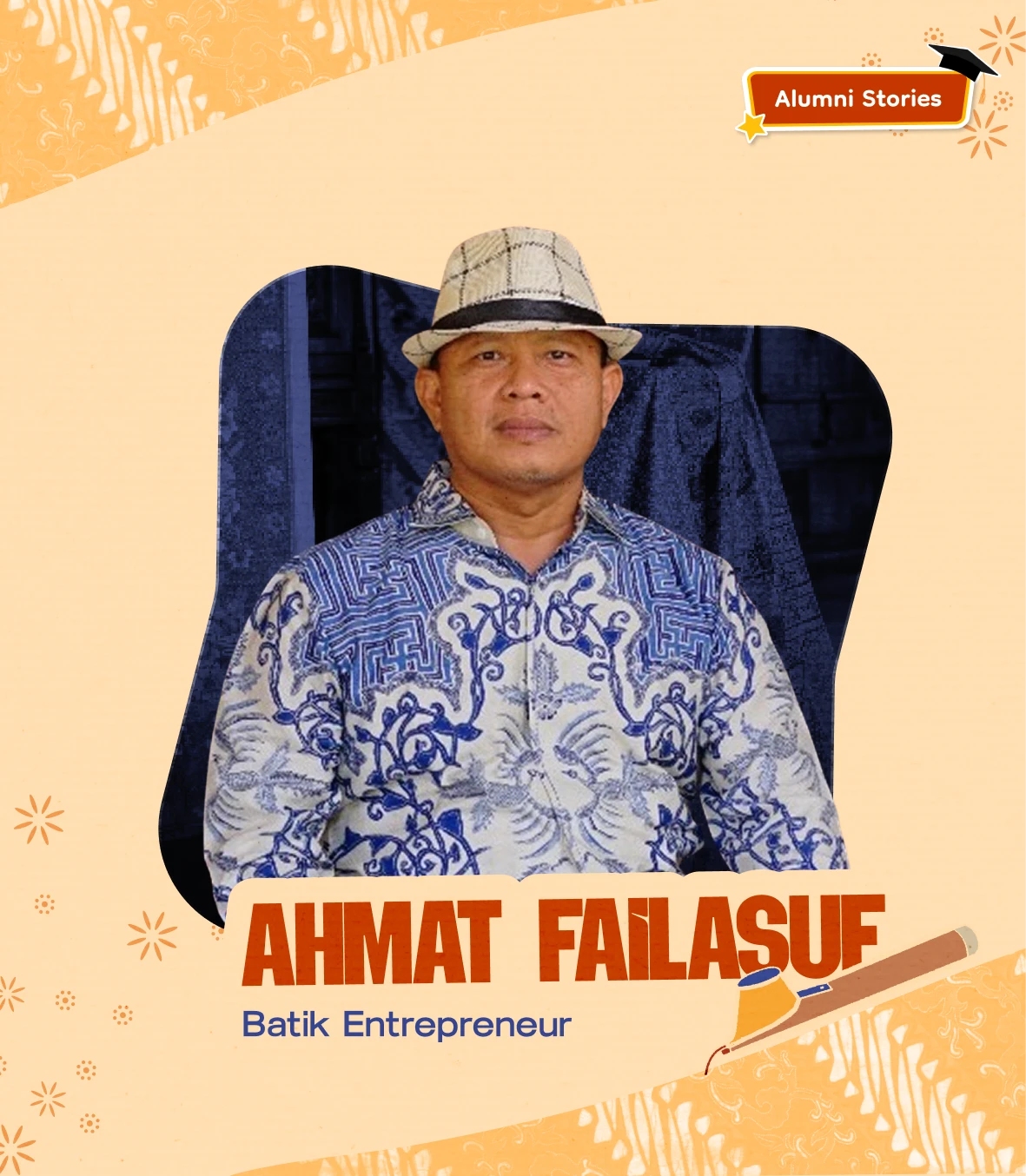
One afternoon in the 1990s, an Accounting student from Universitas Muhammadiyah Surakarta (UMS) wandered around shops along Jalan Slamet Riyadi in Solo. A backpack filled with textbooks rested on his shoulders, while his left hand carried a bag filled with shirts and batik cloth.
That young man was Ahmat Failasuf, often simply called Failasuf. It was his routine after classes to visit shop after shop offering batik from his hometown, Pekalongan.
“Every time I came home from Pekalongan, I’d bring batik to sell in Solo. Some accepted it, some rejected it, and some even blocked me, that was normal. My rule was: if I got rejected a hundred times, I’d quit. But usually, I’d only be rejected around ten times before making a sale,” Failasuf recalled in an online interview in early July.
Today, Failasuf is known as the founder of Batik Failasuf Masterpiece, an exclusive batik brand worn by government officials, including the President of the Republic of Indonesia. Most recently, his designs were showcased by high-level delegates during the G20 Summit in Bali in 2022.
Coming from a family of batik artisans in Pekalongan, entrepreneurship ran deep in his veins. Yet Failasuf wanted his business scaled, more than just a small and home-based.
Born in 1975, he admitted to being an avid reader of newspapers and marketing books, even though he studied Accounting. “I even subscribed to Marketing magazine every month,” he said.
On campus, Failasuf was an active student. He once served as Chairman of the Moh. Hatta Chapter of the Muhammadiyah Student Association (IMM) in the Faculty of Economics and Business at UMS. He was also a student at the Muhammadiyah Islamic Boarding School, Hajjah Nuriyah Shabran.
As a student, he was determined to build small-scale business relationships through batik sales after class. In 1993, right after graduating with his bachelor’s degree, he set his sights on continuing and growing his family’s batik business.
Five years later, the 1998 monetary crisis shook Indonesia’s economy. Many businesses went bankrupt, but the crisis shed light for Failasuf.
Amid great uncertainty, he boldly established his own brand of hand-drawn batik, naming it Batik Pesisir Failasuf. The business was officially founded in 1999 in Kemplong Village, Pekalongan Regency.
The name Batik Pesisir Failasuf was chosen not only because of his coastal hometown, but also to strengthen the identity of pesisir (coastal) batik, known for its vibrant colors and rich floral and animal motifs.
“I chose the name Batik Pesisir because it’s easy to remember, easy to pronounce, and sticks in the buyer’s mind,” said Failasuf.
At first, Failasuf’s move was considered too bold. Starting a business during an economic crisis drew criticism from those around him.
But Failasuf paid them little mind. From selling batik owned by his parents and relatives, and his openness to build connections from shop to shop, the Batik Pesisir Failasuf brand gradually began to gain recognition
Failasuf continued building connections until his batik creations began to be marketed in several cities and regencies in Central Java, and eventually entered Yogyakarta. His dream kept growing. “If you want to scale up across provinces, get close to the governor. If you want to go national, you need to get close to the president,” said the Pekalongan native.
However, he fully realized that the president is not someone easily reached. There are aides, protocols, and even special designers who handle the president’s wardrobe.
His first step was to find out who was behind the president’s attire. That led him to a renowned designer: Adjie Notonegoro.
With no connections in Jakarta, Failasuf boldly called the designer, who was known for dressing President Abdurrahman Wahid (Gus Dur). In 2000, he introduced himself as a designer from Pekalongan and requested a meeting.
Unexpectedly, that meeting opened major doors. The name Batik Failasuf began gaining recognition, orders started coming in, and exhibition invitations followed, including one at the Bogor Presidential Palace.
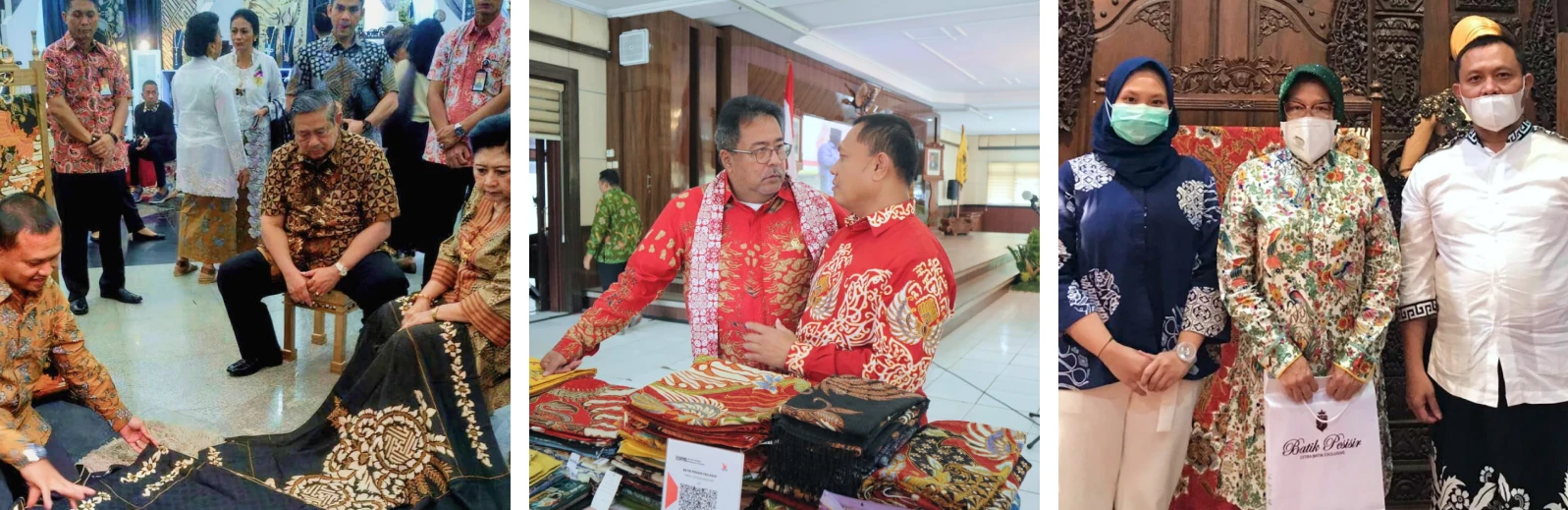
Several statesmen, including President Susilo Bambang Yudhoyono (SBY) (left), Jakarta Deputy Governor Rano Karno, and former Minister of Social Affairs Tri Rismaharini (right), purchased his exclusive hand-drawn batik pieces.
Another highlight in his creative journey came in 2009, when batik was officially recognized by UNESCO as an intangible cultural heritage of the world. Around that time, Failasuf was again entrusted to design exclusive batik pieces for President SBY and First Lady Ani Yudhoyono.
One moment he will never forget was when President SBY personally requested a batik with a specific motif and story. “Mr. SBY is incredibly detail-oriented. He asked for a batik with a uniquely Indonesian motif, yet elegant enough for international forums,” recalled Failasuf.
He then designed a hand-drawn batik on silk fabric, named "Sawunggaling Batik", featuring a Phoenix-like bird flying heavenward. The exclusive batik was intended to be the Yudhoyono family’s outfit for the Eid celebration. However, fate had other plans. Mrs. Ani Yudhoyono passed away on June 1, 2019, just four days before Eid.
The batik, with its Bird of Paradise motif, was used as her burial shroud. Since then, Failasuf’s "Bird of Paradise" batik has become a symbol of pride for the presidential family, with President SBY wearing it at various state events.
Failasuf’s business grew rapidly, like ripe fruit blooming in his own garden. From employing just four people, the number of his workers soared to 600 before the pandemic struck.
Now, around 100 people remain active across various production lines. He is also skilled in building a well-structured organization. “A business will keep running if the human resources are honest, monitoring is routine, and marketing networks are maintained,” e said, highlighting the core principles that have guided his business journey.
In running his business, he divided the brand into three segments: Batik Simonet, for uniforms and the affordable segment, Batik Pesisir Failasuf, for the mid-range market, and Batik Failasuf Masterpiece of Batik, for the exclusive class. The price range is also wide, from Rp100,000 to over Rp100 million.
“The motifs are never reproduced. There’s an exclusive and artistic essence that can’t be described in words,” he said.
In 2006, Failasuf also initiated the Kampung Batik Wiradesa, a batik village that serves as both a production hub and a center for cultural education in Pekalongan. Through the village, he wanted to prove that even kids from rural areas can go global, as long as they have a dream and the drive to keep learning.
After more than two decades in the batik world, Failasuf shared a message for UMS students who wish to start a business like he once did. For him, the first step is not just drafting a plan, but immediately putting learned knowledge into practice.
“Don’t spend years just waiting for the perfect moment! Take internships, start selling, build connections as early as possible,” he advised.
In addition, he stressed that character is the foundation of any business. “No one will want to partner with you if your character can’t be trusted,” he added.
As a Muslim, Failasuf never forgets to anchor his business in spiritual principles. He believes that gratitude brings more blessings, and that acts of charity bring fortune and barakah. It’s a principle he’s held onto since the beginning of his journey.
Writer: Genis Dwi Gustati
Translator: Farizal Luqman Majid
Editor: Al Habiib Josy Asheva
Indonesia is one of the world's largest coffee-consuming nations, a thirst that keeps spawning new coffee shops. Sharpening the competition among them.
Nothing’s more special than reading curated news just for you.
Subscribe to the UMS Newsletter for free today.