Nano Liquid for Healing Diabetic Ulcers
21 July 2026
UMS students have formulated a treatment for diabetic wounds from moringa and neem leaves, and carried home gold at WYIE 2026 in Malaysia.



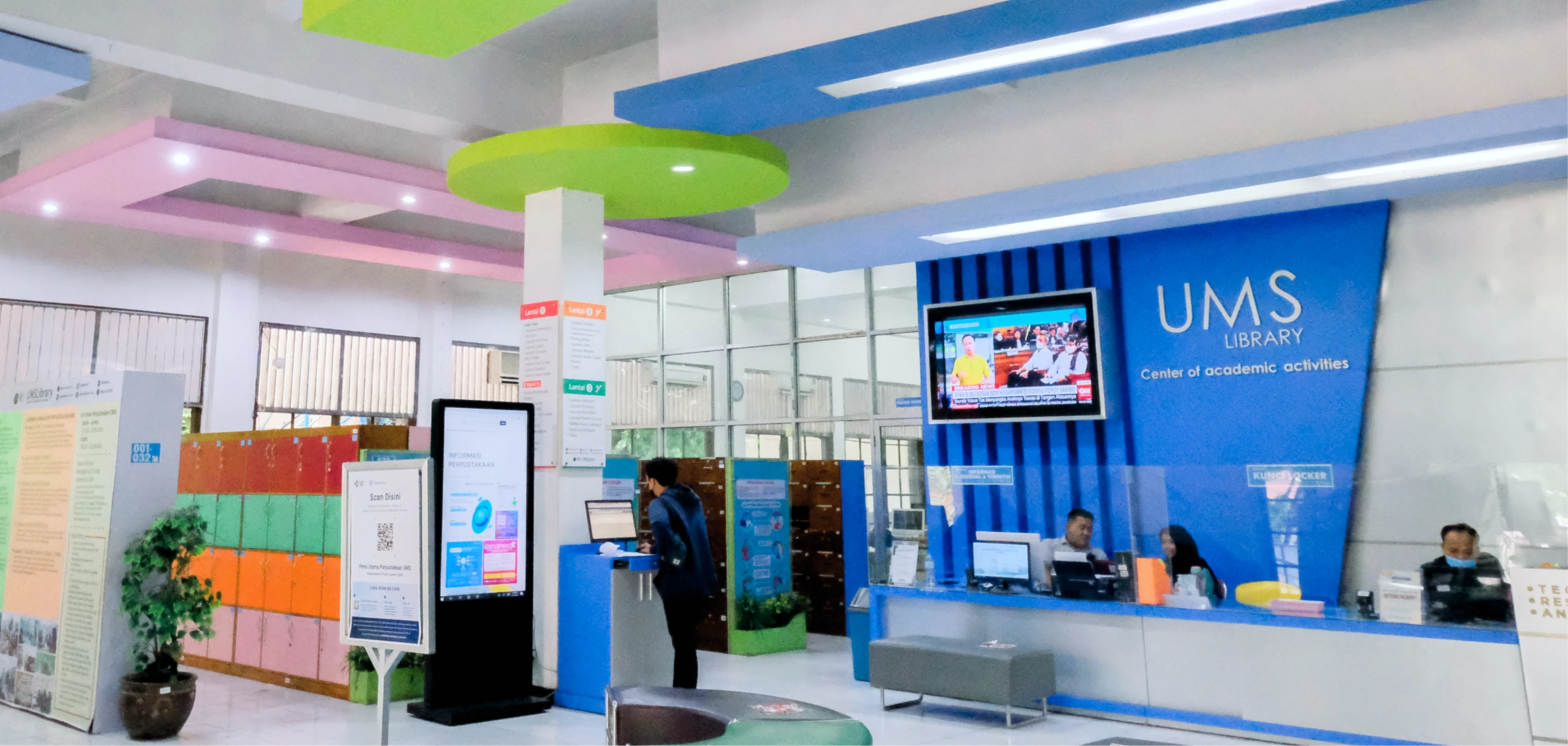
Amid the evolving dynamics of education, Universitas Muhammadiyah Surakarta (UMS) is strongly committed to being a pioneer in providing quality education services. One tangible manifestation of this commitment is the UMS Library and Digital Services Center.
Maria Husnun Nisa, S.Sos., M.A., Head of the UMS Library and Digital Services Center, revealed that the UMS Library has existed alongside UMS growth as a higher education institution in Indonesia. “The UMS Library officially began operations in 1981. However, over time, we have continually evolved to meet the needs of modern education,” she stated.
The UMS Library has transformed from merely being a repository of books to becoming a digital service center that supports the learning process. With an ever-growing collection of physical and digital books, the UMS Library now plays a strategic role in academic literacy.
One of the main attractions of the UMS Library is its extensive collection of literature, both in physical and digital formats. Currently, the library holds more than 100,000 printed book copies covering various fields of knowledge.
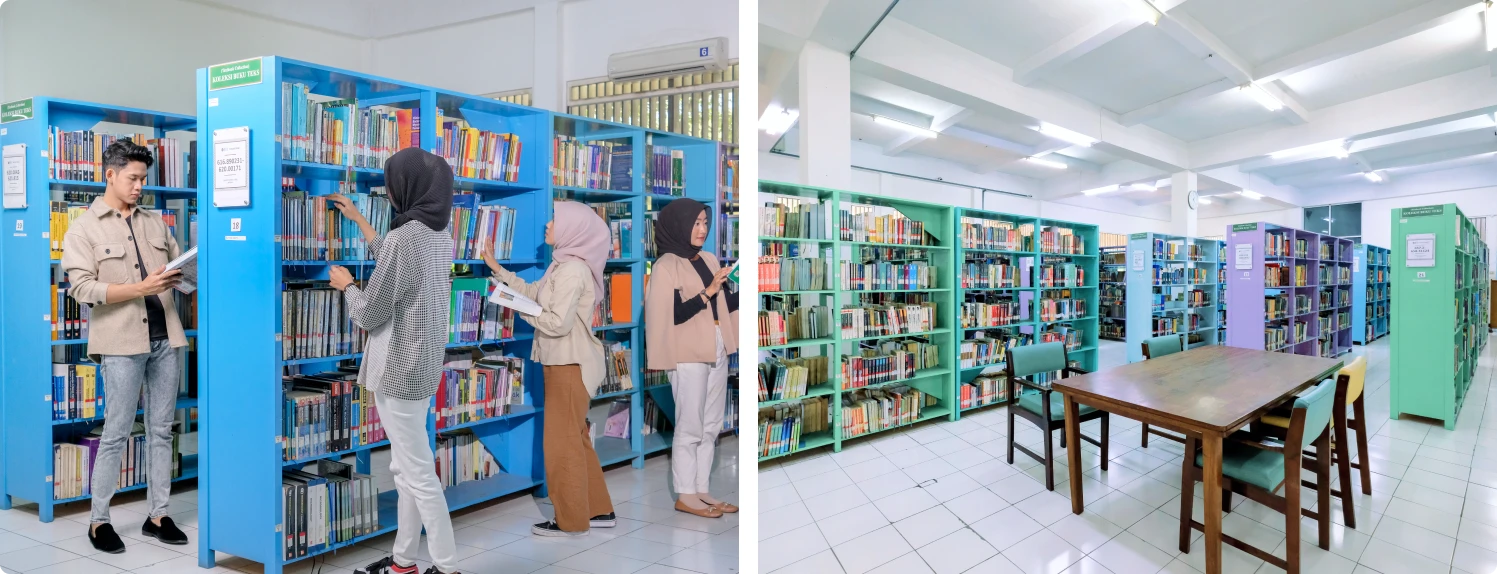
Book collections at UMS library. Imam Safi’i/UMS PR
The UMS Library continues to update its printed book collection to align with advancements in knowledge and the university's curriculum needs. The collection spans almost all fields, including medicine, engineering, education, law, and Islamic studies, ensuring substantial resources for various disciplines.
Beside academic resources, the library offers over 2,000 fiction titles. From classic literature to popular novels, this collection serves as both a creative escape/retreat and a source of inspiration. Foreign-language books, particularly in English and Arabic, further enrich the library's offerings, promoting global literacy among its visitors.
The UMS Library is not only a repository of books but also serves as a center for research journals, both national and international. Through subscriptions to various academic platforms such as ProQuest, Springer, Scopus, and Emerald, students and faculty gain unlimited access to thousands of scientific articles.
“These journals cover a wide range of fields, from health, science, and technology to social sciences and humanities,” explained Unun, her familiar nickname.
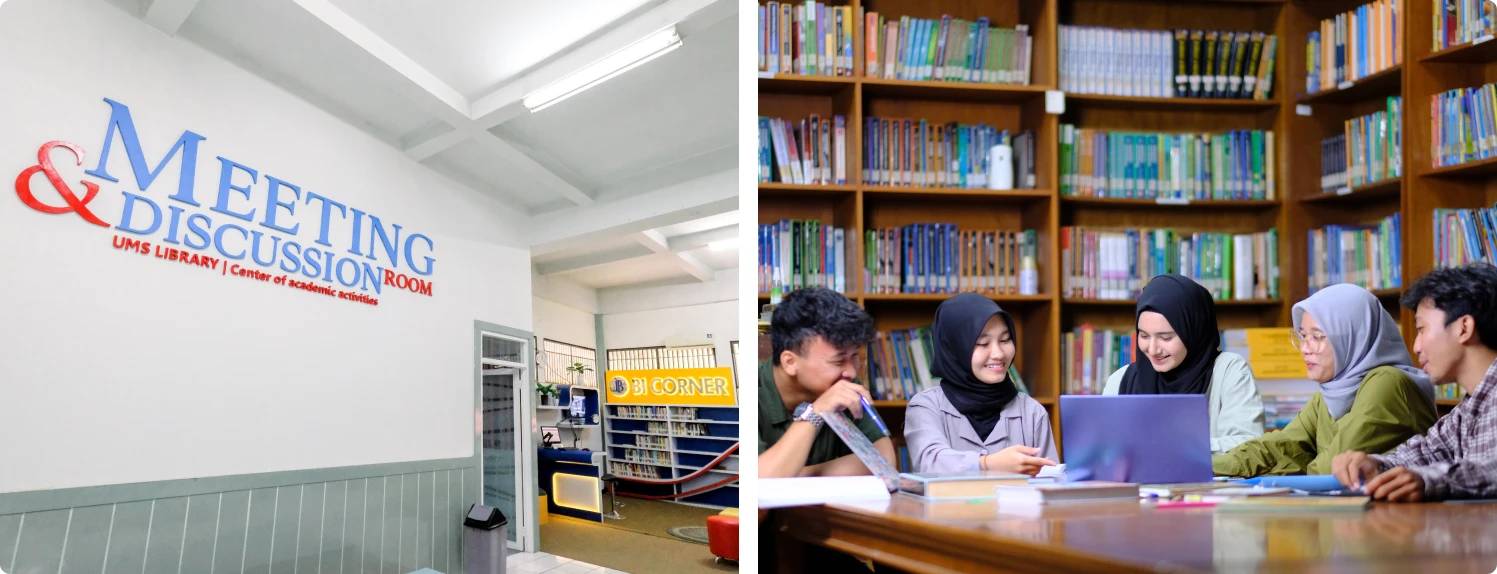
Open discussion area in the corner of the library. Imam Safi’i/UMS PR
An open discussion area located in one corner of the library is complemented by dedicated spaces for reading journals and accessing digital collections. These areas are equipped with computers that provide access to international academic databases. The lighting has been carefully adjusted to ensure maximum comfort for library users.
In addition to subscription-based journals, the UMS Library also utilizes open-access repositories like the Directory of Open Access Journals (DOAJ) to enrich its collection of literature for users.
The UMS Library has developed a collection of over 7,500 e-Books, accessible through its library portal. Students can download these electronic books directly via the campus network or by logging into their student accounts.
Interestingly, these e-Books come equipped with an interactive search feature, making it easier for users to locate specific content within the books.
“This service is also available to the general public. However, the key difference is that the public cannot borrow or take home printed books from the library. This is because managing the logistics and tracking would be more complex since they are not part of UMS academic community,” she explained.
To enjoy and make use of the available facilities, members of the public must first register as library members. The registration process is straightforward, and all requirements are listed comprehensively on the official UMS Library website.
“We also offer convenience for the academic community through an entirely online service called Trolly Service. This includes catalog searches, billing, borrowing, and even home delivery. The concept is similar to food delivery services, aiming to ensure that books as sources of knowledge are easily and practically accessible,” Unun added.
One of the newest facilities of the UMS Library is the Library Cafe, located in front of the library building. Although situated outside the main building, this service is accessible to library users within the reading area.
“The cafe was designed to create a relaxed atmosphere for the academic community. They can order snacks or coffee and enjoy them in the reading room while reading books or working on assignments,” explained Unun.
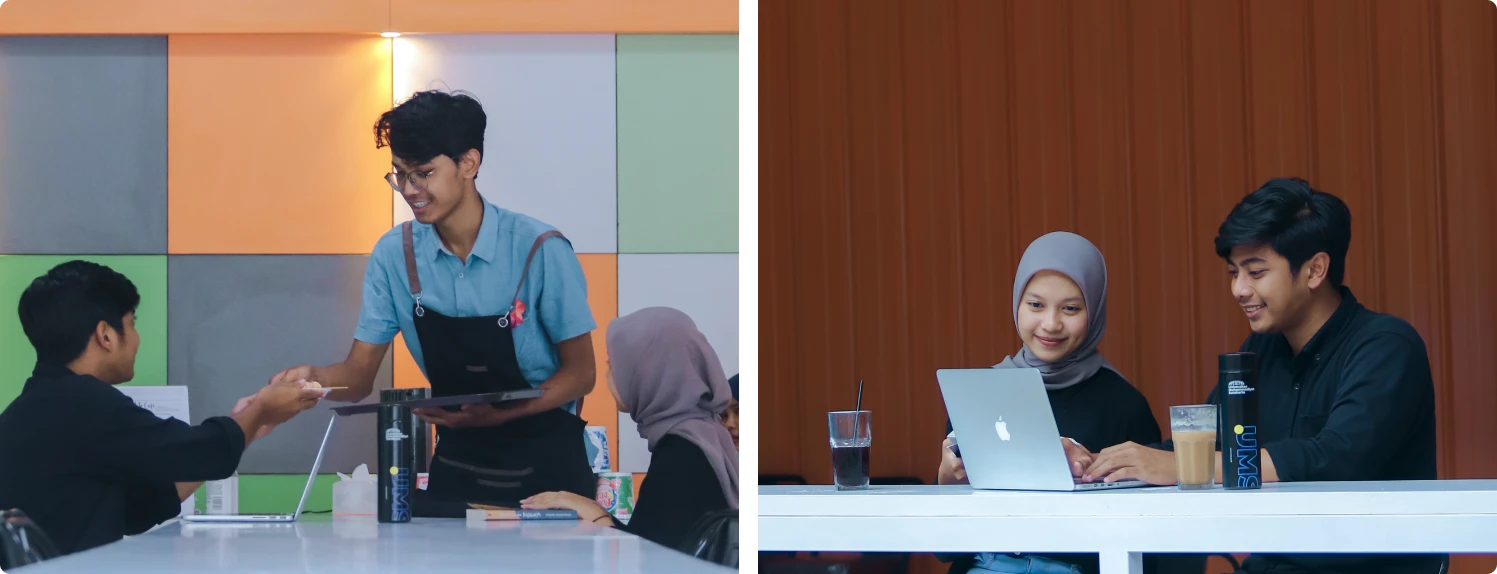
Students order beverages and snacks at the UMS Library Cafe. Imam Safi’i/UMS PR
This facility creates a more casual academic space. Many students visit the cafe for group discussions, relaxation, or simply unwinding after hours of reading.
“I’ve asked several students about it, and they’re delighted with the Library Cafe. It saves them the trouble of going far just to grab some snacks,” she added.
As an institution committed to quality, the UMS Library has earned various accolades, including recognition as the best university library regionally and nationally. Most recently, the library won: 1st place for Website category, 2nd place for Instagram category, and 2nd place for Research category in the 2024 Forum Perpustakaan Perguruan Tinggi Muhammadiyah-‘Aisyiyah Awards.
In conclusion, Unun noted, “Looking ahead, UMS plans to expand its digital literature collection, create additional discussion spaces, and improve information literacy consultation services.”
Writer: Genis Dwi Gustati
Translator: Farizal Luqman Majid
Editor: Al Habiib Josy Asheva
UMS students have formulated a treatment for diabetic wounds from moringa and neem leaves, and carried home gold at WYIE 2026 in Malaysia.
Nothing’s more special than reading curated news just for you.
Subscribe to the UMS Newsletter for free today.