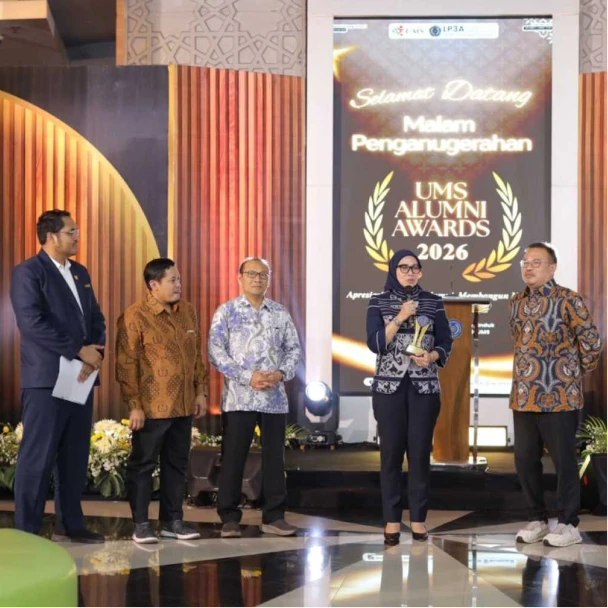
Building the Nation, UMS Presents Awards to Its Alumni
2 August 2026
10 awards were presented to UMS alumni who have created extraordinary impact in their respective fields.


The Community Service Team of Universitas Muhammadiyah Surakarta (UMS), through the Community Service Program Based on the Development and Empowerment of Assisted Villages (P2DB), successfully implemented the “Gerakan Desa Bijak Sampah” (Smart Waste Village Movement) program in Batan Village, Boyolali Regency.
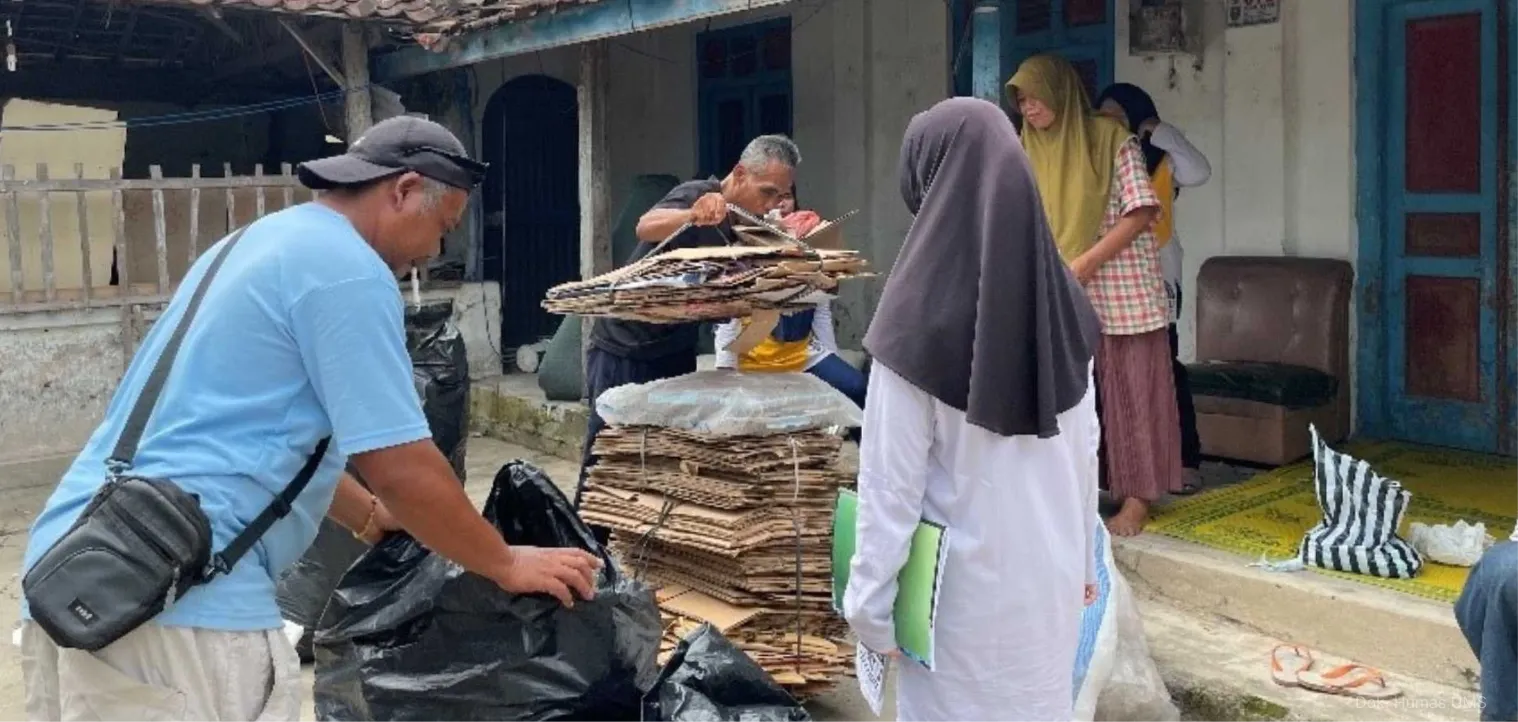
The series of activities, which began in mid-November and culminated on Sunday (7/12/2026), succeeded in initiating and officially establishing the “Kedon Indah” Waste Bank as a household waste management solution for local residents. This program was driven by concerns over the limited understanding of inorganic waste management, which had led to waste accumulation along the village river area.
This condition remains a challenge even though the Homepimpah program (Gerakan Pilah Olah Sampah dari Rumah / Household Waste Sorting and Processing Movement) initiated by the Boyolali Environmental Agency (DLH) has been socialized by the Head of Batan. Obstacles in its on-the-ground implementation include the absence of facilities for collecting sorted waste and an inadequate village management system to support the program.
In response to this situation, the community service team led by Windi Wulandari, S.K.M., M.P.H., from the Public Health, in collaboration with the Biology Education of UMS and several students, initiated the establishment of a waste bank as a concrete solution for the residents of Batan.
The program began with socialization activities on the formation of the management structure, along with the distribution of a practical guidebook as the foundation for waste bank governance.
These stages continued with the inauguration of the “Kedon Indah” Waste Bank by the Head of the Batan PKK, serving as an official platform for the community to manage household waste through a community-based approach.
The head of the community service team, Windi Wulandari, explained that the establishment of the waste bank serves as an initial step in building public awareness.
“Through the Kedon Indah Waste Bank, we want to present a solution that is realistic and can be managed directly by the community,” she said, Tuesday (20/1/2026).
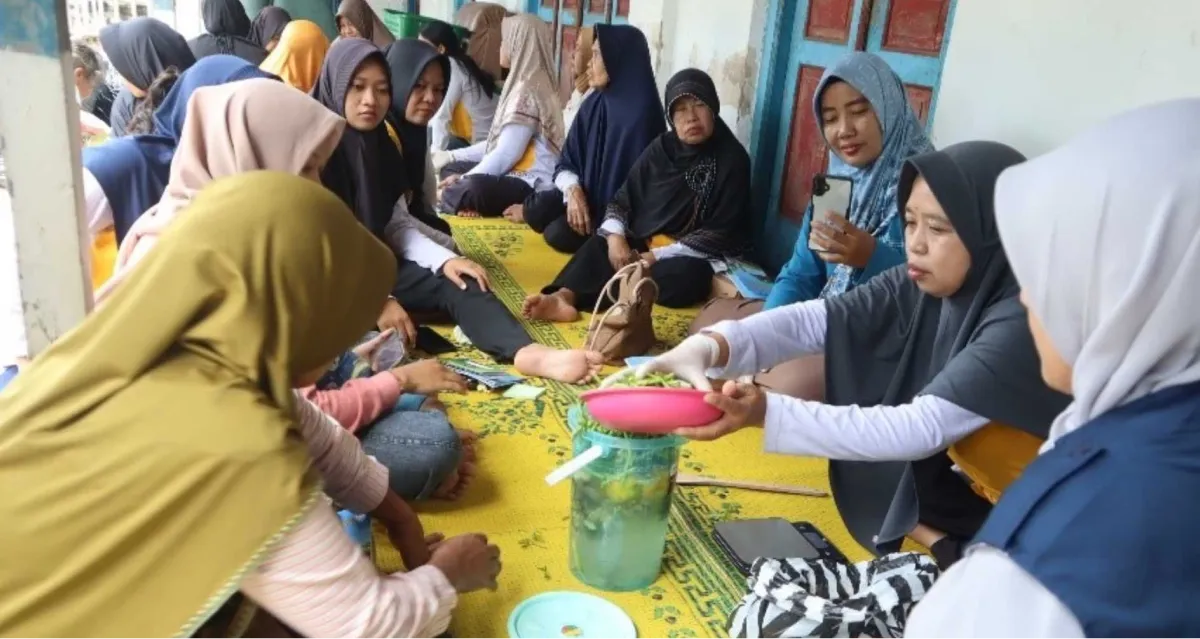
Not only focusing on administrative management, the UMS community service team also equipped residents with technical skills for processing waste at the source.
Residents were trained to process kitchen waste into eco enzyme and compost that are beneficial for the environment, as well as ecobrick techniques to reduce plastic waste that is difficult to decompose. The training was complemented by the distribution of pocket books as practical guides that are easy to apply at the household level.
Community enthusiasm was evident throughout the series of activities, which were marked by interactive discussion sessions and question-and-answer segments addressing waste management challenges faced by residents of Desa Batan.
One resident admitted to gaining new knowledge from the waste processing training.
“So far, we have simply thrown away kitchen waste and plastic. After participating in this eco enzyme and ecobrick training, we now know that waste can actually be processed and be useful. The activities are also easy to apply at home,” she said.
The peak of the program was marked by the first weighing and recording session of collected waste conducted by the waste bank management. Going forward, the Kedon Indah Waste Bank will operate regularly once a month to collect residents’ inorganic waste before it is distributed to waste collectors.
This community service activity was successfully implemented with funding support from the Directorate of Research, Community Service, Publications, and Intellectual Property Center (DRPPS) of UMS under contract number 215.7/A.3-III/DRPPS/XI/2025.
Through this program, the UMS community service team hopes that Desa Batan can transform into a cleaner, healthier, and more self-reliant village in managing household waste sustainably.
Writer: Dwi Kurniadi
Editor: Fika Annisa Sholihah
Translator: Farizal Luqman Majid
10 awards were presented to UMS alumni who have created extraordinary impact in their respective fields.
Nothing’s more special than reading curated news just for you.
Subscribe to the UMS Newsletter for free today.