Smart Body Care by UMS Students Supports Self-Protection for Students with Intellectual Disabilities
21 July 2026
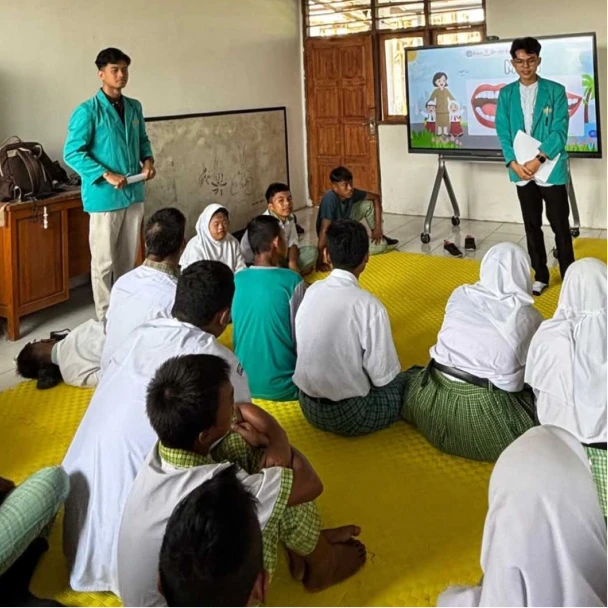
Smart Body Care is here to help students with intellectual disabilities become aware of the importance of self-protection.



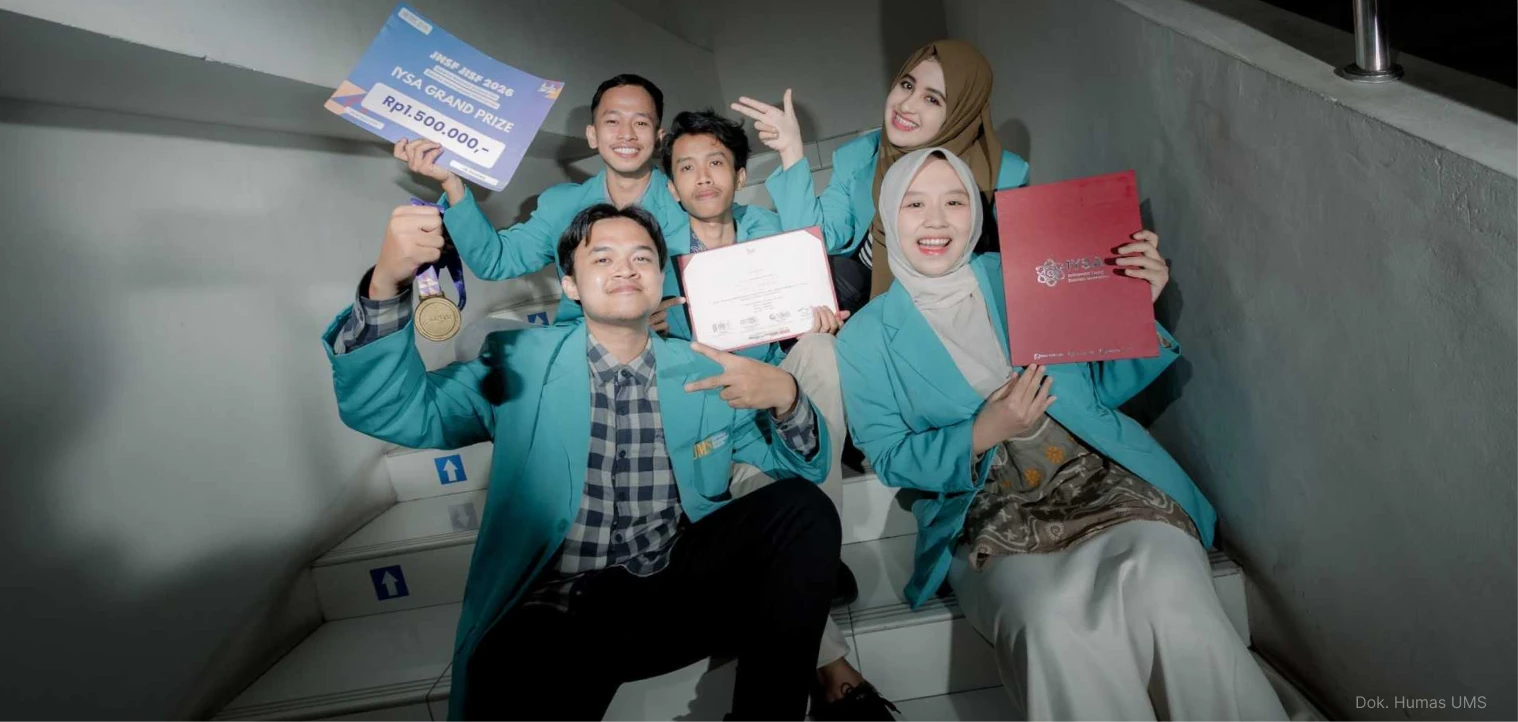
Challenges faced by young children, including difficulty focusing, delayed communication, and excessive screen time exposure, inspired students at Universitas Muhammadiyah Surakarta (UMS) to create an inclusive education innovation. Through the RABA Carpet, the UMS student team won two international awards at the Jakarta International Science Fair (JISF) 2026: the Gold Medal Award and the IYSA Grand Prize Award.
The RABA Carpet was developed as a language and focus stimulation tool for children with special needs, particularly those with Attention Deficit Hyperactivity Disorder (ADHD). The RABA team consists of Taqiyyah Nurul 'Azzah (Physiotherapy), Aulia Rahmania (English Language Education), Dwi Rahmat Maulana (Electrical Engineering), Dani Hendrawan (Pharmacy), and Ihsan Abdillah (Electrical Engineering).
Taqiyyah Nurul 'Azzah explained that the idea behind the RABA Carpet came from real conditions observed in the field. The team found that many young children were still struggling with focus and had not yet developed optimal communication skills.
"After observing several early childhood education centers in the Gonilan area, the teachers told us there were children who had difficulty focusing and whose language skills were still lacking. From there we started thinking about how to create a stimulation tool that was both effective and enjoyable," she said on Tuesday (12/5/2026).
The team was also concerned about the growing phenomenon of young children being overexposed to digital devices. In their view, excessive device use can affect children's cognitive development and communication abilities.
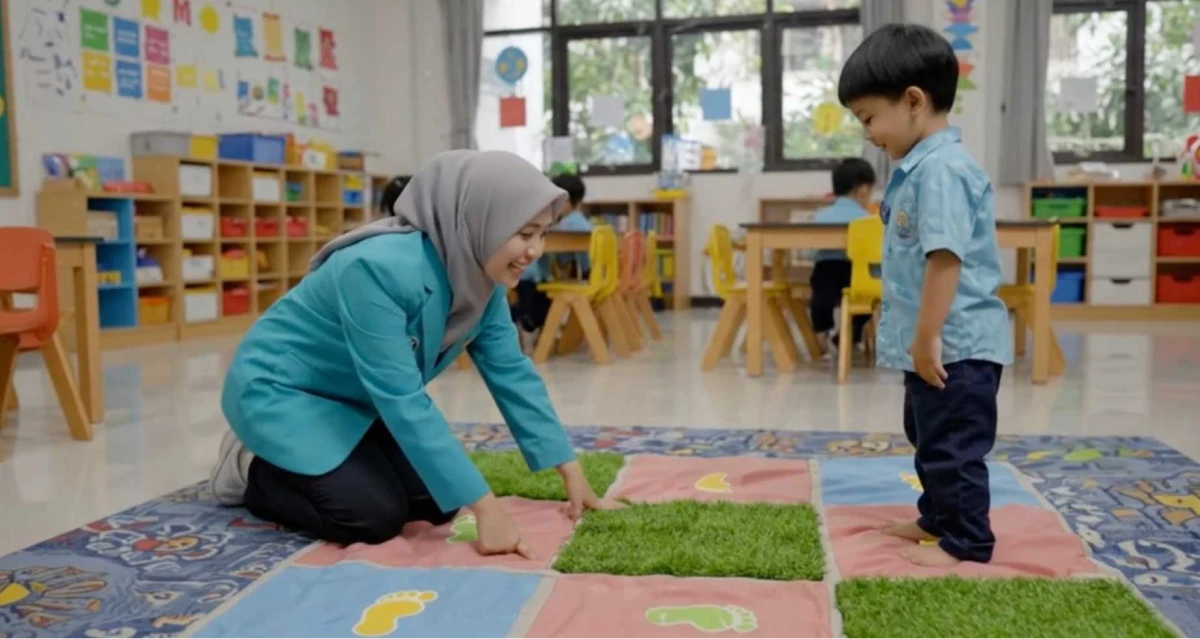 The RABA Carpet, developed as a language and focus stimulation tool for children with special needs. Photo: UMS Public Relations
 The RABA Carpet was designed as a screen-free learning tool that combines visual, audio, and motor stimulation. Children are guided to jump along specific patterns on the carpet, after which sensors emit sounds corresponding to the learning material, allowing children to learn while moving and interacting directly.
"Children with ADHD tend to learn more easily through direct activity or learning by doing. That is why we created a tool that does not use a screen but remains interactive and engaging," Taqiyyah explained.
The innovation's strengths caught the attention of both judges and participants throughout the competition. The RABA team admitted they had not expected to bring home two awards at once.
"Many children and parents came to try the carpet directly. Some were even interested in purchasing the product. The judges were also very enthusiastic and expressed hope that this innovation could be developed further," Aulia Rahmania added.
Beyond the competition, the RABA Carpet has also been trialed at two early childhood education centers in the Gonilan area over the course of one month. Evaluation results showed improvements in focus and language stimulation among children who used the tool.
The team's supervising lecturer, Suprapto, S.Si., Apt., M.Sc., also expressed appreciation for the achievement.
"We are very proud of the RABA team's accomplishment. We hope this becomes a motivation for the team and other students to keep creating, innovating, and competing at the international level. We also hope the RABA innovation can be patented, produced, and applied so that it can help children with special needs who require it," he said.
This achievement is not only a testament to UMS students' competitiveness on the global stage but also affirms the strategic role of research-based innovation in supporting inclusive education and improving the quality of children's growth and development. The RABA innovation also contributes to the Sustainable Development Goals (SDGs), particularly Goal 3 on Good Health and Well-Being and Goal 4 on Quality Education.
Looking ahead, the team hopes the RABA Carpet can be developed further as an inclusive learning tool for young children across Indonesia. This achievement is also hoped to inspire the academic community to continue delivering innovations that are meaningful, collaborative, and of genuine impact to society.
Writer: Fika Annisa Sholihah
Editor: Maysali Sudarwati
Translator: Farizal Luqman Majid
Smart Body Care is here to help students with intellectual disabilities become aware of the importance of self-protection.
Nothing’s more special than reading curated news just for you.
Subscribe to the UMS Newsletter for free today.