The Coffee Shop Boom
1 August 2026
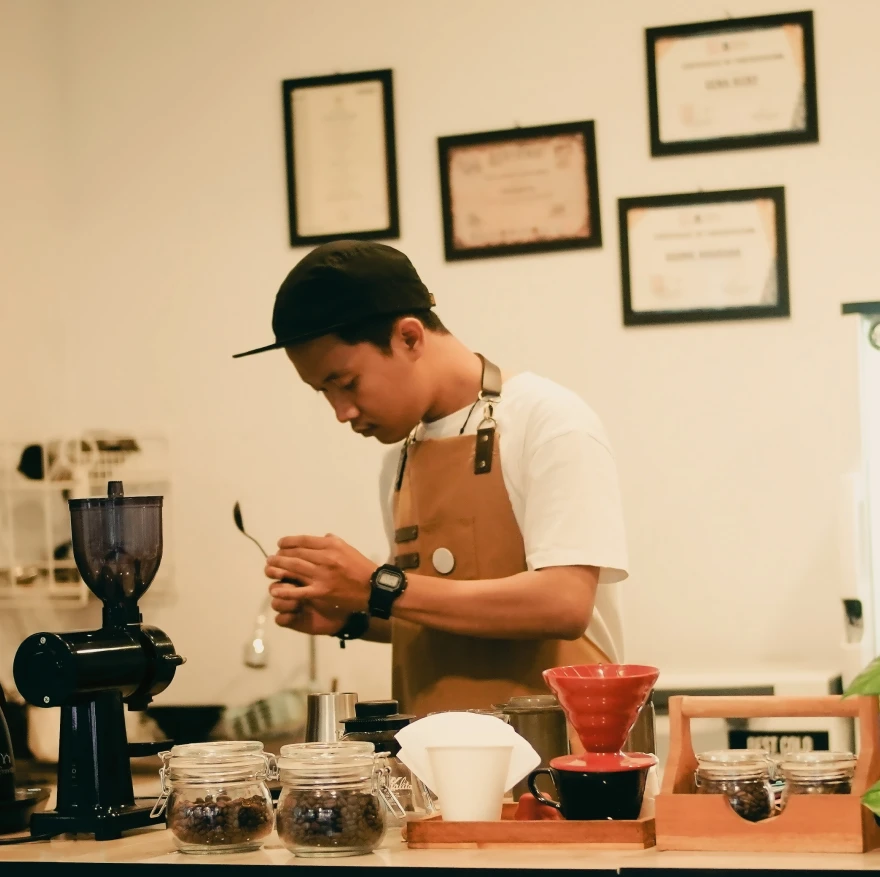
Indonesia is one of the world's largest coffee-consuming nations, a thirst that keeps spawning new coffee shops. Sharpening the competition among them.



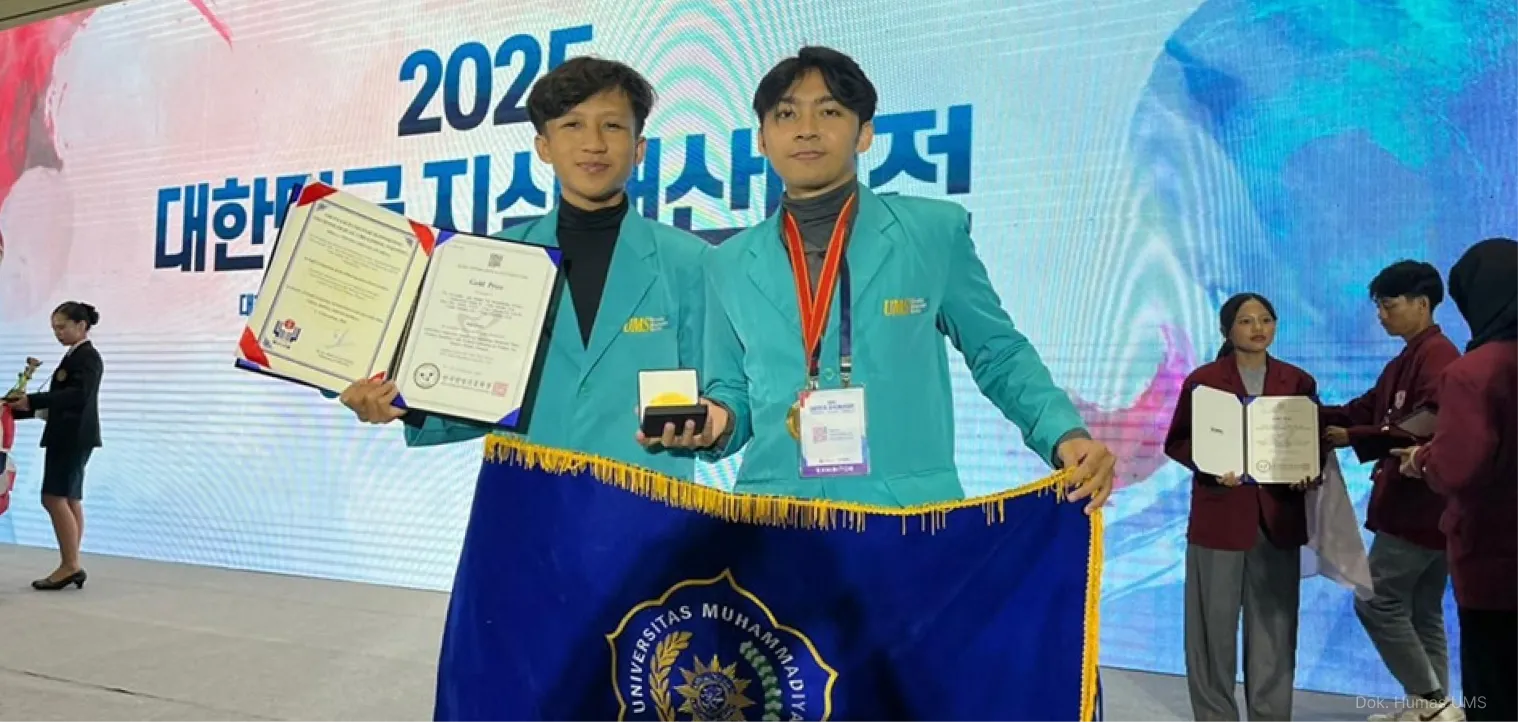
Students from the Faculty of Teacher Training and Education, Universitas Muhammadiyah Surakarta (FKIP UMS), once again recorded a proud achievement at the Seoul International Invention Fair (SIIF) 2025.
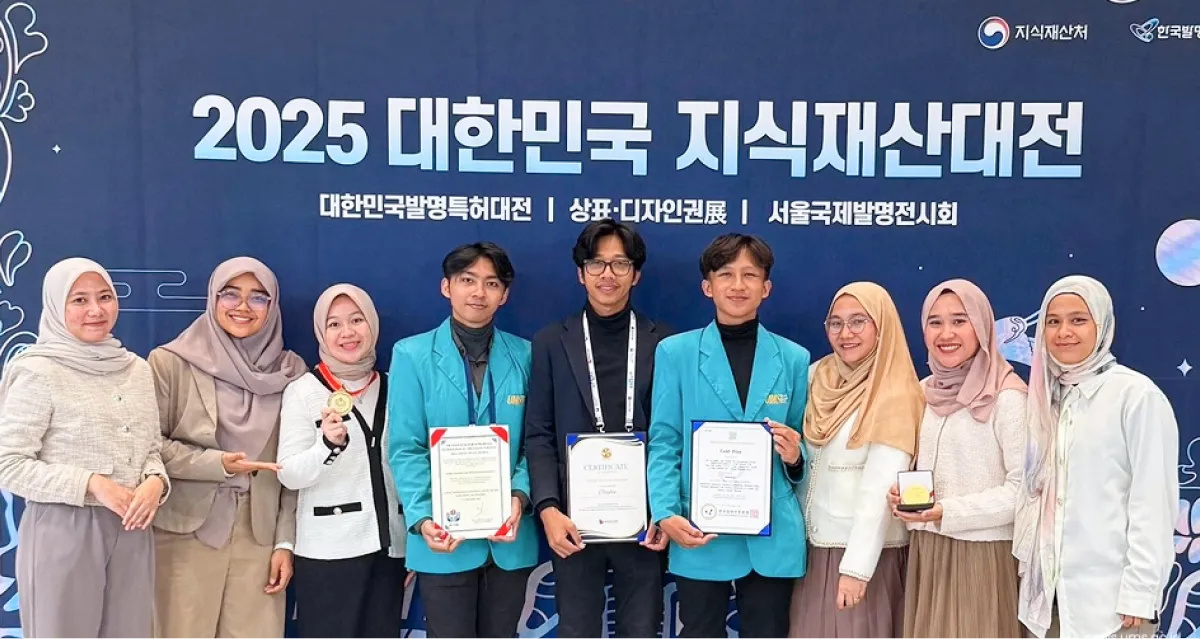
The international collaboration team from UMS together with three leading universities in Australia successfully won a gold medal as well as a special award from the Vietnam Fund for Supporting Technology Creations (VIFOTEC) at the SIIF event held at the Convention and Exhibition Center, Seoul, South Korea, 3–6 December 2025.
SIIF is one of the largest innovation exhibitions in the world, organized by the Korea Invention Promotion Association and supported by the International Federation of Inventors’ Associations. The event brings together hundreds of innovators from various countries to showcase ideas and future technologies.
The Indonesia-Australia collaboration team consisted of Vio Arvendha (PTI UMS 2021), Muhammad Isnani Kusuma (PTI UMS 2022), Kintan Nur Romadhona (Biotechnology, University of Queensland), Desi Puti Andini (Data Science, Monash University), Citra Cahyati (Public Health, University of Melbourne), Nada Fadilah (Agribusiness, University of Queensland), Nadia Yasmine (Public Health, University of Queensland), and Yulia Susanti (Desamind Indonesia).
Muhammad Isnani Kusuma expressed his pride in the achievement. “Collaboration with friends from Australia provided many valuable lessons, especially regarding discipline, communication, and creativity. This achievement has become a great motivation for me to continue developing myself,” he said, Monday (29/12/2025).
The man known as Isnani explained that the innovation they presented was titled “HerbsWise: Immersive Journey of Indonesian Medicinal Plants Wisdom Integrated with Wellness Education to Combat Top Nation’s Priority Diseases”. They introduced an interactive learning innovation based on virtual reality (VR), designed to immersively introduce the richness of Indonesian medicinal plants.
Isnani explained that the VR application is packaged into three main menus. The first and second menus take the form of story-based games. Users are invited to explore herbal plant fields, such as ginger, turmeric, temulawak, cat’s whiskers, cinnamon, and others. Each plant is equipped with educational material as well as interactive quizzes.
"After completing the exploration of medicinal plants, users will proceed to the second mission, which is to heal a sick mother using herbal remedies concocted from plants in the field. One of the case examples presented is the treatment of diabetes mellitus using the cat’s whiskers plant,” he explained.
The third menu is a virtual museum that presents more comprehensive information on medicinal plants. Users can view the form of the plants, the parts used as medicine, as well as the benefits and herbal compounds, as if they were in a real museum.
“This innovation not only teaches knowledge, but also builds a fun and contextual learning experience,” he added.
According to him, this innovation is rooted in Indonesia’s biodiversity, with more than 30 thousand plant species, making Indonesia the country with the second-largest biodiversity in the world after Brazil.
Of the total number of plants, 9,600 species are used as herbal medicine. “The goal of our innovation is to increase awareness, health literacy, and the practical and sustainable use of herbal plants, especially among rural youth,” Isnani explained.
Going forward, the HerbsWise innovation will be implemented directly in communities through village empowerment programs in collaboration with Desamind Indonesia. This VR application is planned to be introduced to adolescents in Cipaku Village, Purbalingga, Central Java, as a medium for health education as well as the development of herbal-based economic potential.
The team also partnered with the herbal beverage product Rizolatte as an example of innovation downstreaming. The program will guide adolescents on how to cultivate, process, and develop herbal products with economic value.
Meanwhile, Kintan Nur Romadhona from the University of Queensland expressed her appreciation for the collaboration with UMS. “I am very happy and proud to be able to collaborate with UMS students. Despite the short time and being on different continents, this project still ran well,” she said.
The supervising lecturer, Hardika Dwi Hermawan, M.Sc. ITE., also expressed his appreciation for the achievements of his students. According to him, this success cannot be separated from the support of the Informatics Engineering Education program, FKIP, and UMS. An adaptive curriculum, research facilities, and opportunities for international collaboration have become important foundations in developing students’ capacities at the global level.
“Alhamdulillah, this achievement is proof that collaboration and hard work can bring our students to the international level. Hopefully, it will inspire other FKIP students to continue creating and collaborating globally,” he explained.
The victory of the UMS-Australia collaborative team, he continued, further strengthens UMS’s position in producing outstanding talent capable of presenting innovative solutions based on technology and local wisdom on the international stage.
Writer: Fika Annisa’ Sholihah
Editor: Maysali Sudarwati
Translator: Farizal Luqman Majid
Indonesia is one of the world's largest coffee-consuming nations, a thirst that keeps spawning new coffee shops. Sharpening the competition among them.
Nothing’s more special than reading curated news just for you.
Subscribe to the UMS Newsletter for free today.