The Coffee Shop Boom
1 August 2026
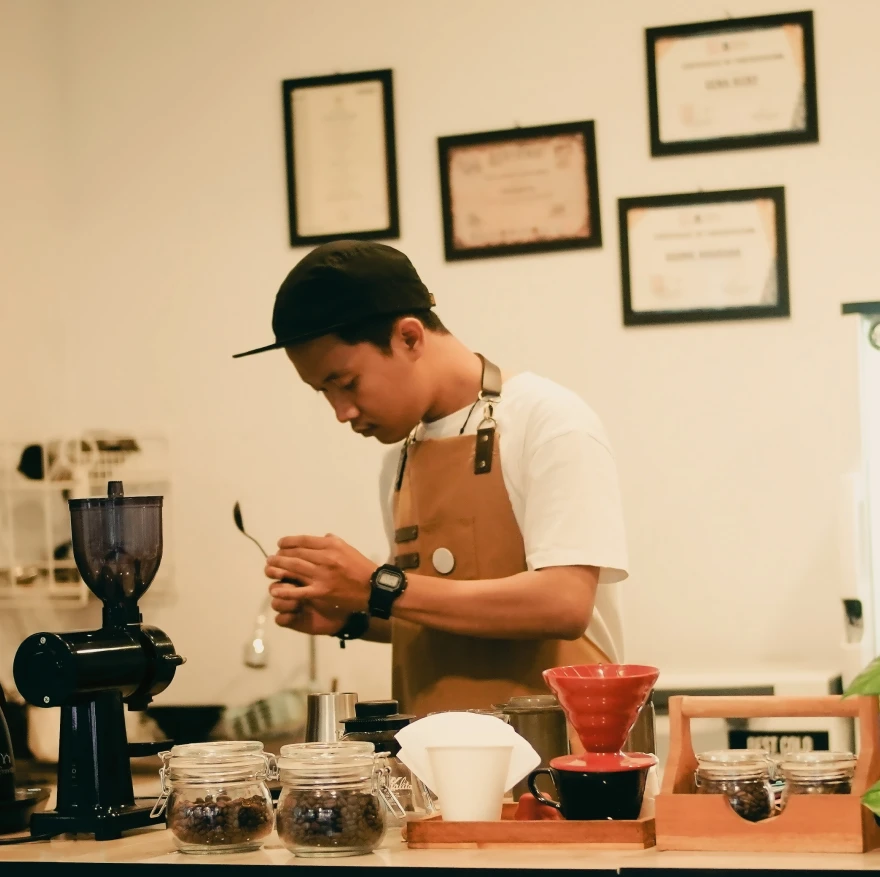
Indonesia is one of the world's largest coffee-consuming nations, a thirst that keeps spawning new coffee shops. Sharpening the competition among them.



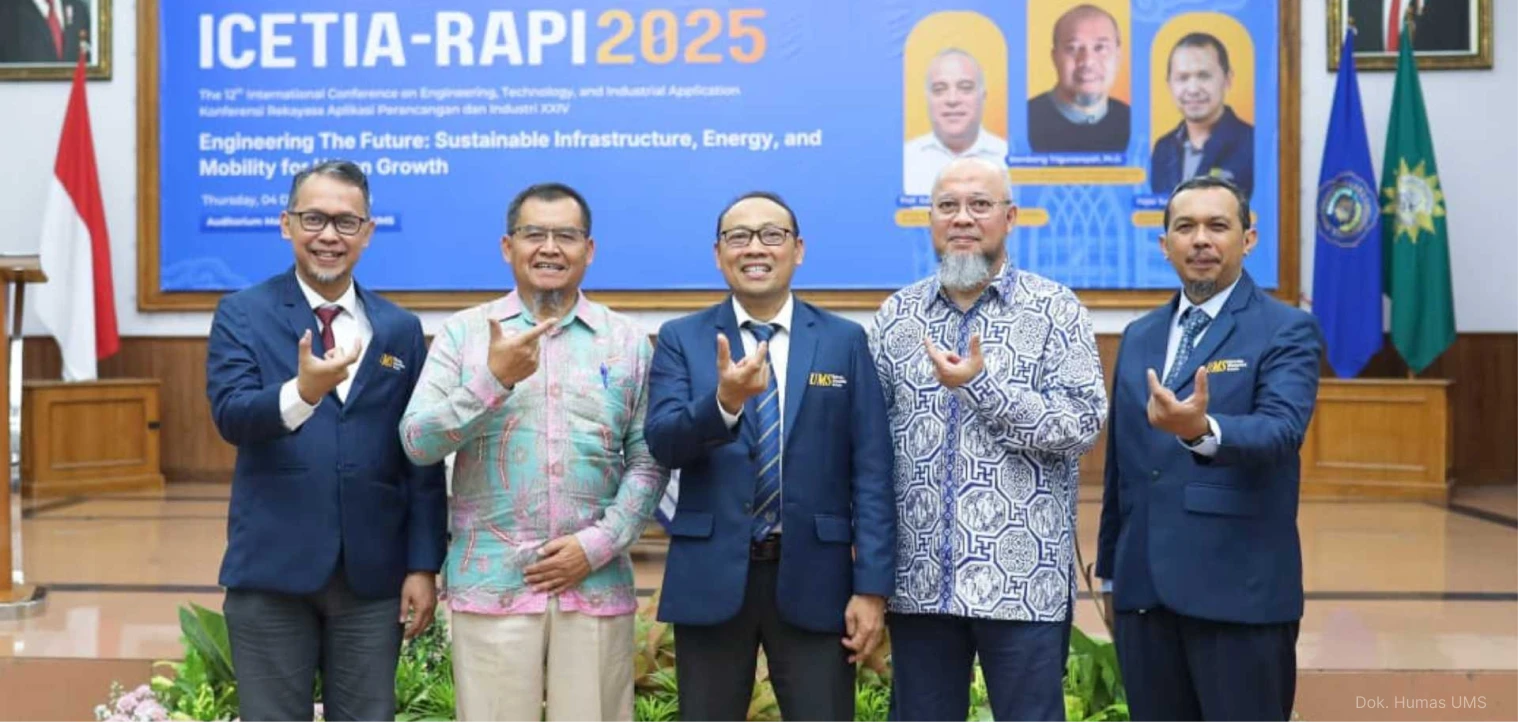
The Faculty of Engineering, Universitas Muhammadiyah Surakarta (UMS), once again hosted the 12th International Conference on Engineering, Technology, and Industrial Application (ICETIA) and the 24th Conference on Engineering, Design, and Industrial Application (RAPI). The event was held in a hybrid format at the Mohammad Djazman Auditorium on Thursday (4/12/2025).
This international conference carried the theme “Engineering The Future: Sustainable Infrastructure, Energy, and Mobility for Urban Growth.” The agenda reflects UMS’s commitment to advancing the Sustainable Development Goals, particularly Affordable and Clean Energy, Industry, Innovation and Infrastructure, as well as Responsible Consumption and Production.
Rama Rizana, S.T., M.Sc., Chair of the ICETIA–RAPI 2025 Committee, said in his opening remarks that the platform allows academics from various universities to enrich intellectual discourse and contribute innovations in engineering development that benefit both Indonesia and the global community.
“We aim to explore innovative engineering solutions, strengthen interdisciplinary collaboration, and spark discussions that inspire sustainable progress in a rapidly changing world,” he stated.
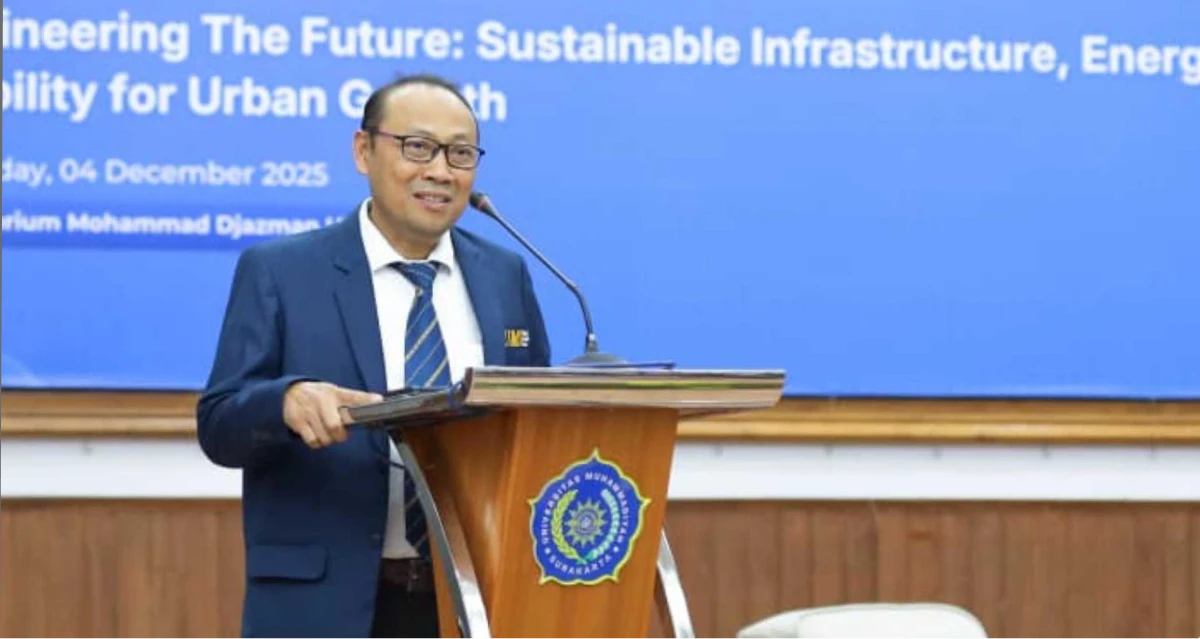
Echoing Rama’s remarks on sustainable infrastructure, Vice Rector I for Education, Student Affairs, and Talent Innovation Development, Prof. Ihwan Susila, S.E., M.Si., Ph.D., who also attended the conference, emphasized the urgency of adopting transformative approaches in urban development in today’s global era.
The rapid growth of urban populations has intensified the need for sustainable infrastructure, energy, and mobility solutions. Ihwan emphasized three key factors influencing urban development: climate change, resource scarcity, and social inequality.
“We are here to explore cutting-edge technologies, share best practices, and collaborate on solutions that accelerate economic growth while safeguarding environmental sustainability and social justice,” Ihwan explained.
He encouraged conference participants to maximize the potential of engineering disciplines. “Let us harness the power of engineering to create environmentally friendly, livable cities that benefit both people and our planet,” he urged.
ICETIA–RAPI brought together three engineering experts from various countries, each focusing on innovative solutions to address today’s urban growth challenges.
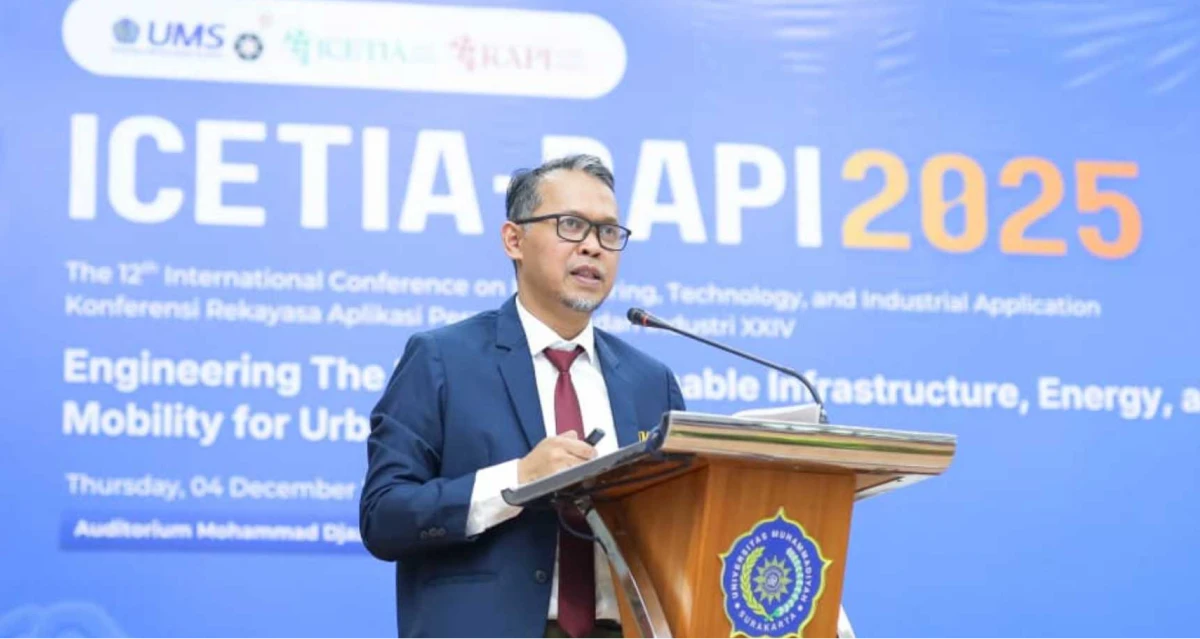
The first speaker was Bambang Trigunarsyah, Ph.D., Associate Professor of Social Property, Construction, and Project Management at the Royal Melbourne Institute of Technology University, Australia. He delivered a presentation on front-end planning aimed at identifying risks and optimizing resource allocation by considering budget, timeline, quality, and safety factors.
The second speaker, Prof. Sami El Ferik, Director of the Interdisciplinary Research Center for Smart Mobility and Logistics at King Fahd University of Petroleum and Minerals (KFUPM), Saudi Arabia, discussed the integration of AI in urban planning.
The final presentation was delivered by Fajar Suryawan, S.T., M.Eng. Sc., Ph.D., Associate Professor at the Department of Electrical Engineering UMS, who highlighted how Indonesia’s research and higher education ecosystem shapes the capabilities of practitioners in building sustainable infrastructure, energy, and mobility.
“You do not build a sustainable city with policy alone. You build engineers, researchers, and innovators. And they are the ones who build cities,” Fajar stated.
Writer: Roselia
Editor: Maysali Sudarwati
Translator: Farizal Luqman Majid
Indonesia is one of the world's largest coffee-consuming nations, a thirst that keeps spawning new coffee shops. Sharpening the competition among them.
Nothing’s more special than reading curated news just for you.
Subscribe to the UMS Newsletter for free today.