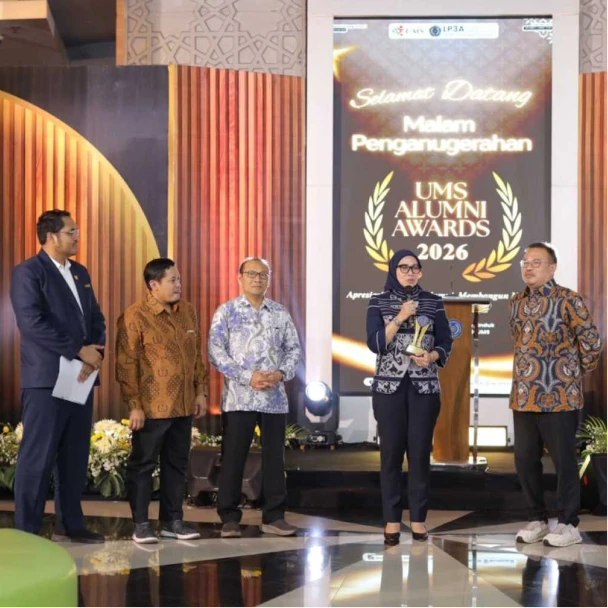
Building the Nation, UMS Presents Awards to Its Alumni
2 August 2026
10 awards were presented to UMS alumni who have created extraordinary impact in their respective fields.



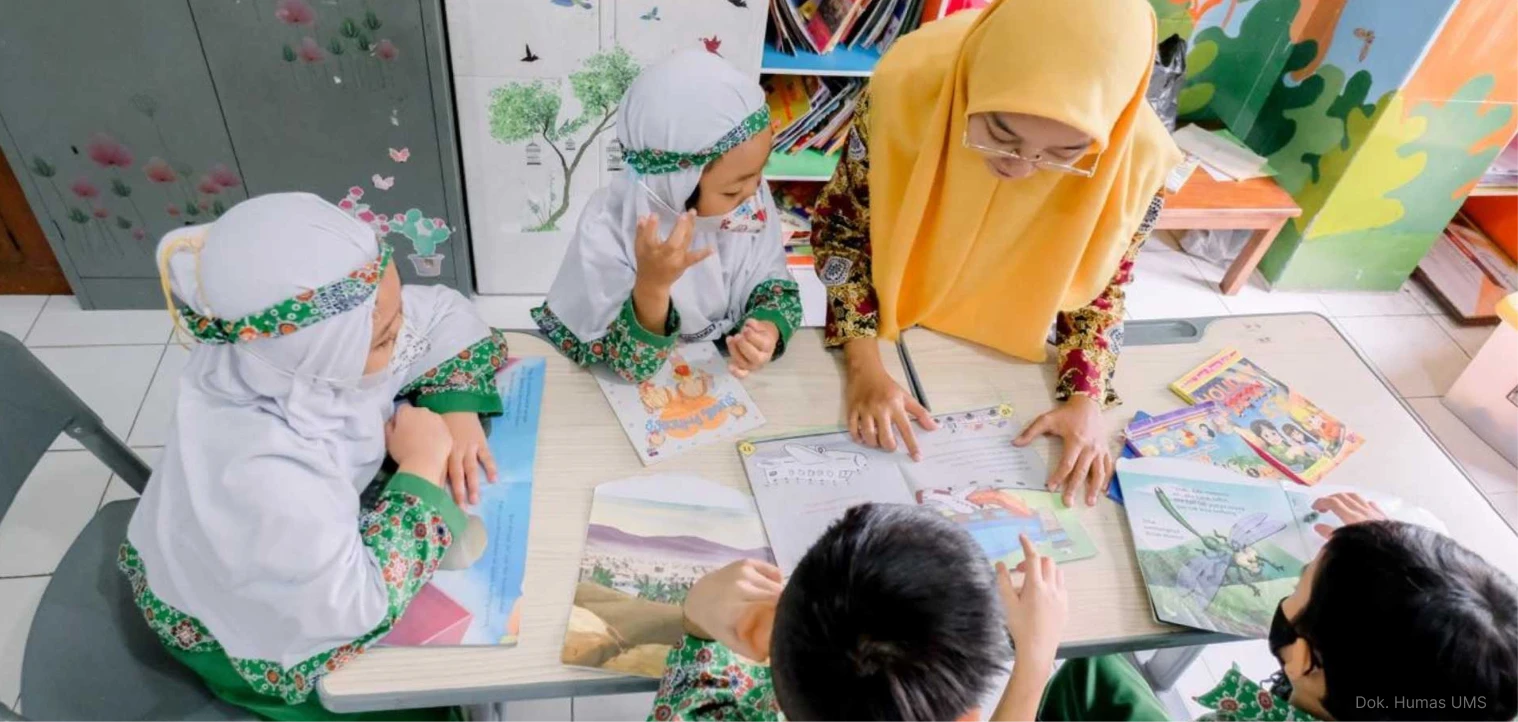
The international accreditation from The Foundation for International Business Administration Accreditation (FIBAA) obtained by the Elementary Teacher Education (PGSD) Study Program of the Faculty of Teacher Training and Education (FKIP) at Universitas Muhammadiyah Surakarta (UMS) has begun to have a tangible impact on strengthening quality and shaping the future development direction of the study program.
This Germany-based international accreditation marks an important milestone in PGSD FKIP UMS’s efforts to strengthen its position as a teacher education program with global competitiveness. The FIBAA recognition not only confirms academic excellence but also opens opportunities for the continuous development of internationally oriented programs.
The Head of the PGSD Program, Murfiah Dewi Wulandari, S.Psi., M.Psi., stated that FIBAA accreditation serves as a strategic foundation for designing academic innovations that are relevant to global needs. One such initiative is the development of bilingual classes in response to the growing demand for educators with international competencies.
“This accreditation does not stop at recognition, but serves as a foundation for strengthening the quality of graduates. Going forward, PGSD UMS is directed to prepare alumni who are ready to perform at both national and international levels,” she explained during an interview on Monday (15/12/2025).
The process of obtaining FIBAA accreditation involved a comprehensive evaluation of the curriculum, learning processes, faculty quality, study program governance, as well as facilities and infrastructure. The evaluation results showed that PGSD FKIP UMS was deemed capable of meeting international standards in the implementation of elementary teacher education.
This achievement is the result of collaborative efforts across various units within UMS. Murfiah emphasized that support from university leadership, the faculty, the lecturer team serving as a task force, and intensive assistance from the UMS Quality Assurance Institute (LJM) were key factors in ensuring the smooth accreditation process, including the FIBAA assessors’ visitation.
“Strong synergy between the study program, the faculty, and LJM, coordinated by Ms. Heppy, enabled all stages of the accreditation process to be completed successfully,” she added.
From an academic perspective, the PGSD FKIP UMS curriculum is considered aligned with the needs of graduate users. The curriculum is designed to be adaptive to developments in the field of education and is supported by learning services and laboratory facilities that are relevant to the competencies of prospective elementary school teachers.
PGSD FKIP UMS also has distinct strengths in the reinforcement of literacy, numeracy, and psychoeducation. These three aspects serve as distinguishing features as well as responses to the real challenges of elementary education practice in the field.
In its implementation, the learning process continues to be directed toward enhancing lecturers’ capacities through the use of innovative media and learning methods, as well as strengthening supporting facilities and infrastructure to align with the international standards that have been achieved.
This international FIBAA accreditation, she continued, also expands opportunities for students and graduates to enhance their competitiveness. PGSD FKIP UMS encourages the strengthening of competencies through National Professional Certification Agency (BNSP) certification, as well as the improvement of English proficiency through study clubs for both students and lecturers.
Going forward, PGSD FKIP UMS opens opportunities for international collaboration through the development of bilingual classes, visiting lecturer programs, and Sea Teacher programs abroad. “Students are also encouraged to actively participate in various international competitions as part of strengthening their global experience,” she emphasized.
With this achievement, PGSD FKIP UMS is considered increasingly well prepared to meet the demand for educators in the continually expanding International Class Program (ICP), while also contributing to the fulfillment of elementary school teacher needs at the international level, in line with UMS’s vision as a globally competitive university.
Writer: Yusuf Ismail
Editor: Fika Annisa Sholihah
Translator: Farizal Luqman Maid
10 awards were presented to UMS alumni who have created extraordinary impact in their respective fields.
Nothing’s more special than reading curated news just for you.
Subscribe to the UMS Newsletter for free today.