The Scholar Behind UMS's Master's Program in IQT
27 July 2026
Prof. Andri Nirwana, S.TH., M.Ag., Ph.D., pioneered the Master of Al-Quran and Tafsir Studies as a first step in strengthening Quranic studies within Muhammadiyah.



The 2024 election is not just about the new presidential candidates but also the antics of the buzzers accompanying it. The political situation in Indonesia is starting to heat up ahead of the leadership succession next year. Recently, the online world has been abuzz with the appearance of a deepfake video of President Joko Widodo (Jokowi) speaking in Mandarin. The sudden appearance of the video caused a commotion among netizens. Many people have confirmed that it is a hoax, but many were taken in by the video.
This manipulated video originated from President Jokowi's English speech uploaded on YouTube in 2015. It was altered using artificial intelligence or deepfake technology to create the illusion that he spoke in Mandarin. So, what exactly is a deepfake, and what precautions should we take?
We met with Endang Wahyu Pamungkas, S.Kom., M.Kom., Ph.D., a lecturer in Informatics Engineering at the Faculty of Communication and Informatics (FKI), Universitas Muhammadiyah Surakarta (UMS), to delve deeper into information about deepfakes.
Deepfake is a product of artificial intelligence employing the deep learning method, specifically utilizing the Generative Adversarial Network (GAN) algorithm. This technology can generate photos, videos, and audio that closely mimic reality.
“Deepfake technology first emerged overseas, if I remember correctly, around 2018 or 2019. Its popularity and attention have only surged significantly since around 2020,” Endang remarked during our meeting in his office on Thursday (02/11/2023)
The deepfake technology operates by gathering data scattered across the internet. This data is then generated by adjusting to the conditions requested by the user, whether it's matching facial expressions, voice intonation, or facial features.
“In the case of the video featuring President Jokowi, the AI behind the deepfake gathered data from individuals speaking Mandarin. This data was then modified to synchronize with the President's facial expressions. Should there be any discrepancies, the AI attempts to generate data that closely resembles the original,” Endang explained.
Endang acknowledges that while current technological advancements are impressive, they also allow individuals to exploit AI to spread hoaxes and create turmoil.
“Indeed, technological progress is advancing rapidly, but it also means that more people are exploiting it for negative purposes. The viral video of President Jokowi coincided with Indonesia’s upcoming elections, which has added fuel to the fire,” he explained.
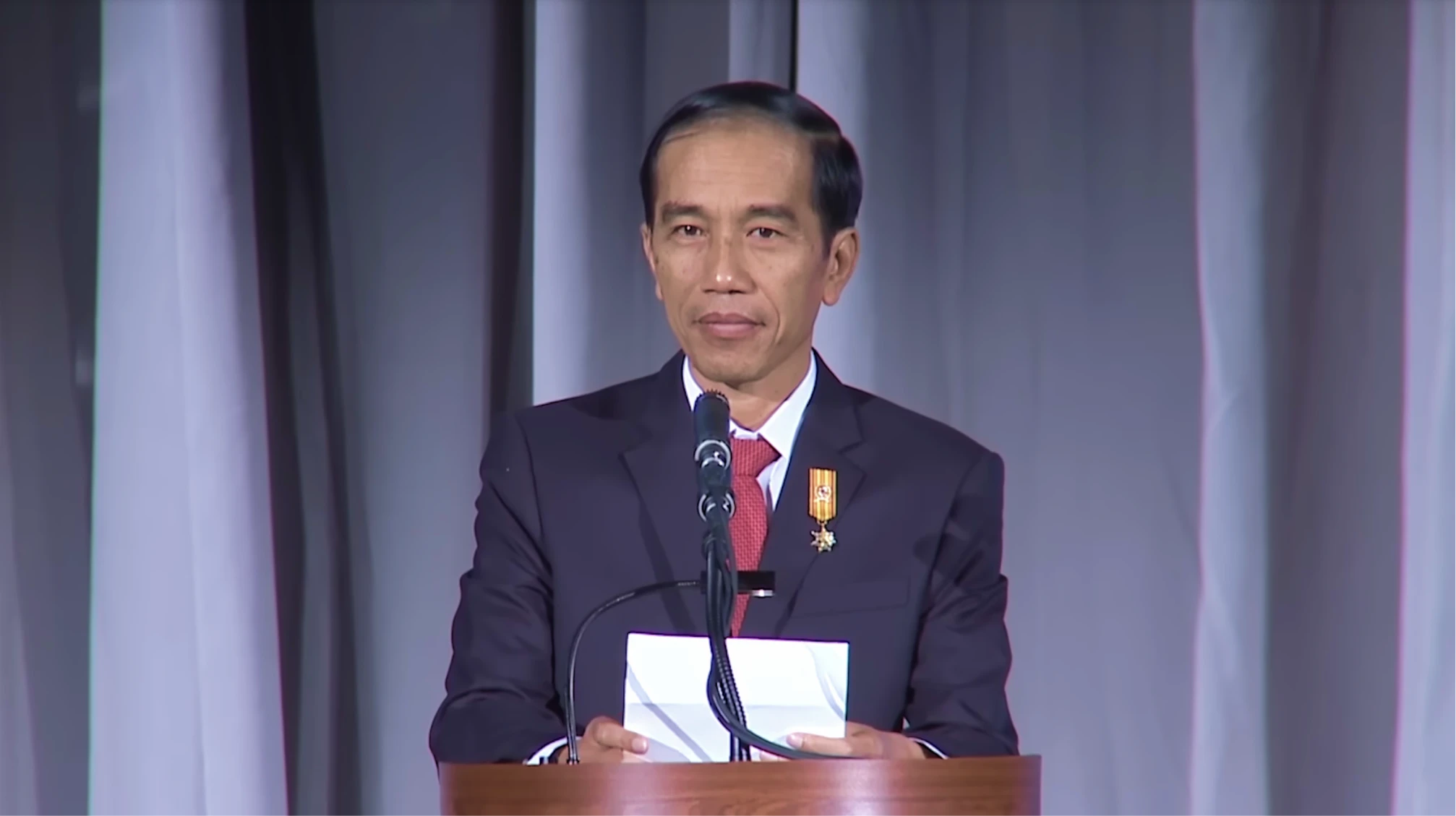
The manipulated video of President Jokowi originates from the recording of President Jokowi's speech at the Gala Hosted by USINDO, US Chamber, and USABC event on October 26, 2015. (source: TV One)
According to Endang, there is a more dangerous threat than the viral deepfake video that surfaced some time ago. This threat is linked to the theft of individuals’ personal identities, posing a significant risk of digital platform-related crimes.
“In my opinion, the most pressing challenge is identity theft. There’s concern that deepfake can be exploited, potentially leading to cases of fraud or other crimes, as we can’t always discern whether what we’re viewing is real or fake,” noted Endang, affectionately known as Pak Dadang.
The menace of identity theft predates the emergence of the video featuring President Jokowi on the internet. As reported by CNNIndonesia.com, incarcerated individuals have been orchestrating organized extortion using deepfake. By employing features of the reface app, these inmates have used the faces of others to carry out fraudulent activities, commonly known as love scamming.
In response, Endang stressed the importance of vigilance among the public regarding the misuse of deepfakes. “Indeed, in today’s era, we must exercise caution when interacting with new or unfamiliar individuals.”
As reported by Waspada Scammer Cinta (WSC) to Kompas TV, they have received reports of 17 cases as of March 31, 2023. Victims of these deceptive love peddlers have suffered significant losses, amounting to up to IDR 630 million.
Ironically, unlike text-based AI like Chat GPT, which can be easily detected using specific software, videos created using deepfake often encounter difficulties in detecting the authenticity of their content. Endang mentioned that video creators can make precise edits to deceive deepfake detection software.
“The results of GAN-produced videos are difficult to spot with certain algorithms. While there is already technology designed to detect deepfake videos, some researchers suggest that the analysis results may not be entirely precise, as creators can manipulate the process during video production to evade detection,” explained Endang.
Endang emphasized the importance of responsibility for AI developers and IT professionals to promote the ethical aspect of the technology they develop. According to him, in creating such advanced technology, the potential for misuse must be anticipated.
“When we develop technology, we must consider its ethical aspects. None of us could have predicted that the technology we develop would be misused like this. It should be a collective awareness to determine what is allowed and what is not in using technology, especially artificial intelligence technology,” he continued.
The surge in misuse of artificial intelligence technology has raised concerns about how the government plans to enforce laws against offenders. Endang firmly believes that robust government measures are crucial to combat artificial intelligence misuse.
“There is a pressing need for enforcement because the misuse of deepfake technology leads to the deliberate spread of false or misleading information,” he explained.
Endang stated that we cannot prohibit the advancement of AI technology. This is because it is inevitable that technology will continue to develop and become more sophisticated. He suggests regulating the users who exploit these advancements. Deterrence plays a pivotal role in curbing digital crimes in Indonesia.
“AI is akin to a tool, much like a knife. Its impact depends on the user. When used correctly, it can bring benefits. However, if misused, it can pose dangers,” he explained.
Regulations to prevent the misuse of AI for spreading hoaxes are outlined in the Electronic Information and Transactions Law (ITE Law), Article 28, Paragraph 1. This article stipulates that “any person who intentionally disseminates false and misleading information resulting in consumer losses in electronic transactions may face imprisonment for up to six years and/or a maximum fine of one billion rupiahs.”
With the massive flow of information and the current advancement in artificial intelligence technology, Endang emphasizes the importance of education through literacy. He emphasizes the need to refrain from accepting information at face value and to instead verify its credibility.
“When we come across information, whether in text or video, it’s crucial to validate its authenticity. This can be achieved by searching for similar content online or by using specialized software for verification,” adds Endang.
He further stresses that Indonesian internet users should not let their emotions dictate their reception of new information, as this can contribute to the spread of misinformation. Additionally, caution is advised when sharing information, as inaccurate news can potentially lead to real-world consequences.
“What we need to collectively realize is that if there is controversial information, its source and accuracy should be double-checked. If we share news that turns out to be false, then we are also responsible for those who are influenced by that news,” concludes Endang.
Writer: Gede Arga Adrian
Editor: Al Habiib Josy Asheva
Translator: Farizal Luqman Majid
Prof. Andri Nirwana, S.TH., M.Ag., Ph.D., pioneered the Master of Al-Quran and Tafsir Studies as a first step in strengthening Quranic studies within Muhammadiyah.

A UMS pencak silat athlete successfully claimed gold at the 10th Asian Pencak Silat Championship 2026.

The Klanceng Edufarm startup is planning international expansion after being named national champion at the 2026 Studentpreneur Bootcamp organized by the Muhammadiyah Center for Entrepreneurship and Business Incubator.

Nothing’s more special than reading curated news just for you.
Subscribe to the UMS Newsletter for free today.