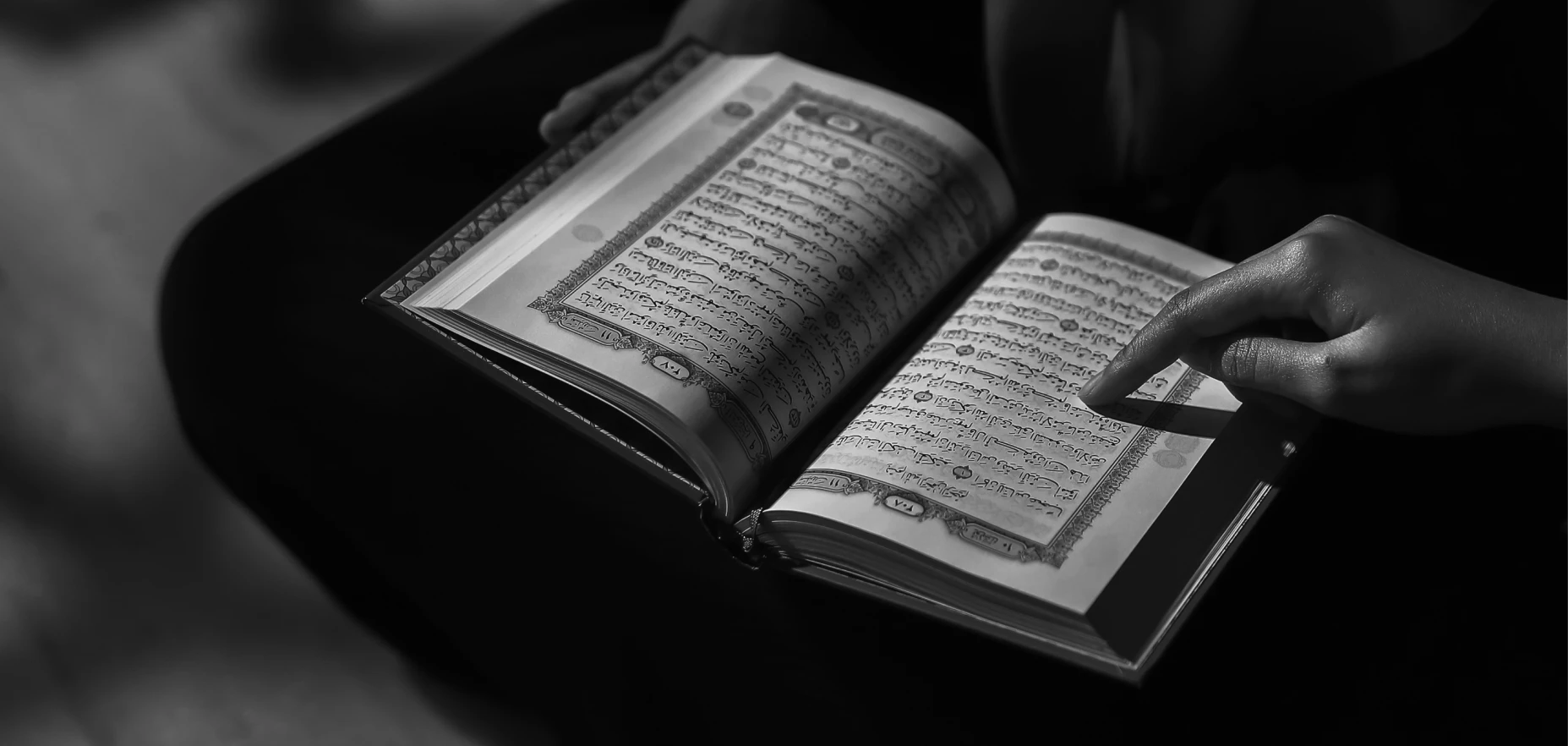
Indeed, during the holy month of Ramadan, Muslims engage in various acts of worship to seek the abundant rewards promised by Allah. Among these acts, reciting Al-Qur’an holds a special position.
Khatam Al-Qur’an is the practice of completing the recitation of the Al-Qur’an. The word “khatam” is derived from Arabic, and according to the Kamus Besar Bahasa Indonesia (KBBI), it means “to finish” or “to complete.”
Muhamad Subhi Apriantoro, a lecturer at the Faculty of Islamic Studies, Universitas Muhammadiyah Surakarta (UMS), emphasized the numerous virtues associated with the activity of khatam Al-Qur’an. He highlighted that this practice is deeply intertwined with the event of Al-Qur’an’s revelation, which occurred for the first time during the month of Ramadan through the Angel Jibril.
“Al-Qur’an, bestowed upon Prophet Muhammad SAW during the revered month of Ramadan, embodies profound glory. Subsequently, everything associated with Al-Qur’an assumes nobility, for Al-Qur’an itself is synonymous with magnificence,” Subhi emphasized during our discussion on Tuesday (19/3/2024). “Those who consistently engage with and comprehend Al-Qur’an shall attain true glory.”
Subhi further explained that the sense of glory associated with Al-Qur’an is amplified during the holy month of Ramadan. He emphasized that Ramadan presents an opportune moment for individuals to seek blessings and attain spiritual elevation by deepening their connection with Al-Qur’an.
“Numerous hadith extol Ramadan as a month profoundly urging us to draw nearer to Allah through Al-Qur’an recitation. Particularly, it emphasizes the abundant rewards and blessings Allah has reserved,” he elaborated.
Subhi underscored the profound rewards promised to Muslims for engaging with Al-Qur’an during Ramadan. He referred to a hadith narrated by Ibn Mas’ud, which states that for each letter recited from Al-Qur’an, a person will be rewarded tenfold. Thus, even the smallest act of reading Al-Qur’an during Ramadan is magnified in its virtue and blessings.
“The Prophet added that ‘alif-lam-mim’ comprises not one but three letters. Considering that each good deed is multiplied tenfold, we witness the remarkable abundance of blessings bestowed by Allah during Ramadan,” Subhi further explained.
Tips for Khatam Al-Qur'an in Ramadan
In this glorious month, Subhi extends an invitation to Muslims to perform good deeds. Allah has bestowed upon us a golden opportunity to accumulate as much reward as possible.
“The month of Ramadan is abundant with rewards and numerous acts of kindness bestowed by Allah,” explained the Islamic Economic Laws lecturer. “Allah generously grants rewards and bestows countless unexpected benefits beyond human calculation.”
Khatam Al-Qur’an can be undertaken by Muslims from various backgrounds, including students. As a student, one often juggles a busy daily routine, such as studies, practical classes, involvement in extracurricular activities, and other activities beyond campus. It is not uncommon for many to also take part in internships, freelance work, or part-time jobs. Subhi provided some tips for students who want to do khatam Al-Qur’an in the midst of their busy schedules.
- Maintain a strong intention to complete the recitation of Al-Qur’an during Ramadan. A sincere intention will facilitate the accomplishment of reciting Allah’s words in its entirety.
- It is crucial to establish a clear target for khatam Al-Qur’an. Once you’ve set your goal, it is essential to realize that Ramadan is relatively short, spanning just one month. Therefore, commit to achieving your target within this timeframe.
- If your goal is to complete one khatam during Ramadan, consider dividing your target into smaller, manageable chunks. For instance, allocate time after salat to read two pages of the holy book. Breaking it down in this way will make it more feasible to accomplish the recital of the holy book.
- If you aim to increase your khatam target, you can also increase the number of pages to be read after each salat. For instance, you could start with reading four pages after a salat, then increase it gradually to six pages, and so forth.
- By employing the “one day, one juz” method, you can streamline your Al-Qur’an recitation goals, making it more manageable to target a juz each day. Since Al-Qur’an comprises 30 juz, adhering to this method ensures one khatam within a month.
- Selecting the right circle of friends is crucial for your journey towards khatam Al-Qur’an. Toxic friendships can impede your progress, so seek out a community of friends who share your goal of achieving spiritual growth and excellence during Ramadan.
One of the dedicated students at UMS, Fauzan Muhammad Ihsan, is actively engaged in khatam Al-Qur’an and is currently undertaking the noble mission of completing the word of God. Fauzan expressed that despite his busy schedule, he refuses to let it become a barrier to seeking glory in Ramadan.
“On every Ramadan, I always establish a goal for how many times I aim to khatam Al-Qur’an. This year, I’ve set a target of khatam three times,” stated Fauzan on Monday, March 18, 2024.
To achieve his goal of completing three khatam, Fauzan reads six pages of Al-Qur’an (approximately twelve pages) after each salat. With this calculation, Fauzan is able to read three juz every day.
When asked about his busy schedule as a student, Fauzan remains optimistic about achieving his target. He believes that time management is crucial and emphasizes that khatam is not about waiting for free time but rather prioritizing and making time for it. “khatam is not waiting for free time, but we must take the time and prioritize it,” he said.
Khatam Al-Quran in Students’ Eyes
Fauzan has been intimately connected to Al-Qur’an since childhood, having completed reading the word of God even at a young age.
“The first time I completed it was in junior high school, maybe around 13 years old. At that age, I found it challenging to finish because the mindset was so that I did not feel hungry because of fasting, and the solution seemed to be playing games or sleeping to pass the time. However, through consistent effort, alhamdulillah, I managed to khatam Al-Qur’an,” shared the student known as Fauzan, on Friday, March 15, 2024.
That initial experience succeeded in igniting a passion for loving and studying Al-Qur’an within Fauzan. In the subsequent Ramadan, he felt more at ease in completing the word of God. Fauzan had discovered the right pattern to facilitate his recitation.
“The crucial aspect is to cultivate the habit of khatam Al-Qur’an and internalize it within ourselves,” he emphasized. “Initially, it may feel challenging and require effort. However, inshallah, after persisting through the initial stages, it will undoubtedly become easier.”
The man who idolizes Uthman bin Affan is driven by a desire to draw closer to Allah SWT through the process of khatam Al-Qur’an. He perceives reading Al-Qur’an as a means for a servant to establish a connection with the Creator.
“In the words of the Prophet’s companion, Uthman bin Affan, ‘If our hearts are pure, we would never be satiated with the Qur’an,’” Fauzan continued. “Therefore, we should set our intention to purify our heart, enhance faith, and strengthen the relationship with Allah.” Fauzan expressed that he experiences a sense of tranquility after reciting firman Allah, along with gratitude for being chosen as a servant to engage with it.
Not Just Recital
Fauzan believes that the essence of khatam Al-Qur’an extends beyond the mere completion of recitation. It entails living and comprehending every verse it contains. He emphasizes that the process of khatam must be accompanied by practicing Al-Qur’an as a guide, as every word of Allah provides instructions for navigating life in this world.
“Al-Qur’an contains instructions for living life in this world, guiding us to avoid getting lost and to fulfill the purpose for which humans were created, to return to the akhirat (afterlife) safely and be included in His jannah (paradise),” explained Fauzan.
Ramadan holds profound significance for Muslims to engage in the recitation of the Al-Qur’an. Fauzan, a member of the Mahasiswa Pencinta Al-Qur’an (MPQ), emphasized that the essence of Ramadan lies in Al-Qur’an, making it the soul of this sacred month.
Making Ramadan a time to interact with the Al-Qur’an should be approached with the utmost seriousness. The connection between individuals and the holy scripture should be a profound and memorable experience that deeply touches the recesses of the soul.
“Don’t let Ramadan be just an annual event. Instead, make it a memorable experience that you eagerly anticipate each year,” concluded Fauzan.
Writer: Gede Arga Adrian
Editor: Al Habiib Josy Asheva
Translator: Farizal Luqman Majid
Featured News
UMS Newsletter
Nothing’s more special than reading curated news just for you.
Subscribe to the UMS Newsletter for free today.