Bank Indonesia Holds Interest Rate at 5.75%, What Is the Impact?
24 July 2026
Bank Indonesia has held its benchmark rate at 5.75 percent, ending speculation of a hike to 6 percent that had circulated in recent weeks.


A prolonged drought has gripped several regions in Indonesia with an unprecedented, searing heat wave that feels more intense than ever before.
The escalating drought serves as a stark reminder of the imbalance wrought by human activities on the ecosystem, including overexploitation of natural resources, pollution, and the impacts of climate change. It is estimated that this year's rainy season may be delayed until November. The Head of the Meteorology, Climatology, and Geophysics Agency (BMKG), Dwikorita Karnawati, has even urged the public to exercise caution and refrain from activities that could trigger severe wildfires.
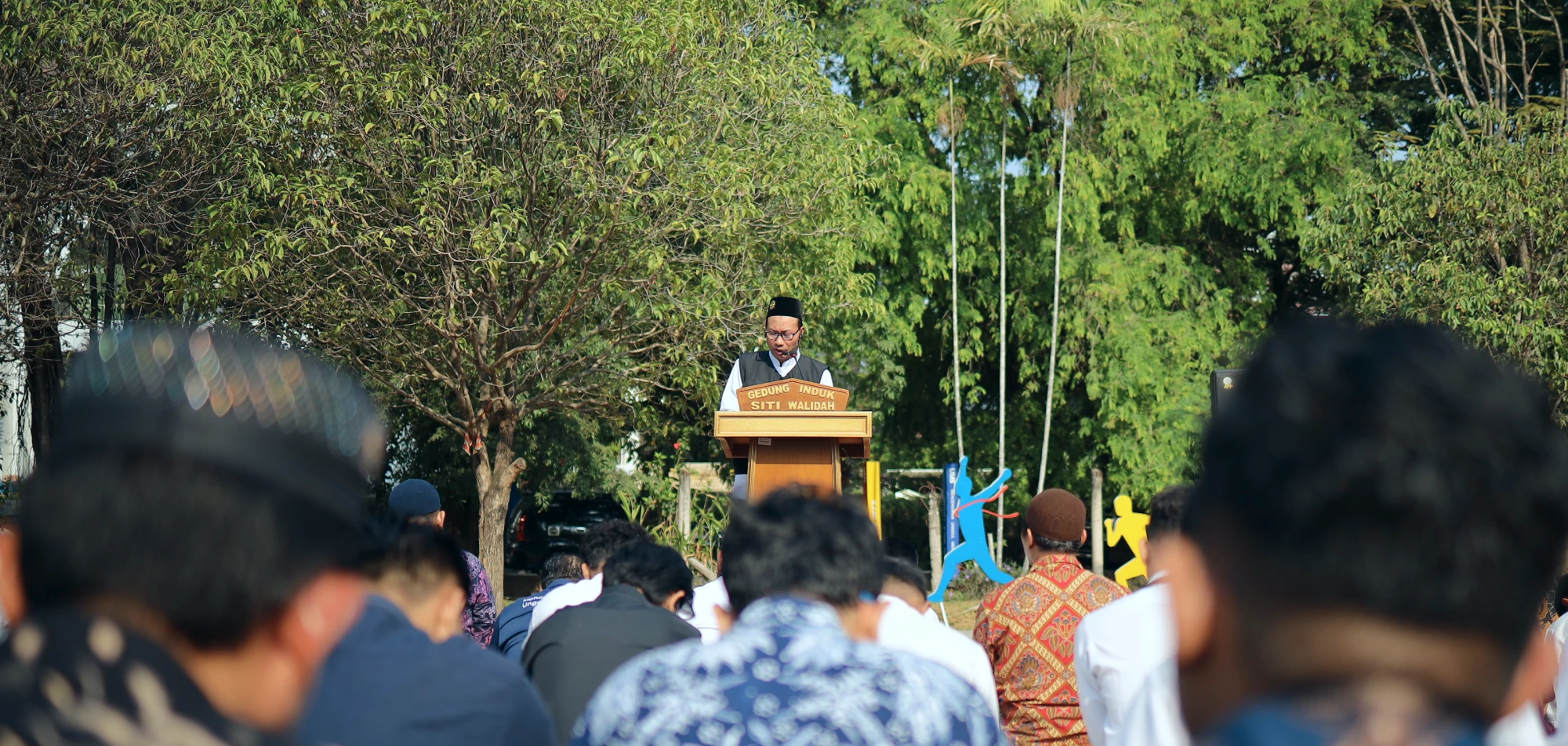
In response to the drought crisis, the leader of Universitas Muhammadiyah Surakarta (UMS) organized a collective Istisqa prayer, held on the South Field of the Psychology Department on Thursday (19/10) for all leaders, lecturers, staffs, and students. Prior to the event, UMS provided guidance to jamaah through an online Tarjih Study titled "Decisions and Fatwas of Tarjih on Prayers and Istisqa Prayers," broadcasted live on the YouTube tvMu Channel.
Dr. Syamsul Hidayat, M.Ag., a lecturer from the Faculty of Islamic Studies at UMS, who had the opportunity to be a speaker in the online sermon, solemnly explained the procedure of Istisqa prayer based on the fatwa of the Central Board of Tarjih and Tajdid of Muhammadiyah during the 20th Tarjih Congress in 1976 in Garut.
Currently, the temperature in Solo Raya has reached 39-40 degrees, approaching the summer temperatures in Mecca. The heat has even led to water crises in some areas. Therefore, one of the guidance from the Prophet Muhammad is to perform the Istisqa prayer," he said.
The Istisqa prayer is a form of prayer and spiritual action performed with a sense of hope and humility, where Muslims gather to pray for the arrival of blessed rainfall. The Istisqa prayer is evidence of our obedience and reliance on Allah, acknowledging that only He holds the power to transform a barren earth into a fertile one.
In the YouTube video lasting approximately one hour, Ustaz Dr. Syamsul elaborated on the deeds that should be internalized before we perform the Istisqa prayer.
"Jamaah should repent, seek forgiveness, and engage in other acts of goodness such as fasting, engaging in dhikr, and giving in charity in the days leading up to the Istisqa prayer," explained the lecturer from the Faculty of Islamic Studies.
Unlike the ‘Eid, we are actually encouraged to wear simple attire with no adornment. There is also no additional takbirat zawaid, so it is similar to the usual Friday prayer.
The Istisqa prayer is held specifically in an open area or inside a mosque after sunrise. Then, the imam leads the Istisqa prayer for two rak'ahs with audible recitation (jahr), which is not preceded by the adhan or iqamah.
After the prayer, the imam delivers a brief sermon. This sermon can be given either before or after the Istisqa prayer. During the sermon, the imam emphasizes istighfar (seeking forgiveness) in between his words.
At the end of the sermon, the imam and the jamaah raise their hands high to pray together. One of the prayers for rain and Allah's mercy recited by Ustaz Dr. Syamsul is as follows:
اَللَّهُمَّ أَسْقِنَا غَيْثًا مُغِيْثًا مَرِيْئًا سرِيْعًا، نَافِعًا غَيْرَ ضَارٍّ، عَاجِلاً غَيْرَ آجِلٍ
Allahummasqinaa ghoitsan mughiitsan mariyyan sarii'an naafi'an ghoiro dhoorrin, 'aajilan ghoiro aajilin.
Meaning: O Allah, send down upon us abundant, tranquil, beneficial, and unharmful rain, which comes swiftly and is not delayed.
"Even in the hadith narrated by Al-Bukhari, in the Book of Hajj, when the Prophet prayed, he raised his hands higher than usual, to the point where his armpits were visible," explained the lecturer.
Ustaz Syamsul emphasized the importance of contemplating the meaning of the prayers during salat, as it reflects sincerity and a profound understanding in seeking blessings from Allah. He also recounted the power of Istisqa prayer when the Holy Land endured a year-long drought.
"I remember attending the Istisqa prayer at Masjidil Haram in late 2003 on a Wednesday morning. The reason was that there had been no rain for a year there (Saudi Arabia), and two days later, heavy rain fell in Mina (the valley of the desert located east of Mecca), Medina, and Mecca. Mashallah," said Ustaz Dr. Syamsul before the end of the YouTube live session.
The lecturer also reminds jamaah that performing the Istisqa prayer is not just a ritual, but a meaningful dialogue with the Giver of Rain. By following the aforementioned procedures, he hopes that every Istisqa prayer we perform will bring the blessing of rain that will nourish the dry and barren earth.
Writer: Genis Dwi Gustati
Translator: Farizal Luqman Majid
Bank Indonesia has held its benchmark rate at 5.75 percent, ending speculation of a hike to 6 percent that had circulated in recent weeks.
Nothing’s more special than reading curated news just for you.
Subscribe to the UMS Newsletter for free today.