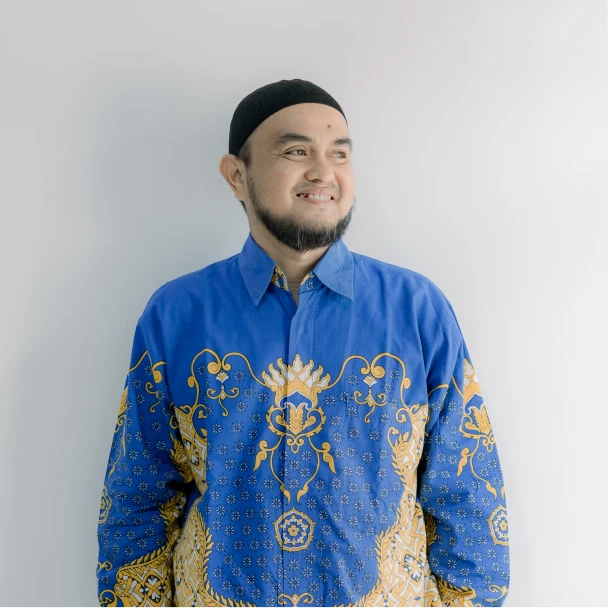


Keeping the Lights On in Qatar's Milaha Vessel
30 July 2026
Muhamad Wildan Fadhila flew to Qatar to work as an electrical technician on ships owned by Milaha. Maintaining the vessel's electrical systems while catching his global exposure.



The Little Aresha daycare case in Yogyakarta drew public attention after allegations emerged of mistreatment of toddlers placed in the childcare facility. It has stirred deep unease among many parents, particularly families who must divide their time between work and childcare every day.
Tempo reported that as of May 2, 2026, 93 complaints had been submitted to the Yogyakarta City Government. The complaints filed at the reporting post were accompanied by supporting evidence, including parents reporting that their children had visible bruising during the period they were enrolled, backed by medical documents and similar records.
A Kompas report meanwhile revealed that dozens of child victims from the Little Aresha daycare had experienced developmental disruptions, a finding that came to light when the Yogyakarta District Police conducted examinations of victim witnesses.
"Based on accounts from each of the parents, some reported that their child's weight had dropped," said the Head of the Women and Children Service Unit at Yogyakarta District Police, Second Inspector Apri Sawitri, as quoted by Kompas on Thursday (7/5/2026).
Daycare has long been considered a safe space for parents to leave their children while they work. Sadly, the case that has gone viral has made parents increasingly anxious about leaving their little ones in someone else's care.
Pediatric specialist and lecturer at the Faculty of Medicine, Universitas Muhammadiyah Surakarta (UMS), dr. Restu Tri Wulandani Tolibin, Sp.A., argued that the Little Aresha case must not be taken lightly, as its effects can influence a child's physical health and mental development over the long term.
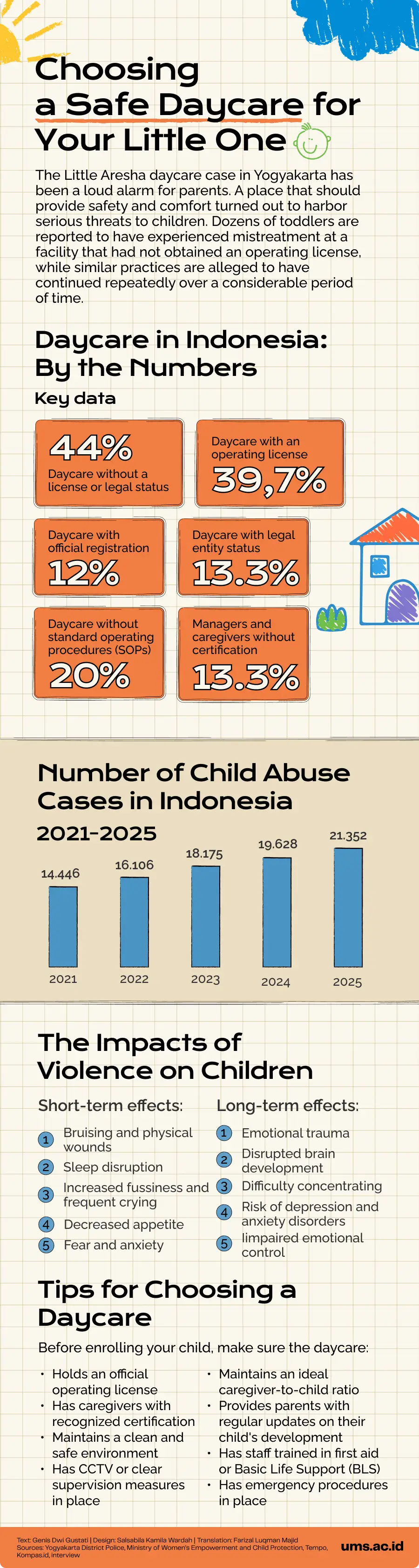
"Short-term impacts can include bruising, wounds, physical injuries, disruptions to eating and sleep patterns, and stress responses such as continuous crying and anxiety," Restu said when met on Friday (8/5/2026).
According to Restu, the violence at the Little Aresha daycare needs to be understood through the lens of early childhood brain development. During the infant and toddler years, the brain is developing at a rapid pace, meaning that harmful experiences can leave deep imprints even before a child is able to speak or explain what they have been through.
Restu explained that trauma in infants and toddlers can become encoded in the child's memory and emotional systems. Chronic stress even has the potential to disrupt the development of brain regions linked to memory, emotion, and behavioral control.
"Trauma experienced by infants and toddlers can affect the formation of long-term memory even though they are not yet able to recall it in the form of verbal narrative," Restu explained.
This makes it all the more important for parents to stay attuned to small changes in their child's behavior after returning from daycare. Not every child is able to show warning signs directly. Some instead display emotional changes gradually, over time.
The Yogyakarta daycare case has also highlighted the importance of safety standards in childcare services. In major cities, demand for daycare continues to grow as more families have both parents working full time.
Unfortunately, the increase in childcare facilities has not always been matched by adequate oversight. According to Restu, one of the most important aspects that is frequently overlooked is caregiver competence.
"A caregiver cannot simply like children. They also need to have basic child-handling skills, even in emergency situations," she explained.
Restu advised parents to ensure that caregivers hold a childcare certification from an official institution and have received Basic Life Support (BLS) training. These skills are essential for handling emergencies such as choking, respiratory arrest, or accidents involving children.
Beyond caregiver competence, the ratio of children to caregivers also plays a major role in determining the quality of supervision. From a medical standpoint, the ideal ratio for infants is one caregiver to three babies. For children under two years old, one caregiver should handle no more than four children.
"The younger the child, the greater the need for supervision and quick response from the caregiver," Restu added.
The nearest daycare is often a practical choice for parents due to convenience and proximity. But Restu reminded parents once again that choosing a daycare should never come down to location alone.
Parents need to inspect the daycare environment in person. The cleanliness of play areas, the safety of furniture, food quality, the presence of CCTV cameras, and child pickup procedures should all be primary considerations.
Restu said parents should seek out reviews from other users and ensure the daycare holds an official operating license from the relevant authority. Transparency from the management is a key factor in building a genuine sense of security.
"Daycare, when well managed, can actually support a child's social development. Children can learn to socialize, share, and get used to routines from an early age," Restu noted.
The Little Aresha case is a reminder that young children are an extremely vulnerable group. They cannot yet defend themselves, cannot fully explain their experiences, and are entirely dependent on the adults around them.
"That is why oversight of daycare services cannot only happen when a case goes viral on social media. Parents, facility managers, healthcare workers, and the government all need to build a more serious and sustained child protection system," she concluded.
Violence against children, in any form and in any place, must be prevented and stopped. Every child has the right to grow up in a safe environment, including when their parents place their trust in a daycare.
Writer: Genis Dwi Gustati
Translator: Farizal Luqman Majid
Editor: Al Habiib Josy Asheva
Muhamad Wildan Fadhila flew to Qatar to work as an electrical technician on ships owned by Milaha. Maintaining the vessel's electrical systems while catching his global exposure.
Nothing’s more special than reading curated news just for you.
Subscribe to the UMS Newsletter for free today.