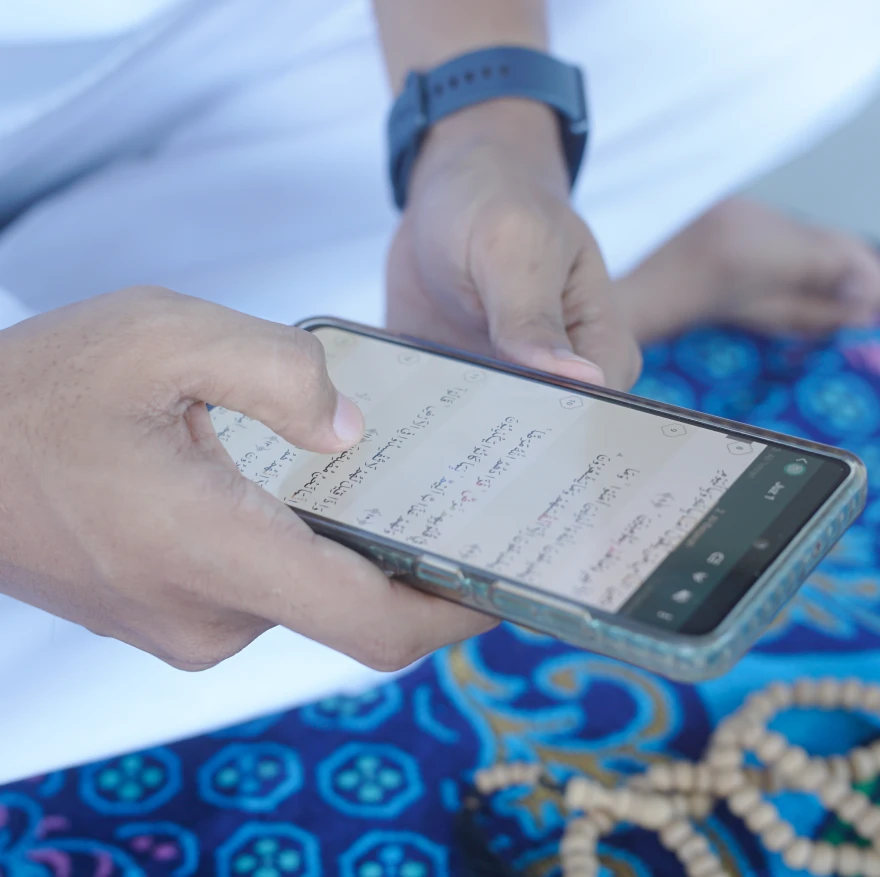
Does Playing Your Phone Invalidate Friday Prayer?
13 August 2026
It is quite a familiar sight of worshippers using their phones while the Friday sermon is being delivered. Does this invalidate their Friday prayer?
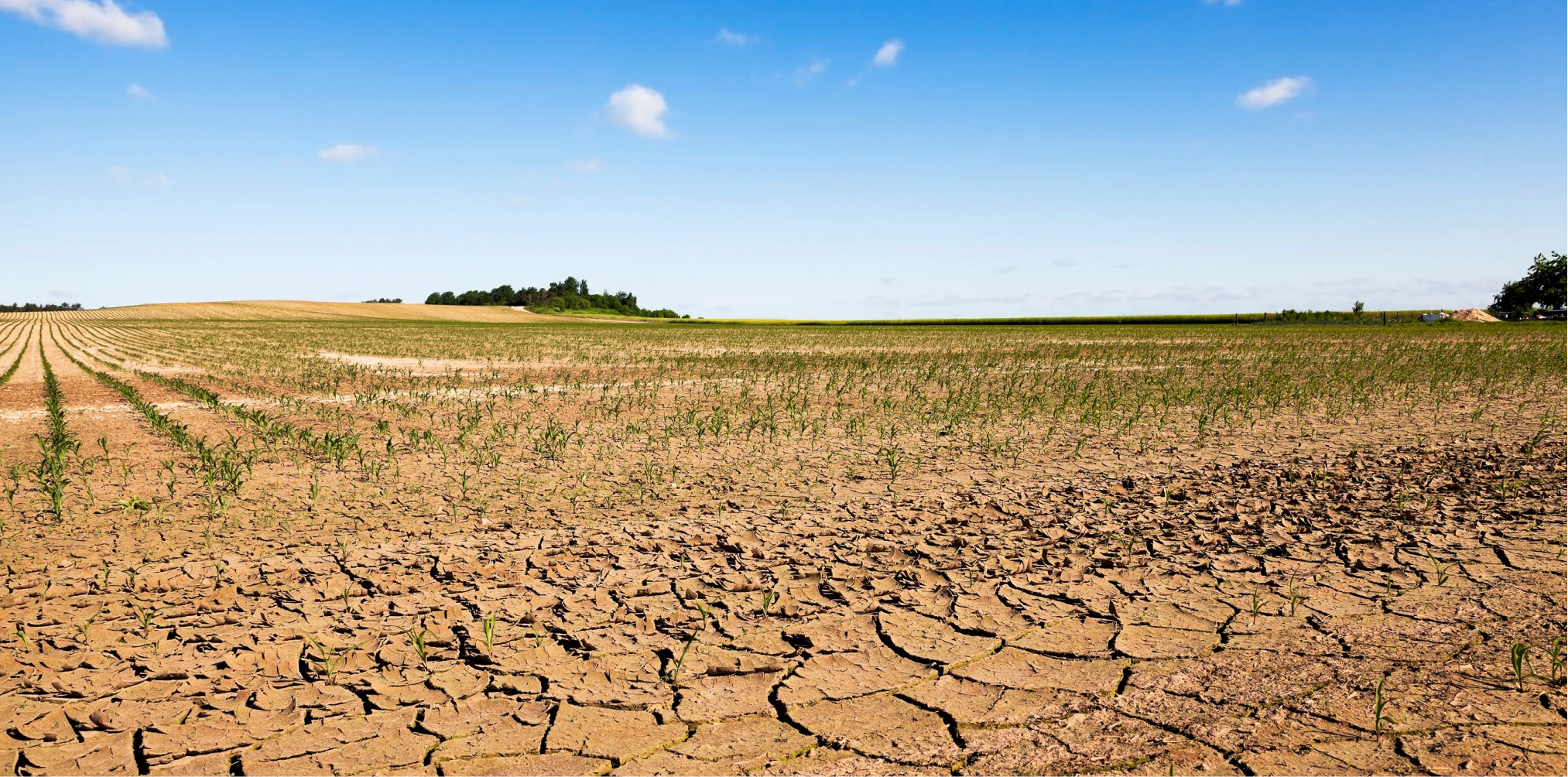
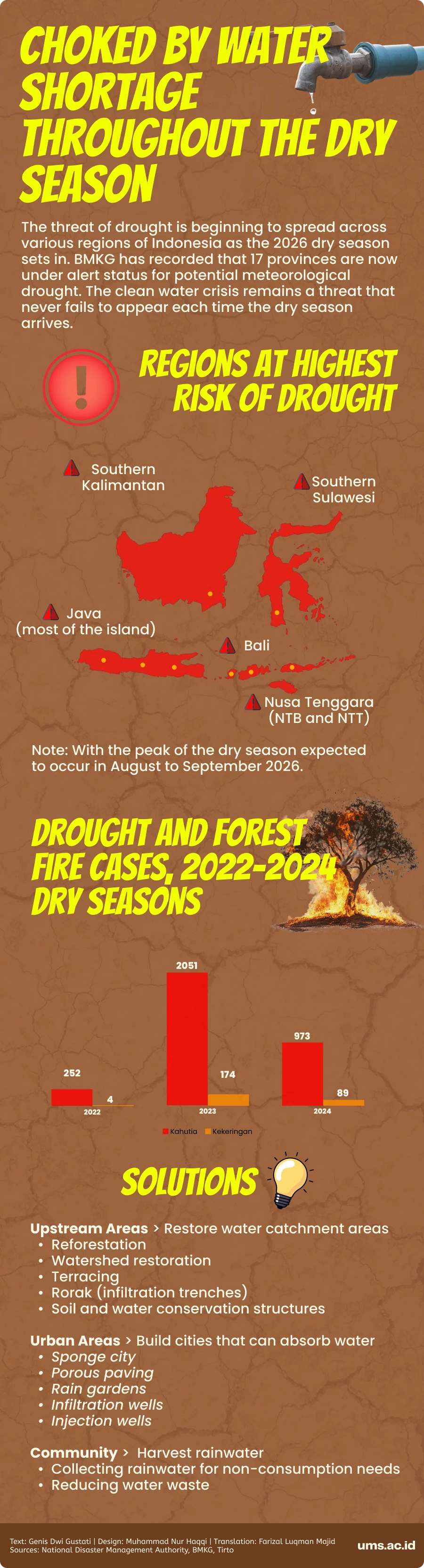
The 2026 dry season is shaping up to be a period that calls for particular caution. The Meteorology, Climatology, and Geophysics Agency (BMKG) predicts that El Niño could persist into the first quarter of 2027 and may reach strong intensity. On top of that, a positive Indian Ocean Dipole (IOD) event could develop between September and December 2026, potentially worsening dry conditions across much of Indonesia.
Citing Tirto, BMKG Deputy for Climatology Ardhasena Sopaheluwakan said monitoring of Pacific sea surface temperatures shows that the Niño 3.4 index has already crossed the threshold for a strong El Niño. The likelihood of a positive IOD event in the second half of the year has also increased. Together, the two climate phenomena could bring drought, higher temperatures, and dwindling supplies of clean water to various parts of Indonesia.
"The message on El Niño's impact that BMKG has put out since March, and repeated in May, has stayed the same: below-normal rainfall and a longer dry season than usual," Ardhasena said, as quoted by Tirto on Monday (18/8/2026).
Kompas reports that the effects of El Niño are already being felt across Greater Solo. In Boyolali, seven villages have been hit by drought and have started receiving clean-water assistance. Sukoharjo expects the number of affected areas to continue rising, with conditions likely to peak around August and September 2026. Sragen has placed 34 villages under an emergency drought alert.
Tempo, meanwhile, reports that clean-water shortages are beginning to affect the Nusantara Capital City (IKN), the national strategic project at the center of the government's development push. Shrinking retention ponds, reservoirs, and small rivers in Sepaku District have reduced water supplies, forcing tanker trucks to deliver water to meet residents' needs and support construction in IKN's core zone.
For Drs. Yuli Priyana, M.Si., a climatology lecturer at the Faculty of Geography, Universitas Muhammadiyah Surakarta (UMS), El Niño is not the only factor behind the recurring water crisis during the dry season. The public, he said, tends to blame the weather alone, when the underlying problem is far more complex.
"The 2026 dry season is really just one of the triggers. The root of the problem is the declining environmental carrying capacity caused by land-use conversion, along with climate change disrupting the hydrological cycle," Yuli said when met in his office on Wednesday (19/8/2026).
Climatologically, Yuli explained, Indonesia does have a distinct dry season, largely influenced by the Asia-Australia monsoon system. From May to September, the sun's apparent position shifts toward the eNorthern Hemisphere, creating a high-pressure system over Australia and a low-pressure system over Asia.
"This causes winds to blow from Australia toward Asia, passing over Indonesia. Because these winds originate from the relatively dry Australian landmass and cross only a short stretch of ocean, they carry little moisture," he added. As a result, rainfall decreases across much of Indonesia, marking the onset of the dry season.
Beyond being shaped by the monsoon, Indonesia's dry season can become more severe when El Niño occurs. Yuli explained that El Niño warms sea surface temperatures in the central Pacific Ocean, disrupting the global atmospheric circulation pattern known as the Walker Circulation. This, in turn, can drastically reduce the formation of rain clouds over Indonesia.
"As a result, there's a decrease in moist air masses over Indonesia, making the dry season longer and drier," he explained.
He added that a number of scientific reports, including projections from the Intergovernmental Panel on Climate Change (IPCC), indicate that climate change could cause monsoon-dominated regions such as Java, Bali, Nusa Tenggara, and South Sulawesi to experience longer and more extreme dry seasons.
Another contributing factor is the degradation of the land's natural capacity to store water. Yuli explained that large-scale land-use conversion for residential areas, industrial zones, and paved roads has covered the soil's natural pores, reducing its ability to absorb rainwater.
A report from the Ministry of Agrarian Affairs and Spatial Planning/National Land Agency (ATR/BPN) recorded that 2.9 million hectares of forest area in Indonesia underwent partial land-use conversion over the past 20 years, from 2005 to 2025. Most of this conversion was driven by the plantation sector, particularly oil palm, sugarcane, and rubber, as well as infrastructure development.
When rain falls, water that would otherwise seep into the ground and replenish groundwater reserves instead flows rapidly across the surface into rivers and eventually out to sea. As a result, the soil's infiltration capacity continues to decline. Yet infiltration plays a crucial role in replenishing aquifers, which provide the baseflow that keeps rivers flowing during the dry season.
"During the rainy season, water isn't stored properly in the ground, so by the time the dry season arrives, water reserves run out quickly. Rivers and springs dry up well before the dry season even ends," Yuli explained.
The availability of clean water, in fact, is one of the clearest indicators of a disrupted hydrological cycle. In Central Java, areas at risk of drought include the Southern Mountains region, the slopes of Mount Merapi, northern Boyolali, Klaten, southern Sukoharjo, Grobogan, Blora, Purworejo, Tegal, and Gunungkidul.
"This drought is shaped by a range of factors, from meteorological, hydrological, and geological conditions to changes in land use. Take large-scale development projects as an example, including IKN, which must continue to protect water catchment areas," he said.
The effects of climate change are gradually reshaping Indonesia's seasonal patterns. Yuli said rising global temperatures have altered atmospheric circulation, making rainfall distribution increasingly unpredictable.
As a result, the rainy and dry seasons no longer always follow the patterns the public has long been familiar with. Some regions may experience extremely heavy rainfall over short periods, only to face prolonged dry spells afterward.
Solving the water crisis cannot rest on handing out clean-water aid once the dry season hits. Any long-term strategy, Yuli stressed, must focus on keeping rainwater on the land for as long as possible.
"The principle to apply is slow, spread, and sink: slow the water down, spread it across different absorption areas, then let it soak back into the ground," he explained.
Upstream, efforts to strengthen water security include restoring watersheds through reforestation, terracing, rorak (infiltration trenches), and other soil and water conservation measures.
"In cities, the sponge-city concept can be put into practice through porous paving, rain gardens, and green open spaces, along with infiltration wells and recharge wells to replenish groundwater," he said.
Yuli also called for rainwater-harvesting systems to be installed in every building, allowing collected rainwater to meet non-drinking needs such as washing, watering plants, and sanitation.
Beyond technical solutions, spatial-planning policies also need to be strengthened. "The clean-water crisis isn't purely a natural disaster, it is driven far more by human activity. Improve environmental governance, and nature's ability to store water will recover, reducing the risk of drought," he concluded.
Writer: Genis Dwi Gustati
Translator: Farizal Luqman
Editor: Al Habiib Josy Asheva
It is quite a familiar sight of worshippers using their phones while the Friday sermon is being delivered. Does this invalidate their Friday prayer?
Nothing’s more special than reading curated news just for you.
Subscribe to the UMS Newsletter for free today.