Compassion That Reaches the Arabian Shore
30 June 2026
Nadia Nur Imani is determined to fulfill her mother's dream by becoming a nurse, opening a new path to The Land of the Two Holy Mosques



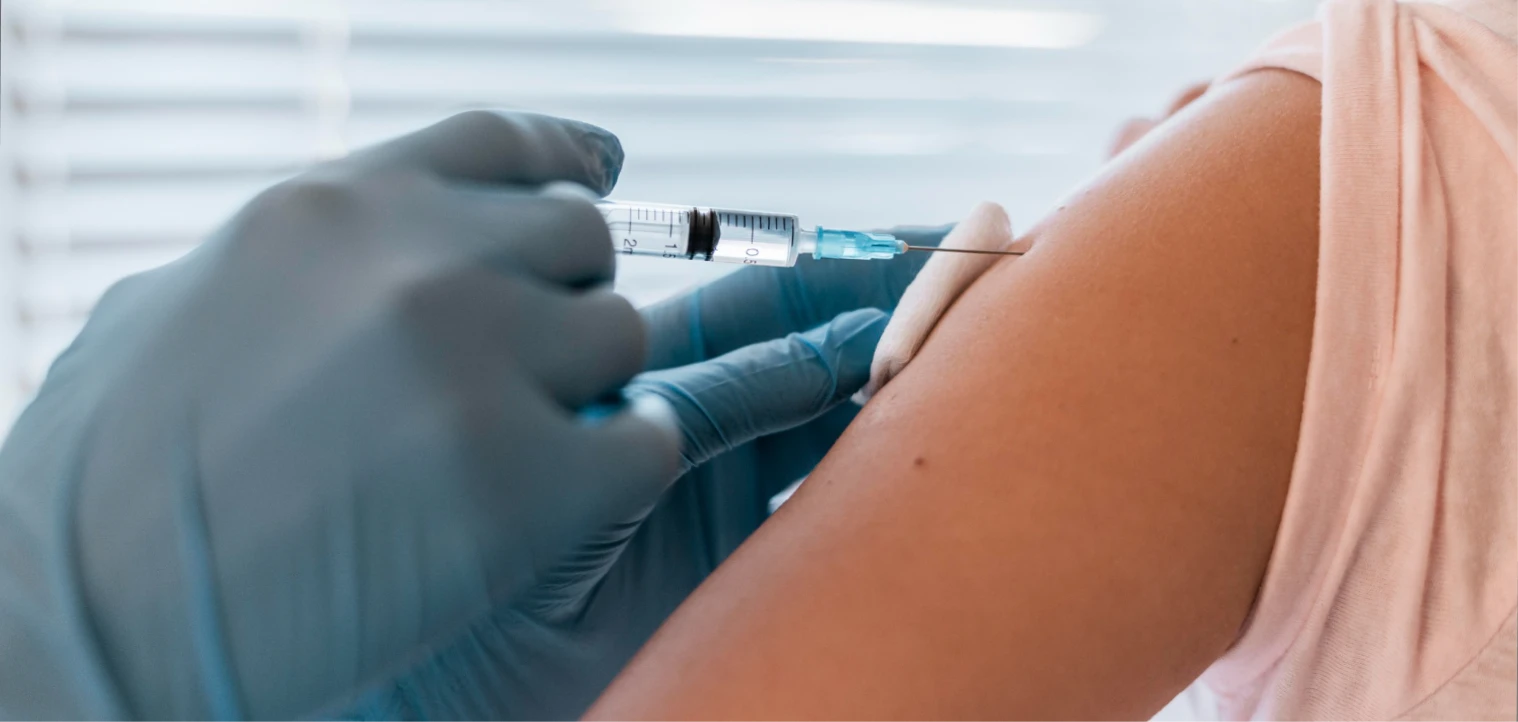
Calls to get vaccinated against human papillomavirus (HPV) are increasingly making the rounds on social media. Even so, many people remain confused about why vaccination matters, what the ideal age for it is, and who actually needs it.
A press release from Indonesia's Ministry of Health states that the national HPV vaccination program will continue to be accelerated to reduce deaths from cervical cancer. Health Minister Budi Gunadi Sadikin has emphasized the urgency of the effort, noting that cervical cancer is one of the leading causes of death among women in Indonesia.
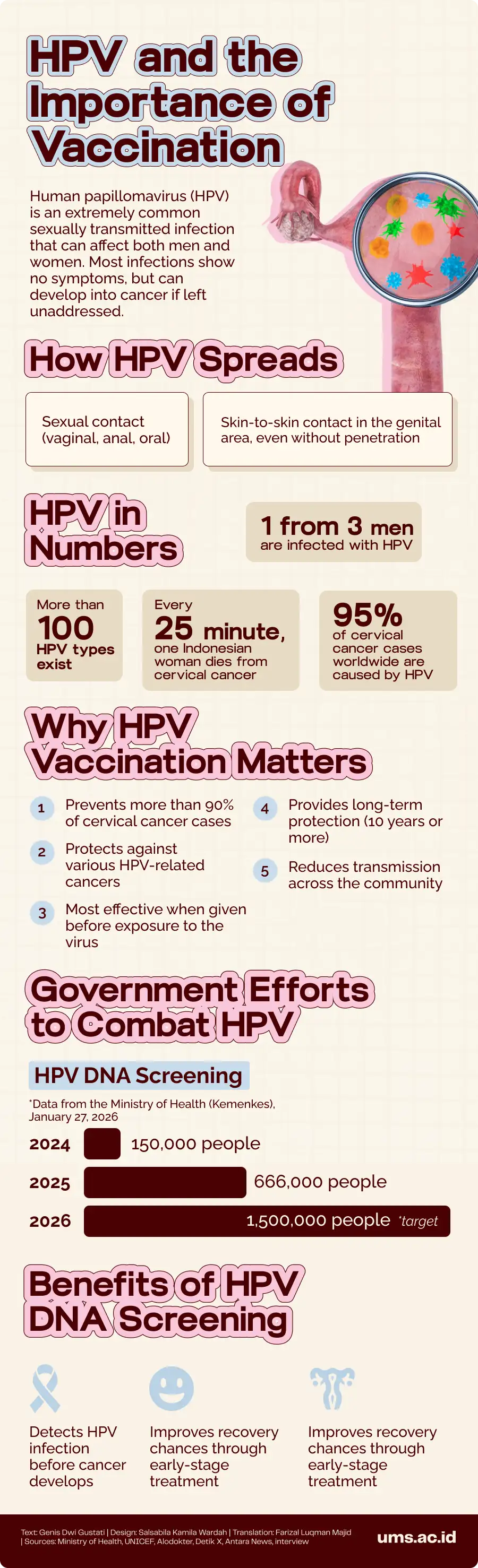
"Cervical cancer is the second deadliest cancer for women in Indonesia after breast cancer. Roughly every 25 minutes, one Indonesian woman dies from cervical cancer," said Minister Budi, as quoted from the Ministry of Health website on Thursday (23/4/2026).
A UNICEF report states that more than 95 percent of cervical cancer cases are caused by HPV. In 2022, around 350,000 women died from cervical cancer and approximately 660,000 new cases were detected.
HPV is a circular, double-stranded DNA virus without an envelope that causes various epithelial lesions. It belongs to one of the most common virus groups and can infect both the skin and mucous membranes.
Transmission occurs through vaginal, anal, or oral sexual contact, and even through skin-to-skin contact in the genital area without penetration. This makes the virus particularly difficult to control, as a person can be infected without ever knowing it.
Dr. Flora Ramona Sigit Prakoeswa, M.Kes., Sp.DVE, Dipl. STD-HIV/AIDS, FINSDV, FAADV, a Dermatology, Venereology, and Aesthetics specialist at Universitas Muhammadiyah Surakarta (UMS), explained that there are more than 100 subtypes of HPV. Some are low-risk and cause warts, while high-risk types such as 16 and 18 are linked to cancer.
"HPV infection can manifest as skin warts or anogenital warts. In high-risk types, persistent infection can develop into cervical cancer, anal cancer, or oropharyngeal cancer," Flora explained when met on Wednesday (22/4/2026).
HPV, Flora continued, often develops without any complaints or symptoms. The World Health Organization (WHO) records cervical cancer as the fourth most common cancer in women globally.
Nearly all cases are linked to infection with oncogenic HPV types. "In developing countries, this disease accounts for up to a quarter of all cancer deaths in women," said the UMS Faculty of Medicine lecturer
HPV in men is something that cannot be ignored. Flora pointed out that discussions around HPV have long centered on women due to its link with cervical cancer. In reality, men can also be infected, carrying the virus without symptoms and playing a role in its transmission chain.
HPV can cause genital warts in men, is responsible for more than 90 percent of anal cancer cases, and is linked to around 60 percent of oropharyngeal cancers. High-risk HPV types can also affect sperm integrity
"HPV can be transmitted from men to women through sexual contact, whether vaginal, anal, or oral, as well as through skin-to-skin contact in the genital area. Men are generally asymptomatic, meaning they can unknowingly become carriers," she explained.
Flora added that high-risk HPV types capable of causing cancer rarely show any symptoms in either men or women. Precancerous lesions can develop over years before they are detected.
"Symptoms of HPV in women are not always obvious either. Changes in the cervix are often only picked up through screening," she said. Routine check-ups are therefore an important step in identifying abnormalities early, before they develop into cancer.
Several factors can increase the risk of an infection becoming a serious illness. These include a weakened immune system, multiple sexual partners, beginning sexual activity at a young age, smoking, and the presence of other sexually transmitted infections.
"It is worth remembering that persistent infection with high-risk HPV types is the primary driver of cancer development," Flora added.
HPV immunization works directly on the root cause of cancer. The vaccine stimulates the production of antibodies against the virus, preventing new infections from taking hold.
Flora explained that vaccination is recommended for children aged 9 to 14 before exposure to sexual activity. However, it is also recommended for both men and women up to the age of 45 who have not previously been vaccinated.
"Global recommendations cover both sexes in order to reduce transmission at the population level. Certain groups are particularly encouraged to get vaccinated, including individuals with weakened immune systems, men who have sex with men, and those at risk of new exposure," she said. The vaccine is not recommended, however, for individuals with severe allergies to any of its components or for those who are pregnant.
The HPV vaccine is given in two or three doses depending on age. Children aged 9 to 14 generally require two doses spaced 6 to 12 months apart. Adolescents and adults require three doses at months 0, 1 to 2, and 6. Protection from the vaccine can last more than 10 years.
The age limits for the HPV vaccine also frequently cause confusion. Much of the information circulating suggests the vaccine is only effective up to age 26. Flora clarified that the vaccine can still be beneficial for those aged 27 to 45, through a shared clinical decision made with a doctor.
"Effectiveness does decrease because the likelihood of prior exposure is higher. However, a person may not have been infected with all HPV types. The vaccine can still offer partial protection against types they have not yet been exposed to," she explained.
People who are already sexually active can still benefit from the vaccine. It does not eliminate existing infections, but it does prevent new infections and reinfection. Given that there are more than 100 HPV types, someone infected with one type remains at risk of contracting others.
"Despite its many benefits, vaccination cannot replace routine screening. Women are still advised to undergo screening because the vaccine does not cover all virus types," Flora reminded.
The WHO recommends screening every 5 to 10 years starting at age 30. Women living with HIV are advised to begin screening earlier. "Global strategy even recommends a minimum of two screenings over a lifetime, at ages 35 and 45," she added.
Flora emphasized that the HPV vaccine is the most effective step in preventing HPV-related cancers, because it works directly on the cause of the disease rather than simply reducing risk.
The vaccine also offers the added benefit of herd immunity. As vaccination coverage increases, viral transmission across the population decreases, protecting even those who have not been vaccinated.
Many people still delay vaccination because they feel it is not yet necessary or because they are afraid. According to Flora, public awareness around HPV still needs to grow. An infection that shows no signs can develop into a serious illness if left unaddressed.
"Education, vaccination, and routine screening are the three main pillars of prevention. When people understand that HPV can affect both women and men, prevention stops being a choice and becomes a necessity," she concluded. Because vaccination is not only individual protection, it is a public health investment for future generations.
Writer: Genis Dwi Gustati
Translator: Farizal Luqman Majid
Editor: Al Habiib Josy Asheva
Nadia Nur Imani is determined to fulfill her mother's dream by becoming a nurse, opening a new path to The Land of the Two Holy Mosques
Nothing’s more special than reading curated news just for you.
Subscribe to the UMS Newsletter for free today.