
Compassion That Reaches the Arabian Shore
30 June 2026
Nadia Nur Imani is determined to fulfill her mother's dream by becoming a nurse, opening a new path to The Land of the Two Holy Mosques



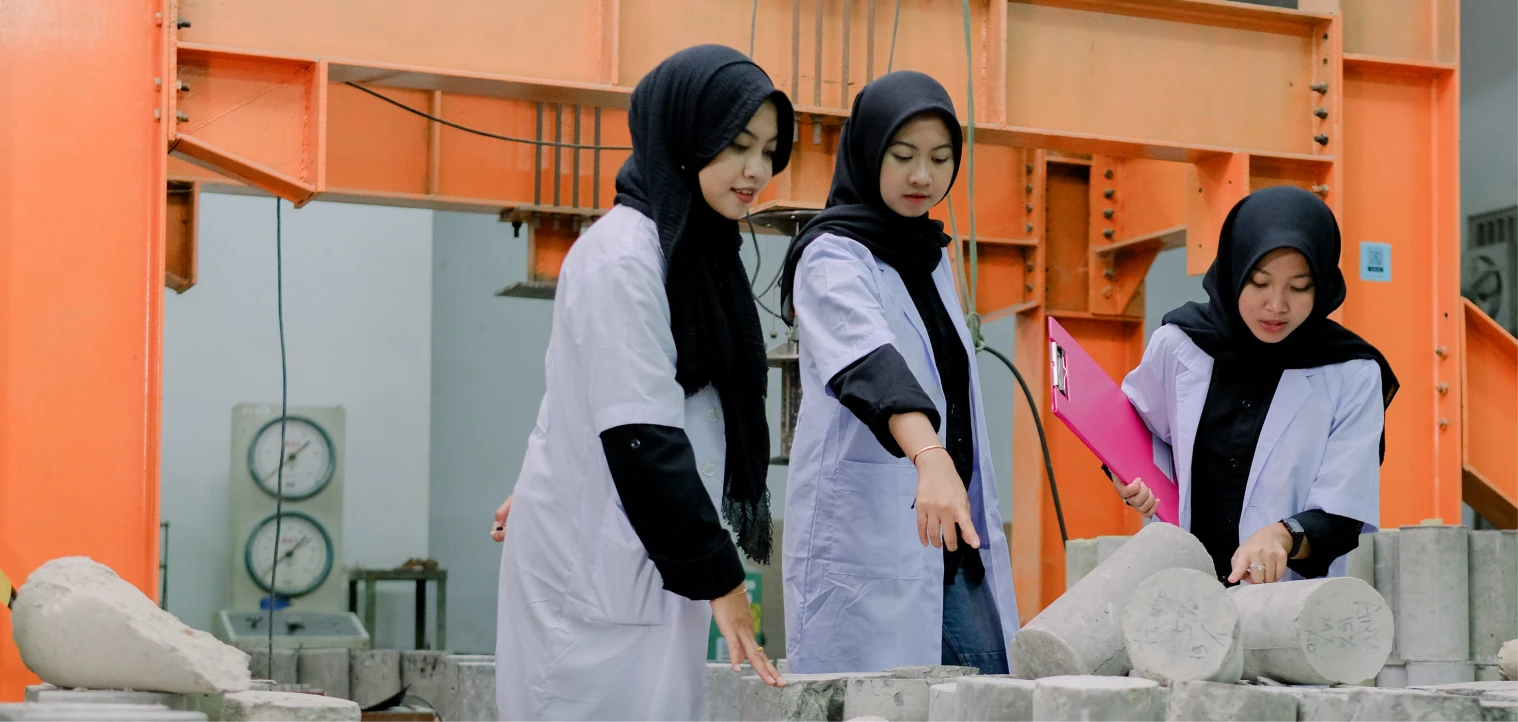
Amid rapid technological advancements, the STEM sector (Science, Technology, Engineering, and Mathematics) has become a crucial space for creating innovation and progress across various fields. However, in Indonesia, women's participation in this domain is far from ideal.
According to data from the World Economic Forum, the global percentage of women in STEM rose by only 1.6% between 2015 and 2023, from 27.6% to 29.2%. Meanwhile, UNESCO’s report in the 2020 International Labour Organization shows that the number of Indonesian women working in science and technology sectors reaches only 37%. These figures demonstrate that the STEM field remains largely dominated by men.
Why does this gap persist? What factors contribute to the underrepresentation of women in STEM? To explore these questions, we spoke with Endang Setyaningsih, S.Si., M.Si., a biotechnology and STEM education expert from Universitas Muhammadiyah Surakarta (UMS).
Even as opportunities in STEM continue to expand, women still face significant barriers that prevent their full participation.
Endang explained, “Based on several studies I've read, the trend in 2024 shows a positive increase, but the numbers are still small. At UMS, many female lecturers are actively engaged in STEM research, comparable to their male counterparts,” said Endang, who recently completed her dissertation on STEM in education.

However, she acknowledged that women’s participation in the industry remains limited. This disparity is attributed to factors such as the conflict between career aspirations and social responsibilities (like being a mother or wife) and workplace policies that are not fully accommodating to women.
“Another reason I've come across is that interest plays a significant role in career choices. Some of my colleagues, and even my own daughter, have opted to pursue social sciences instead,” added the UMS Biology Education lecturer.
According to a report from Detik, UNESCO survey data highlighted three primary reasons for women’s low interest in STEM careers. First, 61% of respondents admitted to considering gender stereotypes when job hunting. Second, 50% of respondents were deterred by the strong male-dominated sentiment in STEM. Third, 45% believed that STEM jobs were unsuitable for women.
The statistics create a significant dilemma for women, forcing them to choose between pursuing professional ambitions or meeting societal expectations. Women are required to consider numerous factors when building a career in the STEM field.
For example, take the story of Lusi Setyowati (28), a former structural drafter at a state-owned enterprise. After working for over five years in STEM, she decided to resign to focus on her role as a mother of two toddlers.
"At first, I thought I could handle both, but in reality, it was tough. The work hours were demanding, with frequent overtime. After giving birth, I felt my children needed direct attention from me, especially during their critical developmental stages," Lusi shared on Thursday (28/11/2024).
Lusi also admitted that social pressure influenced her decision. As a young wife and mother, she often faced expectations to prioritize her family over her career.
“There were moments when I felt judged by some people for choosing to work instead of personally taking care of my children. In the end, I decided to leave my job, even though it was hard to step away from a field I loved,” she added.
Endang added that solutions to increase women's participation in STEM must begin early. Elementary education serves as a crucial starting point for building women's confidence in exploring fields related to mathematics, science, and technology. To achieve this, she emphasized the importance of curriculum changes that create a greater interest among young girls in STEM.
“It also ties into the issue of inadequate education. We need more training and development programs that can support and encourage women’s interest in STEM,” Endang explained.
Universities also play a vital role in creating inclusive policies for women. For instance, UMS continuously strives to encourage more female students to enroll in STEM programs by offering gender-neutral scholarships.
Unfortunately, focusing solely on education is not enough; the workplace must also become more female-friendly. According to the McKinsey & Company report "Diversity Wins: How Inclusion Matters", gender diversity in organizations has been shown to boost financial performance. Companies in 15 countries, including the UK and the US, were found to have a 25% higher likelihood of outperforming industry averages when they embraced strong gender diversity practices. One of the report’s key recommendations is the establishment of policies that support women, such as flexible working hours and inclusive leave systems.
By fostering a female-friendly environment in STEM, Indonesia has the potential to maximize its economic and technological innovation capacity. Countries with more balanced gender representation in STEM have demonstrated faster economic growth and higher innovation efficiency.
“The more women in STEM, the greater the innovations that can be created,” said Endang. She believed that the education sector and industry must collaborate to build an ecosystem that better supports women's involvement in STEM.
Writer: Genis Dwi Gustati
Translator: Farizal Luqman Majid
Editor: Al Habiib Josy Asheva
Nadia Nur Imani is determined to fulfill her mother's dream by becoming a nurse, opening a new path to The Land of the Two Holy Mosques
Nothing’s more special than reading curated news just for you.
Subscribe to the UMS Newsletter for free today.