
Bank Indonesia Holds Interest Rate at 5.75%, What Is the Impact?
24 July 2026
Bank Indonesia has held its benchmark rate at 5.75 percent, ending speculation of a hike to 6 percent that had circulated in recent weeks.


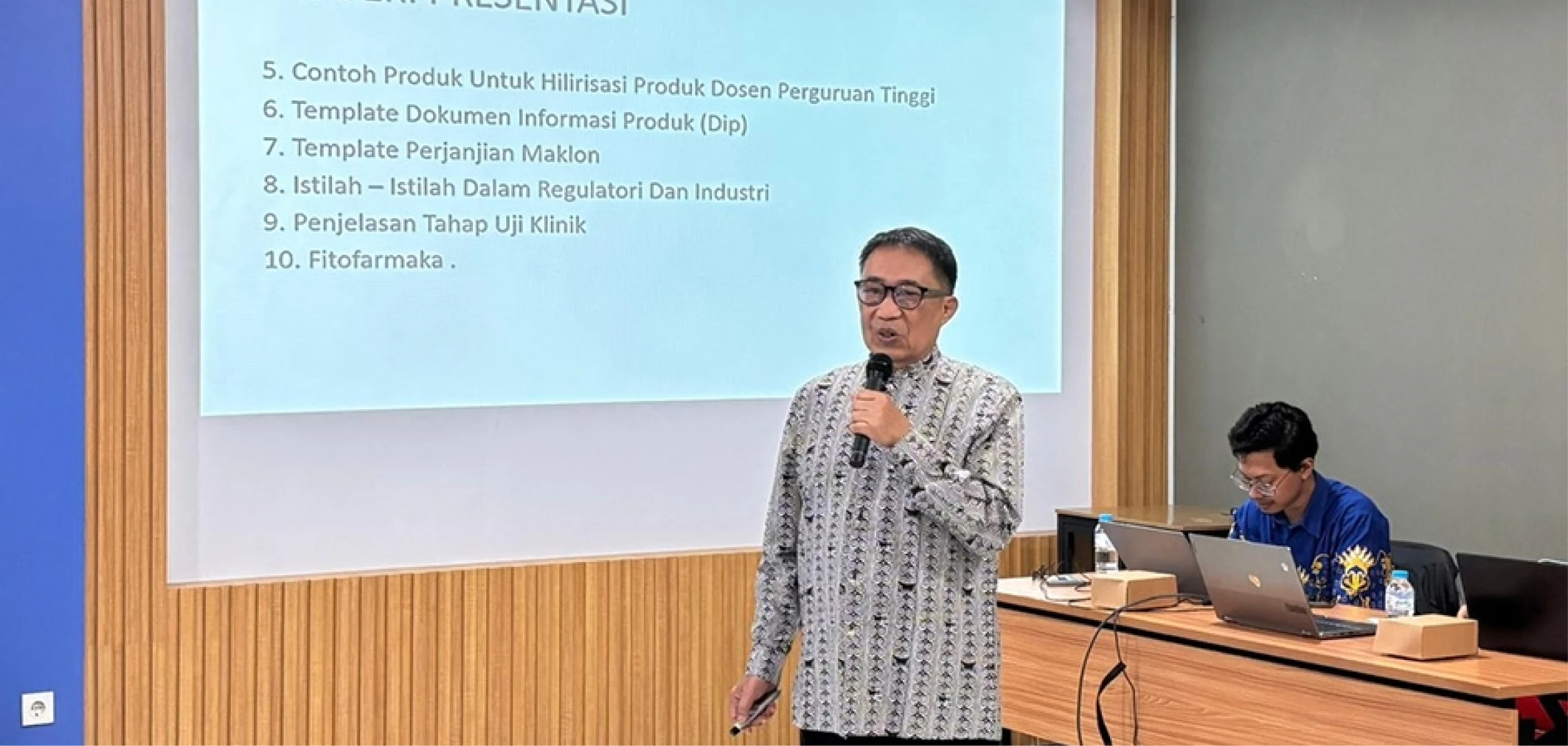
Universitas Muhammadiyah Surakarta (UMS) received a visit from the National Agency of Drug and Food Control (BPOM) to socialize the Academia, Business, and Government (ABG) cooperation program, which encourages the downstream application of university research in the fields of medicine and food.
The visit was represented by two BPOM delegates: Prof. Dr. dr. Andi Armyn Nurdin M.SC. Sp.KKLP., FISCM, FISPH, and a representative from the BPOM General Bureau, Ardiyansyah Kahuripan, S.Si., Apt., M.Si. The activity was a follow-up to a meeting between BPOM Head Prof. Taruna Ikrar and a number of university rectors, including the UMS Rector, held in 2025.
UMS Deputy for Research, Innovation, and Intellectual Property Center (DRPPS), Rois Fatoni, S.T., M.Sc., Ph.D., explained that the ABG scheme is a new BPOM program designed to expand the agency's function beyond drug and food oversight to also support the downstream application of university research so that it has a real impact on industry and society.
"BPOM supports the Ministry of Research, Technology, and Higher Education's program, where the results of lecturers' research do not stop at journal publications but deliver impact to industry," said Rois on Friday (15/5/2026).
He explained that the ABG concept connects three key elements: academia, represented by universities; business, represented by pharmaceutical companies; and government, carried out by BPOM as the regulatory body.
During the socialization session, Andi Armyn Nurdin outlined a proposed cooperation model between universities and industry, which will be directly overseen by BPOM. According to Rois, UMS is considered to have strong potential to become one of the partners in the program alongside other leading universities.
"BPOM will oversee research cooperation between universities coordinated by UMS and a company from Korea. So it goes straight to action," Rois explained.
Rois added that BPOM also offered various other forms of collaboration, including strengthening the competency of pharmacy students through an industrial internship program. Armyn, who also owns a pharmaceutical factory in Jakarta, opened up opportunities for UMS Faculty of Pharmacy students to intern for one semester.
"Previously in factories, students could only observe. Now they can actually work. So they go straight into working and come out with real skills," Rois said.
In addition, BPOM invited UMS lecturers and students to become BPOM Ambassadors in a community empowerment program focused on drug and food safety oversight. The program aims to improve public education on the safety of pharmaceutical, food, and cosmetic products circulating in both physical markets and digital marketplaces.
BPOM also opened opportunities for UMS lecturers to serve as expert consultants in the drafting and updating of national standards in the fields of drugs and food.
"Now that UMS has matured considerably, BPOM is inviting competent lecturers to become expert consultants in formulating standards at BPOM," Rois said.
Beyond that, BPOM also offered assistance with the registration and commercialization of research products developed by lecturers and students, covering training through to the product registration process so that innovations can be mass-produced.
According to Rois, this step is important to ensure that innovations produced by universities do not stop at competitions or academic publications, but can be broadly utilized by the public.
He noted that UMS is projected to become one of the role model universities for the downstream application of research products, particularly in the fields of drugs and food. Going forward, further discussions on realizing the cooperation program will continue with BPOM and other relevant parties.
Writer: Maysali Sudarwati
Editor: Fika Annisa’ Sholihah
Translator: Farizal Luqman Majid
Bank Indonesia has held its benchmark rate at 5.75 percent, ending speculation of a hike to 6 percent that had circulated in recent weeks.
Nothing’s more special than reading curated news just for you.
Subscribe to the UMS Newsletter for free today.