Nano Liquid for Healing Diabetic Ulcers
21 July 2026
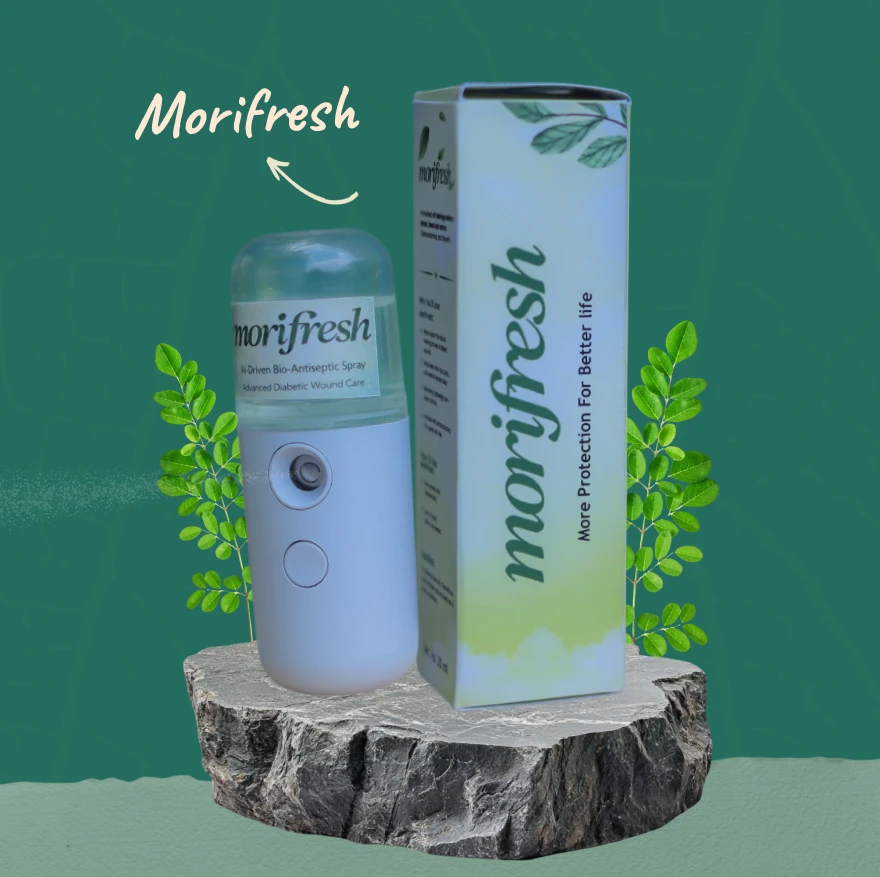
UMS students have formulated a treatment for diabetic wounds from moringa and neem leaves, and carried home gold at WYIE 2026 in Malaysia.



Pharmacy is a top choice for new students at many universities in Indonesia. At Universitas Muhammadiyah Surakarta (UMS), the major which falls under the medical sciences frequently attracted many high school students.
Pharmacy is a branch of science that combines health and physical-chemical knowledge. It plays a crucial role in the development of medicines, food, cosmetics, medical devices, and PKRT (Household Health Supplies). Pharmacists ensure the safety, efficacy, and quality of these products before they reach consumers.
“Pharmacy is just about learning medications, isn’t it?”
Make no mistake! As mentioned earlier, the knowledge you will gain in the UMS Bachelor of Pharmacy study program is very broad. You will learn about medicines and the skills needed to create other pharmaceutical products in this modern era.
There are at least four compelling reasons to choose the UMS Bachelor of Pharmacy program:
You will earn a Bachelor of Pharmacy (S.Farm.) degree after completing 144 credits, equivalent to four years of study.
When you decide to study for a Bachelor of Pharmacy, you will learn various basic and applied sciences related to drugs and other pharmaceutical products, including their physico-chemical properties. Additionally, to perform effective pharmaceutical services, you will study drug management and acquire knowledge in management science, such as marketing and entrepreneurship.
Here are the basic sciences that form the foundation of your studies in the Pharmacy program at UMS:
Science of medicine: Pharmaceutical Physics, Nano Technology, Formulation Practicum and Solid Dosage Technology, Formulation Practicum and Sterile and Non-Solid Dosage Technology, Pharmaceutical Analysis, Drug Stability, Formula Development Design. Halal Product Analysis.
“So, what do pharmacy graduates do for a living?”
Pharmacy graduates have very broad and diverse job prospects. You can work at various institutions, including The Ministry of Health, The Food and Drug Administration (BPOM), Pharmaceutical companies, Hospitals, The pharmaceutical industry, Drugstore. Some specific roles within these areas include:
After completing a Bachelor of Pharmacy degree, graduates must take the Pharmacist Professional program to officially work as a pharmacist. At UMS, the Pharmacist Professional Program can be completed within one year with fieldwork practice. This program is designed to provide the additional knowledge and skills required for professional pharmacy practice.
Technically, a pharmacist has more authority in decision-making regarding pharmaceutical issues. For example, in the context of rational medicine use, a pharmacy graduate may identify the irrational use of a drug, but only a pharmacist is authorized to make recommendations to address this irrationality.
Pharmacist Professional graduates will earn the title of Pharmacist (Apt.) and be registered as members of the Indonesian Pharmacists Association (IAI). They must also pass a competency exam held by the government to obtain a Pharmacist Registration Certificate (STRA).
If you are interested in studying pharmacy and contributing to improving the quality of public health, UMS is an excellent choice to start your academic journey. Having comprehensive facilities, international accreditation, and broad career prospects, UMS Pharmacy offers the opportunity to achieve a promising future in the pharmaceutical field.
Writer: Genis Dwi Gustati
Editor: Al Habiib Josy Asheva
Translator: Farizal Luqman Majid
UMS students have formulated a treatment for diabetic wounds from moringa and neem leaves, and carried home gold at WYIE 2026 in Malaysia.
Nothing’s more special than reading curated news just for you.
Subscribe to the UMS Newsletter for free today.