The Scholar Behind UMS's Master's Program in IQT
27 July 2026
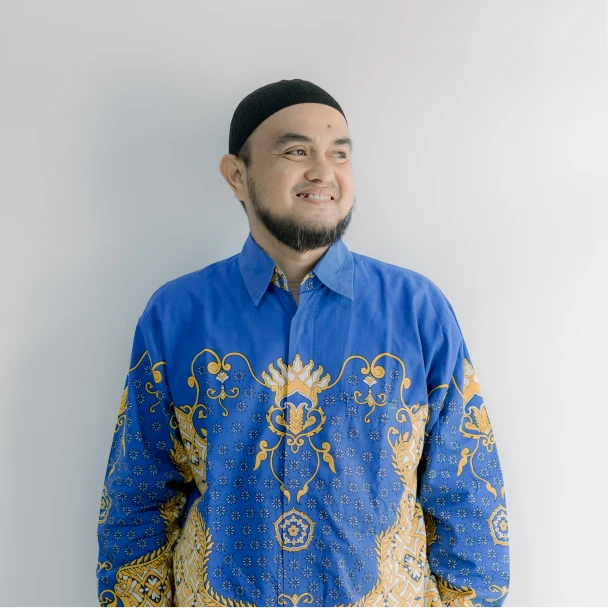
Prof. Andri Nirwana, S.TH., M.Ag., Ph.D., pioneered the Master of Al-Quran and Tafsir Studies as a first step in strengthening Quranic studies within Muhammadiyah.


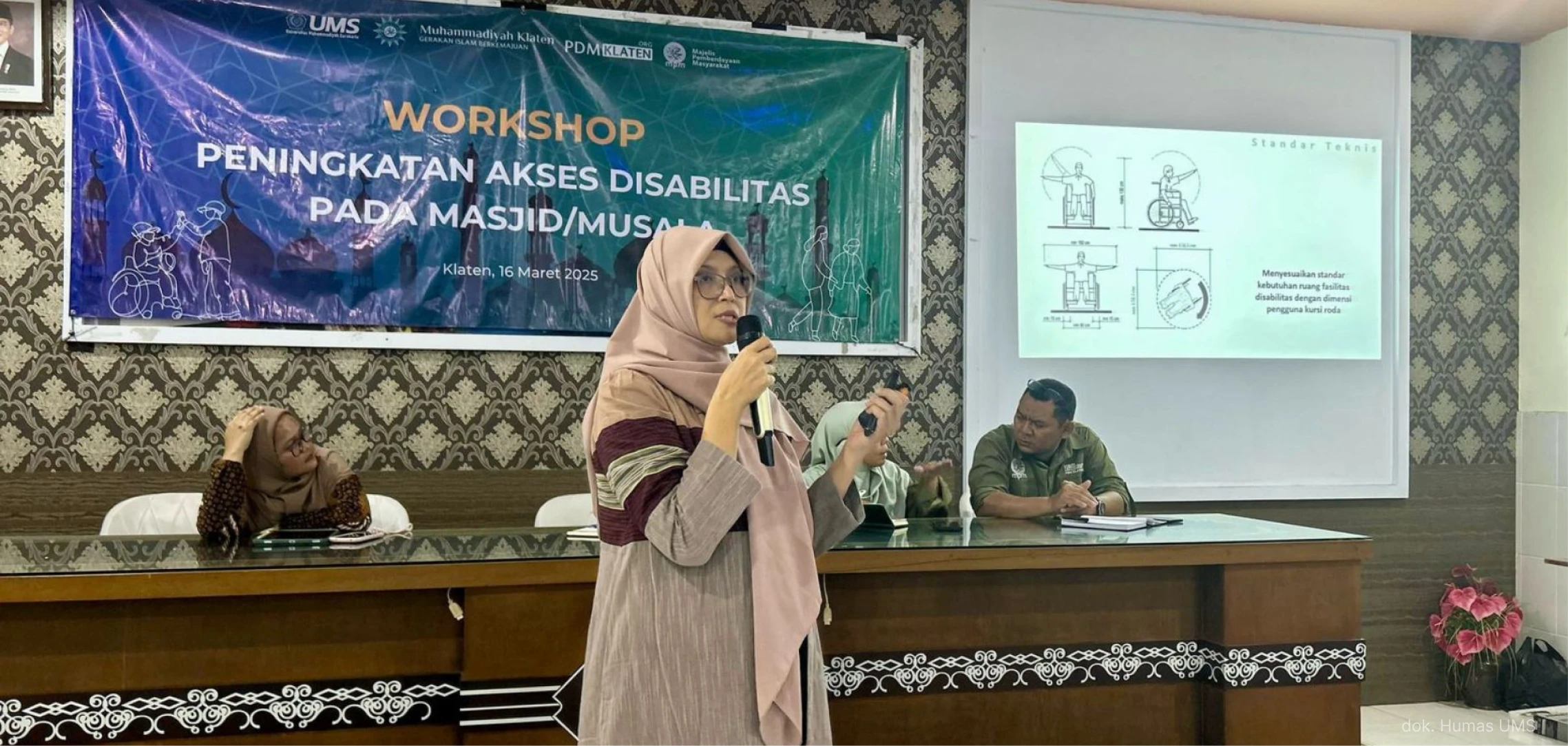
Supported by a team consisting of Dyah Widi Astuti, S.T., M.Sc., Fadhilla Tri Nugrahaini, S.T., M.Sc., and Alfia Magfirona, S.T., M.T., this workshop brought in place various stakeholders to formulate the best solutions for improving the accessibility of mosques and musallas in Klaten.
The Head of the Team, Dyah Widi Astuti, S.T., M.Sc., stated that the objective of this initiative was to assist in the development of accessibility standards for mosques and musallas in Klaten Regency.
“The participants in this workshop include representatives from all Branch Board of Muhammadiyah (PCM) across Klaten and mosque administrators under Muhammadiyah Klaten. The background of this initiative stems from concerns over the limited access available to persons with disabilities in carrying out worship at mosques and prayer spaces,” explained the UMS Architecture Lecturer, Monday (17/3/2025)
Dyah stated that disability-friendly facilities should follow universal design principles, ensuring that mosques and prayer spaces can be used by people with disabilities independently, allowing them to engage in activities comfortably without relying on others.
“Many people are concerned about the issue of ritual purity (najis) that might be carried in by mobility aids used by persons with disabilities, such as wheelchairs or walking canes,” she explained.
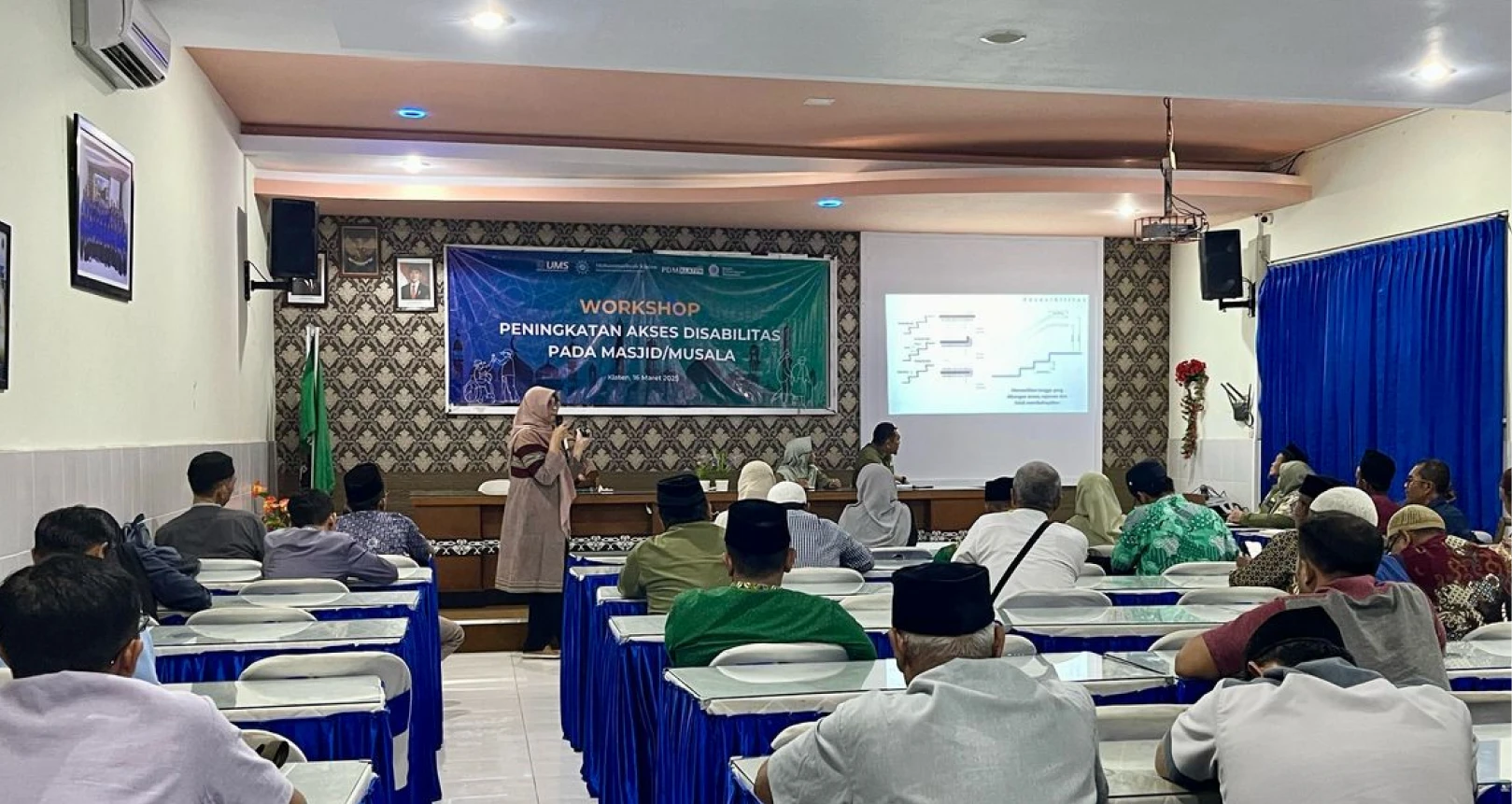
Dyah Widi Astuti presenting a session on improving disability access in mosques and musallas at SMA Muhammadiyah Klaten, Sunday, 16 Maret 2025. Photograph: private doc.
According to Auli Septa Arini, S.Sos., M.S., Sub-coordinator for Child and Disability Rehabilitation at the Klaten Social Services, Women’s Empowerment, and Child Protection Agency (Dinsos P3AKB), the Klaten Regency Government is committed to improving accessibility for persons with disabilities.
“Preparing facilities for people with disabilities means preparing for ourselves in the future, because everyone will age and eventually experience physical limitations,” she noted.
According to Qoriek Asmawati, a speaker from the Klaten Association of Persons with Disabilities (PPDK), many mosques still have non-inclusive designs.
“The facilities provided for persons with disabilities are not accessible. Services for persons with disabilities consist of both physical services (accessible building facilities) and non-physical services (supportive attitudes and interactions). These improvements are expected to encourage active participation of persons with disabilities in religious activities,” she explained.
From a Tarjih perspective, Alifiyatul Azizah, Lc., M.Ud., from the Tarjih Council of Provincial Board of Muhammadiyah (PWM) Central Java, stated that wheelchairs and canes are not considered najis unless there is clear evidence of impurity attached to them. Therefore, excessive concern over this issue is unnecessary.
The event, held on Sunday, March 16, 2025, at SMA Muhammadiyah Klaten, concluded with a group discussion session to determine pilot mosques and musallas in each Kawedanan (sub-regency) in Klaten and to gather input and aspirations from workshop participants.
This initiative will continue with the development of a Standard Operating Procedure (SOP) that can be implemented as a service guideline for persons with disabilities in mosques and musallas.
Writer: Fika Annisa Sholihah
Translator: Farizal Luqman Majid
Prof. Andri Nirwana, S.TH., M.Ag., Ph.D., pioneered the Master of Al-Quran and Tafsir Studies as a first step in strengthening Quranic studies within Muhammadiyah.
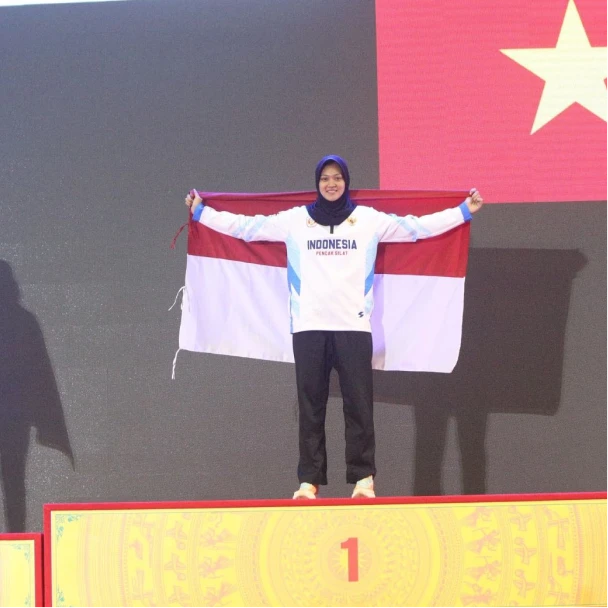
A UMS pencak silat athlete successfully claimed gold at the 10th Asian Pencak Silat Championship 2026.
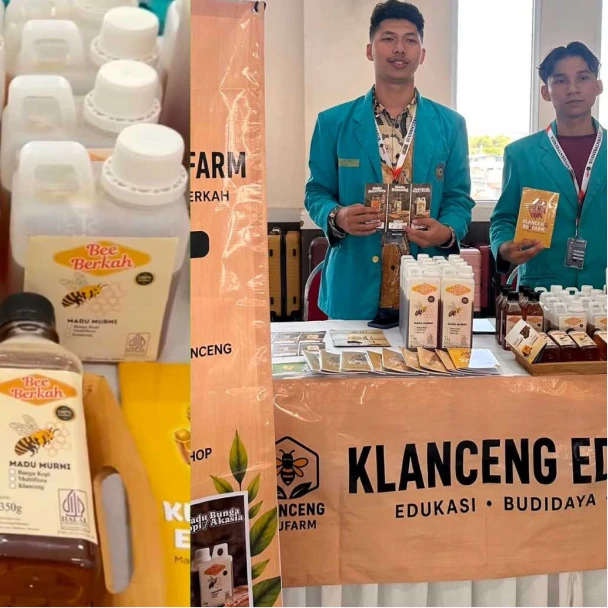
The Klanceng Edufarm startup is planning international expansion after being named national champion at the 2026 Studentpreneur Bootcamp organized by the Muhammadiyah Center for Entrepreneurship and Business Incubator.

Nothing’s more special than reading curated news just for you.
Subscribe to the UMS Newsletter for free today.