Compassion That Reaches the Arabian Shore
30 June 2026
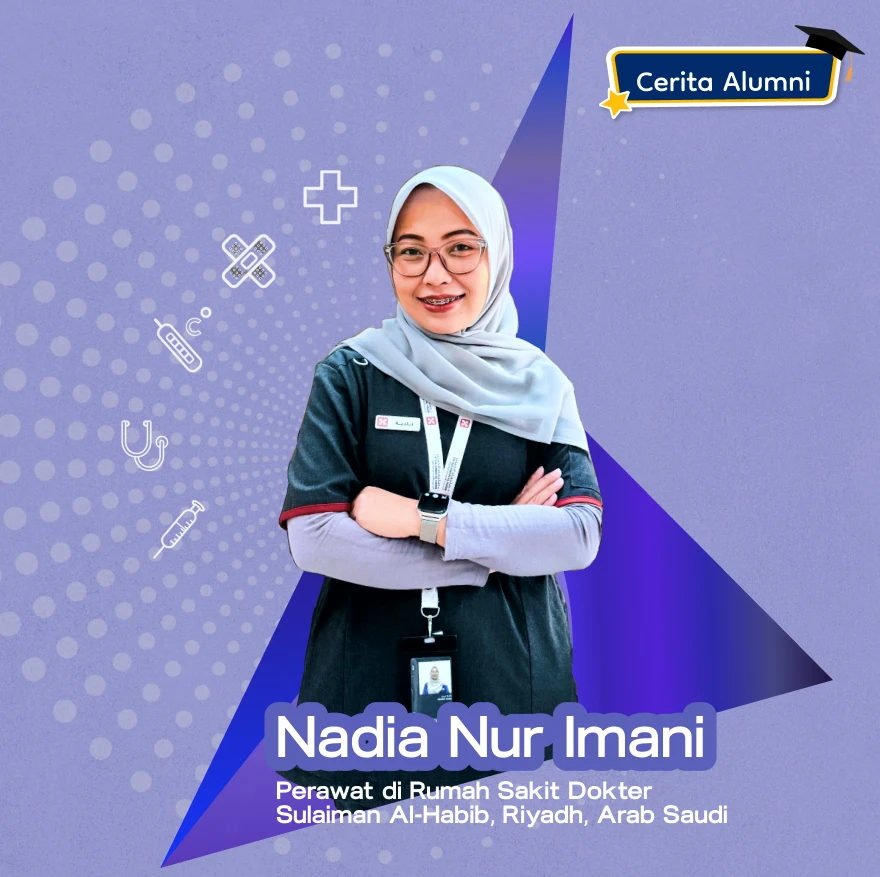
Nadia Nur Imani is determined to fulfill her mother's dream by becoming a nurse, opening a new path to The Land of the Two Holy Mosques



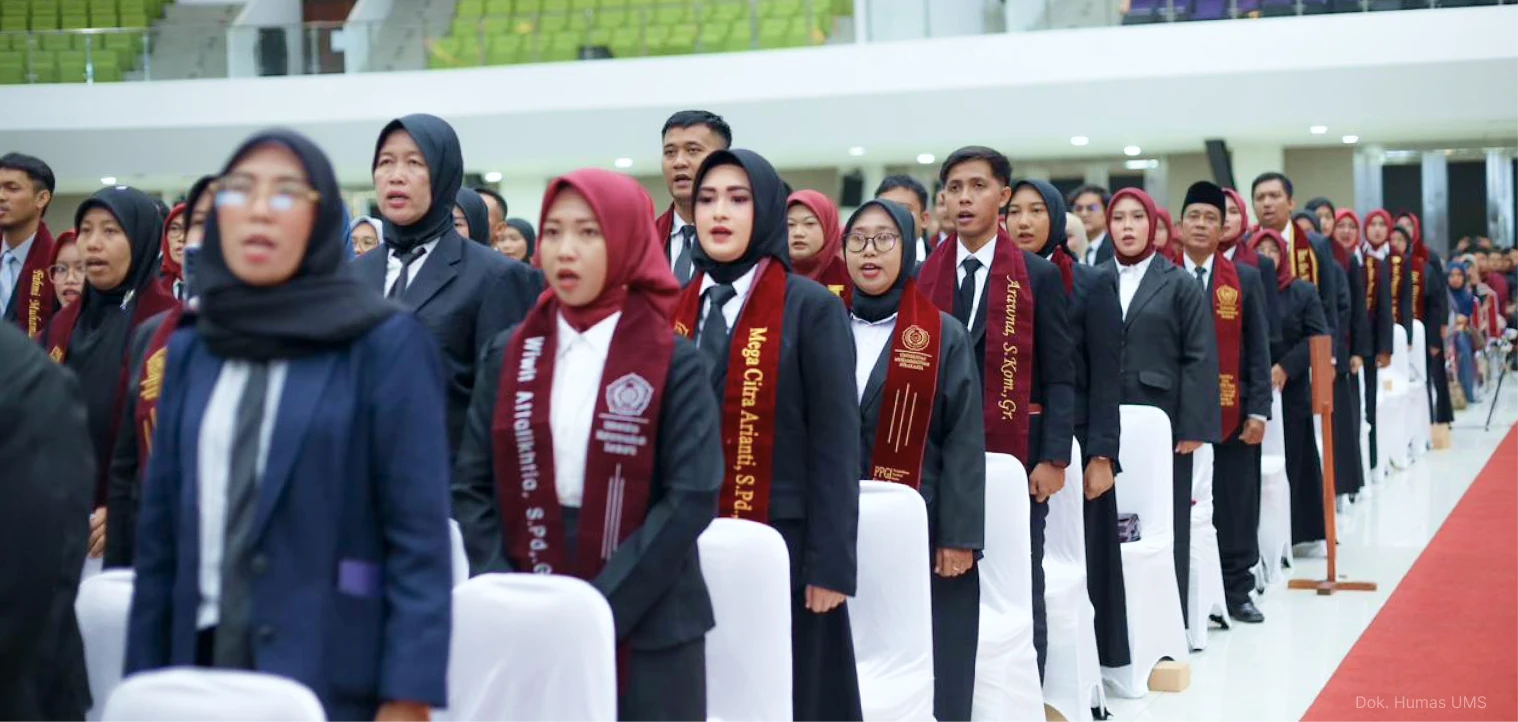
The Teacher Professional Education (PPG) Program of the Faculty of Teacher Training and Education (FKIP), Universitas Muhammadiyah Surakarta (UMS), held the Yudisium for Prospective and In-Service PPG Teachers at the KH Ahmad Dahlan Edutorium on Saturday (31/1/2026).
Dean of FKIP, Prof. Dr. Anam Sutopo, M.Pd., explained that UMS graduated a total of 10,855 PPG students. This number consists of 281 prospective teachers and 10,574 in-service prospective teachers. With this achievement, the total number of PPG graduates from UMS from 2007 to 2025 has reached more than 130,000 alumni.
“We have helped the government issue more than 130,000 teacher professional certificates from 2007 to 2025, which are now spread across the entire archipelago,” Anam explained.
According to Anam, FKIP UMS continues to support the development and mentoring of PPG UMS alumni. This commitment is realized through the establishment of the Center for the Development of Teacher and Education Personnel Professions, which aims to provide training, workshops, and other academic activities.
A master’s scholarship program is also one form of support to foster PPG UMS alumni. Anam said the scholarship is planned to use the Recognition of Prior Learning (RPL) scheme. “The RPL scheme allows the study period to be shortened to just one year,” he added.
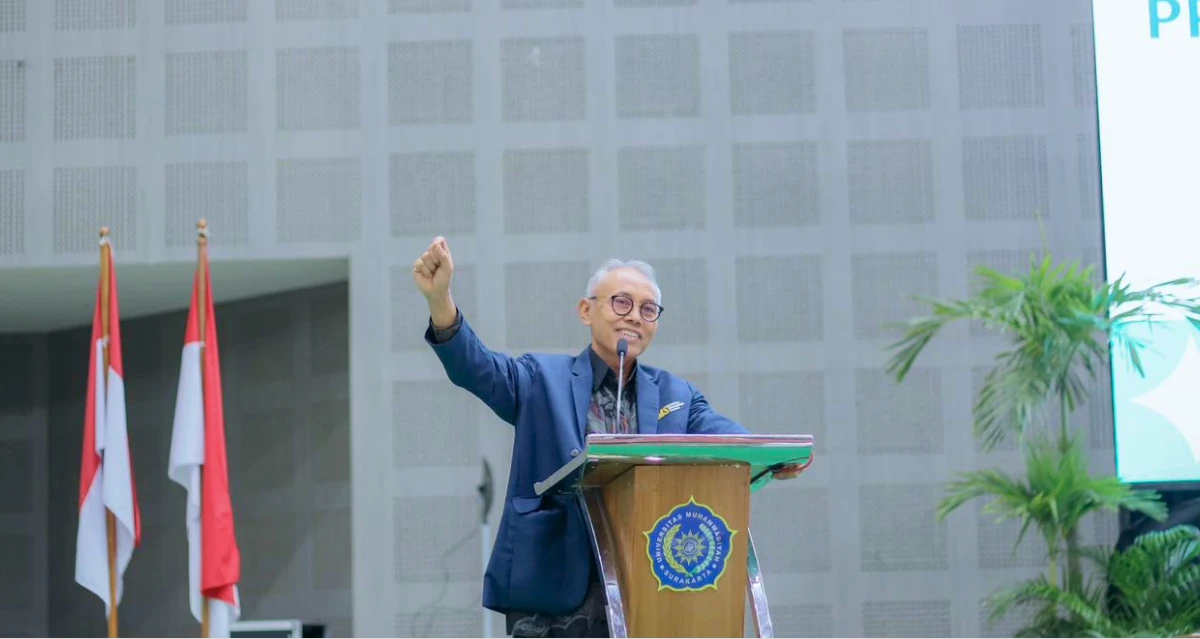
In his address, Prof. Dr. Harun Joko Prayitno, M.Hum., invited PPG UMS graduates to make use of their potential for the benefit of the community and the safety of students through education.
Harun encouraged prospective teachers to continue applying the knowledge they gained during their teacher education at UMS. He also urged them to consistently practice the essence of education, namely upholding the dignity of students, dignifying life, and fostering transcendence.
“The best teachers are those who provide benefits to students through education,” Harun said in his address.
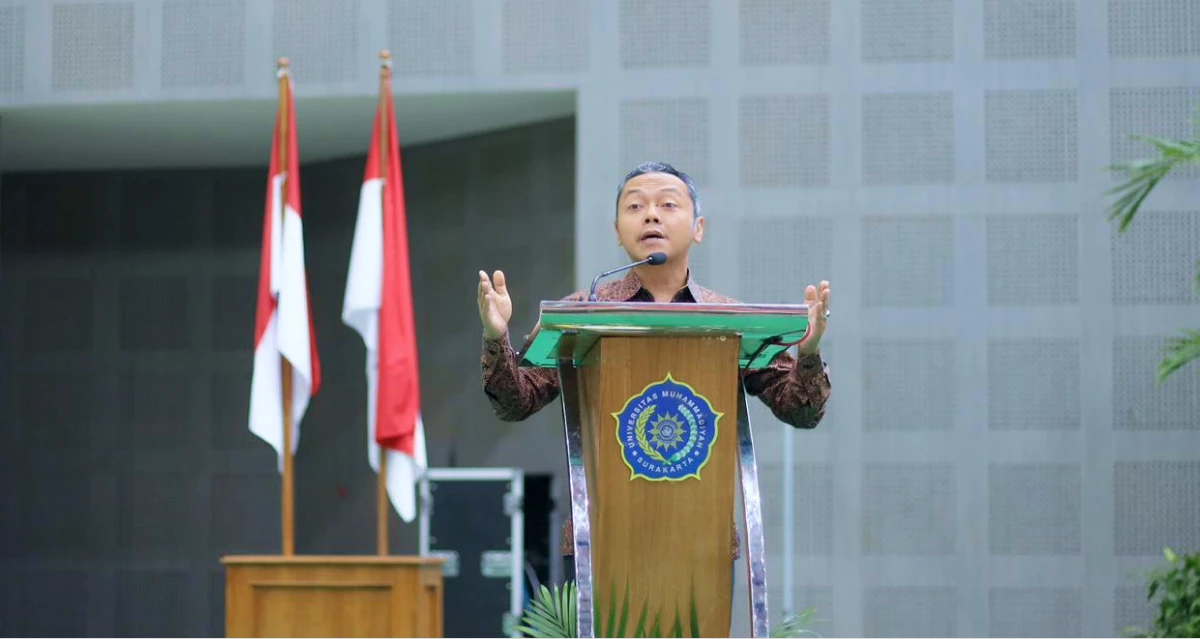
Deputy of Primary and Secondary Education Fajar Riza Ul Haq invited PPG UMS graduates to continue learning and developing their potential. According to him, the challenges faced by teachers today are becoming increasingly complex.
“Children today may learn faster than their teachers. If teachers fall behind, students will feel that they gain nothing from school,” Fajar said.
Read more: How Fajar Riza Paved His Way to the Cabinet
A teacher is not limited to being a curriculum operator. A teacher must become an inspirer, a facilitator, and an architect of learning. To realize this, Fajar said the government continues to encourage the improvement of teachers’ methodological and pedagogical capacities, particularly in deep learning.
The learning paradigm in the classroom must be shifted. Teachers should encourage students to train their critical reasoning and actively ask questions. This, he noted, reflects the quality of a child’s thinking.
“I think this is the challenge for all teachers: to develop competencies that are more contextual and to present learning that is interactive and enjoyable,” Fajar concluded.
Writer: Gede Arga Adrian
Editor: Fika Annisa’ Sholihah
Translator: Farizal Luqman Majid
Nadia Nur Imani is determined to fulfill her mother's dream by becoming a nurse, opening a new path to The Land of the Two Holy Mosques
Nothing’s more special than reading curated news just for you.
Subscribe to the UMS Newsletter for free today.