The Coffee Shop Boom
31 July 2026
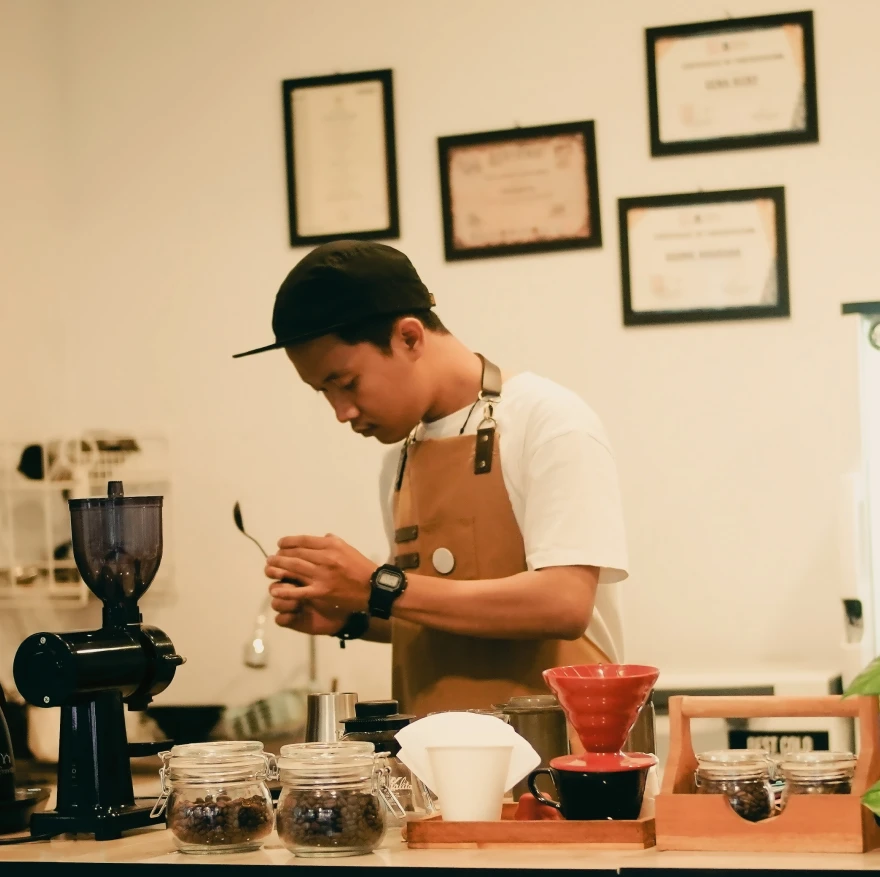
Indonesia is one of the world's largest coffee-consuming nations, a thirst that keeps spawning new coffee shops. Sharpening the competition among them.



In response to the escalating volume of trading transactions on TikTok Shop, a social media platform lacking the requisite authorization as an e-commerce entity, the government has imposed restrictions on such transactions. This move involves the amendment of Trade Minister Regulation No. 50/2020.
Generally, there are six aspects governing the utilization of social media in commerce. Firstly, it is permissible for social media to be employed solely for product promotion, with direct transactions no longer allowed. Secondly, social media platforms must acquire authorization to function as e-commerce platforms. In this case, TikTok must promptly obtain permission to operate as an e-commerce platform.
Thirdly, limitations will be imposed on imported goods that can already be domestically manufactured. This is rooted in the observation that numerous products from micro, small, and medium-sized enterprises (UMKM) are replicated by Chinese companies at a reduced cost. Fourthly, imported products must adhere to the same standards as local goods, including possessing the Indonesian National Standard (SNI) certification or securing the Halal food certification.
Fifth, it is prohibited for social commerce platforms to function simultaneously as both a producer and a seller. This restriction is in place to prevent the potential for monopolistic practices in specific product markets, given their advantageous position in managing consumer algorithm data. Sixth, transactions involving imported products can only occur once, with a minimum transaction value of US$100 or its equivalent, which amounts to Rp 1.5 million.
Countries that have already banned TikTok include Taiwan, the United States, the European Union, Canada, Latvia, Denmark, Belgium, the United Kingdom, New Zealand, Australia, Estonia, France, the Netherlands, Norway, Pakistan, Afghanistan, and Japan. These countries have various reasons for restricting TikTok, including concerns over espionage, cybercrime, and its perceived impact on the local economy. This is attributed to the close affiliations between the developer of the TikTok app, Beijing ByteDance Technology, and the Chinese government.
Indonesia has slightly different reasons for the restrictions on the TikTok social media platform. Small and medium-sized enterprises (UMKM), particularly those in the retail, fashion, handicraft, and manufacturing sectors, have complained about a decline in their businesses. Some retail UMKMs in Tanah Abang, Jakarta, have even closed their businesses. The question is, is this decline in UMKM sales volume caused by the TikTok application?
The main complaint regarding products imported from China revolves around the intense pricing competition. Products from China are sold at very low prices. For example, imported shoes sold on TikTok Shop are priced very cheaply, some are sold for Rp 20,000. Many imported fashion products are sold for less than Rp 100,000. Some local UMKM products that sell well on social commerce platforms are often copied by Chinese manufacturers and sold at lower prices within just a few months. This can be done because they utilize algorithms effectively, allowing them to use sales information efficiently.
Based on the above situation, there is another more pressing issue regarding the penetration of TikTok in the Indonesian retail market. This issue revolves around the fact that local UMKM products tend to be less efficient in their production processes, leading to higher costs. The question then becomes: why are Indonesian UMKMs unable to produce efficiently? This has been a concern for UMKM business players, the government, and universities. However, finding a solution to this problem is not easy.
There are two factors related to the solution of efficiency in the production process of Indonesian UMKMs. First, there is the internal aspect, which includes factors related to the managerial and production capabilities of UMKMs. Indonesian UMKMs have limitations in terms of resources, including technology, human resources, capital and finance, as well as marketing. These factors are currently the focus of government and university to provide assistance and support in order to enhance the capacity of national UMKMs.
Second, there are external aspects, which involve factors related to the protection of UMKMs through various government regulations. The policy revision of Permendag No. 50/2020 is one effort to protect UMKMs from the adverse effects of trade liberalization. UMKMs also need protection regarding domestic trade governance and high-cost economic practices.
Indonesia is one of the world's largest coffee-consuming nations, a thirst that keeps spawning new coffee shops. Sharpening the competition among them.
Nothing’s more special than reading curated news just for you.
Subscribe to the UMS Newsletter for free today.