Another Dry Season, Another Water Crisis
19 August 2026
Drought is expected to haunt Indonesia again during the 2026 dry season. What is the root cause?



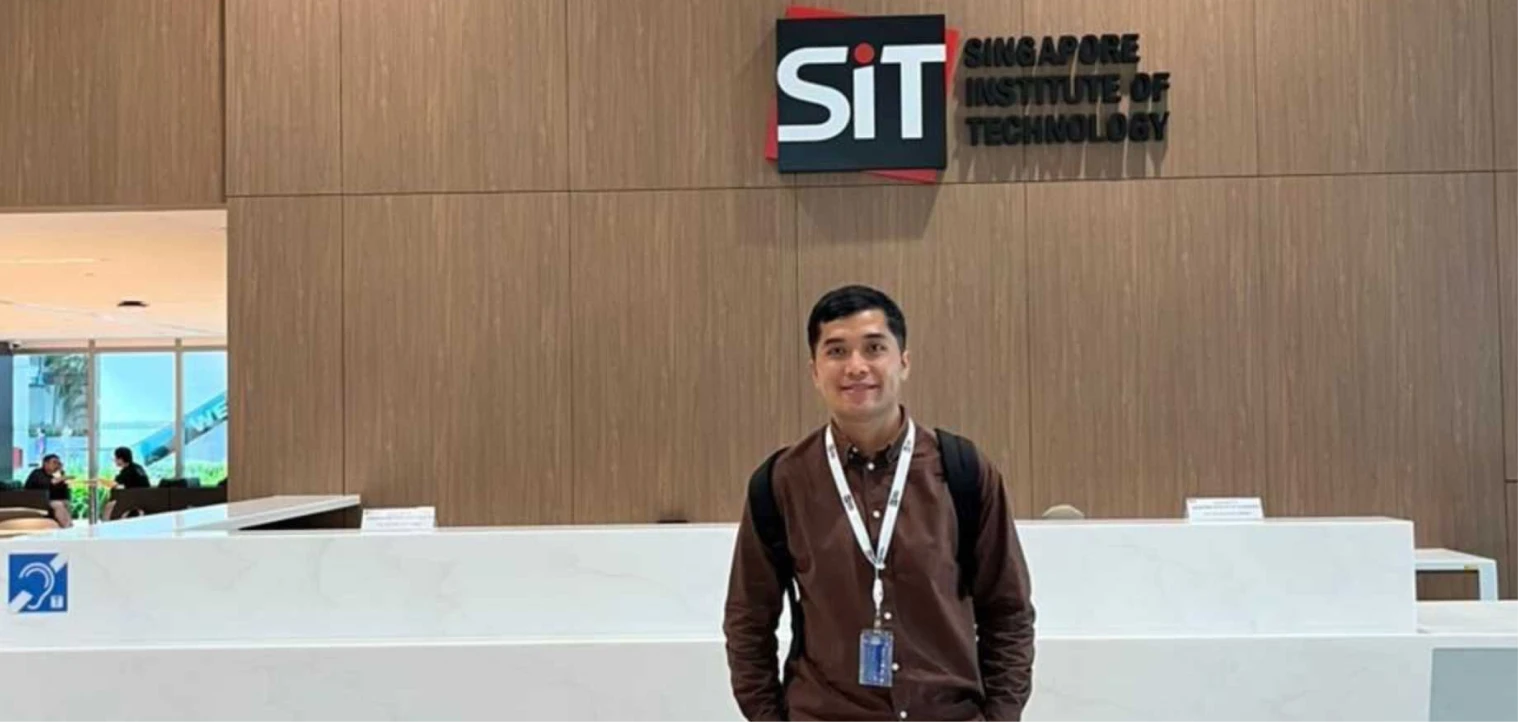
Obby Taufik Hidayat, a lecturer from the Faculty of Teacher Training and Education (FKIP) at Universitas Muhammadiyah Surakarta (UMS), has successfully completed a six-week international fieldwork program at the Community Leadership and Social Innovation Centre (CLASIC), Singapore Institute of Technology (SIT), from May 12 to June 16, 2026.
The international fieldwork was conducted as part of his comparative research titled "Implementation of Service Learning in Higher Education Institutions in Indonesia and Singapore." The study aims to explore and compare the implementation of service learning practices, community engagement, and social innovation initiatives at higher education institutions in both countries.
The research received international research funding from the Sylff Research Grant (SRG) 2026, as well as International Research Cooperation (RKI) grant support from UMS and in-kind research facilities provided by SIT throughout the research period.
During his research visit, Obby collaborated with CLASIC under the guidance of Prof. Dr. Intan Azura Mokhtar, Director of CLASIC at SIT. Throughout the fieldwork program, Obby conducted a series of semi-structured interviews with CLASIC leaders and staff, as well as SIT students involved in the Social Innovation Project (SIP), and carried out observation and document analysis to gain a comprehensive understanding of the experiential learning ecosystem within the community.
According to Obby, the Director of CLASIC SIT described SIP as an innovative SIT pedagogy that shares characteristics with service learning. In Indonesian higher education, meanwhile, this learning approach is typically associated with Kuliah Kerja Nyata (KKN), a community service practicum, and some researchers consider KKN to be the Indonesian equivalent of service learning.
"This international fieldwork has significantly enriched my understanding of service learning and social innovation. Beyond collecting research data, it has provided an invaluable opportunity to exchange ideas, learn from international best practices, and build meaningful academic networks that will contribute to future collaboration between Indonesia and Singapore," he said on Wednesday (1/7/2026).
Over approximately 40 days in Singapore, Obby studied how students there carry out service learning that resembles KKN in Indonesia but takes a different approach. SIP is described as going beyond service learning because it must deliver concrete solutions. In other words, SIP goes further than service learning because its output requires students to create innovative products that address problems or needs in the community.
"There, students do not simply go to the community to perform service. They must deliver real solutions to problems that exist in the community," he said.
Through SIP, students are required to identify problems, conduct a needs analysis, and produce innovations that can be directly applied in the community.
One example Obby encountered was the development of a wheelchair designed to be more effective in helping elderly people use public transport. There was also a project that promoted public awareness around reducing single-use plastic through a digital application that can monitor and support the waste recycling process.
"With KKN the output is usually a reflection or a report. But the Social Innovation Project must produce a solution or innovation that genuinely addresses community needs," he explained.
Another aspect that caught Obby's attention was the length of the process students undergo before going into the field. While KKN in Indonesia typically lasts around one month, SIT students can spend up to a year because at the beginning of their SIP they need to understand community conditions and identify problems there.
"They are not placed at a site straight away. Students are given months to get to know the community profile, identify problems, and understand their needs. So when they arrive, the students' presence truly delivers impact," he said.
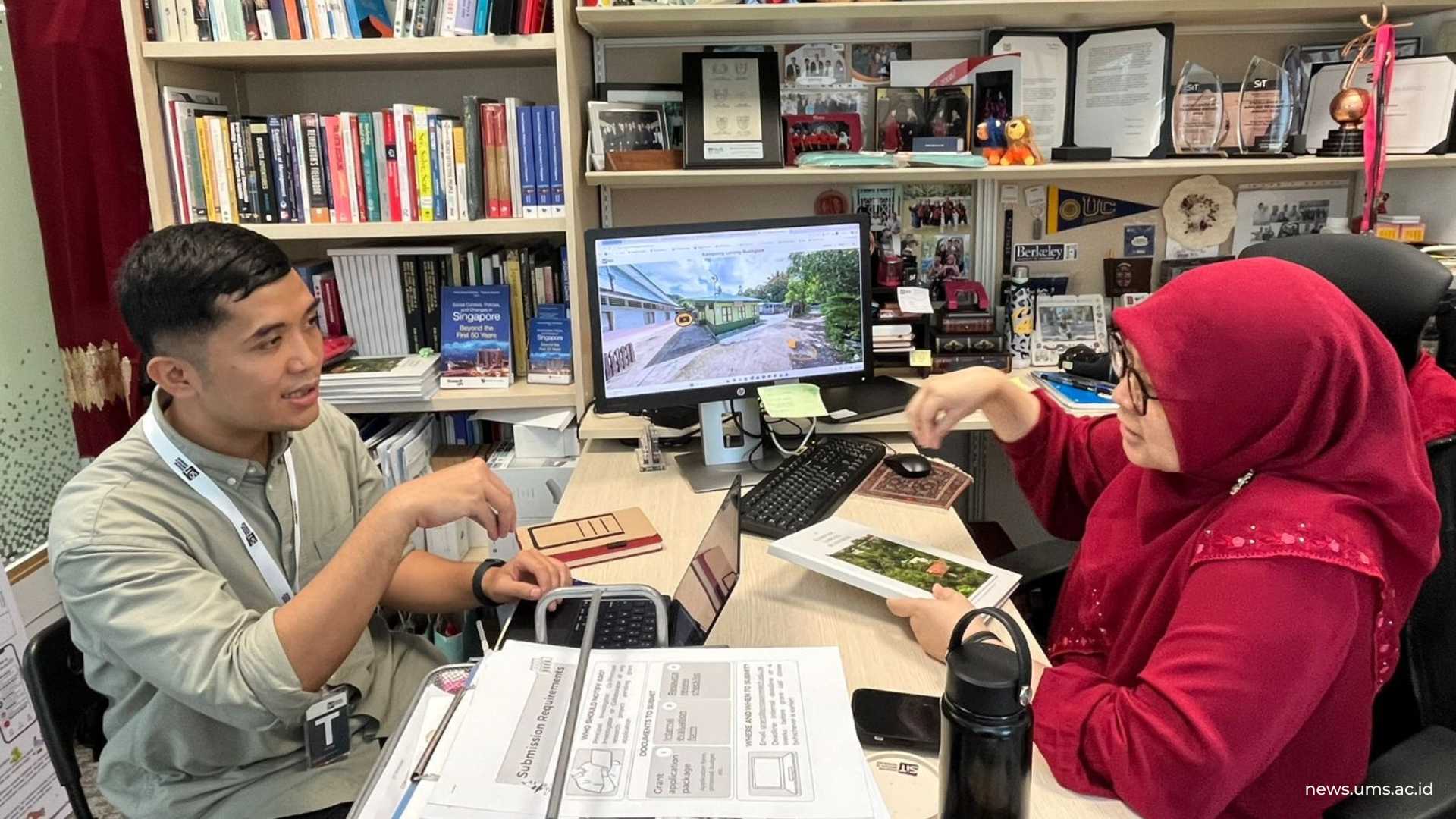 Obby Taufik Hidayat during data collection through an interview with CLASIC SIT.
These findings, Obby continued, can serve as evaluation material for the implementation of experiential learning at Indonesian universities. He considers KKN in Indonesia to have delivered positive benefits for communities, but notes there is still room for development and the addition of important aspects or pillars found in SIP, particularly in problem identification, the development of solutions grounded in students' academic disciplines, empowerment, and solution-based project outputs.
Beyond conducting research, Obby also had the opportunity to serve as a guest lecturer at SIT. On that occasion, he presented on experiential learning practices in Indonesia, particularly the concept of service learning as applied in higher education.
The discussion opened a space for the exchange of ideas between both institutions. Many SIT students showed interest in learning more about community-based learning systems in Indonesia and exploring collaboration opportunities with UMS.
The visit was also used by Obby to initiate cooperation between the UMS Faculty of Teacher Training and Education and CLASIC SIT. He said CLASIC welcomed the collaboration opportunity warmly.
"The hope is that this cooperation does not stop at the signing of documents, but is truly realized in the form of concrete activities, such as student exchange, research collaboration, and joint social projects," he said.
Obby considers international collaboration to be one of the strategic steps in expanding UMS's academic network while providing global learning experiences for students.
"Students need to gain international experience firsthand. By interacting with academics and communities from other countries, they will gain new perspectives that can enrich the learning process," he concluded.
Writer: Maysali Sudarwati
Editor: Fika Annisa Sholihah
Translator: Farizal Luqman Majid
Drought is expected to haunt Indonesia again during the 2026 dry season. What is the root cause?
Nothing’s more special than reading curated news just for you.
Subscribe to the UMS Newsletter for free today.