
Bank Indonesia Holds Interest Rate at 5.75%, What Is the Impact?
24 July 2026
Bank Indonesia has held its benchmark rate at 5.75 percent, ending speculation of a hike to 6 percent that had circulated in recent weeks.


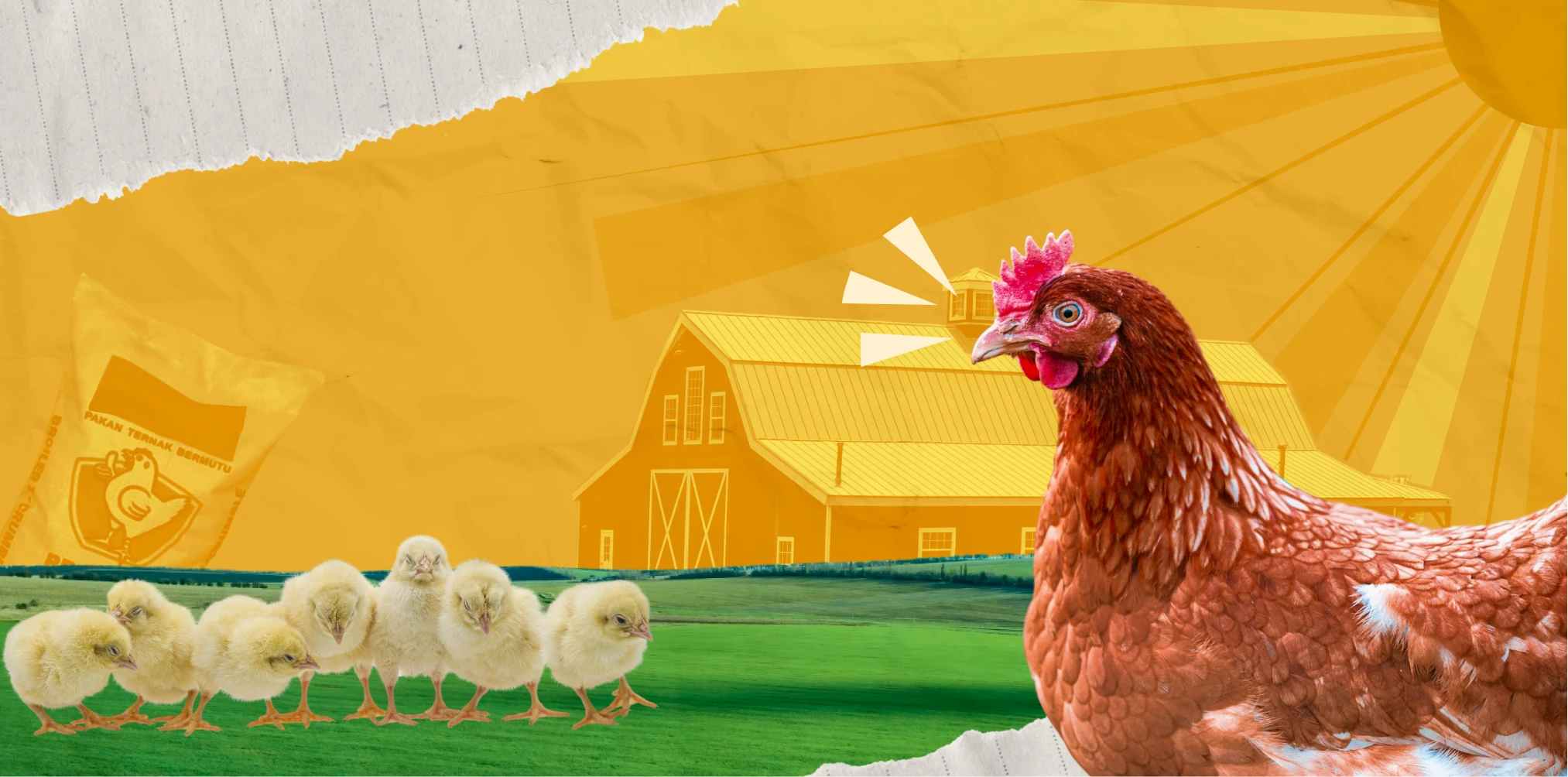
True to their morning routine, the crowing of joper chickens (short for jowo super) filled the air in Kliwonan, Sragen, signaling the start of another busy day in the chicken coops. Farmers moved efficiently, feeding the chickens, checking the brooder temperatures, and ensuring their livestock remained healthy and well cared for.
“Apart from my campus duties, my daily life revolves around tending to chickens,” Suranto shared, describing the lively activity in the chicken coop during the early morning hours. Joper chickens themselves are a meat-producing breed, developed through genetic improvement by crossing female broilers with native roosters.
Behind this productivity is the dedication of Dr. Ir. Suranto, S.T., M.M., M.Si., a researcher from Universitas Muhammadiyah Surakarta (UMS), who applies his expertise in business systems to his own joper chicken farming business. Suranto is a well-known figure among chicken farmers.
In addition to chicken, Suranto runs a variety of integrated farming businesses, sustainable farming that maintains both the quality and quantity of production, including raising tilapia, catfish, goats, and more.
“My main goal is to empower economically disadvantaged communities, particularly in rural areas, involving around 20 farmers,” Suranto said, reflecting on the mission of his research when we met him in his room. “For this, they must have a strong foundation. What kind of foundation? The spirit of entrepreneurship.”
The director of UMS Vocational School also believed that the most effective form of empowerment isn’t through short-term financial aid but by cultivating a sustainable entrepreneurial spirit.
As an Industrial Engineering lecturer and Informatics Engineering Education at UMS, Suranto emphasized the importance of entrepreneurship in creating jobs that can reduce poverty. Over the past few years, he has mentored several poultry farmer groups in villages across Sragen, introducing a more structured approach. His guidance includes both technical and mindset training, aiming to build a resilient entrepreneurial spirit among the farmers.
Suranto developed an empowerment concept he called DEFE, Doing, Empowering, Facilitating, and Evaluating, based on his research titled “Developing a Sustainable Empowerment Model Through Technopreneur Farmers' Economy Sustainability.” This model guides joper farmers through a series of structured stages essential to their business journey.
The guidance begins with the Doing stage, where partner companies or corporations assist farmers in launching their businesses, under the tutelage of CV Mukti Kabeh. In the Empowering stage, farmers gain essential knowledge and entrepreneurial skills, including techniques in food security and waste management.
The next stage is Facilitation, where farmers are provided access to essential resources like chicken stock (DOC), feed, medicine, and improved technology. With the right tools, farmers can run their businesses more efficiently and minimize the risk of losses.
“For example, using a UV brooder, an ultraviolet heating device, proves to be more efficient than traditional methods like large wooden containers or yellow bulbs for each cage,” explained the Industrial Engineering and Informatics Engineering Education lecturer.
Finally, the Evaluating stage is conducted to ensure that each step taken by the farmers and partner companies is progressing well.
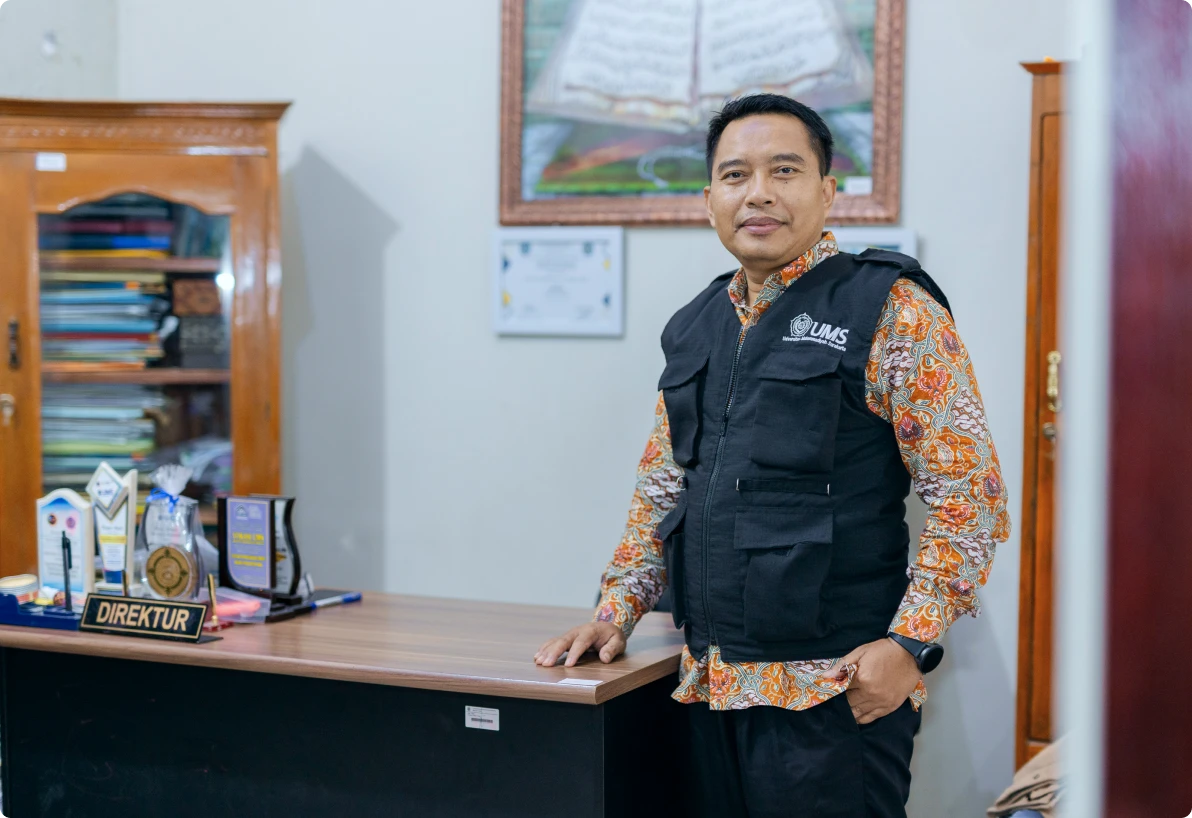
Dr. Ir. Suranto, S.T., M.M., M.Si. Imam Safi'i/UMS PR
During the guidance, particularly in the Empowering stage, Suranto made an interesting discovery in the field. He observed that small-scale farmers are heavily dependent on commercial feed, which is subject to frequent price increases. Realizing the impact of this dependency, he began exploring ways to reduce these costs.
“We decided to try a mix of commercial and non-commercial feed ingredients as an alternative,” Suranto explained. “For example, we used nutrient-rich food scraps like dried white rice, fine bread flour, rice bran, tofu pulp, various flours, and grains.”
Suranto suggested that beginner farmers aiming to lower operational costs can try mixing 15-20% non-commercial feed with commercial feed. He believed this ratio is ideal for those who want to avoid full dependence on costly commercial feed.
As part of a sustainable empowerment model, Suranto initiated the process of turning chicken manure into valuable, economically beneficial compost. He explained that the process was simple, requiring only basic methods to make fertilizer.
“This manure is mostly used by the farmers themselves. If they do decide to sell it, the price can reach around Rp1,000–Rp1,500 per kilogram within their community. It can help boost their income, right?” he explained.
After developing the DEFE model, Suranto, his team, and partners from CV Mukti Kabeh ultimately chose the concept of a “plasma partnership” as a strategy to empower Joper chicken farmers in Sragen. He encouraged plasma farmers to join a partnership scheme with a core poultry company, which has access to greater resources like feed supplies, medicines, and farming equipment.
The plasma partnership scheme provides farmers with access to facilities that enhance production efficiency and improve the quality of livestock products. This partnership, initiated by Suranto, offers not only financial benefits but also creates opportunities for farmers to innovate and expand their market networks.
“We mentor them. For example, if Group A needs 1,000 DOC (Day-Old Chick), we guide them on how to handle the necessary treatments, feed, and other requirements, with assistance from field support staff. We also happen to partner with veterinarians, livestock experts, and animal husbandry graduates to help develop and empower these Joper chicken farmers,” Suranto explained.
"Through the plasma partnership, farmers are equipped with technology and sustainable management materials, from production to distribution. So, issues around harvesting, sales, and distribution are covered, ensuring that farmers are well-supported, sellers have a steady supply of chickens, and consumer needs are met," he added thoughtfully.
Not stopping there, Suranto went on to establish a Joper chicken farmers' association as a forum for member consolidation and exchange of ideas. Before joining this community, most farmers operated individually, with limited awareness and collaboration. Many were indifferent or unaware of their peers' situations, as there was no association to unite them in discussions and innovative ideas to strengthen the food industry.
“I noticed that beginners often took a long time and usually worked on their own. That’s why I created this association, to help farmers learn from each other's experiences and better manage their businesses and improve life skills,” he added.
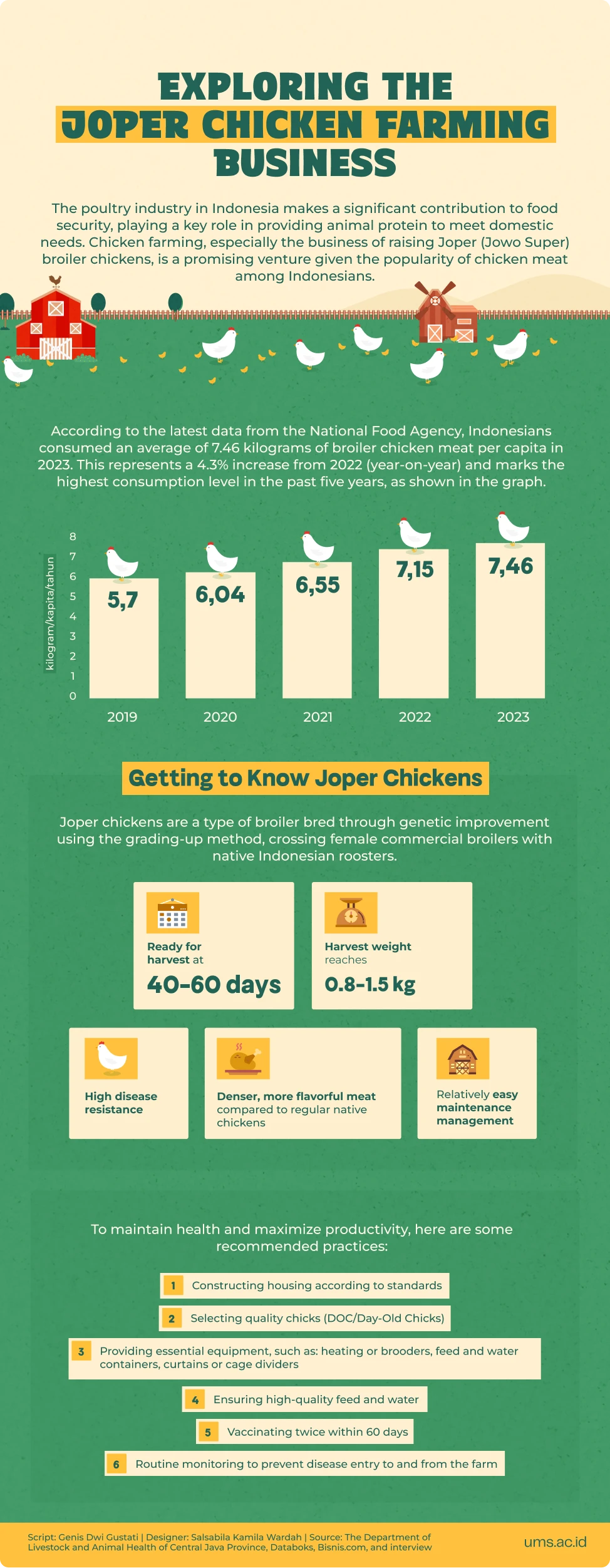
In addition to the livestock sector, Suranto’s DEFE model has also been effectively used to cultivate an entrepreneurial mindset among students. From 2007 to 2012, the program received funding from the Ministry of Education, Culture, Research, and Technology and Technology for Entrepreneurship initiative. It resumed from 2022 to 2024 with support from Indonesia Endowment Fund for Education (LPDP) and the Ministry of Education through the Merdeka Entrepreneurship Program.
Suranto also claimed that the DEFE model could be used in other sectors to empower a broader community. "The DEFE model can be adapted to other fields, such as agriculture or fisheries, by adjusting the objects and methodology," he stated.
With a warm smile, he shared that his farming business had expanded to other commodities, such as ducks and Muscovy ducks. Seeing the continually growing market prospects, he is confident that business diversification will help strengthen food security and create more job opportunities.
He has even successfully harvested ducks and muscovy ducks 13 times without incurring any losses. “Ducks and Muscovy ducks have significant market potential. Using the same model, we’ve been able to earn profits with each harvest, amounting to the Solo region’s minimum wage per month,” he shared openly. Suranto started his duck and Muscovy duck farm with an initial investment of 200 chicks.
“Right now, I’m also researching agriculture, specifically mushroom cultivation, including both fresh mushrooms and those pre-ordered directly by buyers,” Suranto added.
The lecturer has shown that small-scale farmers can achieve rapid growth with the right approach. By combining technology, efficient management systems, and an entrepreneurial spirit, he has successfully built a sustainable farming ecosystem.
Writer: Genis Dwi Gustati
Editor: Al Habiib Josy Asheva
Translator: Farizal Luqman Majid
Designer: Salsabila Kamila Wardah
Bank Indonesia has held its benchmark rate at 5.75 percent, ending speculation of a hike to 6 percent that had circulated in recent weeks.
Nothing’s more special than reading curated news just for you.
Subscribe to the UMS Newsletter for free today.