Bank Indonesia Holds Interest Rate at 5.75%, What Is the Impact?
24 July 2026
Bank Indonesia has held its benchmark rate at 5.75 percent, ending speculation of a hike to 6 percent that had circulated in recent weeks.


Mata airmu dari Solo
Terkurung gunung seribu
Air mengalir sampai jauh
Akhirnya ke laut ~
As we geared up for the research coverage, we listened to the enchanting melody of Gesang's “Bengawan Solo.” Purposefully immersing ourselves in its tunes, we aimed to connect with the spirit of our study. This iconic song, narrating the tale of the Bengawan Solo River, has garnered fame across Nusantara and beyond. The phrase Air mengalir sampai jauh (Water flows far away) within the lyrics acts as a metaphor, vividly portraying the river's ability to irrigate the areas along its course.
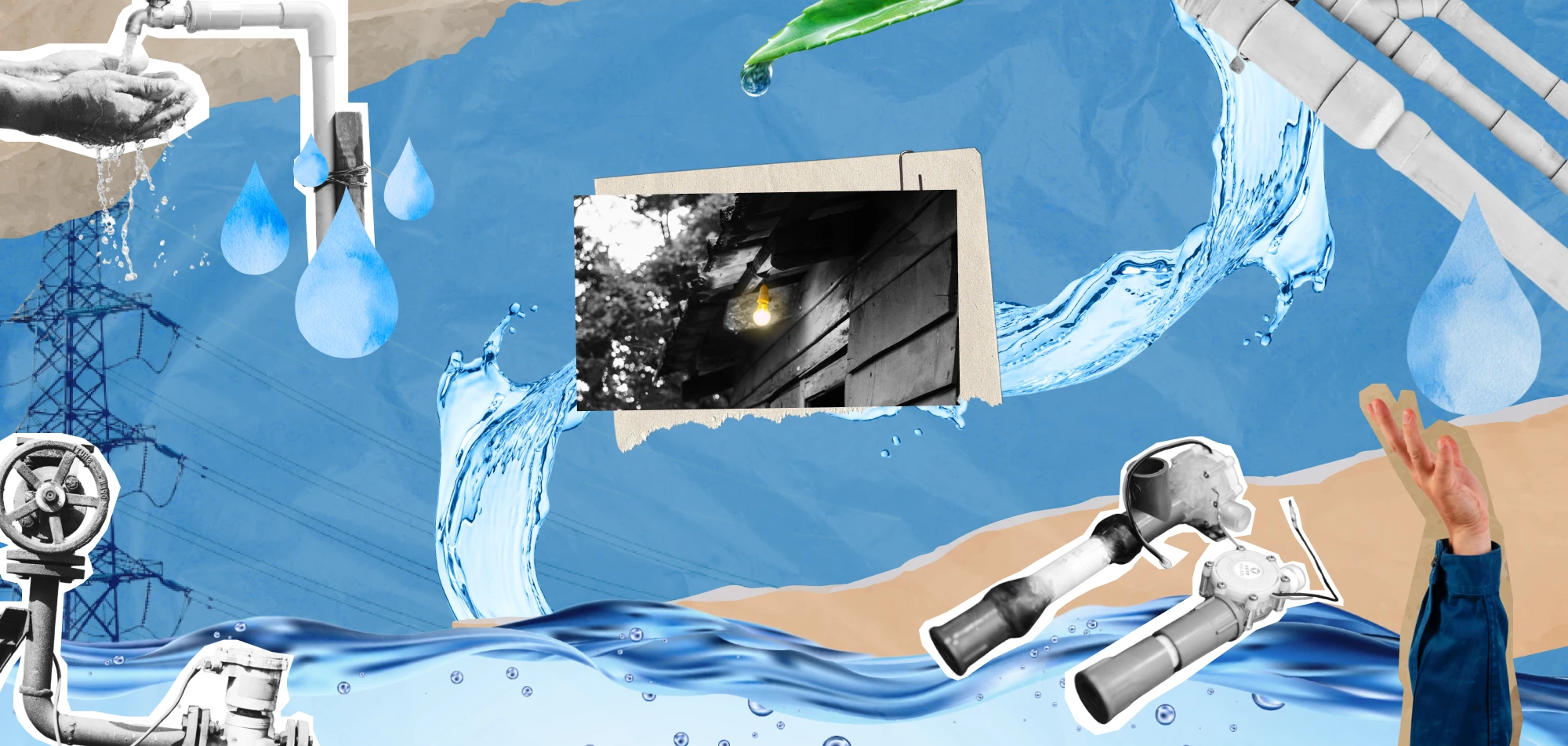
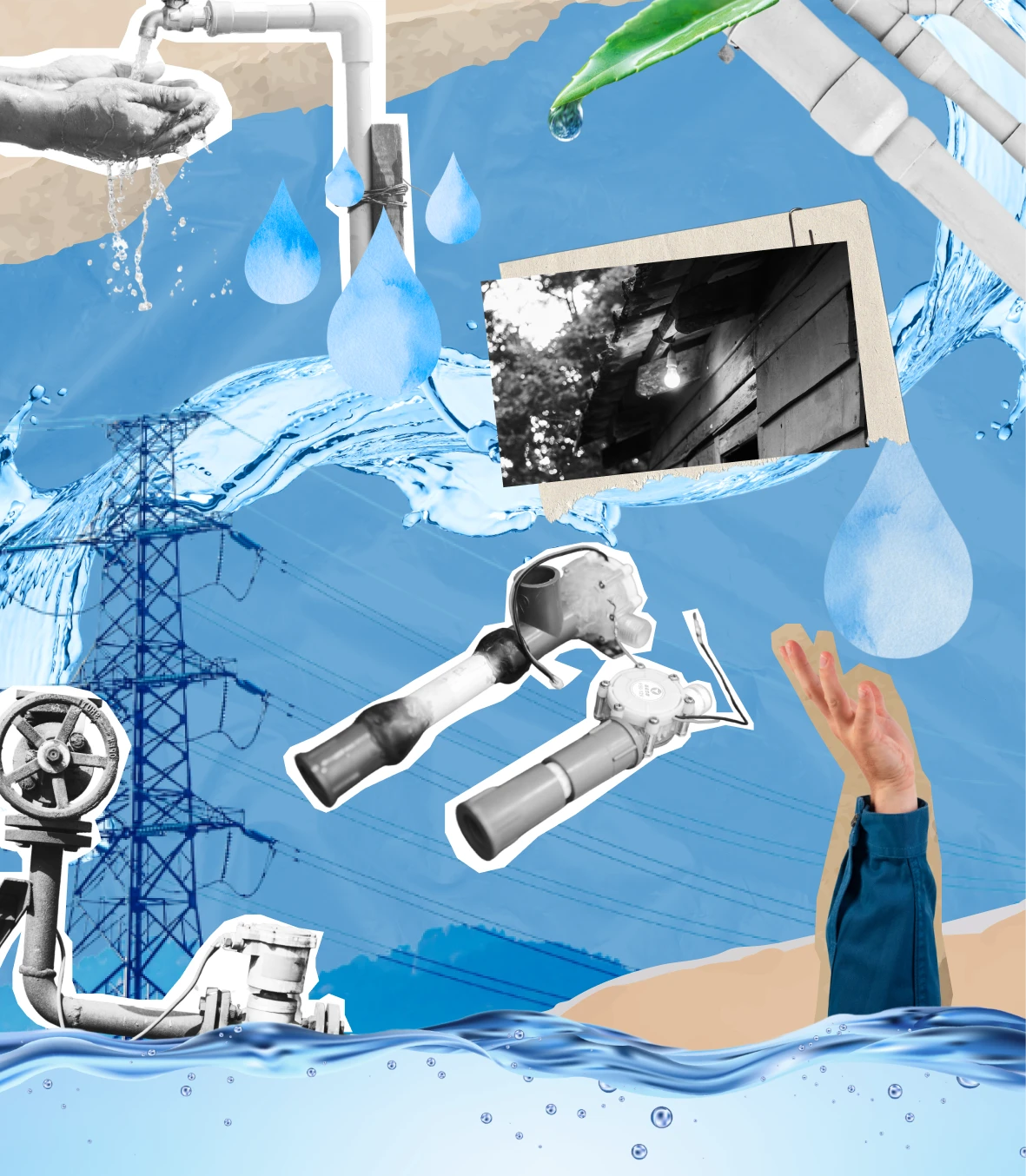
Throughout history, water has been a vital source of life for humans and other living beings. From daily consumption and hygiene to agricultural irrigation, our reliance on water is intertwined with the sustenance of life.
As beings acknowledged by Allah as the highest of creatures, humans have consistently sought ways to harness the potential of water. This includes channeling water through pipelines for household use, constructing dams for irrigation, and developing water-powered generators for generating electricity.
It all starts with water.
Among the various benefits we have derived from water, a notable one is the ability to turn turbines and generate electricity. This process, collectively known as a Hydroelectric Power Plant (PLTA), has a significant impact on providing electricity for communities. The working principle of hydropower harnesses the rapid flow of water to convert the potential and kinetic energy of water into electrical energy.
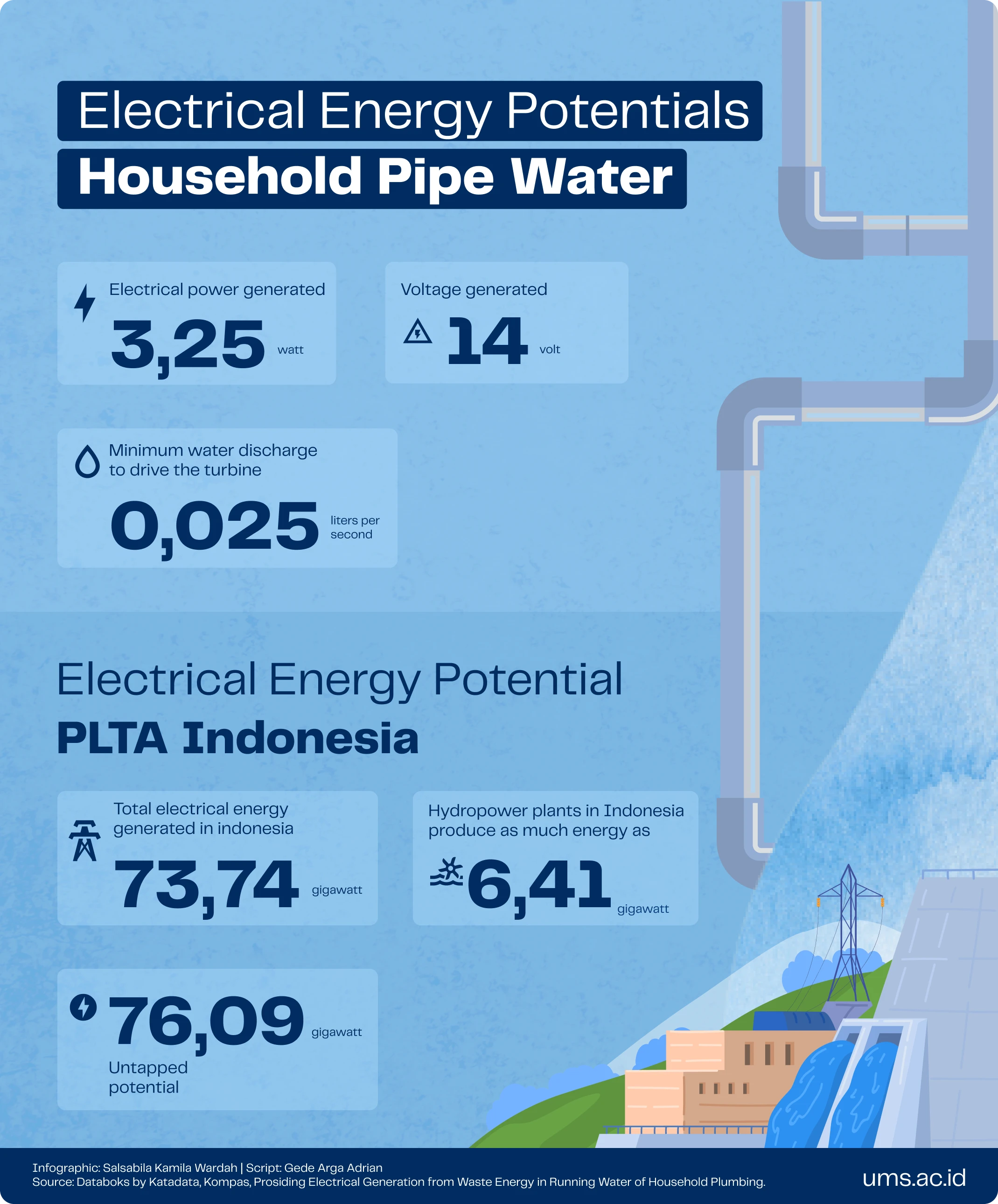
Data from Databoks by Katadata (26/01/2022), indicates that hydropower in Indonesia contributes to the production of 6.41 gigawatts (GW), accounting for 9% of the total electrical energy generation of 73.74 GW in the country. This number is relatively modest, especially when compared to the potential highlighted in Kompas (23/11/2023), which stated that Indonesia's capacity for electricity generation from water utilization could potentially reach 76.09 GW.
The construction of a hydropower plant typically requires the government to build a reservoir with a large dam, often resulting in the relocation of numerous villages and submersion of farmland spanning thousands of hectares.

However, have you ever considered that the water flowing through household pipes might actually harbor untapped potential for electrical energy? This very potential has motivated Rizki Nurilyas Ahmad, S.T., M.T., a lecturer in Electrical Engineering at the Faculty of Engineering, Universitas Muhammadiyah Surakarta (UMS), to explore the renewable energy potential inherent in household plumbing. This research is encapsulated in his study titled “Electrical Generation from Waste Energy in Running Water of Household Plumbing.”
A gloomy January day accompanied us to the Faculty of Engineering at UMS. We met with Mr. Ilyas, his familiar moniker, in a corner of the Electrical Engineering lecturer's room. Although not expansive, the room provided a comfortable space for our discussion about his research.
“I used to live in a village,” said Ilyas, opening the discussion, "Where the water comes directly from the spring so the water is allowed to flow continuously.If the taps or pipes are closed, they can break the pipes.”
From an endless spring of water, Ilyas saw the untapped potential for electrical energy within the abundant water that flows through household pipes. “In reality, we can harness it to generate electricity,” Ilyas asserted optimistically. “It's just a matter of efficiency and how we process it to achieve the desired energy output."
He wrote about this research in his master's thesis. Ilyas said that his research at that time focused on the electrical potential of water flow in household pipes.
“I continued my research to examine how to utilize energy from the flow of water in the pipe,” continued Ilyas.
The six-month research revealed the electricity potential within household pipes (PVC). These pipelines, traditionally used only for water distribution, can actually offer additional benefits for household life.
Ilyas utilized a Mini Compact Turbine-Generator (MCTG) installed in the pipeline network. This mini turbine is easily set up on existing pipelines. The device works by using the flow of water to rotate the turbine and generate electricity. Ilyas highlighted one of the advantages of this mini generator, emphasizing that there is no need to alter the overall design of the house pipes.
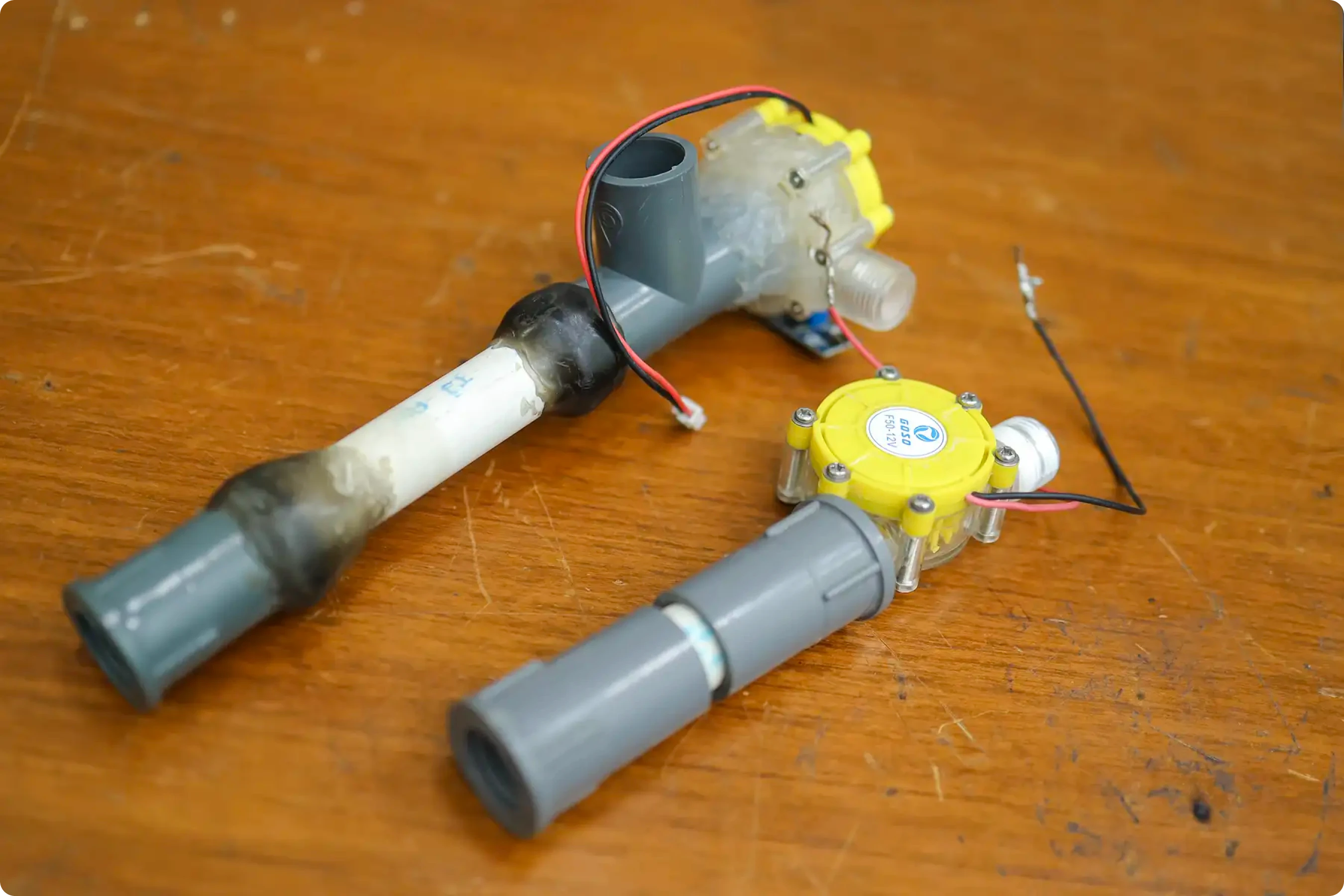
The mini generator that Ilyas used to test the electrical power from the house's pipe water. The shape is ergonomic and installation is fairly easy.
"When a building already has a pipe system installed, there is no need to make major modifications. We just disconnect, install the generator and then connect the pipes," says Ilyas.
The MCTG generator used has the capacity to produce 10 watts of electrical power. Additionally, he employed a converter connected to the MCTG generator.
As a result, the flow of water in household pipes can generate an electric voltage of 14 volts and 3,25 watts of electric power, achieving efficiency of up to 90%. The lecturer mentioned that to set the generator in motion with the water flow, a minimum water discharge of 0,025 liters per second is required.
“Based on the simulation, we discovered that the efficiency can exceed 90%, and the voltage can reach 14 volts, making it suitable for charging batteries. However, the generated power is still relatively low,” he explained.
Despite the relatively low power generated, Ilyas revealed that it is sufficient to power LED lights. “In our research, the obtained power can reach 3.25 watts, which is enough to illuminate an LED lamp by customizing it accordingly,” he explained.
Furthermore, he envisions the broader potential of electricity generated from the flow of household pipes. Ilyas expressed that if this generator is implemented in buildings with high water usage, it could yield a substantial amount of electricity.
“Let's say 3.5 watts from one tap and there are 5 taps with continuous flow, a rough calculation can get 15 watts. I think it is promising enough to be studied further,” said Ilyas optimistically.
Even though he is optimistic about the future of electricity from household pipes, he does not deny the fact that the electric generator he is using is not yet capable of powering other household installations that require high-powered electricity, such as televisions, fans, or just charging a smartphone battery.
“For more general uses, such as turning on a fan or charging a cellphone battery, it is not yet possible. Further research is needed,” he said.
He emphasized that the generated power has yet to reach the 10 watts specified by the generator. Ilyas did not dismiss the possibility of further research to optimize the potential of electrical energy derived from household pipes.
“Given the current research results, where the 10-watt generator specifications have not been fully realized, there is room for optimization. Further research and modifications are necessary to maximize the electricity generated from the water flow,” Ilyas added.
To facilitate the widespread use of these generators, Ilyas has developed a roadmap for future research. He stated that upcoming studies will prioritize the enhancement of electrical converters and modifications to the generator design.
“Initially, the converter has been designed, but its implementation is pending. Secondly, the generator will undergo modifications to enhance its usability and ergonomic features,” he concluded.
The journey to maximize the potential of electrical energy from household pipe water is still in progress. However, it's conceivable that in the future, this mini generator could generate even more renewable electrical energy, bringing substantial benefits to the public.
Writer: Gede Arga Adrian
Editor: Al Habiib Josy Asheva
Translator: Farizal Luqman Majid
Bank Indonesia has held its benchmark rate at 5.75 percent, ending speculation of a hike to 6 percent that had circulated in recent weeks.
Nothing’s more special than reading curated news just for you.
Subscribe to the UMS Newsletter for free today.