Building the Nation, UMS Presents Awards to Its Alumni
2 August 2026
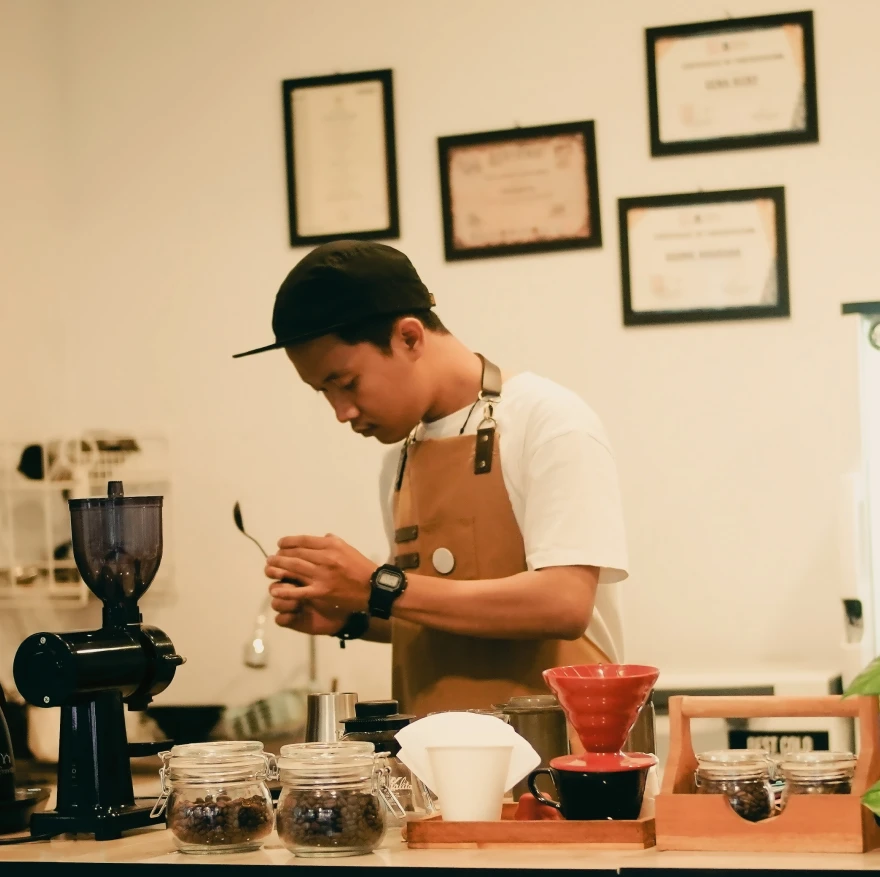
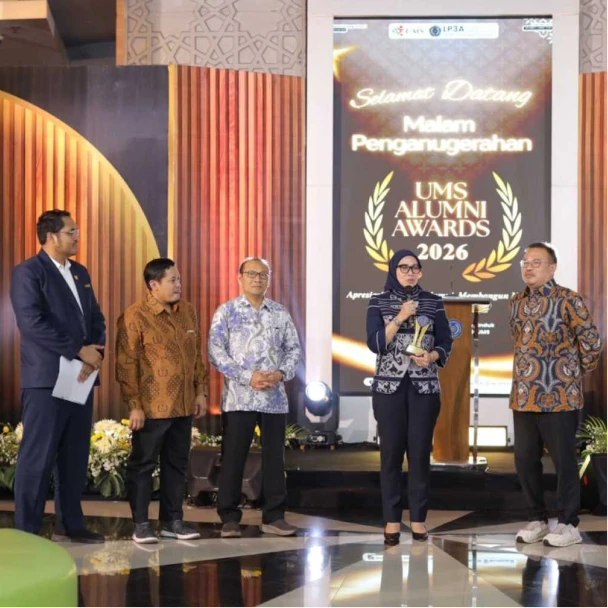
10 awards were presented to UMS alumni who have created extraordinary impact in their respective fields.



The refreshing breeze of Tawangmangu attracted hundreds of thousands of Greater Solo residents, providing a serene escape from the hectic pace of urban life. Renowned among Solo locals, Tawangmangu is the quintessential destination for leisurely getaways with friends and family.
Recognizing Tawangmangu’s tourist allure, the Karanganyar Regency Government has actively facilitated extensive development along the slopes of Mount Lawu. The once ordinary Tawangmangu-Sarangan road has been transformed into a culinary haven, boasting picturesque mountain views. Along this scenic route, numerous aesthetic “rooftop” cafes and restaurants now grace the landscape.
As Solopos (25/07/2023) reported, Tawangmangu’s appeal to tourists has spurred a wave of investment in the culinary industry. Business people, high-class entrepreneurs, regional officials, and politicians are all engaged in a competitive race to capitalize on the lucrative opportunities presented by Tawangmangu’s tourism industry.
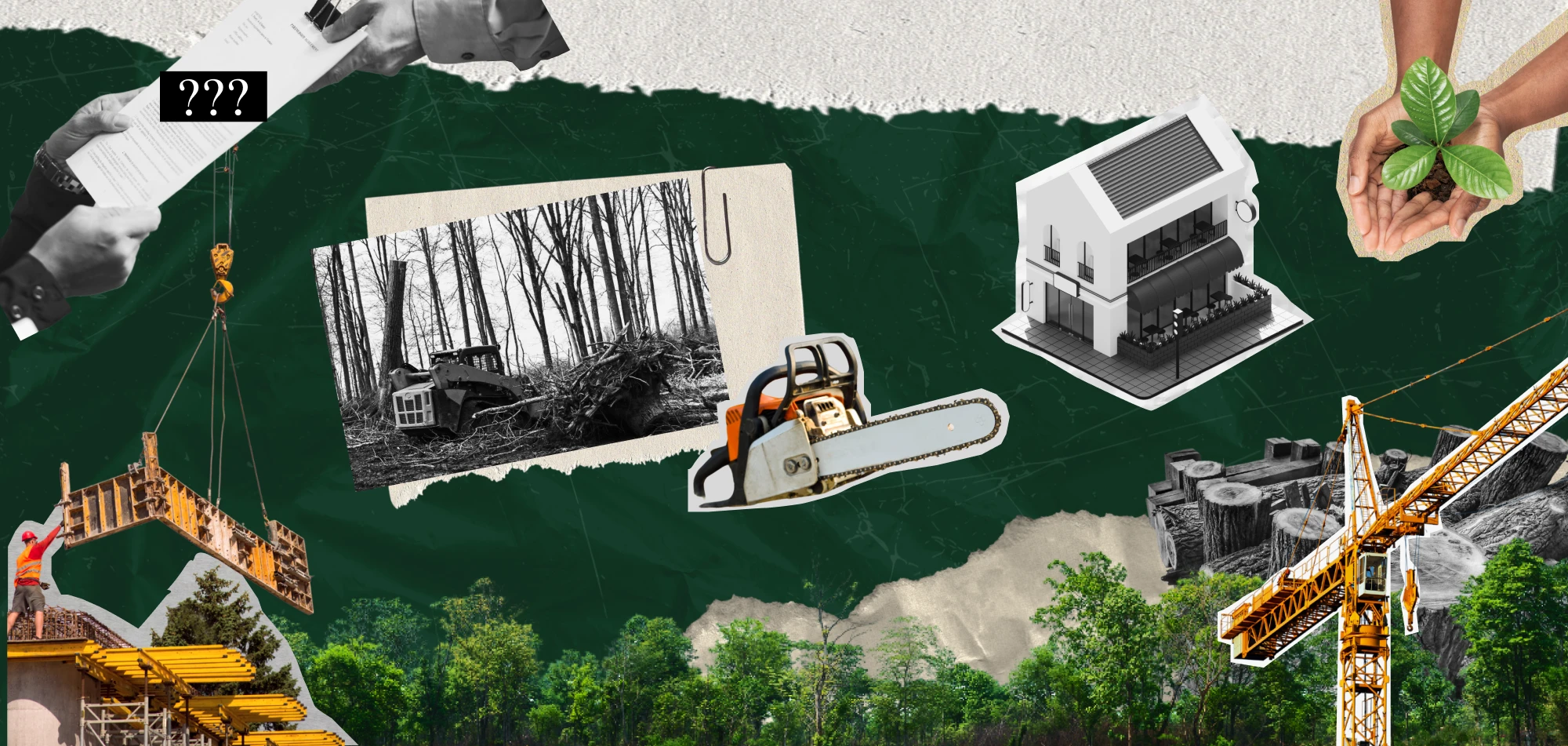
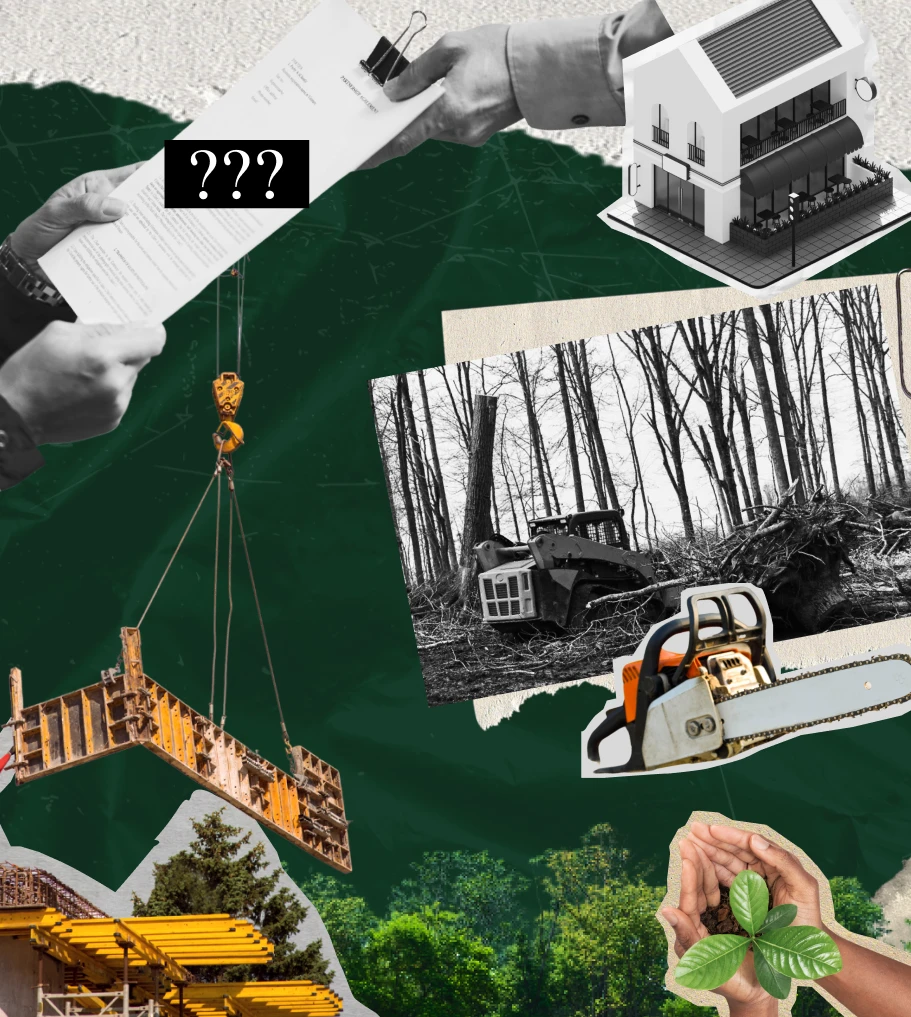
However, beneath the charm of refreshing air and scenic mountain views, the highest district in Karanganyar Regency faces a looming threat of natural disasters. Widespread deforestation, coupled with the conversion of watershed land into Instagrammable rooftop cafes, poses a significant risk of landslides as the altered landscape loses its ability to absorb rainwater.
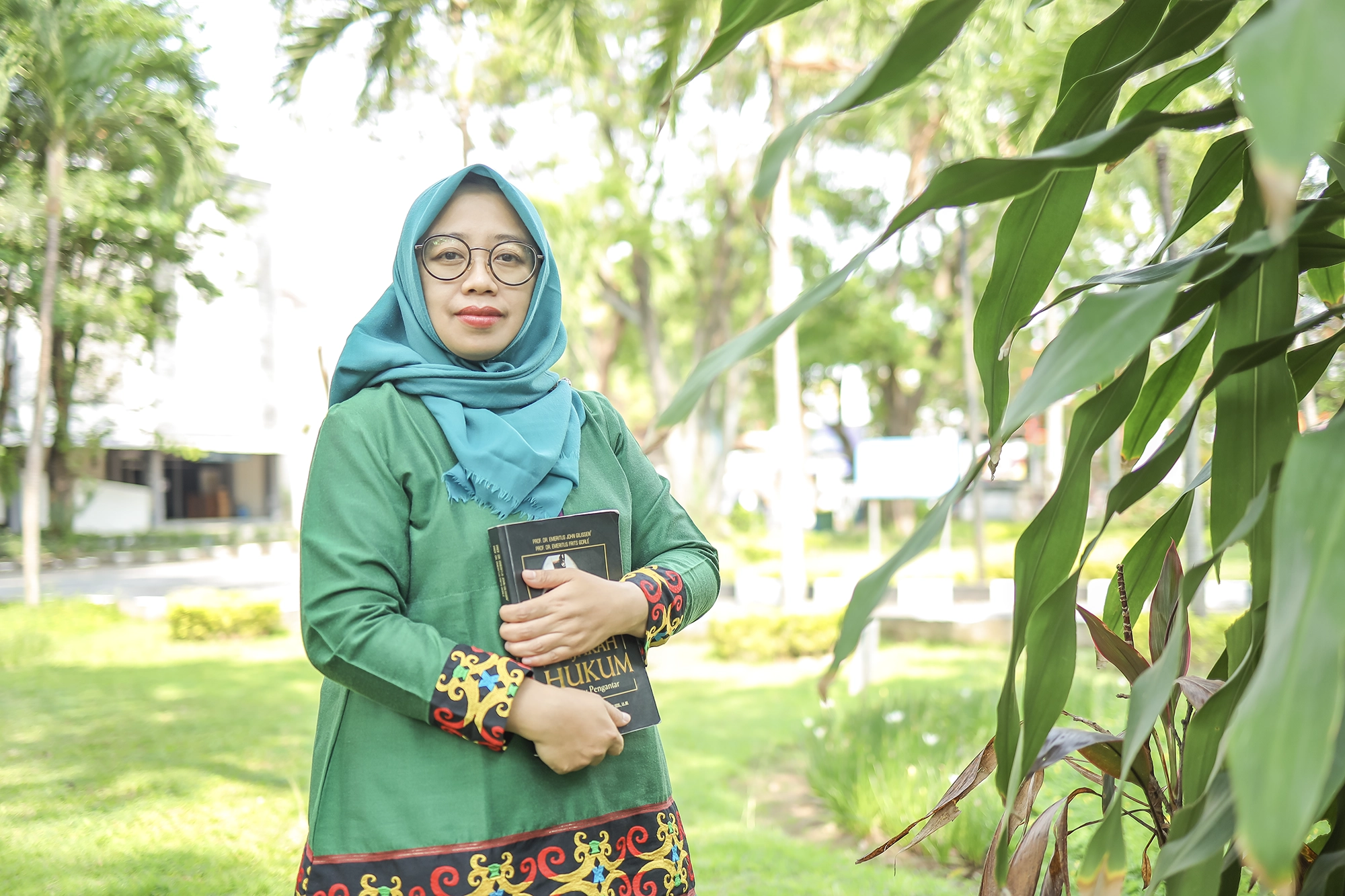
The rapid conversion of land for cafe and restaurant and the escalating deforestation in Tawangmangu piqued the interest of Wardah Yuspin, SH, M.Kn, Ph.D., a lecturer at the Faculty of Law, Universitas Muhammadiyah Surakarta (UMS).
Driven by curiosity, she seeks to delve deeper into the situation at the very foot of Mount Lawu.
Met in her office on Thursday (7/12), Wardah shared the story behind this research. It all began when Wardah visited Tawangmangu some time ago. The journey was hindered by the closure of the road due to a landslide at one point. This forced Wardah to take a detour through another road to reach Tawangmangu.
Instead of reaching her destination on time, Wardah dealt with disappointment when she was forced to take an alternate route, significantly extending her trip. The reason for this inconvenience was the road's closure due to a landslide in a particular part of the route.
She was inspired to take a closer look at the current state of Tawangmangu. With her own eyes, she observed the growing development of new culinary tourism spots in Tawangmangu.
“Over time, numerous stretches along the Tawangmangu road have transformed into popular hangouts and rooftop cafes.”
Wardah’s growing concern comes from the worrying trend of land conversion and deforestation in Tawangmangu. She points out that the land currently used for cafes and restaurants was initially designated as critical watershed areas and should be preserved.
Summarizing her concerns, Wardah embarked on a research project titled “The Impact of Deforestation on Sustainable Development Goals Regulations: An Empirical Studies on Tawangmangu.” This research was published in the International Journal of Sustainable Development and Planning, indexed by Scopus Q3.
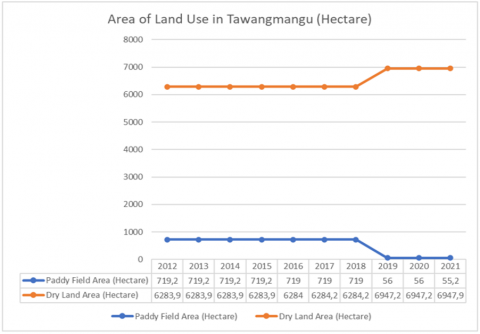
Graph showing the increase in land use in Tawangmangu from 2012-2021. (Source: BPS Karanganyar Regency)
The devastation of forests and the proliferation of critical land in Tawangmangu can be attributed to two main factors: rampant wood theft, which peaked in 2016 at a staggering 31.38 hectares, and extensive forest fire, which peaked in 2015 at an area of 6140.49 hectares. This indicates the significant impact of land use conversion in that area.
In her extensive six-month research, Wardah uncovered several insights. Using data from the Karanganyar Regency Statistics Agency, she discovered harrowing facts highlighting the increase of arid land in Tawangmangu over the past decade. The arid land in Tawangmangu, which stood at 6283.9 hectares in 2012, experienced significant increases, reaching 6947.9 hectares by 2021.
In her journal, Wardah claimed that the increase in land conversion and deforestation rates in Tawangmangu was driven by a concerted effort to build tourism infrastructure in the region. This claim is supported by the fact that the area has been a tourist destination for several years.
With the skyrocketing rate of deforestation, Wardah documented the impact of deforestation in Tawangmangu, noting an increase in the number of landslides. Quoting the report from the Regional Disaster Management Agency (BPBD), landslide disasters in Tawangmangu occurred only once in 2019. This number increased sevenfold the following year, reaching seven landslide incidents.
“Landslides have repercussions that extend beyond just one or two families; they impact a significant number of people. Given the escalating intensity of landslides, I find this deeply concerning. Tawangmangu, being a sloped area, requires the presence of vegetation that can reduce the erosion rate,” Wardah emphasized.
In addition to the findings of land conversion and deforestation rate in Tawangmangu, Wardah found out that some rooftop cafes do not have Building Permits (PBG).
“After research, it was revealed that several rooftop cafes lacked proper building permits. In legal terms, the Building Permit (PBG) serves as a crucial legal document, determining the legality of a structure,” she clarified.
Wardah regretted the lack of building permits for cafes or restaurants in the Tawangmangu area. From a legal perspective, she emphasized that every building should possess a building permit, especially in the sloped terrain of Tawangmangu. According to her, constructing buildings in Tawangmangu requires comprehensive studies to ensure adherence to legal and environmental considerations.
Wardah pointed out, “The absence of legal documents signifies a lack of investigation into the suitability of a location for a cafe or tourist attraction. When relevant agencies conduct thorough research, they can identify areas that are unsuitable for construction due to ecological reasons. This could include a watershed zone, steep terrain, or protected ecological zone.”
The permit issue had initially been detected by the Tawangmangu sub-district management. However, when she sought confirmation from the sub-district, they acknowledged their limited authority in addressing the matter. The lecturer explained that the issuance of Building Permits (PBG) falls under the jurisdiction of the Karanganyar Regency Government.
“They (the sub-district) mentioned that there is no permit yet. The term ‘yet’ implies that either they have not addressed it at all, or they are in the process of handling it, but the official document has not been issued. Thus, while the sub-district is aware of the situation, they find themselves unable to take any substantial action due to the limitations of their authority,” she elaborated.
The presence of cafes or restaurants in Tawangmangu is indeed supported by the Karanganyar Regency Government as part of the growth of the ecotourism zone. Wardah mentioned that this support is given to stimulate economic growth in the area and encourage the opening of new job opportunities.
“The promotion of cafes is indeed endorsed by the Karanganyar Regency Government. The journal mentions that one of the objectives is to boost ecotourism. The strategy involves expanding rooftop cafes to enhance competitiveness, consequently contributing to increased job opportunity,” explained Wardah.
Nonetheless, in the absence of the Building Permit (PBG), Wardah highlighted that the development lacked a focus on environmental considerations. She emphasized that ecological sustainability must take precedence in Tawangmangu’s developmental initiatives.
“On the other hand, ecological sustainability is not taken into account, as construction requires specific land that cannot maintain its status as a watershed area after development. As a result, the land remains vulnerable to the potential threat of landslides,” she continued.
Nevertheless, Wardah emphasized the critical need for synergy among institutions within the Karanganyar Regency government. According to her, there must be a well-defined development plan to harness the tourism potential in the mountainside area. This approach is crucial to mitigate the risks of disasters resulting from deforestation and land conversion issues.
“Spatial planning in mountainside areas should already have a blueprint. Areas unsuitable for ecotourism should not be transformed into ecotourism zones. Collaboration among the village, sub-district, and district is crucial in addressing this issue,” emphasized Wardah.
Observing the deforestation situation in Tawangmangu, Wardah stressed the importance of environmentally sustainable development. According to her, such development is crucial as a strategic measure for the government to actualize the implementation of Sustainable Development Goals (SDGs) by the year 2030.
“The government has set SDG targets for 2030. On the other hand, land clearing with unclear permits is destroying terrestrial vegetation. These two goals are not aligned,” she noted.
Given the prevailing development conditions, she observes that implementing Sustainable Development Goals (SDGs) in the Karanganyar area, mainly Tawangmangu, has not been optimal. Furthermore, the proliferation of non-IMB buildings has led to a reduction in watershed areas.
she advised the Karanganyar Regency government to immediately socialize the importance of having an PBG to the culinary business owners in Tawangmangu. In addition, Wardah emphasized that the business owners should pay compensation for the use of land that should be a watershed area.
“If it has already happened, it is impractical to dismantle it, given its contribution to the local economy. However, if business owners are asked to compensate by planting trees, with a cost per tree, I believe it would promote environmental awareness. In this way, they can contribute to the reforestation of the country,” concluded Wardah.
Writer: Gede Arga Adrian
Editor: Al Habiib Josy Asheva
Translator: Farizal Luqman Majid
10 awards were presented to UMS alumni who have created extraordinary impact in their respective fields.
Nothing’s more special than reading curated news just for you.
Subscribe to the UMS Newsletter for free today.