The Scholar Behind UMS's Master's Program in IQT
27 July 2026
Prof. Andri Nirwana, S.TH., M.Ag., Ph.D., pioneered the Master of Al-Quran and Tafsir Studies as a first step in strengthening Quranic studies within Muhammadiyah.


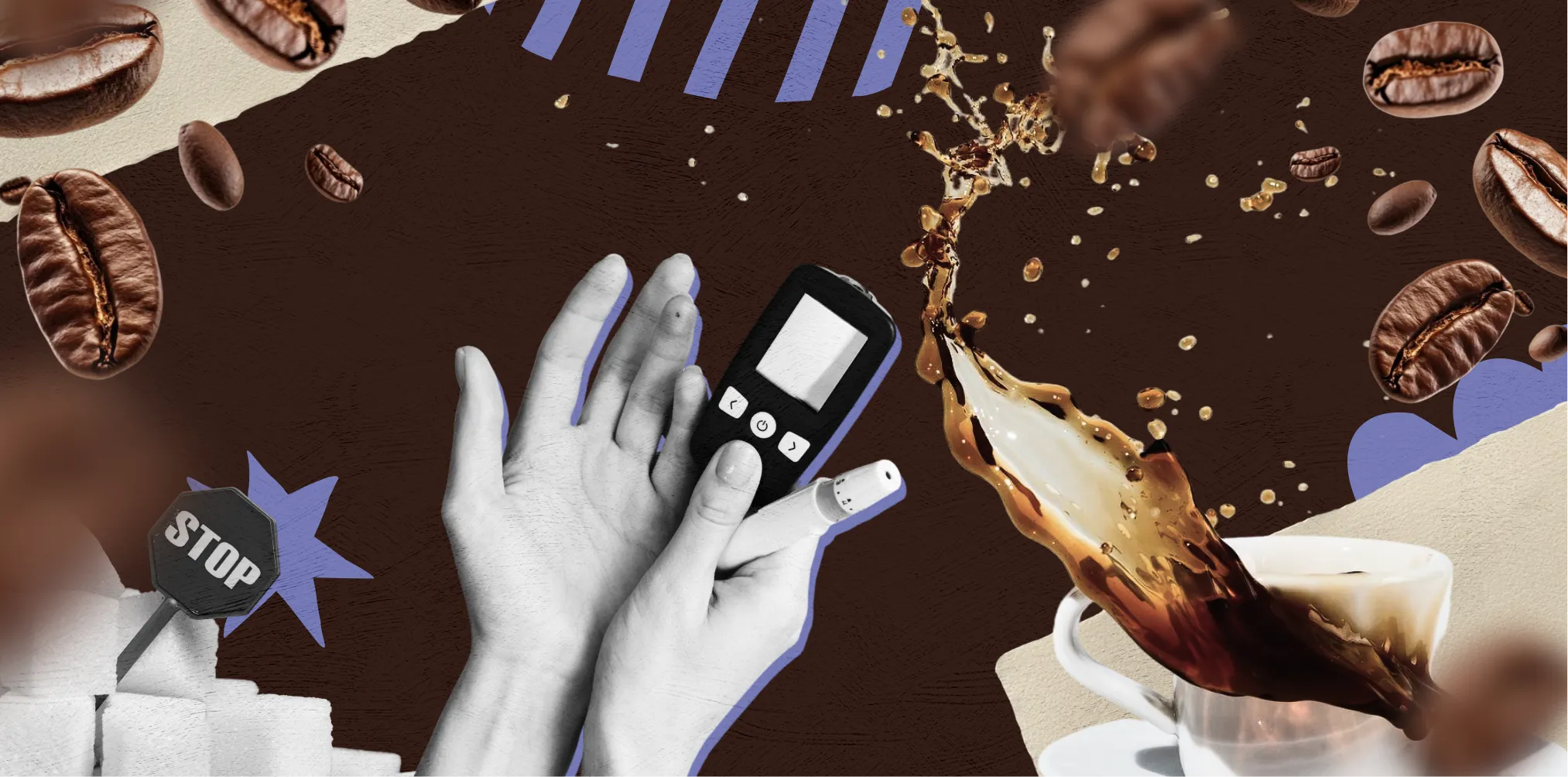

Coffee has long been part of the heartbeat of Indonesian life, accompanying busy mornings, scorching afternoons, and long nights.
Pure black coffee, served without additives, carries medical potential to help lower blood sugar levels. This finding comes from Dr. Riandini Aisyah, S.Si., M.Sc., a lecturer at the Faculty of Medicine, Universitas Muhammadiyah Surakarta (UMS), who has been researching the effects of pure coffee on diabetes.
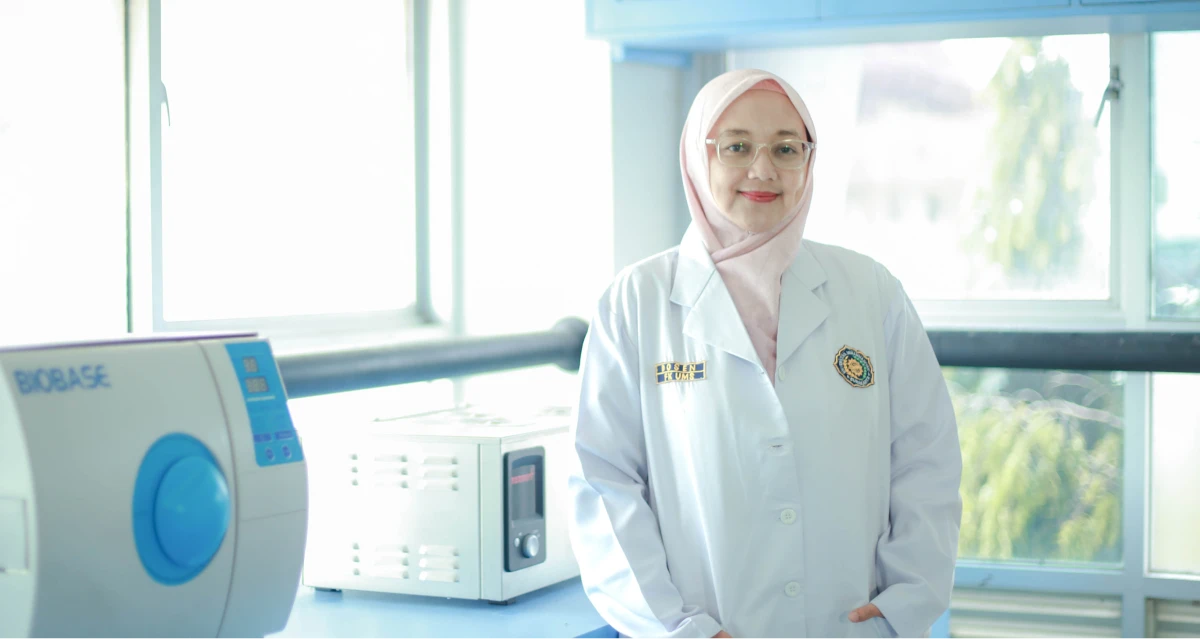
Riandini, along with her colleagues Dr. dr. Safari Wahyu Jatmiko, M.Si.Med., and dr. Nur Mahmudah, M.Sc., presented the results of their study on coffee’s potential for diabetes management at the International Conference of Medical Breakthrough (ICMB) 2024. “We wanted to see to what extent pure coffee can serve as a non-drug therapy for people with diabetes,” said Andin, as she is warmly called, when met at the Biomedical Laboratory 4, Faculty of Medicine UMS, on Friday (14/11/2025).
In her research, Andin used pure ground robusta coffee from Lampung, without any additional ingredients. The coffee was given to Wistar rats that had been induced with diabetes using alloxan.
The test animals were then divided into six groups, including a control group and three groups that received different doses of coffee equivalent to 3, 6, and 9 grams per day in humans. “For 14 days, the rats’ blood glucose levels were monitored periodically, and at the end of the treatment, their muscle mass and skeletal muscle tissue (musculus gastrocnemius) were examined,” explained Andin.
Andin’s research aimed to uncover the role of several active compounds found in coffee, such as caffeine, polyphenols, chlorogenic acid, diterpenes, and trigonelline. These substances work at the cellular level, influencing enzymes and proteins involved in glucose metabolism.
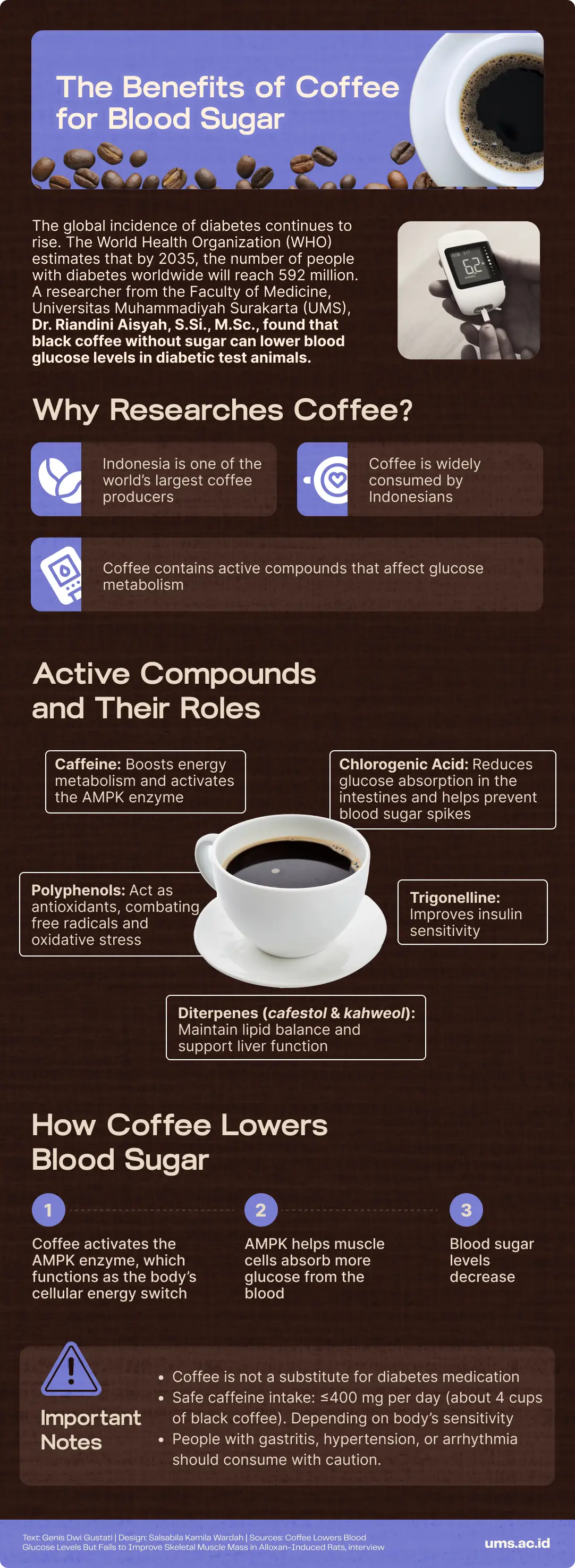
“Coffee activates the AMPK enzyme, which acts like an energy switch in the body,” she added. This enzyme stimulates muscle cells to absorb more glucose from the bloodstream through the GLUT4 transporter.
The results showed that coffee successfully reduced blood sugar levels significantly, especially at the highest dose, 0.162 grams per 200 grams of body weight in rats, equivalent to about 9 grams of coffee per day in humans. However, the effect of coffee did not yet show any increase in skeletal muscle mass.
Diabetes, she continued, causes a decline in muscle mass. Patients with diabetes are generally advised not only to take medication but also to adopt a healthy lifestyle, such as exercising regularly, especially exercises that help increase muscle mass, and maintaining a proper diabetic diet.
She elaborated that coffee helps glucose enter muscle cells, preventing it from accumulating in the bloodstream. However, since her study lasted only two weeks, the effects of coffee on muscle growth have not yet been observed.
“Muscle mass development takes a longer period. It may require a trial lasting 30 days or more, and the results could be different. After all, diabetes is a chronic disease,” explained the lecturer of Molecular Biology.
In addition to lowering blood glucose levels, coffee also functions as a powerful antioxidant. Its chlorogenic acid and polyphenol contents help suppress oxidative stress, repair DNA damage, and increase glutathione levels, the body’s natural antioxidant.
Diabetes mellitus continues to be a growing global health threat. The World Health Organization (WHO) estimates that the number of people living with diabetes worldwide will reach 592 million by 2035.
Meanwhile, in Indonesia, the number of people living with diabetes is estimated to reach 14 million, with around 50 percent of them unaware that they have the disease. “The pattern is usually clear, high sugar consumption and a sedentary lifestyle are a dangerous combination,” said Andin.
She confirmed that diabetes often goes unnoticed because it develops slowly and without clear early symptoms. Many people only realize they have diabetes when their blood sugar levels are already high after undergoing a health check.
“Especially if there’s a family history of diabetes. The disease is essentially a result, an interaction between genetic and environmental factors. In other words, some people are genetically predisposed,” she explained with concern.
These reasons became Andin’s motivation to explore the potential of coffee, considering that most Indonesians are avid coffee drinkers. However, few realize that the way coffee is consumed can determine whether it brings benefits or harm.
“The beneficial kind of coffee is pure black coffee without added sugar or creamer. Once additives are included, its health benefits may be reduced,” Andin added.
Although her research yielded promising results, Andin emphasized that coffee is not a substitute for medical treatment. In her study, coffee indeed showed a significant blood sugar–lowering effect, but the duration was not long enough to measure its long-term impact.
“We still need further research to determine a safe and effective dosage for humans,” she stressed.
In addition, not everyone is suitable for consuming coffee. “The safe caffeine dosage for healthy adults is 400 milligrams per day, though this may vary depending on individual sensitivity. Exceeding this amount may cause side effects,” explained Andin.
She underlined that this dosage applies only to individuals without a history of conditions such as gastritis, hypertension, or arrhythmia. It’s important to pay attention to indications and contraindications, as this dosage cannot be applied universally.
This coffee research is just the beginning. Moving forward, Riandini plans to extend the study’s duration and add more test variables. “In addition to muscle tissue, we aim to examine the pancreas to see how coffee affects beta cells that produce insulin,” she explained.
She also welcomes young researchers to continue this study. “It can be pursued by students or other researchers interested in exploring natural therapies for diabetes,” she added.
Furthermore, Andin hopes that similar studies will highlight Indonesia’s rich variety of local ingredients. “The Lampung coffee or pure black coffee we used is just one example. There are still many local plants that have yet to be scientifically explored,” she said.
Andin’s research adds to the growing body of scientific evidence that coffee is more than just a drink to stay awake or boost dopamine. It holds potential as a safe, affordable, and accessible non-pharmacological therapy for the community.
Writer: Genis Dwi Gustati
Translator: Farizal Luqman Majid
Editor: Al Habiib Josy Asheva
Prof. Andri Nirwana, S.TH., M.Ag., Ph.D., pioneered the Master of Al-Quran and Tafsir Studies as a first step in strengthening Quranic studies within Muhammadiyah.
Nothing’s more special than reading curated news just for you.
Subscribe to the UMS Newsletter for free today.