The Coffee Shop Boom
31 July 2026
Indonesia is one of the world's largest coffee-consuming nations, a thirst that keeps spawning new coffee shops. Sharpening the competition among them.



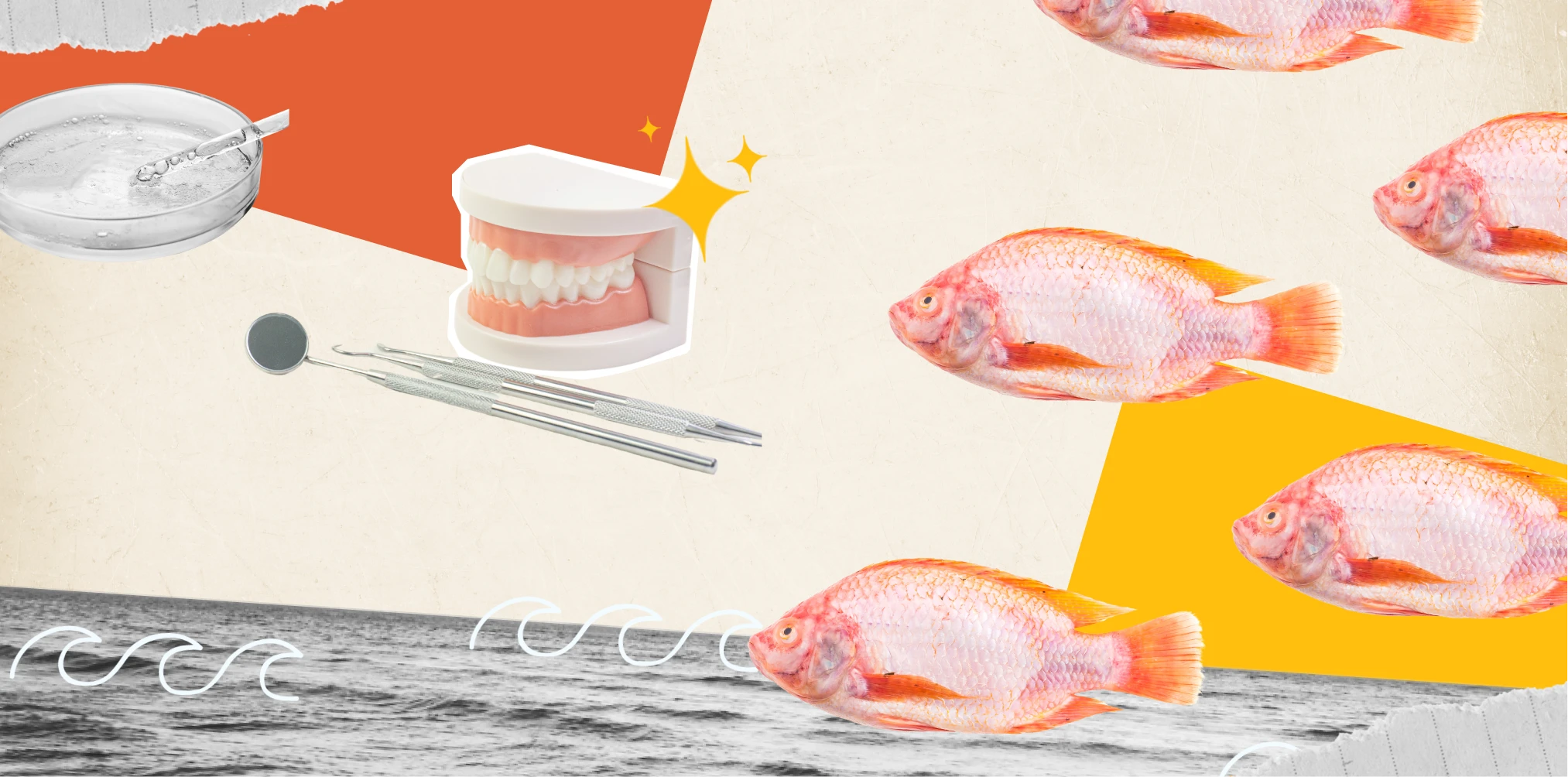
Until 2023, the Ministry of Marine Affairs and Fisheries (Kementerian Kelautan dan Perikanan, KKP) reported that Indonesian fisheries produced a total volume of 24.74 million tons, of which 7.25 million were marine fisheries.
One type of marine fish produced in Indonesian waters is snapper. According to KKP statistics, in 2023, Indonesia produced 8.7 thousand tons of red snapper. It’s no wonder that snapper is commonly found in both traditional and modern markets.
According to Fatsecret Indonesia, every 100 grams of snapper contains 100 calories, 20.51 grams of protein, and 1.34 grams of fat. Snapper’s protein content is higher than gourami and tilapia which both have 17.48 and 20.08 grams of protein per 100 grams.
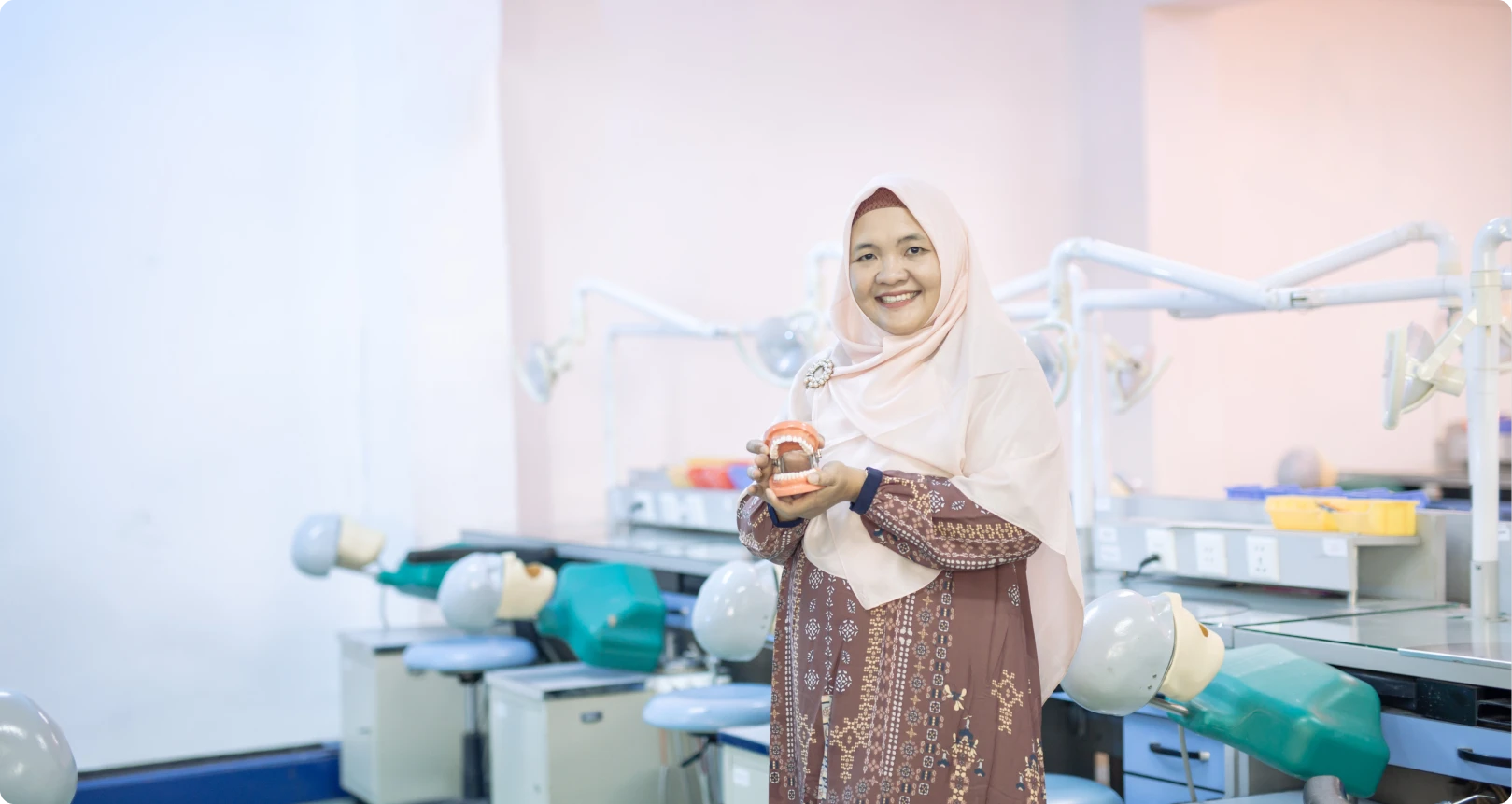
Dr. drg. Noor Hafida Widyastuti, Sp.KG., a UMS researcher who transformed the scales of red snapper Lutjanus Sp. into nanochitosan as a natural pulp capping material. UMS Public Relations/Imam Safii
Dr. drg. Noor Hafida Widyastuti, Sp.KG, a researcher from Universitas Muhammadiyah Surakarta (UMS), has transformed red snapper (Lutjanus sp.) into nanochitosan, an effective pain reliever and anti-inflammatory drug for dental use.
“Red snapper scales contain chitin, which is then processed into chitosan,” she said. Chitin is a substance in red snapper scales that functions as an anti-inflammatory, antibacterial, and antioxidant.
Hafida’s research focuses on pulpitis, a common condition among Indonesians. Pulpitis occurs when the tooth becomes inflamed, causing pain which affects our daily activities.
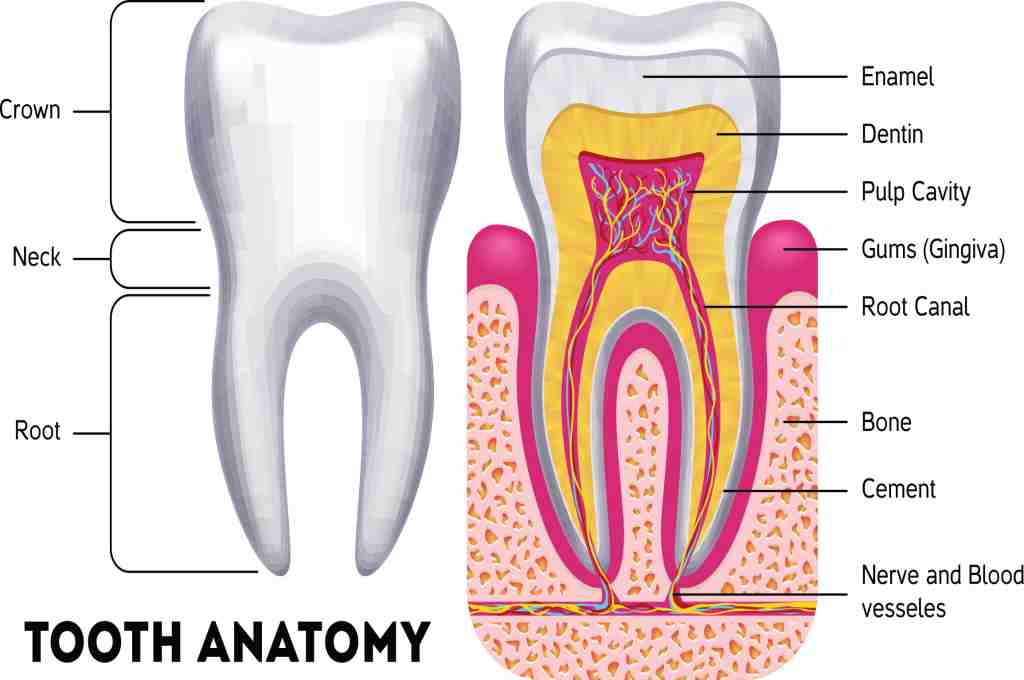
Anatomical structure of teeth. doc. Healthy Doctor
There are two types of pulpitis: reversible and irreversible.
Reversible pulpitis is a mild to moderate pulp inflammation. Pulp is a group of connective tissues located under the dentin layer and at the tooth’s center. Once the cause of the inflammation is removed, the pulp can return to its normal state.
Irreversible pulpitis occurs when the inflammation is severe enough that the pulp cannot return to its normal state.
There are four factors that cause pulpitis. The first factor is bacteria in the oral cavity that causes dental caries. Dental caries can create small holes in the teeth. “The tooth has layers, and if the hole is deep and close to the pulp, it will cause pulpitis,” said Hafida.
The second causative factor is trauma to the tooth, such as a broken or impacted tooth. The third factor is chemical irritation caused by foods with high acid content. The fourth factor is mechanical damage, which can result from brushing your teeth too roughly or using a toothbrush with too stiff bristles.
To treat pulpitis, dentists use calcium hydroxide (Ca(OH)2), a synthetic material available in paste form. Calcium hydroxide is applied to the pulpitis tooth.
However, Hafida analyzed the fact that using calcium hydroxide has several disadvantages. First, it has the potential to cause necrosis, a condition where the pulp in the tooth dies, leading to the final phase of chronic pulpitis.
Calcium hydroxide also has the potential to produce incomplete reparative dentin. According to Hafida’s research and data, the reparative dentin often has small holes, allowing bacteria to enter. “It’s like there are cavities, so it’s not tight,” she said.
Third, forming reparative dentin with calcium hydroxide takes a relatively long time, about 28 days. This condition prompted Hafida to research nano chitosan made from red snapper scales as an alternative natural treatment.
Chitosan is a compound with antibacterial and antifungal properties that can trigger fibroblast cells to release anti inflammatory cytokines. “Similar to cellulose, it can absorb proton ions produced by bacterial processes”, Hafida added. Chitosan can also increase type I collagen synthesis and the number of odontoblast-like cells, which is beneficial in treating dental conditions like reversible pulpitis.
With the development of technology, chitosan is now available in nano sizes and is referred to as nanochitosan. “Nano-sized because the goal is to be more active and make it easier for the body to absorb,” Hafida continued.
First, Hafida prepares the cleaned red snapper scales. The scales are dried in sunlight and then pulverized using a blender. The fish scale powder is then sifted using a sieve to produce 80 mesh powder.
The next stage is the chitosan isolation process, which begins with deproteination to extract the protein from the fish scales. Hafida mixed the scales with 3.5 percent sodium hydroxide (NaOH), then heated and stirred the mixture at 75 degrees Celsius. Afterwards, the mixture is dried in an oven at 60 degrees Celsius.
Next is the demineralization stage, aimed at extracting the mineral content from the fish scale powder. The fish scale powder is mixed with a hydrochloric acid (HCl) solution and heated while stirring at 75 degrees Celsius. The mixture is then filtered, and the resulting material is dried in an oven at 60 degrees Celsius.
The next step is deacetylation, which aims to remove the acetyl content from chitin to produce the final product of chitosan.
To convert chitosan into nano chitosan, Hafida used the Ionic Gelation method. She started by adding a 0.2 percent acetic acid solution to chitosan. Next, she introduced a 1 percent sodium tripolyphosphate (NaTPP) solution, adjusting the ratio of chitosan solution to NaTPP solution to 3:1. The solution was stirred at 900 rpm for 1 hour. The resulting nano chitosan is in the form of a paste.
Hafida tested her nanochitosan concoction on male Sprague-Dawley rats weighing 250 to 350 grams. She conducted her experiments on a total of 24 rats. Sprague-Dawley rats were chosen due to their ease of breeding, suitable dental structure, and relatively calm behavior, which makes them ideal for testing. Hafida explained, “They are easy to acquire and can be easily controlled, especially in terms of their diet.”
First, the samples were divided into four groups, each consisting of six rats:

To apply nano chitosan to rats, Hafida induced “pulpitis" in the animal by drilling the maxillary incisors to a depth of 3 mm. This procedure was used to simulate inflammation of the teeth in the rats.
“After inducing inflammation, we administered nano chitosan and a comparison material, calcium hydroxide. Some samples were left untreated,” explained dentist Hafida.
After applying nano chitosan from red snapper scales, Hafida observed changes in rat behavior using two methods: inflammatory testing through analysis of Tumor Necrosis Factor-alpha (TNF-α) levels and clinical assessment using the Mouse Grimace Scale (MGS) method.
TNF-α is an inflammatory mediator with various biological activities. It plays a crucial role in the immune system by stimulating or inhibiting several cell components. TNF-α can activate cells and trigger the synthesis of proinflammatory cytokines, thereby supporting inflammation processes in the body.
The TNF-α test results indicated that:
Hafida also conducted her clinical experiment using the Mouse Grimace Scale (MGS) method, designed to observe changes in behavior and facial expressions in rats as indicators of pain. The MGS measurement used a video device to record specific facial actions in rats, including changes in the eyes, nose, cheeks, ears, and whiskers.
The Mouse Grimace Scale (MGS) results showed the following pain scores:
The series of tests conducted by Hafida demonstrated that the chitin content in the scales of Lutjanus sp. red snapper can significantly reduce the pain caused by pulpitis, even more effectively than using calcium hydroxide.
However, Hafida’s research was not without obstacles. Starting in 2021, she took about six months to conduct research on red snapper scales. The research faced significant constraints due to the pandemic, severely limiting laboratory activities during that period.
She also had to conduct testing in two different laboratories. Chitosan and nanochitosan production took place at the Pharmaceutical Chemistry Laboratory, Faculty of Pharmacy, UMS. Sprague-Dawley rats were tested at the Biomedical Integration Laboratory, Faculty of Medicine, Universitas Sultan Agung Semarang.
Her dedication to exploring natural medicine received support from UMS through the UMS tri dharma integration grant scheme, with total funding amounting to approximately Rp35 million.
Now her research has been published in a research article titled "The Effect of Nanochitosan from Red Snapper Fish Scales (Lutjanus sp.) on Pain and Pulp Inflammation." The research was published in the Scopus Q3 indexed Journal of Medicinal and Chemical Sciences.
Hafida still has a long journey ahead to fully develop nano chitosan made from red snapper fish scales. “Hopefully, it can become a product that dentists can use to treat reversible pulpitis,” she concluded.
Writer: Gede Arga Adrian
Editor: Al Habiib Josy Asheva
Translator: Farizal Luqman Majid
Indonesia is one of the world's largest coffee-consuming nations, a thirst that keeps spawning new coffee shops. Sharpening the competition among them.
Nothing’s more special than reading curated news just for you.
Subscribe to the UMS Newsletter for free today.