Compassion That Reaches the Arabian Shore
30 June 2026
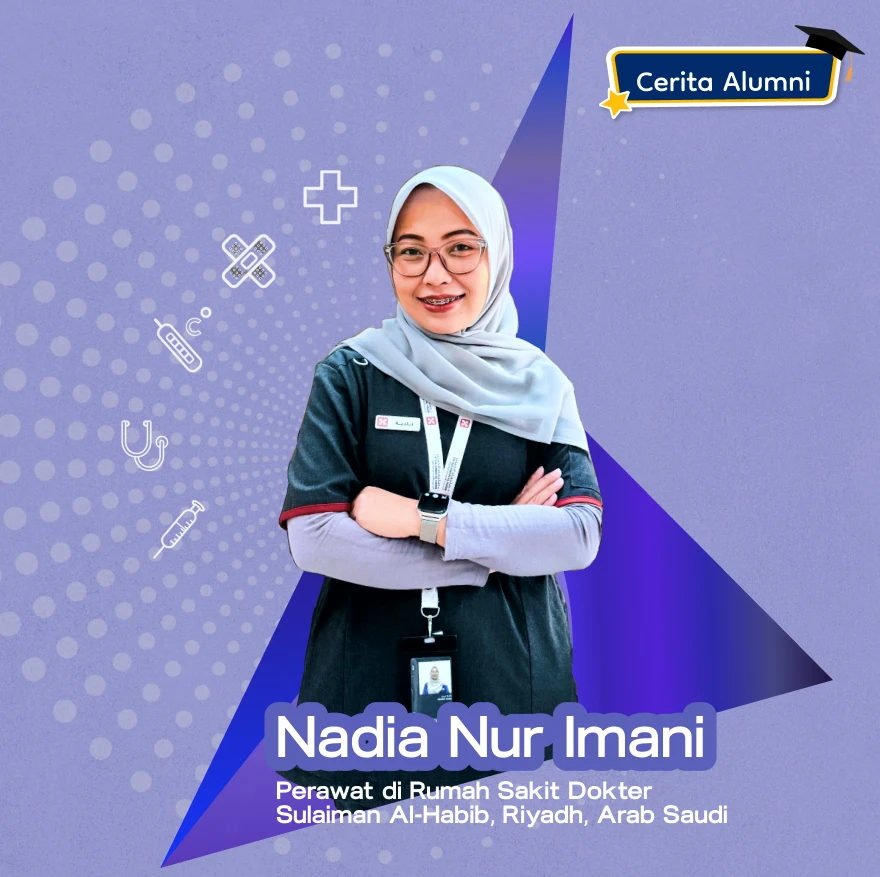
Nadia Nur Imani is determined to fulfill her mother's dream by becoming a nurse, opening a new path to The Land of the Two Holy Mosques



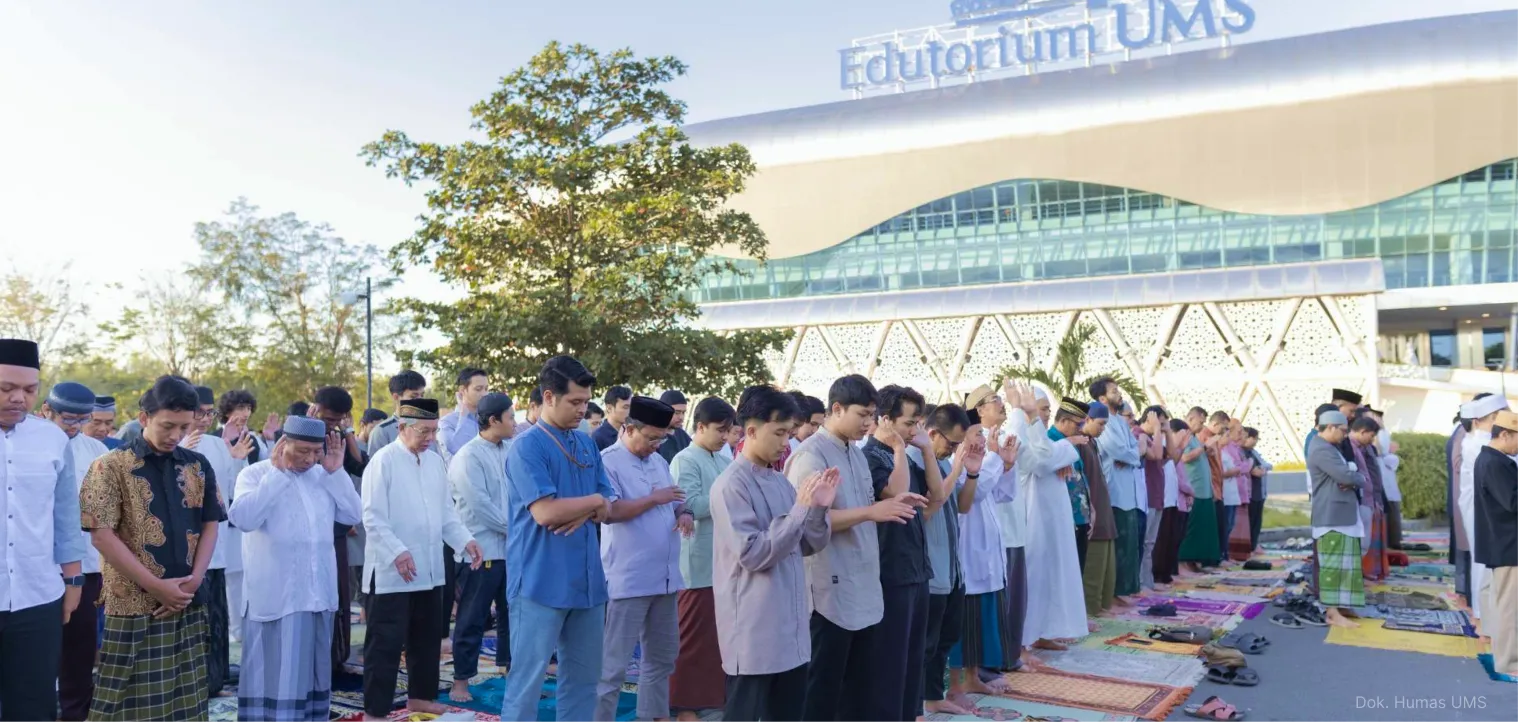
Eid al-Fitr prayer marks the conclusion of Ramadan. Welcomed by the resounding chants of takbir, Muslims don their finest attire and gather at nearby mosques or open fields to perform the prayer in congregation.
The Head of the Al-Quran and Tafsir Studies Program at Universitas Muhammadiyah Surakarta (UMS), Dr. Kharis Nugroho, Lc., M.Ud., explained that the Eid prayer is strongly grounded in authentic hadith and was consistently practiced by Prophet Muhammad SAW.
“Therefore, understanding its legal ruling and procedure is essential to ensure that the spirit and purity of the Eid celebration remain intact,” Kharis said in his office on Wednesday (4/3/2026).
Is the Eid al-Fitr prayer obligatory? This question often arises among Muslims, particularly those concerned about committing sin if they do not perform it. According to Kharis, the majority of scholars classify it as sunah muakkad, a highly emphasized Sunnah.
This ruling is based on the Rasulullah consistent practice of performing it without imposing sanctions upon those who did not attend. "This means its status is strongly emphasized as a symbol of Islam, yet it does not reach the level of obligation like the five daily prayers or the Friday prayer," explained the lecturer from UMS Faculty of Islamic Studies.
Among the evidence is a hadith narrated by Ibn Abbas stating that the Rasulullah performed two rak'ahs on Eid without any additional prayer before or after it. Another narration from Abu Sa'id al-Khudri describes how the Prophet would go out to an open field, lead the congregation in prayer, and then deliver a sermon.
"The Eid al-Fitr prayer is presented as an important collective act of worship, emphasized through its consistent practice," he added.
The Eid al-Fitr prayer has distinctive characteristics compared to daily prayers. Its performance is simple yet rich in meaning and symbolism.
First, the location. Rasulullah more frequently performed it in an open field or musalla, allowing all members of society, men, women, and children, to gather and participate.
Second, without adhan and iqamah. The prayer begins directly with takbiratul ihram when the imam stands to lead.
Third, the number of rak'ahs is two. In the first rak'ah, there are seven takbirs, followed by the second rak'ah with five takbirs before reciting Al-Fatihah. Between the takbirs, the congregation may praise Allah or recite salawat.
As stated in the following hadith:
أَنَّ رَسُوْلَ اللهِ صلى الله عليه وسلم كَانَ يُكَبِّرُ فِي الْفِطْرِ وَالأَضْحَى فِي الأُوْلَى سَبْعَ تَكْبِيْرَاتٍ وَفِي الثَّانِيَةِ خَمْسًا
Meaning: “Indeed Rasulullah SAW recited takbir during the Eid al-Fitr and Eid al-Adha prayers, seven takbirs in the first rak’ah and five takbirs in the second rak’ah.” (Narrated by Abu Dawud)
Fourth, the recitation of surahs. It is sunnah (recommended) to recite Surah Al-A'la and Al-Ghashiyah, or alternatively Surah Qaf and Al-Qamar, as mentioned in authentic hadith narrations.
Fifth, the khutbah (sermon) after the prayer. Unlike the Friday prayer, the Eid al-Fitr sermon is delivered after the prayer. It serves as spiritual advice and reinforcement for the congregation.
"The Eid prayer can be practiced concisely as mentioned, without confusion in following the imam's movements," Kharis explained.
The Eid al-Fitr prayer is not merely a two-rak’ah ritual. It marks the success of a Muslim in undergoing a month of fasting, patience, and self-restraint during Ramadan.
“It can also serve as a moment of self-evaluation. Has Ramadan improved our character? Socially, it fosters togetherness. Everyone stands shoulder to shoulder in one row, without distinctions of status,” he concluded. The prayer may be brief, but its message is profound: self-improvement, strengthening ukhuah, and bringing Islamic values to life in everyday practice.
Writer: Genis Dwi Gustati
Translator: Farizal Luqman Majid
Editor: Al Habiib Josy Asheva
Nadia Nur Imani is determined to fulfill her mother's dream by becoming a nurse, opening a new path to The Land of the Two Holy Mosques
Nothing’s more special than reading curated news just for you.
Subscribe to the UMS Newsletter for free today.